
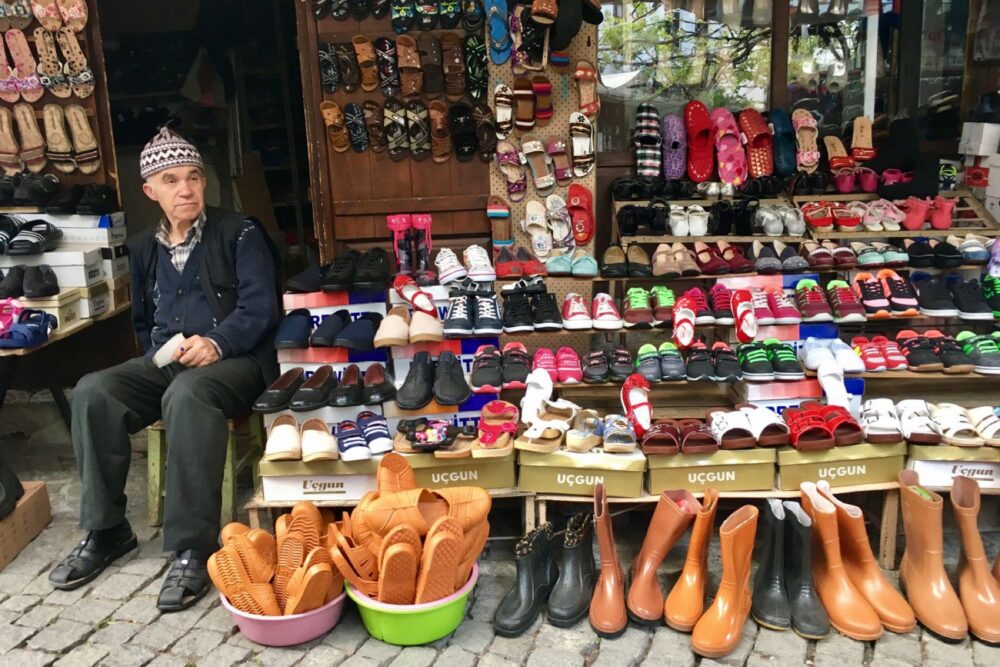
DHgate can work as a starting point for finding citywide and B2B shoe suppliers, but it behaves more like a giant directory than a curated wholesale program. To use it effectively, you search shoe categories and the public “shoes suppliers” results, identify vendors whose catalogs and terms look business-ready, validate them with listing data and off-platform checks, then run small test orders before committing real volume. You also compare landed cost and reliability against other B2B channels instead of assuming DHgate is automatically the cheapest or safest route.
This guide focuses on that specific workflow for US buyers and small ecommerce brands: how to find bulk-oriented shoe vendors on DHgate, how to vet them, what the listings really tell you, and when you’re better off switching to a different sourcing channel.
How B2B Shoe Sourcing Works and Where DHgate Fits
Wholesale shoes typically move along a chain: factory → trading company or wholesaler → regional distributor → retailer, or direct factory → retailer for larger buyers. Many factories and traders in China list on multiple online platforms as one of their lead-generation channels.
DHgate’s editorial blog describes the platform as an international B2B marketplace that connects Chinese manufacturers and global buyers across categories, including shoes and fashion, and notes over 40 categories and tens of millions of products on offer (DHgate wholesale overview). That scale matters because the shoe category isn’t just sneakers—it includes dress shoes, slippers, custom services, and accessories.
For a US small retailer or online shoe seller, DHgate typically plays one of these roles:
- Test-bed for new styles or vendors. You can trial small quantities from several vendors without signing long-term contracts, then double down with the ones that ship consistently.
- Directory for future direct relationships. Once a vendor proves reliable, many buyers move some communication off-platform and negotiate more tailored terms.
- Supplement to a primary channel. Some businesses use other B2B platforms or trade shows for core lines and DHgate for trend-driven or opportunistic buys.
Finding Bulk-Friendly Shoe Vendors on DHgate
Finding citywide and B2B-capable suppliers on DHgate is mostly about how you search and how you filter out consumer-only sellers.
According to DHgate’s own vendor guide, the basic workflow is: visit the site, log in, search for a product keyword such as “sneaker,” browse categories, review the sellers behind each listing, and contact vendors directly from product pages (DHgate vendor guide). For shoes, you can make this much more targeted.
1. Start from the “shoes suppliers” page
DHgate maintains a public results page aggregating “shoes suppliers” for wholesale buyers (DHgate shoes suppliers page). Use this as your entry point instead of the generic homepage.
From there:
- Filter by subcategory (e.g., Casual Shoes, Dress Shoes, Athletic Shoes, Slippers) so you’re comparing like with like.
- Scan the left-hand filters and sort options (price, popularity, etc.) to narrow the field to your budget band.
2. Use specific, B2B-oriented search terms
In the search bar, move beyond “shoes”: terms like “wholesale sneakers,” “bulk slippers,” “business shoes men,” or “custom shoes logo” will surface more B2B-focused listings.
On the results page, look for:
- Titles that explicitly say “wholesale,” “bulk,” “factory,” or “customized shoes”.
- Total prices in the hundreds of dollars, which often signal service or bulk packages, not single pairs.
For example, in the Slippers category, several listings titled “Wholesale customized shoes to increase customer conversion rate” show high total prices. One snapshot observed on 2026-09-14 lists around $566.84 for the package (customized shoes package example). That type of listing appears aligned with B2B customization services rather than a one-off pair.
3. Identify vendors with coherent shoe catalogs
A citywide-capable or B2B-ready supplier usually has multiple related shoe SKUs, not a single random sneaker next to unrelated gadgets.
As of 2026-09-14, the seller “ycbest” illustrates the kind of catalog you’re looking for:
- Men’s Lightweight Casual Business Shoes in the “Other Shoes” category at roughly $27.86–$29.55 (men’s casual business shoes).
- Spring/Summer Low-Top Men’s Shoes… business casual sports footwear at about $29.90–$32.89 (low-top men’s shoes).
- Spring 2025 New Men’s Shoes… business leather shoes priced around $40.17–$50.11 (business leather shoes).
- Women’s platform wedge sneakers at about $28.84–$30.35 (women’s wedge sneakers).
That mix of men’s and women’s shoes within related categories hints at a supplier who is at least organized around footwear.
Contrast that with a seller offering only a single casual shoe listing plus unrelated home goods. That’s typically more of a general reseller than a shoe-focused vendor.
4. Shortlist for B2B signals
From your search results and catalog scans, build a shortlist of perhaps 5-10 vendors that meet all of these conditions:
- Several shoe listings within the same broad niche (e.g., men’s business shoes, athletic sneakers, custom slippers).
- Title or description mentions of wholesale, OEM/ODM, or customization.
- Price bands that make sense for resell (for example, multiple listings in the $25–$50 per pair range for mid-market casual shoes or higher price totals for customized bundles).
Evaluating DHgate Shoe Suppliers for Business Use
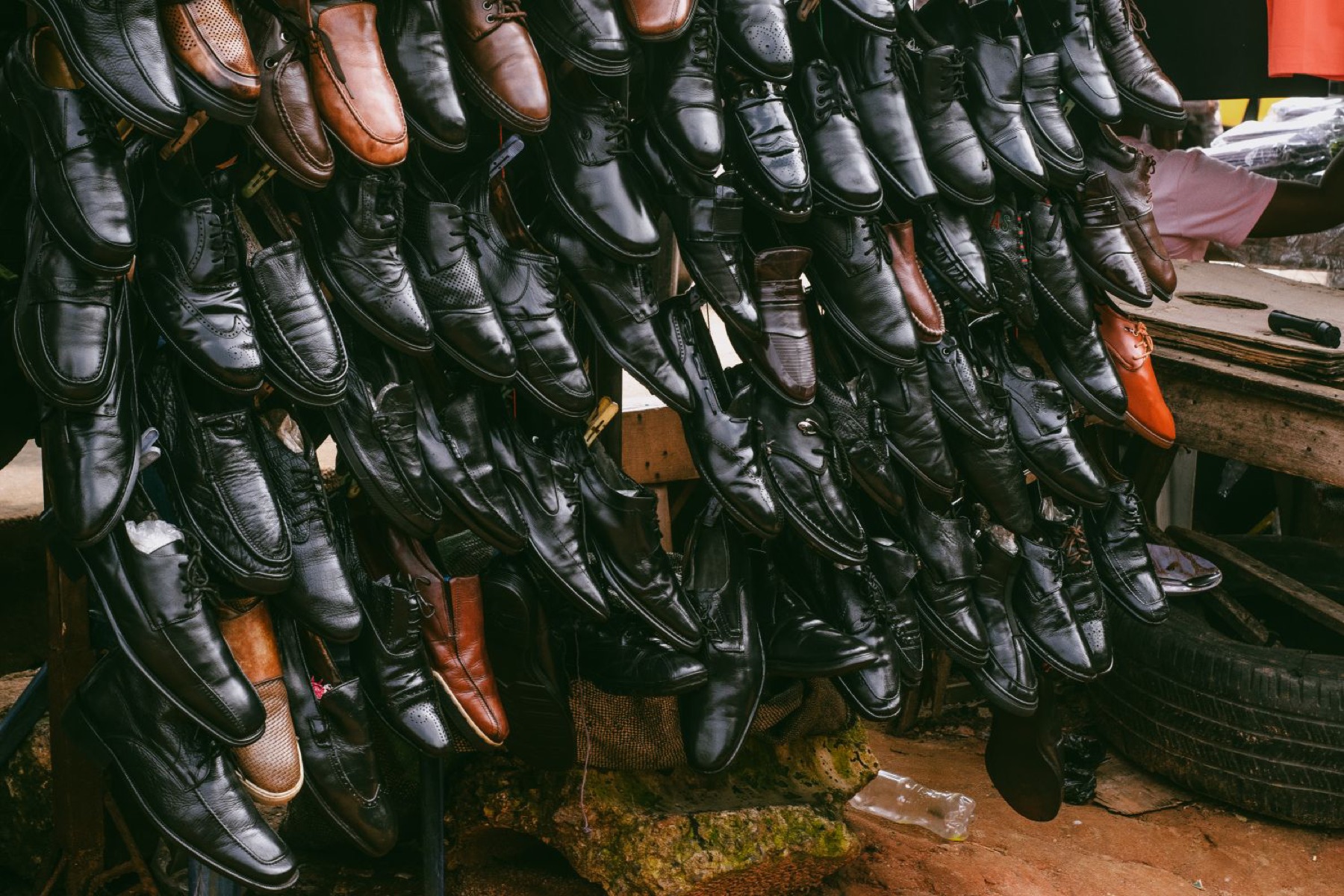
Once you’ve found potential suppliers, the main question is whether they can reliably support your US retail or ecommerce operation. DHgate’s blog advises buyers on B2B marketplaces to compare multiple suppliers, check minimum order quantities and capabilities, and read customer feedback before committing (supplier selection guidance). Here’s how that translates specifically for shoes.
Check catalog coherence and depth
For citywide or multi-store supply, you want depth and consistency:
- A range of sizes and, ideally, wide sizes if you serve US markets.
- Variation by color and upper material, but within a consistent construction standard.
- Multiple listings in the same style family (e.g., several versions of a business loafer or multiple casual sneaker designs) so you can build a cohesive collection.
A seller like sport8866 with a listing titled “Casual Sneakers And Flat Shoes Casual Shoes” in the Athletic Shoes category at roughly $60.95–$70.93 (casual sneakers example) suggests a focus on athletic/casual footwear, but you still need to see if they offer variants or if that’s a one-off.
Use reviews and ratings where they actually exist
Not all listings show reviews or ratings; many product snapshots above had 0 reviews at the time they were checked. When you do see feedback, use it.
A useful example is the Slippers-category listing “Casual-Shoes Shoes Shoe With Standard Size. Slippers Sports-Shoes…” from seller “joyblend.” On 2026-09-14 it showed:
- Price range roughly $0.96–$1.00 per unit.
- A 5.0 rating from 21 reviews (low-cost slippers/accessory listing).
Those numbers by themselves don’t prove quality, but they tell you this supplier has at least shipped many low-cost shoe-related items successfully enough for buyers to leave positive feedback. If that same vendor also offers full shoes or related accessories, the track record becomes part of your risk calculation.
Probe B2B readiness in messages
After shortlisting, message suppliers directly via DHgate’s communication tools. Tailor your questions for shoes, not just generic MOQ talk:
- What size runs can they supply for a given style? (US vs EU sizes, half sizes.)
- Can they label or bag pairs in a way that fits your warehouse or prep center?
- How do they handle repeat orders—are the materials and lasts consistent between batches?
- For custom listings like “Wholesale customized shoes to increase customer conversion rate,” ask what exactly you’re buying: design services, full production, or pre-made stock with simple logo printing.
If a vendor ignores direct questions about sizes or materials, that’s a red flag for B2B reliability.
Watch for cross-border red flags specific to shoes
For DHgate shoe sourcing, some concrete warning signs include:
- One listing, no other shoes, but a promise of large capacity—could be a dropshipper layering on top of another supplier.
- Very high per-pair prices for generic-sounding shoes (e.g., $60–$70 casual sneakers from an unknown seller) without clear differentiation.
- Copy-heavy titles that lean on buzzwords like “designer” or “best-selling” without describing materials, soles, or construction.
Key Purchasing Factors: MOQ, Pricing and Logistics for DHgate Shoes
DHgate’s editorial content positions the platform as B2B-friendly and highlights that you can buy single units or bulk and access discounts on larger quantities (designer products guide). The actual MOQs and price bands for shoes vary widely by listing. Using product snapshots from 2026-09-14, here’s what that looks like in practice.
DHgate shoe listing snapshot (2026-09-14)
| Example type | Listing / Seller (category) | Approx. price band (USD) | Notable signal |
|---|---|---|---|
| Low-cost slippers/accessory | Casual-Shoes… Slippers Sports-Shoes… – joyblend, Slippers (joyblend slippers) | $0.96–$1.00 per unit | 5.0 rating, 21 reviews, very low entry price |
| Mid-range casual/business shoes | Men’s Lightweight Casual Business Shoes – ycbest, Other Shoes (ycbest business shoes) | $27.86–$29.55 per pair | One of several related men’s shoes from seller |
| Higher-tier casual sneakers | Casual Sneakers And Flat Shoes – sport8866, Athletic Shoes (sport8866 sneakers) | $60.95–$70.93 per pair | Athletic focus, premium-ish price range |
| Bulk customization package (lower total) | Wholesale customized shoes… – hxdnice_shop, Slippers (hxdnice custom package) | $138.45–$152.64 total | Likely small batch or service-style listing |
| Bulk customization package (higher total) | Wholesale customized shoes… – dh5367242, Slippers (dh5367242 custom package) | $1,212.11 total | Service/bulk scale, probably many pairs |
These are time-bound examples; availability, prices, and terms may change.
From a buying-strategy perspective, use this pattern to your advantage:
- Start with low-commitment SKUs (like the sub-$1 slippers/accessory example) to test seller reliability, communication, and packaging at minimal risk.
- Move to mid-range pairs ($25–$50 band) once you’re satisfied with base quality and want resellable footwear.
- Explore bulk customization listings only when you have clear specs, because those often represent a significant upfront spend.
Making MOQs and samples work for you
A DHgate blog on shoes notes that bulk orders can unlock better pricing and that the platform supports both single units and wholesale quantities (Are DHgate Shoes Real?). Practically, that means you can:
- Order small quantities first even if you plan to eventually buy much larger volumes.
- Ask vendors about tiered pricing—for instance, request quotes at 10, 50, and 100 pairs, even if the listing doesn’t spell it out.
- Use customization bundles (like the various “Wholesale customized shoes” listings in the Slippers category) once you’ve confirmed the vendor can handle basic production.
On logistics, you’ll need to explicitly ask vendors about:
- Estimated production time per batch.
- How they pack shoes (individual boxes vs bulk cartons), which affects your freight and prep costs.
- Whether they can ship to your US warehouse or 3PL and what documentation they provide.
Query-time DHgate listing example
Observed on 2026-09-14, Multi-functional Shoe Cleaner S260202 appeared in Other Home & Garden. This is a time-bound, illustrative listing example; availability and listing details may change. Compare the stated specifications and order a sample before considering a larger purchase.
When DHgate Is (and Isn’t) the Right Channel for Citywide Shoe Supply
DHgate’s editorial content lists it alongside platforms like AliExpress as one of several ways for small businesses to source wholesale products (DHgate vs other wholesale options). Independent dropshipping blogs also group DHgate with alternatives such as Alibaba and other B2B marketplaces, which reflects how buyers actually behave: they mix channels instead of tying themselves to one.
For citywide and B2B shoe supply, DHgate tends to be a workable fit when:
- You’re testing a new concept or niche and need small, varied orders from several suppliers without heavy paperwork.
- Your volumes are modest (say, under a few hundred pairs per style) and you care more about flexibility than squeezing out the last cent of margin.
- You want access to a wide style range, using DHgate’s sneaker and broader shoe categories as a catalog you can browse and sample from.
Other channels often make more sense when:
- You’re building branded, long-term lines that require detailed development, third-party quality checks, and in-person inspections.
- Your main constraint is landed cost at very high volumes; at scale, many businesses negotiate directly with factories or work with specialized sourcing agents.
A pragmatic pattern for many US small businesses is:
- Use DHgate as a discovery and testing tool to identify promising shoe suppliers and validate styles with real customers.
- Once a vendor proves reliable and your volumes grow, reassess channels—that might mean negotiating more formal terms with the same supplier or transitioning core orders to another B2B platform or offline arrangement.
If you treat DHgate as a flexible sourcing lab rather than a complete wholesale solution, its mix of small-batch access, wide shoe selection, and B2B-leaning sellers can be useful. The key is to anchor every decision in concrete listing evidence, structured evaluations, and realistic expectations about what the platform can—and cannot—take off your plate.