

If you want to pre-buy shipping supplies in Canada without gambling your peak season, treat packaging vendors like any other critical supplier: prove who they are, prove what they’re selling, and don’t let an untested source become your only line of boxes or mailers. The safest pattern for most Canadian ecommerce sellers is to lean on at least one proven domestic wholesaler or retailer for your core SKUs, then cautiously layer in cross-border or marketplace vendors for cost savings or specialty packaging once they’ve passed samples and small trial orders.
That approach matters because a bad batch of boxes or thin mailers doesn’t just annoy you—it drives up damage, returns, and one-star reviews at exactly the moment you can least afford it.
Why packaging vendors are a trust problem for Canadian ecommerce
Picture this: it’s October, you’re in Canada shipping coast to coast, and you’ve just bought a three-month supply of boxes from a new, cheaper vendor. The first pallet arrives and the board feels flimsy. By mid-November, customers are sending photos of crushed cartons and dented products. You’re now paying to reship orders across long distances, and the “savings” on packaging have disappeared.
Canadian parcels often travel far—between provinces, through multiple hubs, and occasionally across the border—which magnifies the cost of packaging failure. A single bad vendor choice can mean:
- More breakage and moisture damage because corrugated strength was overstated.
- Extra fillers and repacking time because boxes arrived smaller or thinner than spec.
- Returns and reships that cost more than the box savings you chased.
The local market is also crowded. You’ll see everything from established suppliers like KeyPak, Global Industrial, and WR Display & Packaging to regional firms, office-supply chains, and global marketplaces. Many look similar on price and photos. The real difference is consistency and recourse—two things you only get if you slow down long enough to vet and test.
And because advance shipping supplies are almost always bought in bulk, every trust mistake is multiplied. If a 1,000-box order turns out to be under-strength or off-size, you either eat the cost and reorder or risk shipping in packaging you don’t believe in.

Baseline checks for any packaging vendor you’re considering
Before you even talk specs, confirm you’re dealing with a real, stable business and not just a nice logo and a checkout page.
1. Confirm the business is real and reachable
For any vendor—whether it’s a Canadian wholesaler, a boutique packaging firm, or an online-only seller—look for:
- A proper website with a business name and clear product categories.
- A physical address in Canada or abroad (postal code, city, and country).
- A phone number or direct email that actually reaches a person.
- Signs they’ve been around a while (about pages, news, or customer references).
Established Canadian suppliers like KeyPak emphasize being 100% Canadian with local contact details and next-day service in some regions. WR Display & Packaging explicitly says they stock Canadian-made corrugated boxes and publish a toll-free number. Those are normal trust cues; if your prospective vendor hides behind a contact form and nothing else, treat that as a yellow flag.
2. Look beyond the vendor’s own marketing
Search the business name plus “reviews” or the city on Google. You’re looking for:
- Google Business or Yelp reviews mentioning shipping supplies or packaging.
- Comments in Facebook groups, Reddit threads, or seller communities where Canadian merchants compare sources.
- Any pattern of complaints about wrong sizes, inconsistent board quality, or late deliveries.
Isolated bad reviews happen. A pattern of “boxes are thinner than advertised” or “orders frequently shorted” is much harder to ignore.
3. Demand real packaging specs, not just buzzwords
Trustworthy packaging vendors are comfortable talking about specs. For common corrugated boxes and mailers, you want to see:
- Board strength indicators (like ECT or burst strength) for corrugated boxes.
- Flute type (E, B, C, or double-wall) for cartons used with heavier items.
- Exact internal dimensions in centimeters or inches.
- Material type and thickness for mailers (poly thickness, rigid mailer board type).
Major wholesalers and custom firms routinely publish or share these specs on request. A vendor that only says “strong box” or “premium mailer” but can’t give you a board grade or thickness is asking you to buy blind.
4. Watch for pricing that’s suspiciously low
High-volume wholesalers like Global Industrial set a rough market floor for standard cartons, tape, and mailers. If someone is dramatically undercutting those prices with no explanation (overstock, closeout, lighter material), they may be:
- Using thinner board or lighter film than they claim.
- Substituting materials between orders.
- Cutting corners on QC or counts per bundle.
Low prices can be real—but they always deserve extra verification before a big pre-season buy.
Proving packaging quality before you commit to advance orders
Once a vendor passes basic trust checks, you still need to prove their products will survive your specific shipping lanes. This is where a simple, repeatable testing process pays off.
Step 1: Match specs to your products and carriers
Start by mapping what you ship:
- Weight ranges (e.g., under 500 g, 500 g–2 kg, heavier).
- Fragility (soft textiles vs. glass vs. electronics).
- Typical carriers and services (Canada Post, couriers, LTL freight).
For corrugated boxes:
- Ask for the flute type and strength rating (often expressed as ECT or burst strength). Heavier or more fragile items usually need stronger board or double-wall.
- Choose a box size that closely matches your product and internal packaging so items can’t rattle. Oversized cartons force you to use more filler; undersized ones crush product or bulge.
For mailers and envelopes:
- Confirm the material (kraft, rigid chipboard, poly) and thickness.
- Check outer dimensions against what your carrier charges; a few millimetres can move you into a pricier tier.
Step 2: Get samples or a micro-order
Most serious packaging vendors will either send samples or allow a very small initial order. You don’t need every SKU; focus on the ones that carry the most risk or volume:
- Request 5–20 units of each critical box size and mailer type.
- Ask for their standard filler (bubble, paper, air pillows) if you’re considering switching.
- Keep a list of what you’re testing so you can compare across vendors.
If a supplier resists samples completely or insists your first order must be a full pallet with no prior inspection, that’s a sign to move slowly or walk away.
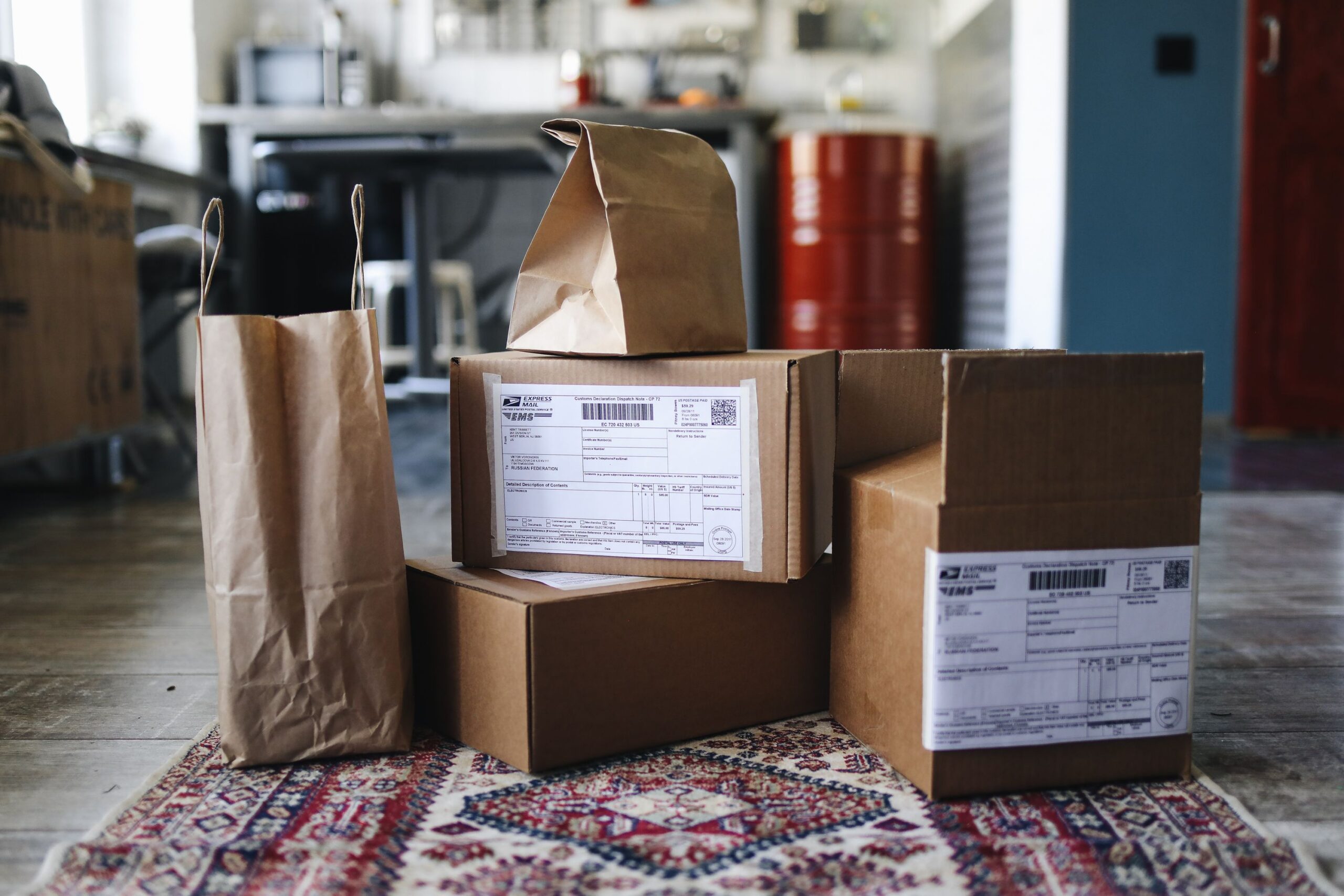
Step 3: Run simple in-house stress tests
You don’t need a lab—just a consistent way to compare.
For boxes:
- Dimensional check: Measure internal length/width/height and compare to the spec. Note any deltas larger than a few millimetres.
- Stack test: Stack a few loaded boxes (or fill with weight roughly equal to your products) and leave them overnight. Look for crushing, warping, or tape failure.
- Drop test: From ~waist height, drop a loaded, fully taped box on a corner and a flat side. Inspect corners and seams.
For mailers and envelopes:
- Fit test: Pack representative orders. Check that closures seal securely without tearing and that contents don’t shift.
- Edge test: Bend and flex the edges to see if they split under moderate force.
Document what you see with photos and short notes. This becomes your baseline when you compare a new supplier to your existing one.
Step 4: Stage your first real purchase
After samples, your first “real” order should still be controlled:
- Limit it to 1–2 high-usage SKUs.
- Order enough to cover maybe 2–4 weeks of volume, not an entire season.
- As soon as the shipment arrives, repeat your QA checks on random units from different bundles.
If everything matches spec and performance in real shipping over that period, then—and only then—consider scaling up for advance buying.
Protecting yourself on payment, documentation, and quality issues
Trust isn’t only about product; it’s about how you pay and what’s on paper when something goes wrong.
Safer ways to pay a new vendor
For first-time or unproven vendors:
- Prefer traceable, buyer-aware methods like credit cards or major online payment services.
- Avoid paying 100% up front by wire transfer if you can’t independently verify the business.
- For custom work where deposits are standard, try to structure payments in stages: e.g., deposit on order, balance after sample approval or before shipment.
None of these methods eliminate risk, but they make it easier to contest a charge or demonstrate you acted in good faith.
Put the critical details in writing
Whether you’re buying from a Canadian wholesaler or an overseas printer, lock in the essentials via quote or purchase order:
- Exact product descriptions and SKUs.
- Dimensions and key specs (board grade or ECT, flute, material type, colour codes).
- Tolerances you care about (e.g., “+/- 2 mm” on size).
- Quantities per SKU and total quantity.
- Lead time and agreed delivery window.
Email confirmations and PDFs are fine. The goal is to have a shared reference so “out of spec” is something you can point to, not argue about.
Run QA on arrival and escalate with evidence
When your packaging shipment arrives:
- Inspect outer cartons/pallets for damage before signing carrier paperwork.
- Open a few bundles from different spots on the pallet.
- Re-check dimensions, board feel, print quality, and counts.
- Take photos of any defects, including a ruler or scale where relevant.
If there’s a problem, send a concise email with:
- Order number and date.
- Specific SKUs affected and estimated quantities.
- Photos and a short description of the defect.
Many wholesalers and custom firms will offer credits or replacements for clear, well-documented issues. Cross-border vendors may be slower or more restrictive, so catching problems on the first shipment matters even more.
Choosing between Canadian wholesalers, logistics brands, custom firms, and marketplaces
You have several channel types available in Canada. None is inherently “safe” or “unsafe,” but each has its own trust mechanics.
Here’s a high-level comparison of how they usually work:
| Channel type | Typical strengths for trust | Common tradeoffs |
|---|---|---|
| Canadian wholesalers/packaging firms | Wide SKU coverage; business accounts; clear shipping/return policies; sometimes showrooms and field reps | Minimums for best pricing; less flashy branding; may require lead time for custom work |
| Office-supply & logistics brands | Standardized SKUs; retail-style policies; easy to walk in (e.g., Staples, The UPS Store) | Often higher per-unit price; limited customization and fewer bulk discounts |
| Custom packaging companies | Detailed specs; artwork proofs; contracts and MOQs; consistent branding | Longer lead times; more formal change/cancellation rules; may require design fees |
| Global online marketplaces | Huge variety; access to overseas factories; potential cost savings on large runs | Higher variance in quality and lead times; cross-border logistics and customs; per-seller policies |
Canadian wholesalers and specialist suppliers Vendors like KeyPak, Acme Shipping Supplies, and WR Display & Packaging illustrate what “normal” looks like domestically: broad catalogs of boxes, mailers, tape, and equipment; business accounts; and shipping promises such as next-day delivery in certain regions. Some promote walk-in showrooms or local pickup.
Trust here is relationship-based. You can call someone, ask for suggestions, or request a rep visit for a packing-area review. For advance supplies, these are often the best candidates for your baseline SKUs.
Office-supply chains and logistics brands Chains like Staples and The UPS Store stock standard moving boxes, mailers, bubble, and tape. Trust is built on brand familiarity and straightforward retail policies—if you buy the wrong size, you may be able to return unopened packs.
You usually pay more per unit than with a wholesaler, and customization options are limited, but these stores can be a reliable fallback when your main supplier is delayed or out of stock.
Custom packaging companies Specialized firms and full-service suppliers use a more formal process: quotes, proofs, MOQs, and sometimes contracts. They’re often the best route for branded mailer boxes or eco-focused packaging because they’re willing to define specs in detail and stick to them.
You trade spontaneity for control—lead times can be longer, and changes mid-run can be expensive—but for advance, branded packaging, this clarity is a plus.
Online marketplaces, including cross-border Global marketplaces host many independent sellers of boxes, bags, and other packaging materials. Their trust model is different: instead of relying on one company’s reputation, you rely on seller-by-seller ratings, product descriptions, and platform tools for messaging and payments.
This introduces more variability—in quality, communication, and shipping times—so you need stricter vetting and smaller test orders compared with a domestic wholesaler.
Using cross-border marketplaces like DHgate cautiously for packaging
Cross-border marketplaces can be useful for certain packaging needs, but they’re rarely a safe first choice for the bulk of your advance supplies.
DHgate, for example, is an online marketplace that connects buyers with many independent suppliers, including those offering custom gift boxes, packaging boxes, and packaging bags. Around 2026-09-14, DHgate’s listings included products like:
- “Packaging box, plush toy packaging box, doll box, gift box. Customize.” (Custom Packaging category).
- “Gift box; packaging box; storage box; candy box; souvenir. Customize.” (Custom Packaging).
- Factory-customized industrial ton bags in a Packaging Bags category.
Those listings show the variety available, but many packaging items on DHgate have zero or very few public reviews. That doesn’t automatically mean the supplier is bad—it means you have less public evidence to go on, so the risk band is wider.
If you decide to experiment with a marketplace like DHgate for packaging:
- Treat it as an experiment channel, not your backbone. Use it for specialty boxes, trial designs, or secondary SKUs, not your only 8x8x8 shipper.
- Vet sellers carefully. Read whatever ratings and reviews exist, study photos and spec text, and message the seller with specific questions about board type, thickness, and printing.
You’ll find a deeper, DHgate-specific evaluation process in our guide on how to evaluate packaging vendors on DHgate (linked where relevant on DHgateWiki). The key point here: for trust and continuity, online marketplaces work best as supplements to proven Canadian sources until a specific overseas supplier proves itself over multiple cycles.
Designing a low-risk sourcing mix for your advance shipping supplies
The goal isn’t to find a perfect vendor; it’s to build a system where a single failure doesn’t derail your season.
A practical approach for Canadian sellers:
- Pick a primary domestic baseline supplier.
Choose a Canadian wholesaler or specialist with clear specs, responsive support, and predictable lead times. Use them for your highest-volume, most mission-critical SKUs: main box sizes, standard mailers, core tapes.
- Keep at least one domestic backup.
This might be another wholesaler, a regional packaging firm, or a chain like Staples. Test a few SKUs so you can switch quickly if your primary has a stockout or quality issue.
- Ring-fence experiments.
Use separate SKUs or limited volumes for:
- Branded or custom packaging from a custom firm or marketplace seller.
- Eco-alternative fillers or new mailer types.
- Cross-border packaging orders (including DHgate and similar sites).
- Set simple re-order rules.
For example:
- A new supplier must deliver two consistent, on-spec shipments before you expand their share of your volume.
- If defect rates or QA issues rise, new orders from that vendor are paused until resolved.
- Log issues by SKU and vendor.
Keep a basic spreadsheet: vendor, SKU, date received, issues found, and resolution. Over time, patterns emerge—some vendors excel at custom print but struggle with lead times, others are rock-solid on plain cartons.
By mixing a proven Canadian baseline with carefully controlled experiments—domestic and cross-border—you get the best of both worlds: stable operations for your day-to-day shipping and room to chase better pricing or more interesting packaging without putting your business at risk.