
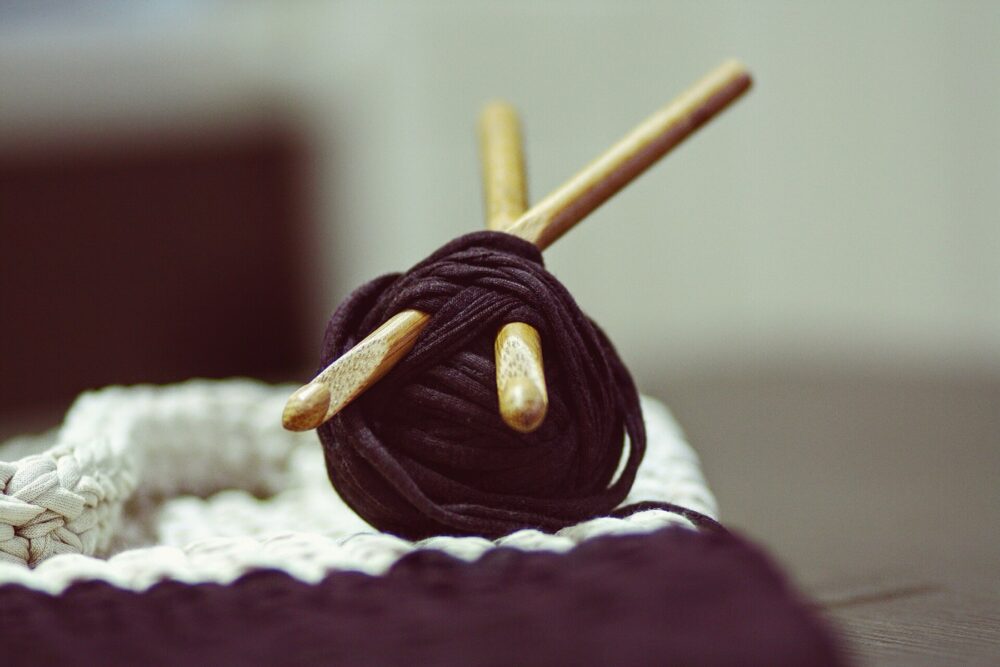
For a US craft or ecommerce business, wholesale yarn and knitting supplies largely flow through mills and distributors in Asia and Europe, then into marketplaces and craft wholesalers. DHgate, a China-based B2B marketplace that connects manufacturers and suppliers with global buyers and hosts millions of product listings and hundreds of thousands of suppliers, can be one route to source yarn, needles, hooks, and accessories in small or bulk lots. It only pays off, though, if you stay on top of color-lot consistency, fiber labeling, and total landed cost, and compare it honestly with domestic craft wholesalers and other online marketplaces.
Yarn is a continuous strand of interlocked fibers used for knitting, crochet, and other textile crafts, typically made from wool, cotton, acrylic, and other fibers.Source For resale, your margins depend as much on predictable quality and branding as on unit price. That’s what makes cross‑border sourcing both attractive and risky: per-skein costs can drop sharply, but you’re further away from the mill, the dye house, and the QC process.
How Wholesale Yarn and Knitting Supplies Are Made and Sold
At the mill level, yarn is spun from raw fiber (natural or synthetic), plied to achieve strength and loft, then dyed and wound into cones, skeins, or balls. Large mills in China, India, Turkey, and other textile hubs handle much of the global volume, especially for acrylics and commodity wool blends.
For wholesale buyers, yarn usually moves through these layers:
- Spinner / mill: Produces undyed or dyed yarn, often selling full cones or pallets.
- Converter / brand owner: Specifies fiber blends, colors, and ball-band labeling, and commissions production under their brand.
- Distributors and wholesalers: Buy branded lines and break them into reseller-friendly case packs.
- Marketplaces and craft retailers: Offer mixed assortments, from commodity acrylic to hand-dyed luxury bases.
Domestic craft platforms like LoveCrafts and large chains such as Michaels’ yarn department specialize in finished, branded yarn with clear labeling and established gauge. You pay more per skein, but you also get brand recognition and high confidence that a “Color 1234” red today will match a reorder.
Cross‑border B2B marketplaces such as DHgate and Alibaba tend to aggregate more upstream or semi‑finished products: unbranded yarn on cones, private‑label-ready skeins, and generic knitting tools. You gain access to factory‑level pricing and customization, but you’re responsible for verifying fiber content, safety claims, and consistency.
Choosing and Communicating With Cross‑Border Yarn and Tool Suppliers
Quality failures in yarn and knitting tools show up fast in bad reviews: knots in every skein, mislabeled fiber content, colors that bleed, or circular needles that kink and snap. You need supplier checks tailored to how knitters actually use your products.
On marketplaces like DHgate, you can narrow your search with filters and then evaluate suppliers using ratings, reviews, and transaction history, as its own editorial guidance suggests. That’s the generic part. The craft-specific part is what you ask and sample:
For yarn suppliers:
- Color lots: Ask whether they can hold a color across multiple production runs and how they label dye lots. Request photos of ball bands and cone labels and sample multiple skeins from the same lot.
- Fiber content & feel: Get written fiber composition and request physical samples of each base. Compare the sample to your market: a “soft” acrylic that feels plasticky will be hard to sell against familiar brands.
- Gauge and twist: Ask for yarn weight (DK, worsted, etc.) and recommended needle sizes, then swatch the samples yourself to confirm the fabric matches expectations.
- Defect rate: Inquire how they manage knots, thick/thin spots, and shedding. Your sample order is your reality check.
For knitting tools (needles, hooks, accessories):
- Material and finish: Request details and photos showing tips and joins; cheap metal needles can have burrs that split yarn.
- Size accuracy: Ask how sizes are marked and whether they follow US or metric sizing standards consistently.
- Packaging: Confirm whether items arrive retail-ready (carded, bagged, barcoded) or in bulk, which affects your labor costs.
Across DHgate and other marketplaces, take advantage of messaging tools to ask focused, craft-specific questions. Keep communication written and organized: one thread for yarn bases, another for tools, with your specs and photos. Treat early exchanges as a filter—suppliers who answer clearly with photos, production timelines, and realistic MOQs are worth shortlisting.
For DHgate in particular, its own editorial tips recommend using filters, checking supplier ratings and transaction history, and requesting samples before large orders. That aligns neatly with how you’d approach color lots and fiber content: always test a small batch before you commit.
Cost, MOQ, Shipping and Channel Choices: Where DHgate Fits
Many DHgate listings are known for relatively low MOQs; some suppliers allow buyers to purchase in very small lots rather than by the pallet. That makes DHgate attractive if you’re:
- An Etsy seller testing a few private‑label yarn colors.
- A small online shop trialing budget-friendly needle sets.
- A brick‑and‑mortar craft store experimenting with value lines alongside premium brands.
On top of that, many DHgate listings use tiered pricing where unit cost decreases as order volume increases. You can start with a small, higher‑priced test order, then use lower per-unit prices if you scale up a successful line.
Here’s how DHgate compares conceptually with other channels for yarn and knitting supplies:
| Channel | Typical MOQ & Flexibility (editorial judgment) | Product focus for yarn/tools | Best fit scenarios for a US buyer |
|---|---|---|---|
| DHgate (China B2B marketplace) | Often low MOQs; some listings allow very small test orders; tiered pricing common | Mix of unbranded yarn, generic tools, some branded craft items | Testing new low‑cost lines, private label, budget tools |
| Large B2B marketplaces (e.g., Alibaba) | MOQs often higher; more factory‑scale negotiations | More direct-from-mill yarn, OEM, and production runs | Scaling successful lines to larger volumes |
| Domestic craft wholesalers / distributors | Higher MOQs per color, but predictable reorders | Branded yarn with strong QC; recognized tool brands | Shops focused on brand recognition and reliability |
| Craft retail platforms (LoveCrafts, Michaels etc.) | Retail-level quantities (no true wholesale tiers) | Broad branded assortment, consumer-focused packaging | Small resellers reselling familiar brands, limited scale |
This table reflects editorial judgment plus publicly visible platform focus (e.g., LoveCrafts’ knitting hub). MOQs and specific terms vary by supplier.
A simple sampling checklist for DHgate and similar marketplaces
Use this compact sequence whenever you consider cross‑border sourcing:
- Shortlist 3-5 suppliers for each product type (yarn base, needle set) based on ratings, transaction history, and clear product descriptions.
- Request samples: 2-4 skeins per color lot and at least one full set of tools. Pay close attention to feel, gauge, and hardware finish.
- Negotiate tiered pricing for your target volume only after you’re satisfied on quality and color/gauge consistency.
Scenario: Etsy yarn seller, DHgate vs. US wholesale
Imagine you’re an Etsy seller currently buying branded worsted-weight yarn from a US wholesaler. Your per-skein cost is higher, but you lean on brand recognition and color reliability.
If you test DHgate, you might instead order unbranded yarn in a similar weight with a very low MOQ. You’d:
- Request samples in your top three colors.
- Swatch each sample and wash/block to test pilling and bleeding.
- Design your own ball-band and branding.
If the samples pass, your landed cost per skein might drop, but you now own the risk of color-lot mismatches, fiber claims, and marketing. If your Etsy audience is price-sensitive and open to lesser-known brands, DHgate’s low MOQ and tiered pricing may be worth the experiment. If your buyers expect specific mainstream yarn brands, a domestic distributor is probably the safer core channel.
Making DHgate Part of a Broader Sourcing Strategy
DHgate works best as one layer in your sourcing plan, not the only layer. Use it for:
- Private‑label yarn lines where you can control branding and don’t need a global name.
- Budget-friendly knitting kits and accessories that complement higher-end tools.
- Small, low-risk test runs before committing to larger factory orders elsewhere.
At the same time, keep domestic craft wholesalers and established platforms like LoveCrafts in the mix for branded yarn and tools that knitters recognize and trust. That balance—cheap test runs via a marketplace, stable branded lines via distributors—is usually more resilient than betting everything on a single channel.
If you decide DHgate is worth exploring for yarn and knitting supplies, you can adapt general marketplace research from guides like finding wholesale suppliers on DHgate, finding DHgate suppliers, and choosing a DHgate wholesale supplier to your craft-specific checks on color lots, fiber content, and tool usability.