
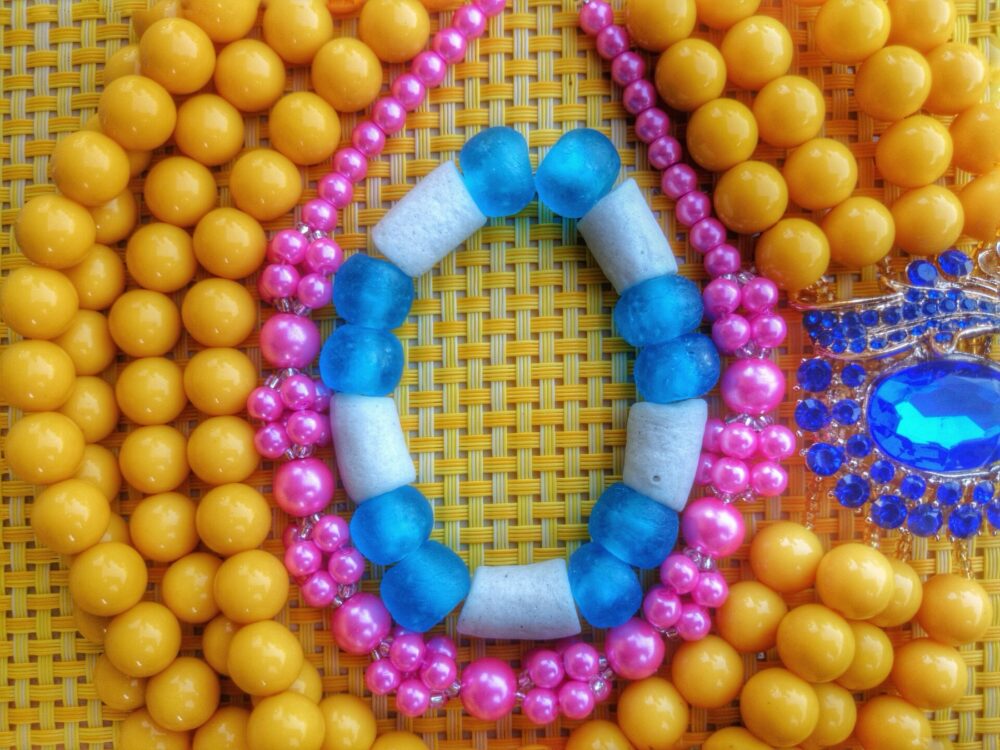
Jewelry beads and supplies are a classic cross-border category: huge variety, uneven quality, and real price gaps between domestic and overseas sources. DHgate can be useful here because it connects U.S. buyers to thousands of China-based bead and findings suppliers with generally flexible order sizes, but you still have to vet each seller, request samples, and compare your landed cost against alternatives like Alibaba and U.S wholesalers before committing.
If you run an Etsy shop or a small jewelry brand, your decision is basically this: do you trade higher MOQs and longer lead times for lower per-unit cost and more variety, or pay more per piece for faster, simpler domestic sourcing? The rest of this guide helps you make that call.
How Wholesale Jewelry Beads and Supplies Are Made and Distributed
Beads and jewelry components are produced in multiple regions, often with different strengths:
- Glass, crystal and basic metal beads: heavily produced in China and other Asian manufacturing hubs.
- Gemstone strands: a mix of cutting centers (India, China) and country-of-origin miners.
- Findings (clasps, crimps, ear wires), chains, and plated components: mostly mass-produced in factories, again with strong concentration in China.
A DHgate editorial overview notes that the marketplace lists over two million jewelry pieces, including pearls, beads and jewelry packaging, which gives you a sense of the SKU depth for components rather than finished pieces alone.https://www.dhgate.com/blog/?p=5236 DHgate itself is a China-based B2B marketplace, not a manufacturer; it hosts millions of products from hundreds of thousands of suppliers and lets buyers worldwide source directly from those sellers.https://www.dhgate.com/blog/?p=12297
On the U.S. side, bead-focused wholesalers and retailers such as Artbeads and Continental Beads aggregate components from multiple manufacturers and sell them in smaller lots. These businesses often emphasize branded crystal, Japanese seed beads, and curated findings, with clearer specs and faster shipping than most cross-border options.
In practice, small brands mix both worlds: core staples from domestic wholesalers, and trend-driven or low-cost items (like bulk glass beads or fashion findings) from cross-border marketplaces.
Assessing Bead Suppliers on DHgate and Other Marketplaces
On DHgate, each bead or findings listing belongs to a specific seller. Marketplace guidance suggests a few concrete steps when you’re sourcing:
- Use filters and search tools to narrow down to the bead material, size range, and color you actually need. This cuts through the huge SKU volume.https://www.dhgate.com/blog/how-to-start-an-ecommerce-business-on-dhgate-a-comprehensive-guide/
- Evaluate suppliers by their ratings, review content, and transaction history. Long-running stores with many completed orders in jewelry are usually safer than brand-new accounts.
- Request samples before bulk orders; DHgate’s own ecommerce-sourcing guide explicitly calls out sampling as a way to test quality and confirm specs before committing.https://www.dhgate.com/blog/how-to-start-an-ecommerce-business-on-dhgate-a-comprehensive-guide/
- Pay attention to badges described in DHgate’s wholesale positioning article: “top merchant” indicates higher-volume sales and strong customer feedback; “China brand” is used for sellers focused on Chinese-made goods.https://www.dhgate.com/blog/?p=13293
To make this more concrete for beads:
Micro-checklist for a bead supplier on DHgate or Alibaba
- Photos: Are there close-ups of the beads and findings, including holes, plating, and any printed patterns? Blurry or stock-photo-only listings are a red flag.
- Variance risk: Do reviews mention color differences between batches, flaking plating, or miscounted strands? That matters a lot for jewelry brands.
- Material claims: For “gemstone” or “crystal,” look for specific names (e.g., amethyst, Czech glass) rather than vague terms like “stone” or “diamond style.”
- Lot size: Are beads sold by strand, gram, piece, or mixed pack? Make sure that unit works with your pattern counts.
- Communication: Ask the seller to confirm hole size, strand length, and plating type in writing. Clear answers are a good sign; evasive replies suggest you should move on.
On Alibaba, where many listings come directly from manufacturers, you’ll see more emphasis on custom designs and branded production. A jewelry-focused Alibaba seller blog explains that MOQs for custom pieces often start higher, with low MOQ sometimes quoted in the 20-30 pieces per SKU range, while many established factories require 100+ pieces for custom designs because of production efficiency and setup costs.https://seller.alibaba.com That’s perfect for a brand ordering custom charms or logo tags, but less ideal if you just want assorted glass beads to test a new line.
MOQ, Pricing, and Channel Choice for Jewelry Beads: Where DHgate Fits
Two dynamics drive your bead sourcing economics: minimum order quantity (MOQ) and tiered pricing.
Alibaba, by contrast, tends to lean into higher MOQs for custom jewelry manufacturing. The seller blog on jewelry MOQs highlights the trade-off: factories push larger runs to keep per-unit costs down and their production lines efficient, while buyers want accessibility with smaller orders.https://seller.alibaba.com If you’re ordering custom-branded jewelry components, that model can be cost-effective as your brand scales.
Domestic bead wholesalers like Artbeads or Bead3 typically offer very low practical MOQs (often single strands or bags) but at higher per-unit prices, reflecting both their own sourcing costs and U.S. warehousing.
Here’s how those channels broadly stack up for a small U.S. jewelry brand:
| Channel | Typical MOQ Feel (editorial) | Best Use Case (editorial) |
|---|---|---|
| DHgate | Low to moderate; seller-set, often small packs with bulk discounts | Testing new bead styles from overseas, building variety without huge commitments |
| Alibaba (jewelry manufacturers) | Moderate to high, especially for custom SKUs | Custom charms, branded components, scaled production runs |
| U.S. bead wholesalers | Very low per SKU, but higher unit cost | Fast replenishment, quality-critical or branded components |
Landed cost: whichever channel you choose, your real math is:
Product cost + freight + duties/taxes + packaging + your handling time
Scenario: Small U.S. Jewelry Brand Testing a New Bead Line
Imagine you sell minimalist earrings on Etsy and want to add beaded bracelets.
- You buy 5-10 strands of mid-range glass beads and a starter pack of findings from a U.S. supplier like Artbeads to perfect your designs and photos. Low MOQ, higher cost, but fast delivery.
- Once designs are stable and you see sales potential, you search DHgate for similar bead types and findings, filtering by material and size. You shortlist two suppliers with strong ratings and clear photos, ask questions about hole size and plating, and order sample lots.
- You compare samples against your domestic beads, including color consistency, plating durability (simple rub test), and actual count per lot.
- If DHgate quality matches and landed cost is significantly lower, you place a larger order with the best supplier, knowing you’ll keep domestic wholesalers as an emergency backup when you run low.
DHgate fits this scenario because of its flexible lot sizes and tiered pricing; Alibaba would be more relevant once you want a custom logo charm in large volumes.
Risk Callout: Cross-Border Bead Sourcing
Cross-border bead sourcing can work very well for cost and variety, but you should treat it as higher-risk than buying domestically:
- Quality drift: small issues like slightly different shades or inconsistent plating can ruin a collection’s look.
- Spec mismatches: hole size or strand length errors are common and can make components unusable.
- Lead time variability: overseas shipments add more uncertainty to your launch calendar.
Mitigation tactics that map directly to DHgate’s own buyer guidance include using platform filters to avoid the lowest-quality listings, checking seller history carefully, and ordering samples before bulk.https://www.dhgate.com/blog/how-to-start-an-ecommerce-business-on-dhgate-a-comprehensive-guide/ None of this replaces your own QC process, but it does lower the odds that a cheap bead becomes an expensive mistake.
Before choosing a DHgate supplier, use Find wholesale suppliers on DHgate.
If you decide DHgate is the right channel, you can go deeper on marketplace-specific sourcing tactics in pieces like Find DHgate suppliers and Choose a DHgate wholesale supplier, which focus on listing-level evidence and supplier behavior.