
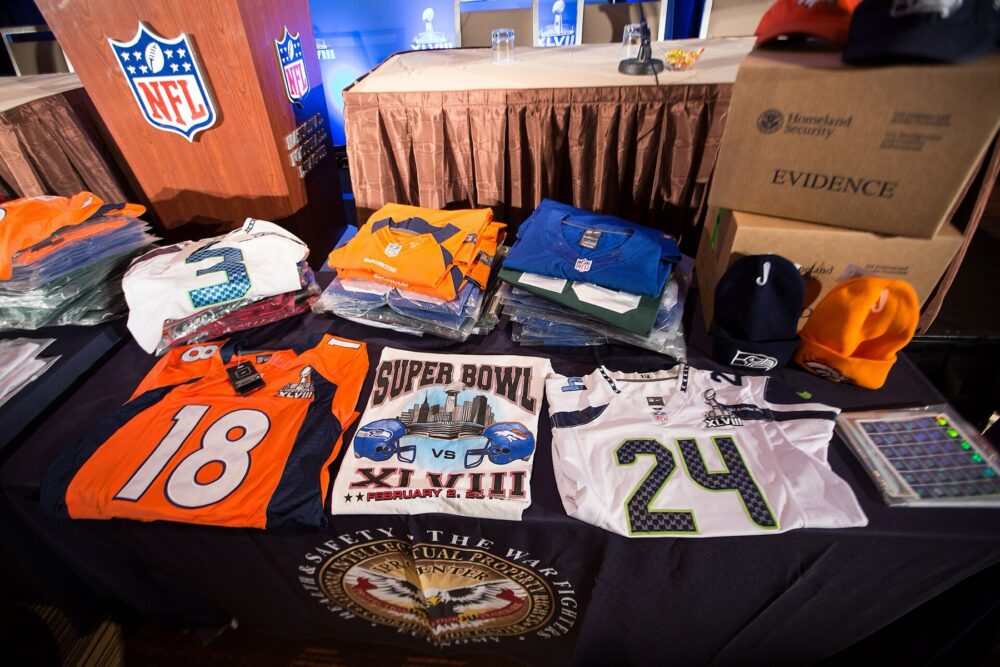
NFL merchandise wholesale means buying NFL-branded or NFL-style products in bulk at a discount, then reselling them through your store or online shop. If you want official, logo-bearing gear for a long-term U.S. business, you generally need to go through licensed distributors. Cross-border marketplaces like DHgate sit in a different lane: they’re widely used for low-cost sports jerseys and fanwear, often unlicensed or replica-style, which can fit small, price-sensitive fan shops if you understand the legal and quality risks.
How NFL Merchandise Wholesale Works for Small U.S. Sellers
For licensed NFL goods, the supply chain is fairly structured. The NFL and teams grant licenses to manufacturers and brand partners; those brands then sell through wholesale distributors and closeout houses, which in turn sell to retailers at wholesale prices.
Distributors such as Casey’s Distributing, St. Louis Wholesale, Anatolia Wholesale, and Jenkins Enterprises are examples of U.S. companies offering licensed sports merchandise, including NFL lines. Their catalogs skew toward officially licensed apparel, accessories, and collectibles: think team-logo drinkware, décor, socks, blankets, and some apparel.
For a small U.S. seller, that split matters:
- If you’re building a long-term, brand-safe business, licensed distributors are usually the foundation.
- If you’re testing low-priced NFL-style apparel for a short-term pop-up or strictly generic designs, cross-border marketplaces can be a flexible add-on, but they require more diligence.
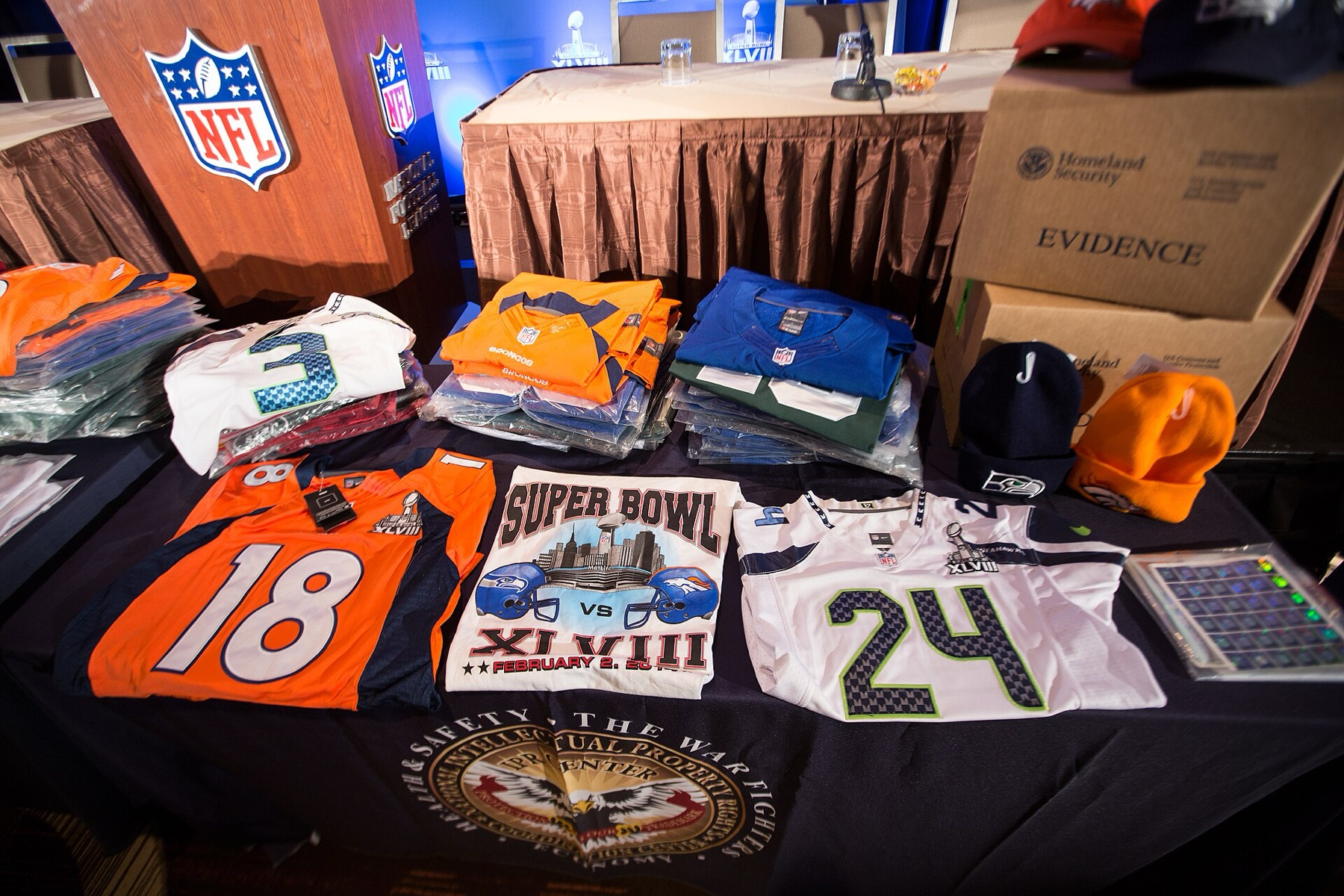
This is also where IP risk enters. Using team logos or league trademarks without a proper license can expose you to enforcement—even if you bought the stock in good faith. Counterfeit merchandise is a known issue in sports retail.
Choosing Suppliers: Licensed U.S. Distributors vs. Cross-Border Marketplaces
You’re really choosing between two models, each with different product focus and risk profile:
| Sourcing path | Typical products and focus | Fit for small U.S. sellers | Key risks or limits |
|---|---|---|---|
| Licensed U.S. distributors (e.g., Casey’s, St. Louis Wholesale, Anatolia) | Official NFL apparel, accessories, home décor, and collectibles from licensed brands | Strong choice for permanent, brand-sensitive operations that need predictable quality and clear licensing | Higher unit costs, larger case packs or MOQs, less flexibility on experimental low-price lines |
| Closeout / liquidator wholesalers | Mix of licensed overstock, discontinued items, and generic sports goods | Good for bargain-hunting and filling gaps in a licensed assortment at lower cost | Inconsistent availability, changing assortments, and extra care needed to confirm licensing status on each item |
| Cross-border marketplaces (e.g., Cross-border multi-seller, Alibaba) | Broad mix of sports jerseys, generic fanwear, and NFL-style designs from many sellers | Useful for testing apparel variety, colors, and custom name/number jerseys in small batches | Authenticity uncertainty, IP exposure on team logos, variable quality, and added import and compliance complexity |
Domestic licensed wholesalers usually require a business account, tax ID, and may have case-pack minimums. Their signal of trust is the licensing and brand list: on Casey’s you’ll see major licensed brands like WinCraft and Riddell listed as wholesale partners, which indicates a focus on officially licensed sports merchandise. On Anatolia Wholesale you’ll see “licensed sports products” positioned as a core offering.
Cross-border marketplaces are more open: you create an account and can search directly for jerseys or fan gear. Verification is more manual and listing-by-listing. Instead of looking for “licensed” badges, you’re weighing seller history and product evidence.
A practical evaluation approach:
- Licensing/IP: For anything showing NFL team logos, assume you need either a clearly licensed source or legal advice. If a marketplace seller can’t document licensing, that stock is a high-risk bet for U.S. resale.
- Product focus: U.S. wholesalers shine for branded accessories and collectibles. Marketplaces shine for apparel variety, colors, and custom name/number jerseys. Match this to your assortment plan.
- Communication: With U.S. distributors, terms and product details are usually clear on the site or via reps. With cross-border suppliers, factor in time zones and language differences and insist on written clarity for materials, print methods, and packaging.
- Scenario fit: A permanent “Team Shop” in a stadium should be built almost entirely on licensed channels. A seasonal online fan shop testing price-sensitive replica jerseys might consider cross-border marketplaces, but with tight risk controls.
Using DHgate to Source NFL-Style Jerseys and Fan Gear
If you decide DHgate is worth exploring for NFL-style products, approach it as a step-by-step sourcing process. The platform is a China-based global B2B marketplace with millions of product listings and a large number of suppliers, and it is frequently used for wholesale jerseys and sportswear according to DHgate’s own editorial blog. That breadth can be useful, but it also means quality and compliance vary by seller.
- Define what you can legally sell
For U.S. resale, the safest DHgate use case is generic football apparel: team-color hoodies, “football” graphic tees, or custom-name jerseys that don’t use NFL trademarks. Any listing with official team logos or league marks should be considered high risk unless you’ve been advised otherwise by qualified counsel.
- Search specifically, then narrow
Use targeted terms: “football jersey,” “American football shirt,” “custom name number jersey,” or “sports fan hoodies” instead of just “NFL jersey.” This widens your options beyond potentially infringing listings and surfaces more generic styles.
- Evaluate seller evidence before thinking about price
- Number of completed orders for that item (higher counts suggest the seller is at least active).
- Buyer reviews with photos, focusing on stitching, print quality, and color accuracy.
- Clear material descriptions (polyester mesh vs. cotton fleece, etc.).
- Uploaded product photos that look like the actual garment, not lifted marketing images.
If the listing doesn’t give you enough to judge quality, message the seller. Ask for close-up shots of logos/graphics, inside seams, and size charts. This kind of direct communication is also recommended in DHgate’s own jersey-buying blog guidance.
- Work out MOQs, samples, and quotes seller by seller
DHgate’s blog emphasizes that buyers can often order jerseys in very small quantities and then get lower per-unit pricing for bulk quantities. In practice, each seller chooses their own minimums, and you negotiate directly with them. A common playbook for a small U.S. retailer:
- Start with a handful of sample jerseys from two or three different sellers to compare fabric, sizing, and print quality.
- After receiving samples, place a first test order at a modest wholesale quantity—enough to validate a full batch but not enough to sink you if the quality disappoints.
- Negotiate unit price at specific break points (such as asking what pricing looks like at 50, 100, or 200 pieces) rather than asking for a generic “best price.”
- Calculate landed cost, not just unit price
For each DHgate supplier on your shortlist, build a simple landed-cost sheet:
- Quoted unit price at your target quantity.
- Estimated import duties and taxes for apparel (consult your customs broker or online duty tools).
Comparing landed cost across domestic distributors and DHgate sellers will show whether the apparent savings on unit price survive real-world freight and duty.
- Test repeat-order reliability before you fully commit
Jerseys and fan apparel are repeat-purchase businesses: you need consistent sizing and print quality over time. After your first DHgate bulk order:
- Measure a few pieces against the size chart and your samples.
- Check that colors and prints are consistent across the batch.
- If you re-order, verify that new stock matches previous deliveries; some factories change materials quietly.
If consistency breaks down, switch suppliers early rather than after your fifth order.
For seller discovery and vetting on DHgate specifically, you can layer on broader DHgate sourcing playbooks like finding wholesale suppliers on DHgate, how to find DHgate suppliers, and how to choose a DHgate wholesale supplier. Use those general frameworks, but keep your filter tight around IP-safe, generic football gear if you’re selling into the U.S.
For a permanent NFL-focused store with brand exposure and potential league scrutiny, your safer play is to prioritize licensed domestic distributors like Casey’s Distributing, St. Louis Wholesale, or Anatolia Wholesale and treat DHgate only as a source of generic, non-branded football fashion. For a small online fan shop experimenting with low-cost jerseys, DHgate can be a testbed—if you treat IP compliance and quality checks as central parts of the sourcing process, not afterthoughts.