
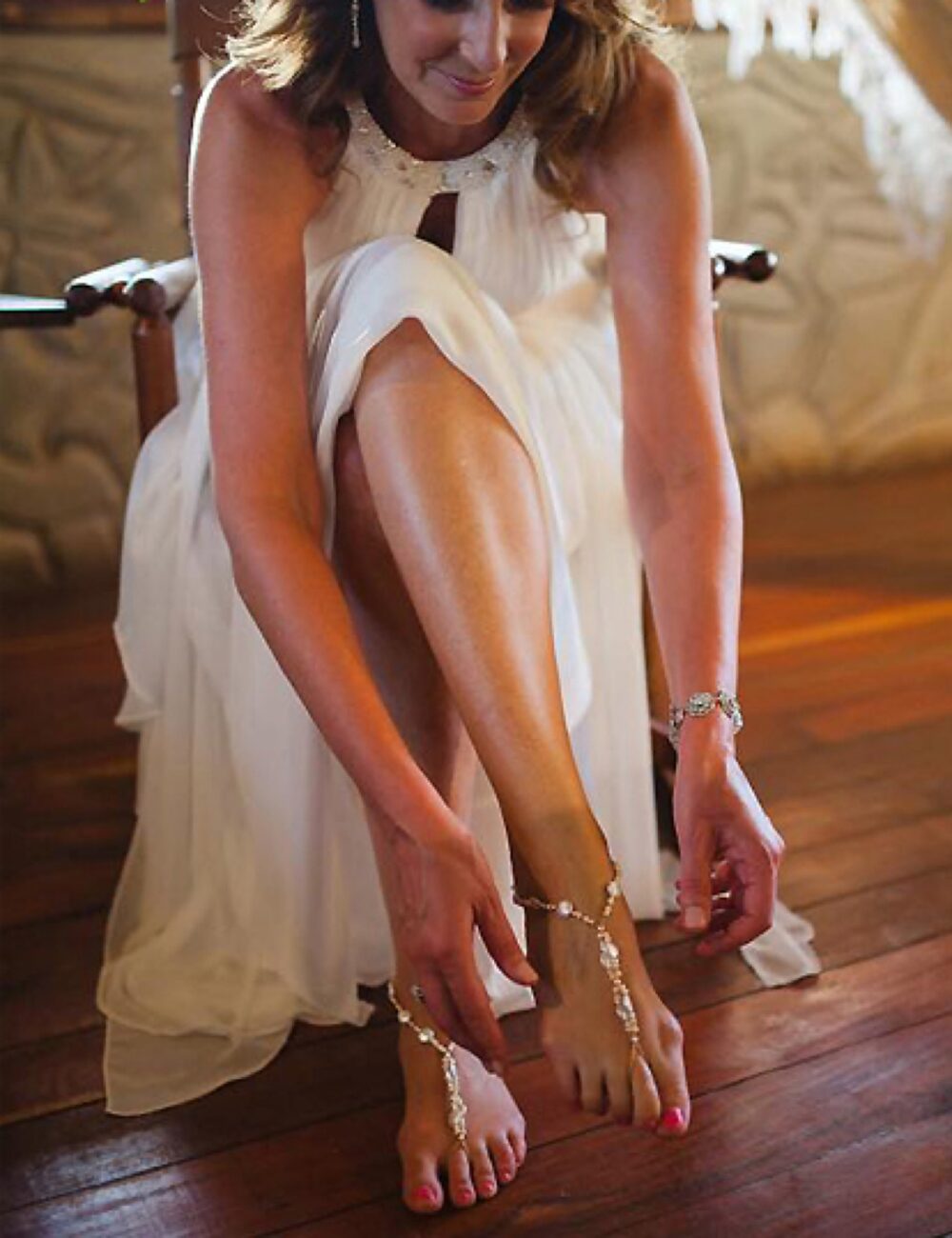
You’ll find the most unique foot jewelry designs on small boutiques and artisan marketplaces, while big marketplaces and B2B platforms cover the cheaper, high-volume side. For everyday wear or weddings, Etsy and specialist bridal/foot jewelry shops typically have barefoot sandals, bridal foot chains, and detailed anklets in standout designs. Cross-border platforms such as DHgate are better used when you want low-cost anklets or toe accessories in bulk and you’re willing to vet individual sellers and finishes carefully rather than expecting boutique-level craftsmanship.
For US buyers and small ecommerce shops, the real decision is less “which site?” and more “which channel matches how and where the piece will be worn, and how many you need?” The sections below walk through the main product types, how they behave on a moving foot, and where each style is easiest to source online.
What Counts as Foot Jewelry and Why People Buy It
Foot jewelry is any decorative piece designed specifically for the ankle, foot, or toes. That includes simple chain anklets, stacked toe rings, barefoot sandals that drape over the top of the foot, and more elaborate foot chains that connect an ankle bracelet to a toe loop.
People wear these for a few distinct situations:
- Beach and resort outfits. Lightweight anklets or rhinestone foot chains that work with sandals or bare feet for summer and vacations.
- Bridal and formal looks. Crystal barefoot sandals and bridal shoe chains that add sparkle around the ankle and instep, especially for beach weddings or open-toe heels.
- Festivals and performance. Layered chains, charms, or themed designs that stand out from a distance and can handle a lot of movement.
- Everyday style. Minimal anklets in metal or cord that you can leave on most of the time.
- Resale and small ecommerce. Sellers source sets of anklets and toe rings to bundle with swimwear, sandals, festival outfits, or gift boxes.
Once you know when the piece will be worn and how visible it needs to be, you can match that scenario to a channel: boutique or artisan for one-off drama, fast-fashion and big-box retailers for affordable trend pieces, and bulk-friendly marketplaces for inventory.
Key Foot Jewelry Types and What Differentiates Them
Foot jewelry isn’t a single product; the way a piece hangs and rubs against the skin matters a lot more than it does for a necklace. Here are the main types and how they differ.
Anklets
Anklets are bracelets worn around the ankle, from very fine chains with tiny charms to thick Cuban chains marketed as hip-hop or beach jewelry. They may be:
- Plain metal chains in gold- or silver-tone finishes.
- Stone or crystal embellished, using rhinestones or cubic zirconia for shine.
- Multi-strand or layered, combining chains and beads.
You’ll see everything from beach anklets on fast-fashion sites to more polished pieces on jewelry retailers. A DHgate-linked listing summarized on Wikishopline is a typical example: double-chain heart anklet positioned as a summer foot ornament, aimed at low-cost fashion buyers rather than fine jewelry collectors.
Toe rings and toe accessories
Toe rings are small bands worn around the toes. They can be:
- Adjustable, with an open back to fit different toe sizes.
- Part of a larger foot chain where the ring anchors the design.
Marketplaces and big-box sites often bundle multiple toe rings as sets, making them easy upsells for small ecommerce shops.
Barefoot sandals and foot chains
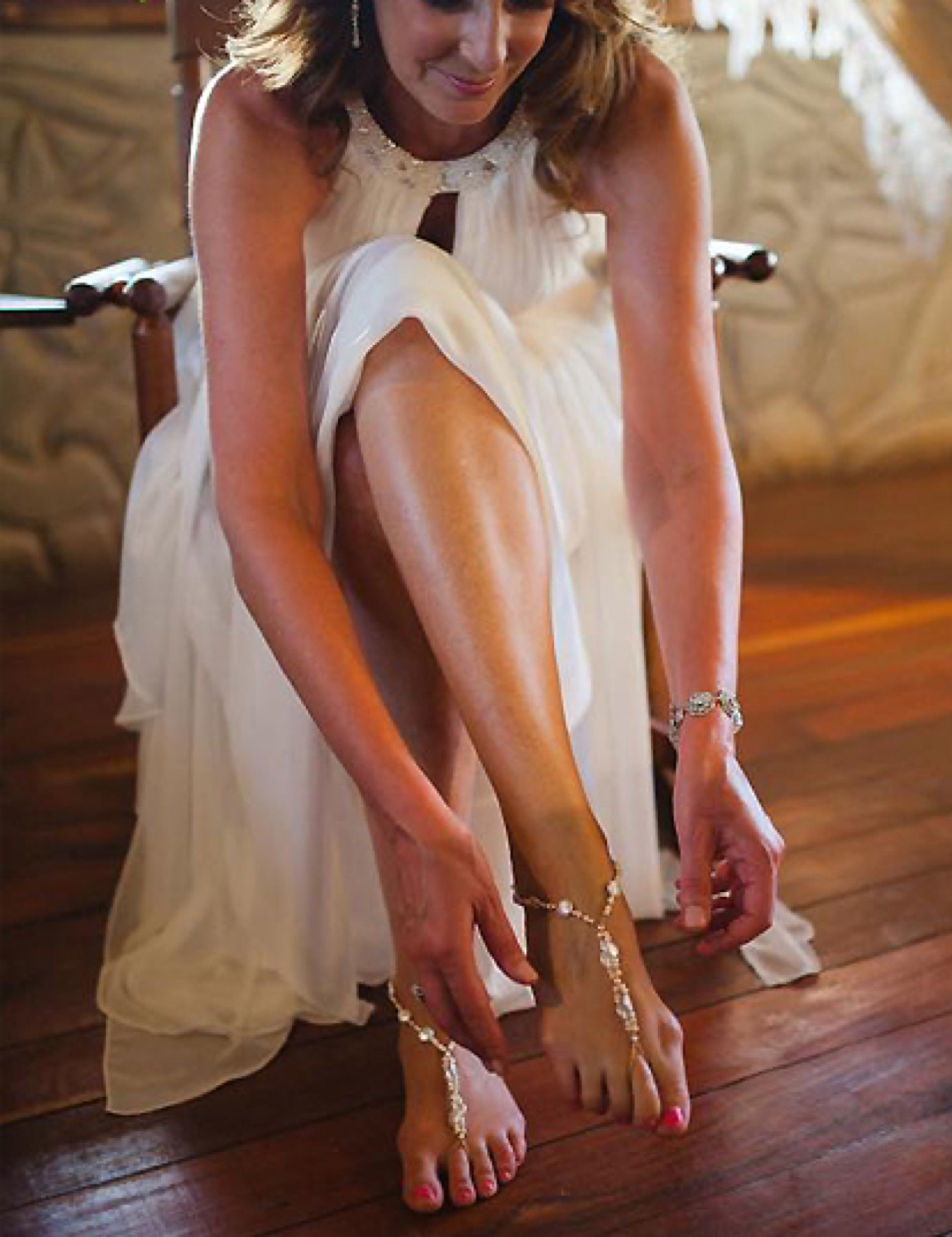
Barefoot sandals sit on the top of the foot and usually connect an ankle loop and a toe loop with decorative chains, beads, or crystals. Foot chains are similar but may be more minimal, focusing on thin chains and a few stones.
Boutiques and artisan marketplaces carry more elaborate versions, especially for weddings. For example, Walmart’s online business portal lists rhinestone foot chains and barefoot sandals made with metal, rhinestones, and cubic zirconia, aimed specifically at beach and summer wedding foot jewelry like this foot chain listing.
Artisan platforms such as Etsy’s “sexy foot sandals” category go further, with handmade barefoot sandals, beaded lace designs, and bridal foot jewelry sets that are positioned as unique or small-run pieces.
Bridal shoe chains and special-occasion pieces
Bridal shoe chains clip or loop onto open-toe heels or sandals, creating an anklet-plus-foot-jewelry effect. Specialist bridal and foot jewelry boutiques, like those selling cubic zirconia bridal shoe chains and crystal foot jewelry, target this niche with more precise metalwork and stone placement than most mass platforms.
If you’re sourcing for a wedding-focused shop, these dedicated boutiques and Etsy stores are usually a better fit than generalized marketplaces, simply because they’re designed around bridal styling and photography.
How to Judge Quality and Pick the Right Online Channel (Including DHgate)
Because foot jewelry sits low on the body and takes more abuse from sand, water, and movement, you need to be pickier about materials, fit, and construction than you might be for earrings.
1. Match materials and build to how the piece will be worn
Think through exposure:
- Beach and pool wear. Look for stainless steel, well-plated base metals, or cord that can tolerate occasional water. Listings like Walmart’s rhinestone and cubic zirconia foot chains show how mass platforms frame these as beach wedding pieces, but they’re still using base metals and glass or CZ stones, not precious metals.
- Everyday anklets. If you expect to wear an anklet daily, prioritize smoother chain links and finishes that won’t snag socks or irritate skin. Avoid very sharp-edged rhinestone settings if the jewelry will sit under tights or close to shoes.
- Bridal/festival statement pieces. Here, comfort for a single event may matter more than long-term durability. Handmade barefoot sandals on Etsy and bridal foot jewelry from specialist sites often use more intricate beading and lace, which looks great on camera but may be best reserved for occasional wear.
For small ecommerce sourcing, decide whether you’re selling low-cost, trend-driven accessories (where base metals and rhinestones are fine) or higher-margin pieces where you’ll need clearer material descriptions and potentially hypoallergenic options.
2. Get sizing and movement right
Foot jewelry interacts with shoes and walking in ways that bracelets don’t:
- Chain length. Anklets should sit comfortably above the ankle bone without digging into the Achilles when you move. Check listings for actual length and extension chain details, not just “one size.”
- Toe loops and rings. For barefoot sandals and foot chains, verify how the toe loop attaches. If you’re buying in bulk, test at least one sample to see whether the loop is comfortable between toes and doesn’t pull tight when the wearer flexes their foot.
- Layering with shoes. Foot chains and bridal shoe chains need to clear sandal straps and heel counters. Boutique listings and bridal-focused sites usually show styled photos with shoes, which can help you judge whether the proportions will work.
3. Choose channels based on volume and uniqueness
Here’s how major online channels line up for foot jewelry, from single-piece buyers to small ecommerce sourcing:
| Channel type | Best for | Typical styles/materials | Trade-off |
|---|---|---|---|
| Artisan marketplaces (e.g., Etsy) | One-off purchases, bridal clients, boutique-level ecommerce | Handmade barefoot sandals, unique anklets, bridal foot chains, often with detailed beading or lace | Higher prices per piece, limited scalability for large bulk orders |
| Specialist bridal/foot jewelry boutiques | Wedding shops, photographers, stylists | Curated bridal foot jewelry, shoe chains, crystal barefoot sandals | Narrower style range but strong visual presentation and event focus |
| Fast-fashion retailers (e.g., YesStyle leg/foot accessories) | Trendy personal buys, small shops targeting younger fast-fashion customers | Fashion anklets and leg accessories, often in base metals with playful charms | Designs can change quickly; quality is geared toward short-term fashion use |
| Big-box and general retailers (e.g., Walmart online) | Affordable beach/wedding sets, upsells in general fashion shops | Rhinestone foot chains, anklet + toe ring sets in base metal and cubic zirconia | Limited uniqueness, but easy to understand materials and target use (beach, summer, weddings) |
| B2B marketplaces from China (DHgate, Alibaba) | Small ecommerce sellers sourcing low-cost anklets and toe accessories in bulk | Large catalog of fashion jewelry, including anklets, using base metals and crystals | Requires careful seller vetting; finishes and consistency vary more than on curated boutique sites |
DHgate, described in its own editorial content as a China-based B2B cross-border marketplace offering large volumes of jewelry at low prices for small businesses, sits in that last category. It becomes relevant when you need quantity and variety of fashion anklets or toe accessories and are prepared to:
- Inspect listing photos closely for chain thickness and stone settings.
- Order a small batch or sample before committing to larger volumes.
- Use filters, reviews, and external research to choose sellers.
If you’re new to DHgate and want a deeper understanding of how the marketplace itself operates, the overview at What DHgate is and how the marketplace works is a good starting point. For actual sourcing decisions, pairing that with guidance in Find trusted sellers on DHgate and the DHgate order-readiness checklist helps you keep your focus on specific jewelry listings rather than assuming all vendors are equal.
4. Decide when DHgate and similar marketplaces are not the right fit
There are scenarios where DHgate or comparable B2B platforms are likely the wrong tool:
- You need a single, highly specific bridal barefoot sandal that matches an exact dress and venue; boutiques and Etsy artisans are more appropriate.
- Your brand promise revolves around precious metals, traceable stones, or local making; many bulk listings are built around fashion pricing and don’t support that story.
In those cases, sourcing from domestic artisan channels or specialist bridal/foot jewelry sites may cost more per piece but reduce the risk of mismatched expectations and inconsistent finishes.
By thinking about where and how the jewelry will be worn, and how many you actually need, you’ll naturally gravitate to the right mix of channels: artisan for standout designs, fashion retailers and big-box sites for quick trend pieces, and bulk-focused marketplaces—DHgate included—for low-cost ankle and toe accessories when quantity matters as much as style.