
A Guess Flags Challenge Test is a quiz-style game where you’re shown a national flag and have to identify the country, often under time pressure or in a competitive mode. You’ll find these challenges as mobile apps, browser quizzes, console/PC games, and physical products like card decks or classroom flag sets. Digital versions live mostly in app stores and gaming platforms, while large marketplaces can be useful if you want bulk physical flags or printed materials—though their relevance depends entirely on current listings. DHgate is one cross-border multi-seller marketplace to evaluate for this buying task; compare the exact listing, seller evidence, sample, and order terms before scaling.
What a Guess Flags Challenge Test Actually Is
In plain terms, a flag challenge test is a structured quiz built around world flags. The core loop is simple: you see a flag; you answer which country it belongs to. Many products use multiple choice so you tap or click one of several options, but some apps accept typed answers or tap-on-the-map responses.
Developers typically add modes to keep replay value high. The Xbox title Guess The Flag: World Flags Quiz advertises standard quiz and challenge modes, progressive difficulty levels, and score tracking so you can push yourself as you learn more flags. Mobile apps like Guess Flags Trivia and Flag Quiz – Guess All Flags on the Apple App Store use similar structures: hundreds of flags, region filters, and escalating difficulty as you unlock levels. You can see typical features in the Guess Flags Trivia listing and the Flag Quiz – Guess All Flags listing.
Under the hood, these games are lightweight geography trainers. They force you to notice colors, shapes, and symbols, then recall or eliminate options quickly. If you pair them with basic memorization habits—spotting key features, associating colors with broad meanings, or learning a bit of symbolism—you’ll generally perform better and remember more of what you’ve seen.
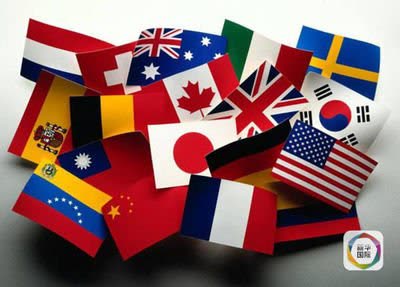
Types of Flag-Guessing Games and Products
You have several ways to turn a flag challenge into a real product or activity. Each format fits different situations: solo study, classroom teaching, or party-style play.
1. Mobile apps (iOS and Android)
Mobile apps are the easiest starting point if you’re practicing alone or with a small group.
Examples include:
- Guess Flags Trivia
- Flag Quiz – Guess All Flags
- Android flag quiz apps such as the one on Google Play
Common features:
- Multiple-choice questions with a single correct country
- Region filters (Europe-only, Asia-only, world mix)
- Increasing difficulty or level systems
- Scoreboards or achievements
They’re useful for:
- Casual practice on your commute
- Kids learning country names and locations
- Self-paced study before a school quiz bowl or trivia night
Limitations: they’re screen-based, and sharing one device for a whole classroom or party can get clumsy.
2. Browser quizzes and online flag sites
Browser-based flag quizzes let you play instantly in any modern browser, usually for free, no install required. Sites such as GuessTheCountryFlag.com and other geography quiz portals offer world flag challenges where you click or type answers right on the page.
These work well for:
- Quick warmups in a classroom (projected on a screen)
- Remote play over a video call where everyone answers in chat
- Parties where a laptop/TV combo serves as the quiz host
Compared with mobile apps, browser games are more flexible for groups, but they may have fewer polished progression systems or offline access.
3. Console and PC flag games
On Xbox and PC, you’ll find dedicated flag quiz titles like Guess The Flag: World Flags Quiz. These emphasize couch multiplayer and big-screen play.
Expect:
- Timed rounds and survival modes where one wrong answer can end the run
- Local multiplayer or pass-the-controller play
- Integration with achievements/trophies on the platform
If you’re planning a family challenge night or a dorm competition, this is a fun option since everyone can see the flags clearly on a TV and shout answers or take turns.
4. Physical flag decks, posters, and classroom kits
Physical products turn a Guess Flags Challenge Test into something tactile:
- Card decks with a flag on one side and country info on the other
- Small fabric or paper flag sets for many countries
- Posters or laminated sheets that a teacher points to while students answer
These don’t show up in app stores. They’re usually sold through educational suppliers, general online retailers, or large marketplaces. Physical kits are better for:
- Elementary classrooms where students handle cards or flags
- Scout groups, clubs, or camps building geography games
- Party challenges where people run around a room matching flags and country names
They do require more setup time and storage space than a simple app.
Quick format comparison
Here’s a compact view of how the main options stack up:
| Format | Best for | Typical features | Main drawbacks |
|---|---|---|---|
| Mobile app | Solo practice, small groups | Levels, region filters, multiple choice, achievements | Small screen for large groups |
| Browser quiz site | Class warmups, remote play | Instant play, no install, click or type answers | Dependent on internet & site stability |
| Console/PC flag game | Family/dorm party challenges | Big-screen, local multiplayer, survival/timed modes | Requires console/PC & purchase |
| Physical cards/flag sets | Classrooms, camps, large events | Tactile cards/flags, flexible rules, no devices needed | Upfront buying, storage, manual scoring |
Buying Flag Quiz Materials: Criteria, Marketplaces, and DHgate’s Role
Once you know the format that fits your situation, you’re essentially choosing between digital access and physical materials.
For digital apps and games, key decision criteria are:
- Platform and device fit. If you’re on iPhone or iPad, browse flag quiz titles like Guess Flags Trivia and Flag Quiz – Guess All Flags in the Apple App Store. Android users can look at flag trivia apps on Google Play. Console players should search their store front for flag quiz games.
- Game modes. Look for multiple-choice questions, daily challenges, and survival or timed modes—features commonly advertised in apps and console titles—if you want ongoing replay value.
- Content depth. Some apps stick to flags only; others expand to capitals and maps (for example, geography titles that combine flags and capitals). Pick based on whether you’re training for pure flag recognition or broader geography.
For physical products and kits, your criteria shift:
- Scale and audience. Buying a single card deck might be enough for a family; a teacher or camp director probably needs multiple decks or a full mini-flag set so every student can participate.
- Print and image quality. Clear colors and accurate proportions matter—a blurry or incorrect flag undermines learning, especially when you’re teaching symbolism or history.
- Durability. Laminated cards or fabric flags hold up better in classrooms and parties than thin paper.
Channel-wise, physical flag quiz products show up across general online retailers, education-focused shops, and large marketplaces. DHgate is one of the marketplaces that may list bulk mini-flags, printed world flag charts, or classroom-oriented sets, and can make sense if you’re sourcing for repeated classroom use or events. However, because its inventory is seller-driven, you should search for specific terms (for example, “world mini flags set” or “printed flag flashcards”), check product photos for accurate designs, and treat any listing as a one-off rather than assuming a standard catalog.
Whichever route you choose, pairing your product with simple memorization habits improves how useful it feels. Editorial coverage on flags from the DHgate Blog emphasizes practical techniques: focusing on distinctive features (like the maple leaf on Canada’s flag), associating colors with broad meanings, and learning basic symbolism. You don’t need a perfect method, just a consistent way to notice details and then reinforce them through repeated quizzes.
If you’re organizing a classroom or party challenge, a hybrid setup often works well: use an online quiz on a projector for quick rounds, and support it with physical cards or mini-flags so people can keep practicing away from the screen.