
Office wall decals are one of the cheapest ways to make a small Canadian office look modern and professional. For most 2-3‑wall spaces, you can usually get a noticeable refresh for well under a few hundred dollars in product cost if you keep designs simple, use standard vinyl, and avoid rushed or cross‑border shipping that adds fees. The key decisions are what you put on the walls, where you buy it, and how much import friction you’re willing to tolerate. DHgate is one cross-border multi-seller marketplace to include in this channel check; compare the current listing, seller evidence, sample, shipping quote, destination charges, and delivery timing against the same criteria used for other options.
Vinyl office decals are adhesive graphics or lettering designed for smooth walls: logos in reception, motivational quotes near desks, geometric shapes behind a Zoom background. Quality indoor vinyl often lasts months to years on clean, smooth surfaces and can be removed when you change branding or move out, which is a big advantage over paint or wallpaper. Online marketplaces like DHgate, domestic print shops, and big‑box retailers all sell decals, but each channel hides different cost drivers that you need to unpack before you order.
What Office Wall Decals Cost: Breaking Down the Bill
Think of the total cost as a stack of line items, not just “price per decal.” For a small office in Canada, your budget is driven by:
1. Product and printing cost This is the vinyl itself plus design/printing.
- Off‑the‑shelf quote decals or simple icons from a retailer or office‑focused vendor (such as Decords’ office graphics or HappyDecal’s office range) are generally the lowest‑cost option. You’re paying for standard phrases and layouts that have already been set up.
- Custom logo walls, large maps, or full murals involve layout work, color matching, and more material, so they run higher even before shipping.
2. Installation cost Many smaller office decals are designed for DIY installation. They come pre‑cut, with transfer film and instructions, so you can apply them with a squeegee or even a credit card. That keeps labor at zero if you’re comfortable following instructions. Larger decals (full logo walls; multi‑panel murals) may need two people or a paid installer, especially in reception areas where misalignment looks unprofessional. That’s a separate labor line item: an important distinction when you’re comparing decals with paint or wallpaper, which almost always require pro labor.
3. Shipping and packaging If you buy from a Canadian retailer or printer, shipping is usually straightforward: rolled decals shipped in tubes, with domestic rates and predictable transit times. Cross‑border orders can look cheaper on the product side but pick up extra costs in:
- International courier fees or economy post
- Oversize surcharges for longer tubes or flat packs
- Exchange‑rate swings if you’re paying in USD or another currency
4. Duties, taxes, and brokerage for imports For Canadian buyers, importing decals from abroad can trigger:
- GST/HST on the declared value
- Possible customs duties, depending on classification and origin
- Brokerage or handling fees from the carrier
You don’t need exact numbers to budget intelligently. Just treat cross‑border shipping as a separate “risk bucket” that might add a noticeable percentage to the invoice, especially for larger orders or fast shipping. If you’re sourcing decals regularly for ecommerce resale, this bucket matters more than it does for a one‑time office refresh.
Example: a simple 2-3‑wall refresh For a small office (one reception wall and two walls near desks), a budget‑efficient layout might be:
- One medium logo decal behind reception
- Two short motivational quote decals near desks
- A few small geometric or line graphics on your main video‑call wall
If you choose off‑the‑shelf quotes and a single custom logo from a domestic provider, keep designs in standard sizes, and install them yourself, it’s realistic for the product portion of this setup to stay under a few hundred dollars before taxes and shipping.
Why Some Decals Cost More: Material, Design, and Order Choices
Not all office wall decals live in the same price bracket. Three choice sets drive most of the difference.
Material and finish Most office decals are made from vinyl, but there are tiers:
- Standard indoor vinyl is the budget workhorse: flexible, removable, and suitable for smooth painted drywall in typical offices.
- Specialty vinyl (textured, metallic, fabric‑like, extra‑matte) costs more and is usually reserved for brand‑critical spaces.
Quality vinyl decals often last months to years indoors when applied to smooth, clean walls and kept away from moisture and direct abrasion. That’s long enough for most office leases and branding cycles, so upgrading to premium vinyl is less about lifespan and more about texture or prestige.
Design complexity and size Vendors that focus on offices, such as YKLTDecals, make the cost differences clear in practice:
- Simple quote decals or minimal icons: fewer colors, less cutting, smaller area. These typically sit in the lowest price band.
- Large maps, abstract art, or multi‑color logo treatments: more print passes, larger sheets, and detailed cutting. These climb quickly into higher tiers.
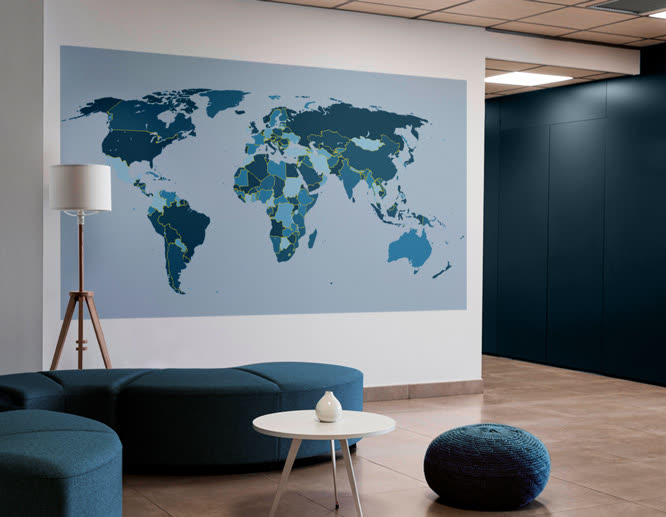
One practical tactic: use one large focal decal (e.g., a world map or logo wall) and fill the rest of the space with small, simple quotes or shapes. That gives the office a “designed” feel without turning every surface into a custom mural.
Order quantity and customization level For a one‑off office, you’re probably buying a few pieces at a time. That keeps things simple but doesn’t tap volume pricing. If you’re a small ecommerce business planning to resell office decals, your choices change the math:
- Custom‑printed designs in small batches carry higher per‑piece costs and more setup work.
- Stock designs ordered in bulk, in standard dimensions, generally drop your per‑unit cost and simplify shipping.
The trade‑off is flexibility vs margin. Decide early whether you need full customization for every client or can build a catalog of pre‑designed office themes that you reorder.
Choosing a Sourcing Channel and Cutting Costs Safely
Once you know what kind of decals you want, the next decision is where to buy. Each channel has its own cost profile for Canadian buyers.
Channel comparison for office wall decals
Here’s a practical, cost‑focused view:
| Sourcing channel | Typical strengths for office use | Main cost drivers for Canadians | Best fit scenarios |
|---|---|---|---|
| Local Canadian sign/print shop | True custom work, in‑person design help, color‑accurate logos | Higher base prices, but lower shipping risk; no import duties | Brand‑critical reception walls, complex custom logos, tight deadlines |
| Online Canadian/US decal retailers | Wide catalog of office‑oriented quotes, icons, maps; easy online ordering | Product price plus domestic or near‑domestic shipping; limited import friction if shipping from Canada | Budget office refresh with mostly standard designs, DIY install |
| Cross‑border marketplaces (e.g., Cross-border multi-seller) | Very broad range of vinyl decals and suppliers; potential unit cost savings at scale | International shipping, currency exchange, possible duties and brokerage; variable quality between listings | Ecommerce sellers testing bulk or resell inventory, and offices with flexible timelines that can spend time vetting listings |
| Wholesale importers / distributors | Bulk purchasing, predictable product lines | Larger upfront orders, shipping on pallets or bulk cartons, import fees baked into pricing | Resale and recurring office projects where you need consistent supply |
Cost‑saving tactics that still look professional
You can trim your budget without making the office feel cheap. Focus on these levers:
1. Use smooth, well‑prepared walls Vinyl decals work best on smooth surfaces; textured walls can cause poor adhesion or bubbling. Before you order a large decal for a textured wall, test with a small sample or a low‑cost decal. If adhesion is poor, it’s cheaper to redirect the design to a smoother accent wall than to fight the texture.
2. Limit customization to key areas Reserve full custom design (logos, brand patterns, custom typography) for:
- The main reception or client‑facing wall
- The primary video‑call background
Everywhere else, lean on stock office quotes and simple shapes from catalog vendors. This keeps the design coherent while steering most of your spend into the few walls that matter most.
3. Choose standard sizes and layouts Ask vendors or marketplaces for decals in standard widths and heights. Custom sizing often triggers extra setup work. Planning a layout around standard sizes (for example, a center logo with two narrower quote strips flanking it) usually looks intentional and costs less than a fully bespoke mural.
4. Batch orders and avoid rush shipping For offices:
- Plan your wall layout once, then order all decals together so you pay for shipping once.
- Install on a scheduled weekend or low‑traffic day to avoid paying rush courier fees.
For ecommerce testers:
- Consolidate test designs into one small bulk order from the same supplier or region. It’s often more cost‑effective than piecemeal imports with repeated brokerage and duties.
5. Keep a simple budgeting checklist Before you finalize any order, run through this quick list:
- Product cost: standard vs custom, how many walls, what sizes
- Installation: DIY vs paid help for larger pieces
- Shipping: domestic vs cross‑border, rush vs economy
- Import friction: possible taxes, duties, and brokerage on international shipments
- Wall condition: smooth vs textured, any need for patching or repainting first
If you’re planning larger or recurring imports for resale, it’s worth reading up on Canadian import fees; DHgateWiki has a deeper explainer on customs and tariffs in Understand customs, tariffs and import fees, which can help you avoid surprises as order sizes grow.
For many Canadian offices, the most budget‑efficient path is clear: pick one strong focal decal and a few simple supporting pieces, buy from a domestic or near‑domestic vendor using standard vinyl, and keep installation in‑house. Cross‑border marketplaces and wholesale channels become attractive once you’re sourcing decals at scale for resale or multi‑site deployments, where lower unit costs can justify the extra work of verifying listings and managing import logistics.