
If you need hardware at 2 a.m., your options are usually a mix of late‑open local chains, 24‑hour convenience or big‑box stores with limited hardware aisles, and online marketplaces that let you order anytime for pickup or delivery. Truly 24‑hour hardware stores do exist in some US cities, but they’re uncommon; most chains keep standard or extended daytime hours and rely on online ordering to cover the off‑hours. For urgent repairs, you’ll almost always solve the problem locally. For inventory and resale, you’ll usually be better off with domestic or cross‑border platforms instead of driving around looking for a store with the lights on.
How 24-Hour Hardware Access Really Works in the US
A strict “24‑hour hardware store” is a shop that sells tools and building supplies continuously, day and night. Listings and guides point out that finding one can be challenging in the US, because most hardware shops operate on standard or extended business hours rather than true 24/7 schedules.Finding 24‑hour hardware stores generally involves searching city‑by‑city.
There are notable exceptions. For example, Nuthouse Hardware in New York City is highlighted as a hardware store operating 24 hours a day, serving tradespeople and residents who need materials at odd hours.Nuthouse Hardware profile It’s a local solution, not a national pattern.
City directories underscore how localized 24‑hour access is. YellowPages, for example, has a specific page just for hardware stores open 24 hours in New York.24‑hour hardware listings in NYC You’ll see similar city‑level lists for places like Phoenix or Kearny, NJ, not a national network.
By contrast, major hardware chains such as Ace Hardware are documented as following set daily hours—often opening early and closing in the evening—but not operating around the clock.Ace Hardware hours overview So for most US buyers, “24‑hour hardware” really means:
- A handful of true 24/7 hardware shops in large metro areas;
- Late‑open or early‑open home‑improvement chains;
- 24‑hour convenience, grocery, or big‑box stores that stock basic hardware;
- Online ordering that lets you claim inventory outside usual shopping windows.
Platform Options for Getting Hardware Around the Clock
Because true 24/7 hardware stores are rare, hardware access at odd hours is really a platform question: how do you combine local stores and online tools so you’re never stuck?
Local chains and independent hardware stores
Local hardware chains and independents are still the fastest route for hands‑on buying. Most keep standard or extended hours—often something like early morning to evening—but not 24/7. Their websites usually function as store locators and, in many cases, product catalogs.
Many large chains and some independents let you place online orders for in‑store or curbside pickup. You can order at 11 p.m., reserve stock, and pick up when the store opens, which effectively extends your buying window even though the doors are locked overnight. Some stores also offer local delivery windows via their own trucks or third‑party services.
General online marketplaces (US-based)
Big general marketplaces (for example, Amazon or eBay) give you 24/7 ordering and wide variety on hardware: fasteners, hand tools, small power tools, electrical components, and more. You don’t get physical access at 3 a.m., but you can:
- Place an urgent order anytime;
- Choose expedited or next‑day delivery where it’s available;
- Restock common SKUs for your small ecommerce or repair business.
Marketplace listings often show stock levels, multiple brands, and competing prices side‑by‑side, which is more efficient than calling around to local stores when time isn’t critical beyond the next couple of days.
Supplier and cross-border marketplaces
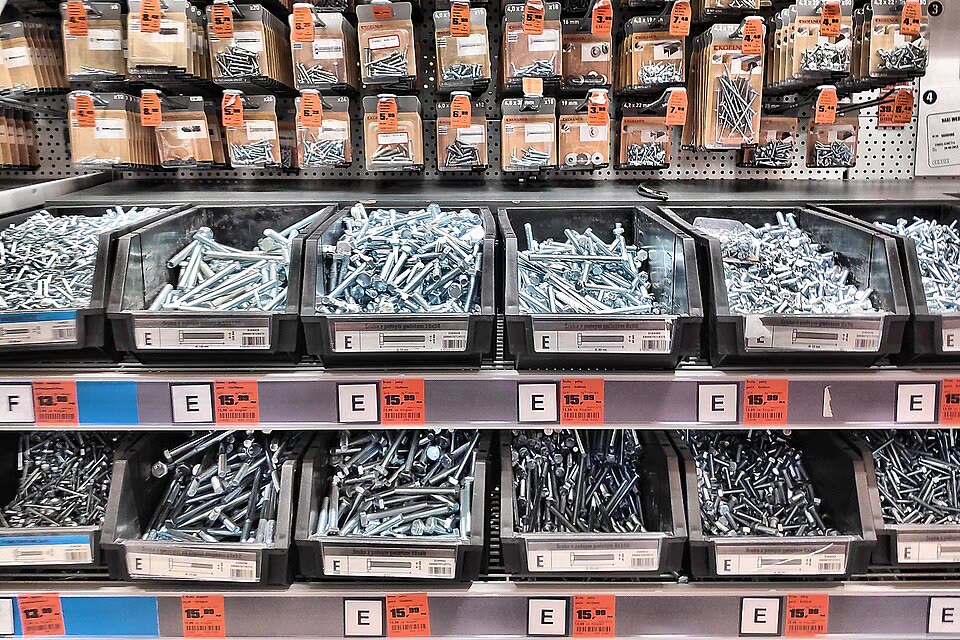
Supplier platforms and cross‑border marketplaces connect you with factories, trading companies, and wholesalers. You’ll see more variation in branding, quality, and packaging, and usually larger cartons or bulk lots rather than single items.
These platforms shine for planned, non‑urgent hardware purchases: screws by the thousands, small parts, or low‑cost tools you intend to resell. Shipping is usually slower and more variable than domestic marketplace orders, but pricing and variety can be better at scale. You’ll need to treat every seller as its own business: compare catalogs, message for details, and check minimum order expectations before you commit.
Speed vs Scale: Which Channel Should You Use?
Think about 24‑hour hardware access as a trade‑off between speed, order size, and risk. This table sums up the main platforms in practical terms:
| Channel type | Best for | Speed to get usable goods | Typical order size |
|---|---|---|---|
| Local hardware store / chain | Emergency repairs, single jobs | Immediate (during open hours) | Single items to small batches |
| 24‑hour big‑box / convenience | Basic hardware in a pinch | Immediate | Very small, limited range |
| US online marketplaces | Near‑term needs, repeat SKUs | 1-3+ days (varies) | Small to medium orders |
| Cross‑border marketplaces | Planned bulk, resale inventory | Several days to weeks (varies) | Cartons, bulk lots |
For emergency fixes—broken pipe, failing door lock, dead outlet—your first question should be: “Can I solve this with what’s available locally tonight?” That usually means:
- Checking city directories or maps for any true 24‑hour hardware stores;
- Looking at big‑box or grocery chains with basic plumbing, electrical, or fastener aisles;
- Calling nearby hardware shops that may stay open late even if they’re not formally 24/7.
For planned projects and business inventory, a more strategic mix makes sense:
- Use local and US marketplaces to test brands and specs in small quantities.
- Once you know what sells or works, consider cross‑border sourcing for bulk hardware where timing is flexible.
Matching Your Scenario to the Right Platform Mix
For a one‑off household emergency, drive time usually beats delivery time. Spend your energy finding the closest open store that has any kind of hardware section, not optimizing price. For contractors and repair pros, knowing which nearby shops keep the latest hours and which chains support late‑night online ordering for morning pickup can save entire jobs.
For small ecommerce businesses, treat 24‑hour hardware stores as your backup channel, not your main source. Use domestic marketplaces and supplier platforms to plan inventory, then layer in cross‑border sourcing once you’re comfortable with your demand patterns and willing to wait longer for pallets or cartons.
If you’re weighing multiple online routes at once—not just DHgate—this broader overview of marketplaces is useful: Compare online marketplaces and shopping platforms. It will help you place 24‑hour hardware shopping in context with your long‑term sourcing strategy.