
Yes, there are plenty of reliable reviews for inexpensive guitar pedalboards, and a lot of budget boards are genuinely usable. The trick is matching the board format and size to your pedal setup, then using photos, hardware details, and real-user feedback to weed out the flimsy options. For a home rig with 3-5 pedals, a compact rail or flat board from a reputable budget brand will usually be all you need; gigging with 6-10 pedals or hauling your board in vans is where build quality and cases start to matter more than saving the last few dollars.
Affordable doesn’t mean improvised or messy. A good low-cost pedalboard should:
- Hold your pedals securely with room to hit each footswitch cleanly.
- Survive regular setup/tear-down without screws stripping or rails bending.
- Make power and cabling reasonably tidy so noise and failures are less likely.
Music retailers like Gear4music’s pedalboard catalog and specialist makers such as Accel Audio show just how wide the range of affordable boards has become, from simple slotted trays to compact rail systems with cases.
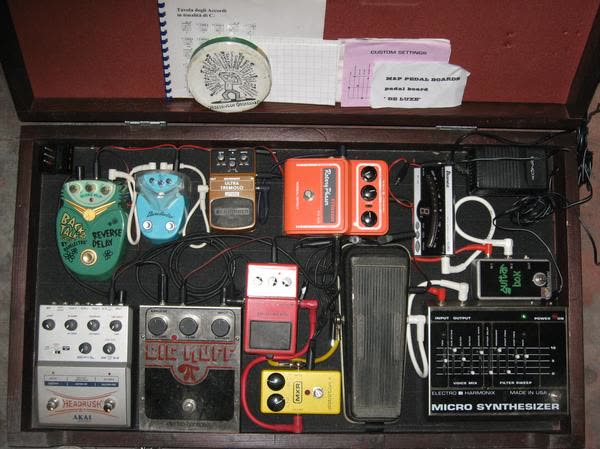
DHgate is one cross-border multi-seller marketplace to include in this channel check; compare the current listing, seller evidence, sample, shipping quote, destination charges, and delivery timing against the same criteria used for other options.
What makes an affordable pedalboard worth buying?
A pedalboard is simply a platform that holds your effects pedals in a fixed layout, often with a power supply and cabling mounted underneath or alongside. You’ll feel the difference the moment you stop chasing loose pedals and cables around the floor.
Where a cheap board is perfectly fine:
- Small home or rehearsal rigs. For 3-4 standard pedals and a tuner, a lightweight aluminum or steel board with Velcro and cutouts for cabling is usually enough.
- Static setups. If the board will live next to an amp in a studio or spare room, you can get away with simpler hardware and no hard case.
Where budget boards tend to struggle:
- Heavy gigging and travel. Thin aluminum rails, soft screws, and low-grade latches can bend or fail when the board is tossed in trunks or checked with luggage.
- Large, dense rigs. Once you’re managing 8-10 pedals and a multi-output power brick, flimsy rails, tight layouts, and poor access for wiring become a real headache.
Editorial and community sources regularly discuss these tradeoffs. Guitar gear forums host long threads comparing “cheap vs expensive” boards, and videos like Cheap vs Expensive Pedalboard (What’s the Difference?) on YouTube break down where low-cost boards cut corners (fasteners, cases, thickness) and where they hold up.
Pedalboard types and sizes: match the board to your rig
Most affordable boards fall into a few practical formats. Choosing the right one is more important than the brand name on the label.
Common budget-friendly formats
Here’s how the main types differ in day-to-day use:
| Board type | Typical look/use | Pros for budget buyers | Watch out for |
|---|---|---|---|
| Flat tray | Simple rectangle, often with solid top and Velcro | Very cheap, easy to mount anything | Limited cable routing; power sits on top |
| Slanted rail | Angled surface made of a few horizontal slats | Comfortable foot access; space under for power | Very thin rails can flex with weight or travel |
| Compact rail (Nano/Metro style) | Narrow, rail-style, often with soft case | Extremely portable for 3-5 pedals | Outgrown quickly if you add more pedals |
| Case-style board | Board integrated into a hard or flight case | Best protection for gigging rigs | Heavier and usually more expensive |
Affordable branded examples help illustrate these shapes:
- Pedaltrain Nano/Metro series. The Nano Plus is a small rail-style board marketed as light and compact; the Metro line scales that up slightly while keeping a slanted rail layout, often sold with soft cases for transport.Source
- RockBoard DUO compact boards. Models like the DUO 2.1 pair a slanted rail board with a flight case, aimed at players who want a small footprint but serious protection on the road.Source
- Ghost Fire super-light boards. Ghost Fire’s aluminum-alloy pedalboards are explicitly sold as super-light options for compact rigs, making them appealing if you carry your board on public transit or to rehearsal spaces.Source
How big a board do you actually need?
Think in terms of pedals and how much spacing you like:
- 3-pedal rig (home player). Tuner + overdrive + delay. A compact rail board like a Pedaltrain Nano-style or Ghost Fire mini holds these with room for a power supply underneath and keeps cabling clean.
- 5-pedal rig (band rehearsals). Tuner, two drives, modulation, delay. A small slanted board in the “Metro” or “DUO” size range lets you place pedals in two tidy rows and step between them without stomping knobs.
- 8-pedal rig (gigging). Tuner, multiple dirt pedals, compressor, modulation, delay, maybe a looper. At this point, a medium slanted rail with dedicated under-mount power or a case-style board becomes attractive. You get stronger rails, better cable routing, and, often, a hard or flight case.
Retail catalogs such as Gear4music’s pedalboard listings and Accel Audio’s pedalboard lineup show a wide spread of sizes in each format, usually grouped by pedal capacity or length. Use those dimensions to sketch your rig on paper before you buy; nothing feels worse than realizing your “deal” board is two inches too short.
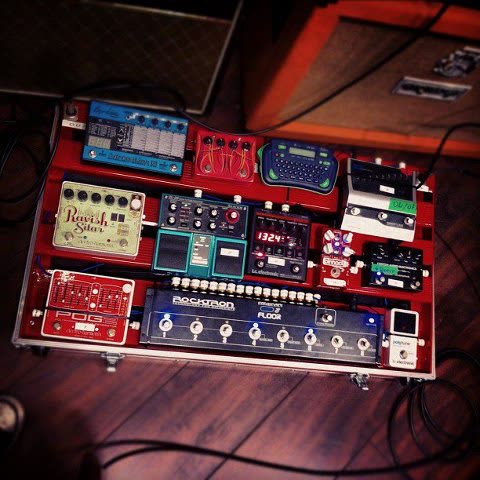
Buying on a budget: materials, reviews, and sourcing channels
Once you know your format and size, the key to avoiding junk is to zoom in on materials, hardware, and real-world feedback.
Materials and build cues to check
For affordable boards, you usually see:
- Aluminum rail designs. Lightweight and corrosion-resistant, as promoted in Ghost Fire’s “super-light” pedalboards.Source Good for small rigs, but examine product photos for rail thickness and bracing.
- Steel trays or frames. A bit heavier, but often stiffer and less likely to bend. If you’re gigging, thin aluminum with no reinforcement is where cheap boards fail first.
Look closely at:
- Screws and joints. Zoom into listing photos. Tiny screws into soft metal or visible gaps at corners suggest the board might loosen or wobble.
- Power supply mounting. Under-board slots or brackets are worth paying a little for. Otherwise you can end up taping a power brick to the top, eating pedal space.
- Feet and stability. Rubber feet at all corners and a crossbar or center support prevent flex when you step on upper rows.
Using reviews and communities for inexpensive boards
Relying on one star rating on a marketplace is risky; triangulate instead:
- Editorial and catalog context. Sites like GuitarWorld’s coverage of cheap guitar pedals show which budget brands are at least taken seriously for effects; many of those same brands sell boards.
- Forum threads. Long-running discussions on Guitar Forum about “cheap pedalboards” and “best cheap, good quality pedalboard” include photos, broken-hardware stories, and success cases that reveal which low-cost designs hold up.Source
- Reddit and YouTube. Subreddits like r/guitarpedals and comparison videos such as Cheap vs Expensive Pedalboard (What’s the Difference?) on YouTube highlight specific failure modes (bent rails, bad latches) that you can look for in product shots.
For each candidate board, search the exact model name plus “review” or “issues” and scan user photos. If you see the same complaint about flexing, broken handles, or cases falling apart, treat that as a red flag.
Choosing your sourcing channel: local vs marketplace vs cross-border
For US buyers and small ecommerce sellers, affordable pedalboards are available through three broad channels:
- Dedicated music retailers. Shops and sites like Gear4music and Accel Audio offer curated selections of pedalboards from known brands. You generally get clearer specs, more consistent quality, and easier returns, which matters for gigging rigs or repeat resale.
- Large marketplaces (Amazon-style, eBay, etc.). Here you’ll find many unbranded or factory-brand aluminum rail boards. Your job is to compare seller histories, drill into user-uploaded photos, and read reviews sorted by “most recent” to see how current batches are holding up.
For a single personal board, starting with a reputable brand’s small rail or tray from a music retailer is usually the least risky path. If you’re outfitting several budget rigs for students or a small shop, marketplace and cross-border boards can make sense—as long as you vet designs carefully and accept that a fraction may not match the photos or long-term durability of better-known brands.