
Yes, you can find unique 3D printed charms and custom jewelry online, but what you actually get depends heavily on the kind of platform you use. Some sites sell finished charm bracelets and pendants, some only offer 3D-printable files, and some act as factories that print designs on demand. Before you start browsing, you need to decide whether you want a ready-made charm, a digital design you’ll print yourself, or a repeatable product line for a small ecommerce brand.
3D printing lets jewelry designers create intricate, personalized charms and one-off pieces that would be harder or slower to make with traditional methods. That includes small decorative charms, custom name or logo pendants, and fully bespoke rings or bracelets designed around a specific story or event, a trend reflected in the broader 3D-printed jewelry space described on Wikipedia. On the buyer side, that flexibility shows up in three main online channel types: retail marketplaces, 3D file libraries, and on-demand manufacturing platforms.
How 3D Printed Charms and Custom Jewelry Fit Into Today’s Online Marketplaces
For this niche, “3D printed charms and custom jewelry” covers two things you’ll see online:
- Finished 3D-printed pieces – earrings, slider charms, pendants, rings or bracelet components that are already printed and ready to wear.
- 3D-printable models – digital files (often STL or similar formats) that describe the charm’s geometry so you or a service can print it later.
Online marketplaces already host a wide range of charms, from handcrafted designs to mass-produced options, which gives buyers a lot of stylistic choice. DHgate’s own editorial coverage of 8mm slide charms notes that general online marketplaces tend to mix intricate handmade charms with mass-produced pieces in one catalog, creating a broad style spectrum from minimal to ornate.
In the 3D printing corner of that universe:
- Artisanal marketplaces like Etsy are widely used to buy personalized jewelry and custom charm bracelets; many shops mention 3D printing or CAD in their listings.
- Specialized 3D platforms like Shapeways operate as marketplaces where designers upload models and buyers order finished 3D-printed objects, including jewelry, printed on demand in materials chosen at checkout (Shapeways overview).
- File libraries like Thingiverse and MyMiniFactory host downloadable 3D models, including charm designs, that you print yourself or via a local service, as described in DHgate’s editorial overview of 3D printable cat merchandise.
That mix is why search results for “3D printed charms” look scattered: you’re seeing finished products, bulk charm offers, and free STL files in the same page, even though they solve very different buyer needs.
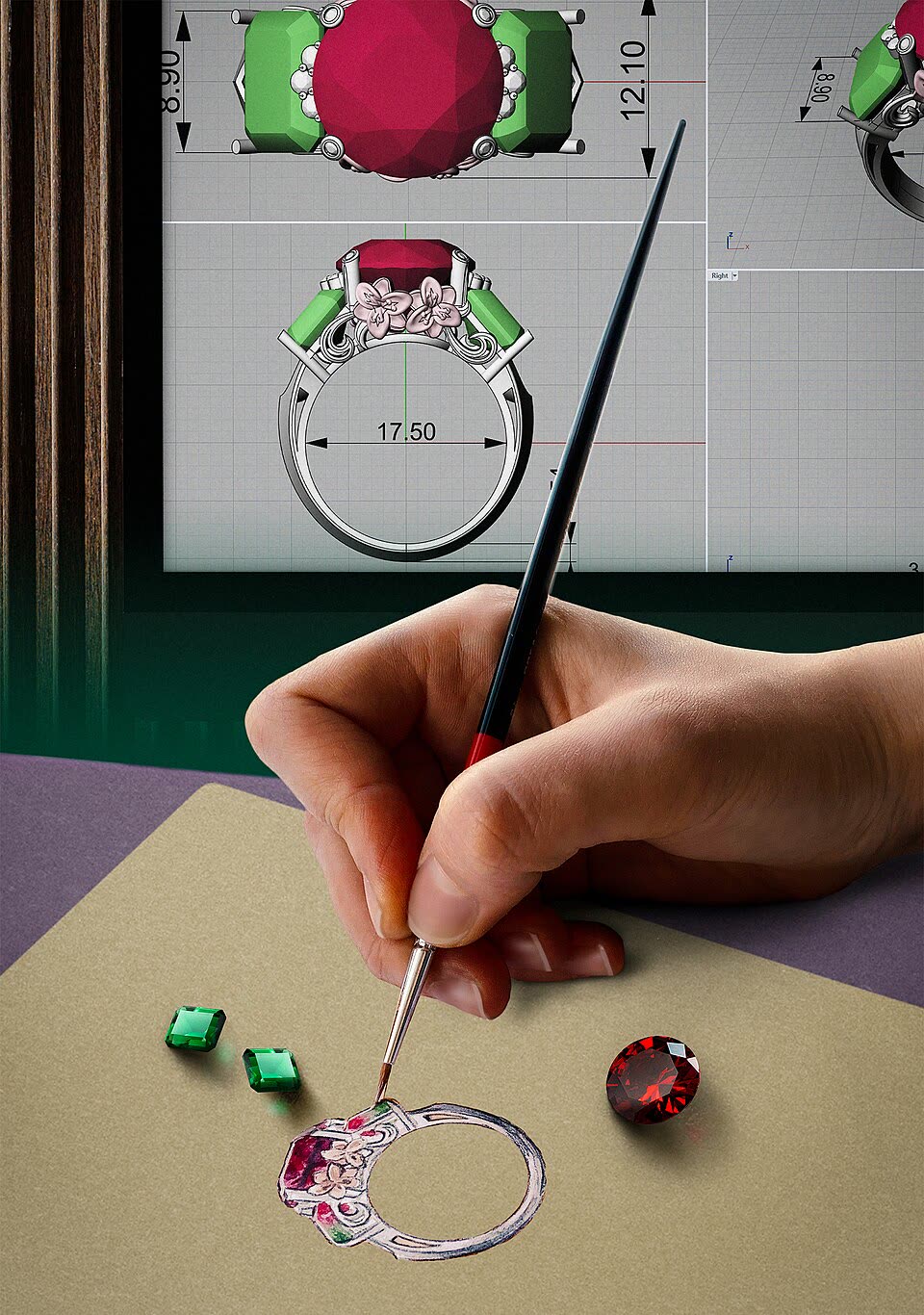
Platform Types for 3D Printed Jewelry: Files, Makers, and Marketplaces
You can think of 3D jewelry platforms in three buckets. Each has a different value proposition for US buyers and small ecommerce sellers.
1. Retail marketplaces: finished charms and ready-to-wear jewelry
Examples: Etsy, general ecommerce sites that host independent jewelry sellers.
On these platforms you’re buying finished pieces, not files. Sellers use 3D printing behind the scenes, but you’re shopping like you would for any charm bracelet or pendant:
- You browse listings, choose materials and finishes from the options a seller offers.
- Customization is driven by messages or drop-down choices (name, initials, birthstone, color).
- Production is handled by the seller; you never see the printing process.
DHgate’s editorial guide to personalized jewelry calls out Etsy as a major destination for custom charm bracelets and other personalized pieces. That matches what you’ll see in practice: lots of one-off designs, small studios using 3D printing for prototyping and production, and wide variation in style and quality.
Pros for buyers and small sellers
- Easiest route for a one-off gift or personal piece.
- Good for micro-brands that sell small batches of finished 3D-printed charms without managing their own factory.
Limitations
- You rarely get the underlying 3D files, so it’s harder to move production elsewhere.
- Quality and durability differ shop by shop; you have to judge each seller individually.
2. 3D file libraries: STL models you print yourself
Examples: Thingiverse, MyMiniFactory.
Here, the product is the design file, not the charm itself. DHgate’s editorial overview of 3D printable designs highlights platforms like Thingiverse and MyMiniFactory as hubs for free or paid models, including small decorative items.
Typical flow:
- You search for “charm,” “pendant,” or a theme (cats, zodiac, gamer icons).
- You download STL or similar files.
- You print them on a home 3D printer or send them to a local print service.
Pros
- Maximum creative control: you can scale, tweak, or remix designs if licensing permits.
- Low cost per design, sometimes free.
Limitations
- You need access to a 3D printer or a service that can handle the material you want.
- Licensing can vary; a file may be for personal use only, which affects ecommerce sellers.
3. On-demand manufacturing platforms: designers plus industrial printers
Example: Shapeways.
Platforms like Shapeways sit between file libraries and retail marketplaces. They’re marketplaces for 3D printed objects, backed by a manufacturing service:
- Designers upload models and set them up for sale.
- Buyers choose a design and order it printed in available materials (plastic, metals, etc.).
- The platform handles printing and shipping; the buyer receives a finished charm or piece of jewelry.
Pros
- Access to materials and finishes that are hard to achieve on a hobby printer.
- Scales better than home printing for small ecommerce runs.
Limitations
- Per-piece costs can be higher than mass manufacturing.
- Brand experience is partly controlled by the platform’s production standards.
Quick comparison: what you actually buy
| Platform type | What you buy | Who prints it | Best for |
|---|---|---|---|
| Retail marketplace (Etsy) | Finished charm/jewelry | Individual seller | Personal gifts, small-batch handmade brands |
| 3D file library (Thingiverse, MyMiniFactory) | Digital 3D model (STL, etc.) | You or a print service | Hobbyists, DIY makers, technically savvy sellers |
| On-demand 3D marketplace (Shapeways) | Finished 3D-printed object | Platform’s facilities | Designers and brands needing higher-end materials |

Matching Platform Choices to Your 3D Jewelry Buying or Sourcing Scenario
How you use these platforms depends on whether you’re a personal buyer or running a small ecommerce operation.
If you’re an individual buyer
- “I just want a unique charm bracelet or pendant.” A retail marketplace like Etsy is usually the fastest route. You’ll see many personalized options and some explicitly marketed as 3D printed. Focus on shops whose photos and descriptions match your style; quality and finish are highly seller-specific.
- “I enjoy making my own pieces and have (or plan to get) a 3D printer.” File libraries such as Thingiverse and MyMiniFactory give you thousands of charm models to experiment with. Printing in inexpensive materials first helps you decide which designs are strong enough to turn into wearables.
If you run a small ecommerce brand
Your decision is more about control, repeatability, and cross-border sourcing.
- Design-led brand with limited production capacity. Using Shapeways or a similar on-demand platform can work if your value is in the design and you’re okay with per-piece manufacturing costs. You can iterate on models quickly, and your catalog can highlight “printed on demand” as part of the story.
- DIY maker with local printing access. Downloading models from MyMiniFactory or Thingiverse (where licensing allows commercial use) and printing locally gives you more control over packaging, finishing, and quality checks. You’ll spend more time on production but own the full brand experience.
- Charm reseller focused on volume and price. In this case you may actually be looking beyond 3D printing toward bulk charms from general wholesale marketplaces. DHgate is one of several sites, alongside Alibaba, that list charms in bulk lots rather than as single custom-printed pieces. For that route, treat each supplier as its own business: review their catalog, sample a small order before committing, and make sure material descriptions and photos align with how you plan to market the jewelry.
If you’re weighing DHgate or similar for bulk charms rather than custom 3D printing, it’s worth understanding how that marketplace works more broadly; the overview at What DHgate is and how the marketplace works and the broader article Compare online marketplaces and shopping platforms provide context.
Practical risk points specific to 3D jewelry
Across all platform types, the main issues aren’t generic “buyer protection” concepts but whether the charm will look and wear the way you expect:
- Design complexity vs. material: Highly intricate designs may print cleanly in industrial processes but lose detail on home printers or in cheaper plastics.
- Licensing for resellers: Many file-library models are marked for personal use. If you plan to resell printed charms, look for explicit commercial-use permissions or commission a designer.
- Consistency over time: If you build a line around a charm sourced from a single Etsy shop or Shapeways designer, consider how you’ll handle changes in their availability or print options.
Once you’re clear on whether you need finished pieces, files, or an outsourced factory, the platform choice becomes much more straightforward—and you’re less likely to be disappointed by a listing that looked great but wasn’t offering the kind of product you thought you were buying.