
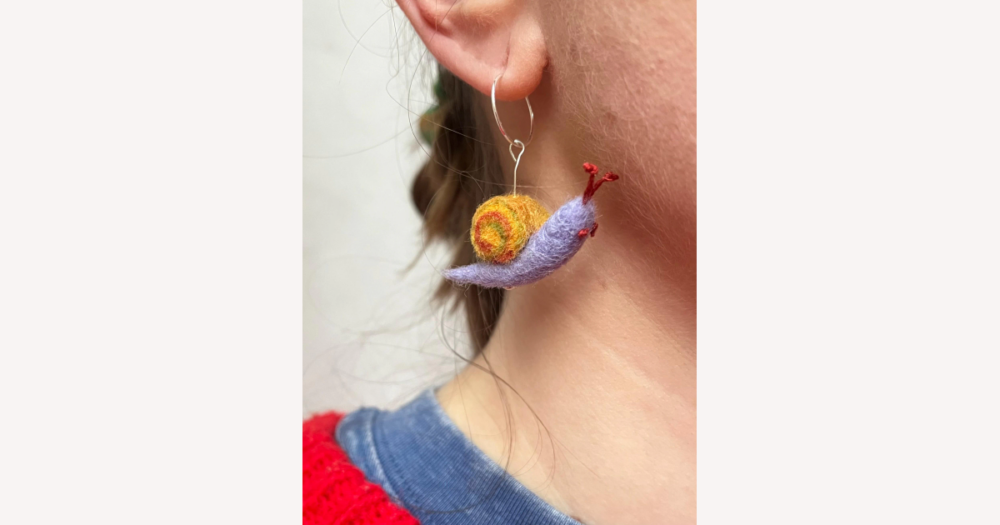
If you love the look of needle felted earrings on DHgate, the most important decision is material. Fine animal wool, especially merino, usually felts into dense, lightweight shapes that work well for small jewelry, while the metal hooks and posts need to be comfortable and clearly described. This guide explains how different fibers and findings affect appearance and feel, and how to read DHgate listings and seller information so you can judge material quality and avoid unpleasant surprises with your order.
Choosing the best fiber for the felted part of your earrings
For needle felted earrings on DHgate, fine natural animal wools—especially soft breeds like merino—are usually the most reliable core material. Wool fibers have microscopic scales and natural crimp that catch and lock together under the needle, so you can build small shapes that feel dense and cohesive without becoming heavy on the ear.
By contrast, many synthetic fibers and plant-based fibers have smoother, less barbed surfaces. Acrylic blends marketed as “acrylic wool” can be used, but they often felt more slowly or unevenly and are prone to fuzzier edges or weaker cores unless they’re mixed with real wool. Plant fibers like bamboo or flax tend to behave more like smooth, drapey yarns than sculptural felting fibers, so they’re better as accent threads or surface textures than as the main sculpted element.
When browsing DHgate, I would prioritize listings that clearly state fine animal wool for the felted component and show close-up photos of neat, dense felting. Non-wool cores are best treated as experimental choices: I’d only consider them if the seller provides specific material details and clear photos that demonstrate tidy, well-compacted shapes rather than loose or fuzzy blobs.
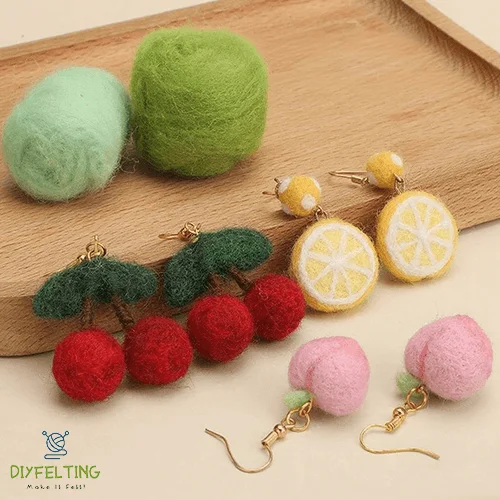
Example needle felted earrings with compact wool shapes attached to simple hooks, showing the kind of dense, lightweight felting buyers might look for in DHgate listings.
How wool, synthetic and plant fibers behave when needle felted
Natural animal wool, particularly good felting breeds, has barbed fibers that interlock as you needle them. With repeated needling, the fibers compact into resilient, relatively smooth shapes that stay light and hold detail, and the wool usually takes dye richly so colors look saturated even in tiny earring forms.
Common synthetic fibers such as acrylic blends can be prepared for felting and sometimes appear in listings as “acrylic wool,” but their smoother surfaces mean the fibers don’t grab each other as readily. That can translate into slower, patchier felting, softer or looser cores, and edges that fuzz out more unless the synthetic is blended with real wool for structure.
Plant-based fibers like bamboo or flax are typically smoother and more suited to spinning or weaving than to sculptural needle felting. In earrings they may produce softer, drapier or strongly textured effects that are harder to control in small, firm shapes. Actual behavior always depends on the specific product, how it was prepared, and the maker’s technique, and DHgate listings rarely provide enough technical detail to guarantee how a non-wool fiber will felt in practice—so it’s sensible to treat those materials as less predictable than well-felting wool when judging the final look and firmness of earring components from afar.
Metal findings and attachment methods that affect comfort
For needle felted earrings, the felted shapes only stay comfortable and secure if they’re paired with suitable metal findings. Sellers on DHgate may use simple hooks, lever-back or hoop styles, or flat posts with butterfly backs, along with small jump rings or connecting wire. Those parts are often made from base metal alloys that can contain nickel, stainless steel, sterling silver, or gold-plated metals. Because some people react to nickel and other mixed alloys, it’s safer to treat vague terms like “metal hook” or “fashion alloy” as unknowns and to give more trust to listings that name specific metals and mention hypoallergenic properties while still confirming details with the seller if your skin is sensitive.
Attachment choices matter just as much as the metal itself. Felted components can be stitched through with strong thread or fine wire, mounted on embedded eye pins or caps and wrapped with fiber, or glued onto posts and decorative bases. Neat stitching or wire wrapping that goes through the felt and anchors into the finding usually looks cleaner and resists pulling loose over time, especially when the felt is dense. Hardware that’s visibly embedded in the wool—rather than just sitting on the surface with a thin layer of glue—also tends to age better. When you inspect DHgate photos, favor earrings where you can see clear, robust attachment points and avoid or question listings where a felt ball appears to float on a hook with no obvious stitching or hardware, since those unclear joins can be weak spots for both durability and comfort.
Simple wool-only earrings vs embellished mixed-material designs
| Design type | Main materials | Style impression | Weight feel | Construction complexity |
|---|---|---|---|---|
| Simple wool-only felted earrings | Dense felted wool shapes with minimal extra findings | Streamlined look that keeps attention on the wool form; finishes can appear very neat if the felting is smooth | Typically very light on the ear, comfortable for longer wear | Relatively simple: a few secure stitches or embedded findings; fewer parts that can loosen or snag |
| Embellished mixed-material felted earrings | Felted wool combined with beads, embroidery threads, charms, crystal accents or lace yarn | More intricate and layered, with added texture, sparkle and artisan detail | Often slightly heavier, with more movement; may feel fine or busy depending on size and number of accents | More complex: extra findings, threads and moving parts that require careful construction and create more potential snag points; best when listings clearly show tidy, well-secured embellishments |
How to check fiber and metal details in DHgate listings
- Scan the listing title and description for specific fiber terms such as “merino wool,” “wool blend,” or “acrylic,” rather than generic labels like “felt earrings.”
- Check whether metals are named—stainless steel, sterling silver, gold-plated alloy, or similar—and note any mention of nickel-free or hypoallergenic features if that matters to you.
- Zoom in on all available photos to assess felting density and neatness, looking for evenly needled surfaces, clear shapes, and minimal loose fuzz on the felted components.
- Inspect how the felted pieces are attached to hooks or posts, looking for visible stitching, embedded hardware, or cleanly finished glue joints rather than vague joins that seem easy to pull loose.
- Message the seller with specific questions, such as whether the fiber is 100% wool or a blend, whether any synthetic fibers are mixed in, and what exact metal the hooks or posts use, especially if you have known sensitivities.
- Compare the seller’s responses and photos with the written specs, placing more trust in listings where these details align consistently across description, images, and messages.
When unclear material descriptions should make you cautious
What materials information can—and can’t—promise
On DHgate, the materials information you can trust most is what you can clearly see or read: whether the felted part looks like true wool or has a shiny synthetic sheen, named metal types such as “stainless steel” or “925 silver,” how dense and neat the felting appears in close-up photos, and straightforward construction details like stitched, wrapped, or embedded findings. When those elements are specific and supported by good images, I treat them as a solid basis for judging broad material categories and basic build quality.
What you can’t fully know from specs or photos are long-term and highly personal qualities: exactly how soft the fibers will feel against your skin, how quickly the felt might fuzz or pill with regular wear, or whether a stated metal will stay comfortable if your ears are sensitive. Even honest, detailed listings can’t completely predict those outcomes because they depend on the specific piece and the wearer. I use material information as a filter to narrow options and set realistic expectations, then treat a first order from a new DHgate seller as a practical test of how their fibers, felting, and hardware feel and hold up in real use.
FAQ: Can non-wool fibers be the main material in needle felted earrings?
Can I use non-wool fibers like acrylic or plant-based fibers as the primary material in needle felted earrings instead of animal wool?
Non-wool fibers such as acrylic or plant-based options can sometimes be needle felted, and skilled makers do produce interesting results with them. However, they generally lack animal wool’s reliably easy felting behavior and predictable structure for small jewelry pieces. Acrylic and many plant fibers have smoother surfaces, so they tend to felt more slowly or loosely and are less consistent at forming dense, tidy cores compared with fine animal wool like merino.
On DHgate, I still treat fine animal wool as the standard core material for most needle felted earrings because it is better documented for creating compact, lightweight shapes that hold up well. If you prefer vegan or synthetic options, it’s safer to approach non-wool cores as creative experiments or niche choices: look for listings with clear material descriptions (for example, named acrylic or plant fiber blends) and strong visual evidence of successful, dense felting in close-up photos. When a seller is transparent about the fibers used and the images show neat, well-compacted shapes rather than loose or fuzzy blobs, I’d be more comfortable choosing a non-wool design, while keeping in mind that outcomes are less predictable than with good felting wool.