
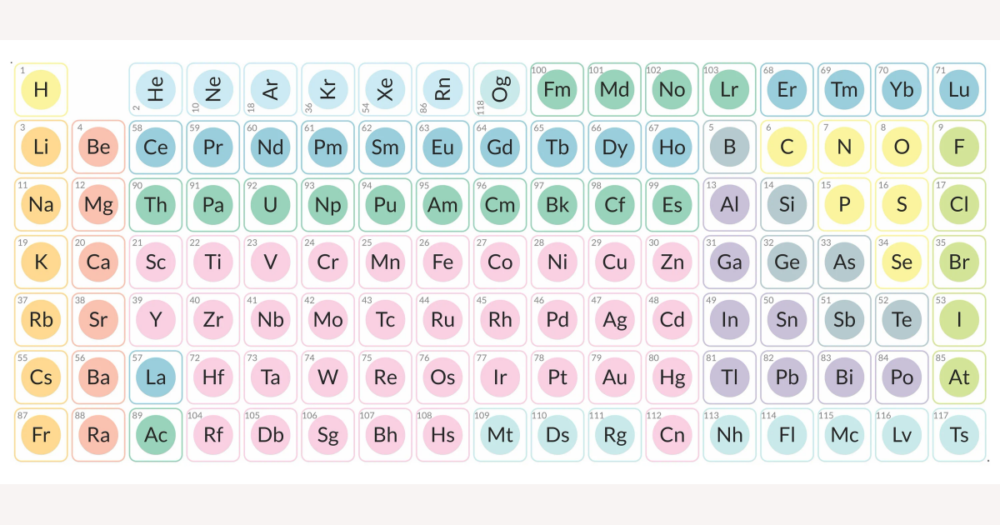
If you plan to search DHgate for a magnetic periodic table, you’ll get better results if you first decide what kind of teaching aid you actually need: a large magnetic board that stays on the wall as a clear reference, or movable element tiles students can rearrange. From there, focus less on flashy graphics and more on whether the magnets are strong enough for your board, the materials feel sturdy, and the print is sharp and readable from typical student seating distances.
What counts as an “educational” magnetic periodic table?
On DHgate, an “educational” magnetic periodic table usually means a board or set of magnets built to teach real chemistry, not just decorate a fridge. In a classroom-style full-board design, the entire periodic table is printed on one magnetic sheet or rigid board that sticks to a metal surface such as a steel whiteboard or filing cabinet, giving you a fixed reference chart students can see from their seats.
The other common format is a set of movable magnetic tiles or cards, with one magnet per element (or per small group of elements). These tile sets are meant for hands-on activities: students can assemble the table from scratch, sort elements into families, or play matching games where they move pieces around on a board.
Educationally focused designs in either format usually show all 118 real elements with clear symbols, names, and atomic numbers, often using simple color blocks to mark categories like metals, nonmetals, or noble gases. Novelty or decorative magnetic “periodic tables” might only use a few familiar symbols, replace real elements with jokes or themes (such as a “periodic table of coffee”), or omit key information that makes the chart usable for teaching.
A teacher planning daily lessons might prefer a large, simple full-board chart that stays on the wall and is easy to read from the back row, while a tutor or parent running interactive sessions could get more value from tiles that students can rearrange. Someone decorating a science-themed space on DHgate, by contrast, may be happy with a stylized or humorous magnetic design that looks interesting even if it is not a complete, up-to-date table.
Once you decide whether you need a fixed reference board or moveable tiles—and whether your priority is serious instruction or atmosphere—you can start judging the underlying materials, magnet strength, and print quality in DHgate photos and descriptions to avoid flimsy or unreadable options.
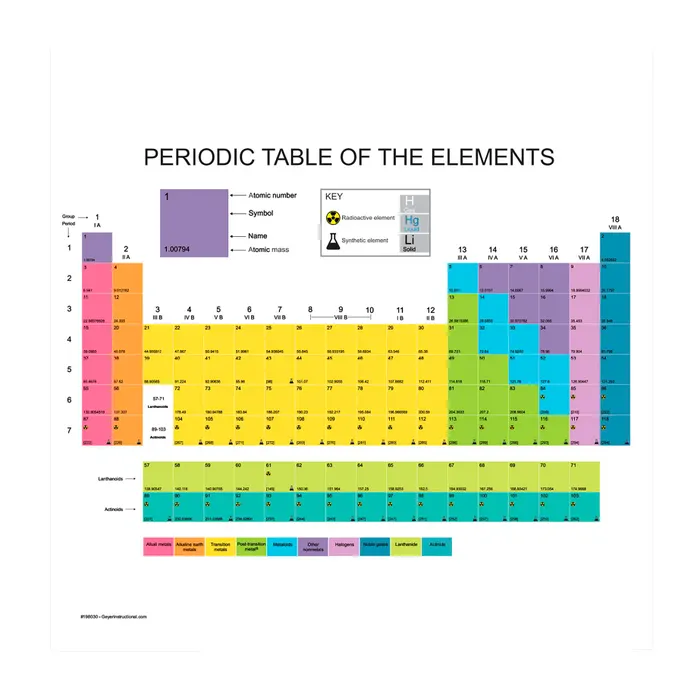
Use this image as a reminder that some magnetic periodic tables are printed as a single board, while others appear as many small magnets laid out in a grid when you browse photos on DHgate.
How to judge materials and magnet quality for classroom use
When you look at DHgate listings for magnetic periodic tables, the most important clues to classroom quality are hidden in the construction details. First, check how the magnet is applied: a full flexible magnetic sheet running across the back usually grips a metal surface more evenly and is less likely to slide, while small glued-on strips or dots can be weaker or peel if students handle the board often.
Look at the substrate—the material the print is on. Thin magnetic vinyl or laminated card can work for light use, but thicker, stiffer boards or tiles made from rigid card, plastic, or metal tend to stay flat and survive being taken down, moved, and passed around. If the listing mentions thickness in millimetres or shows a side-on photo, you can usually tell whether it is closer to a flimsy fridge magnet or a classroom-grade board.
Magnet strength and surface compatibility matter just as much. Magnets are designed to stick to ferromagnetic metals like steel, so they will not cling to glass boards, wooden doors, or some aluminum whiteboards without a separate metal backing. For a vertical classroom display, weak magnets can cause tiles to drift or fall; in listing photos, sparse or tiny magnets on the back of larger tiles are a sign you may need to be cautious.
Coatings and laminations also change how usable the table is. Glossy finishes can make colors look vivid, but they may catch glare from overhead lights and windows, making symbols hard to see from certain angles. Matte finishes usually cut down reflections and can improve readability, and a clear protective laminate can help resist smudges from hands or dry-erase markers and cope better with minor spills.
Study the print itself. Sharp, high-resolution printing with generous font sizes and strong color contrast between text and background is much easier to read from the middle or back of a room; fuzzy text, very fine lines, or pale color schemes are warning signs if you plan to use the board for serious teaching rather than up-close reference.
For a long-term wall display or a board that students will handle regularly, I would choose a design with continuous magnet backing, a relatively thick, rigid substrate, a low-glare coating, and simple, high-contrast printing—even if that means fewer decorative graphics. For occasional small-group work or home use at close range, lighter materials and more stylized layouts may be acceptable, as long as you can still clearly read the element information in the listing photos. Once you are comfortable reading these build-quality clues, the next decision is choosing a size and layout that actually fit your teaching space and typical viewing distances.
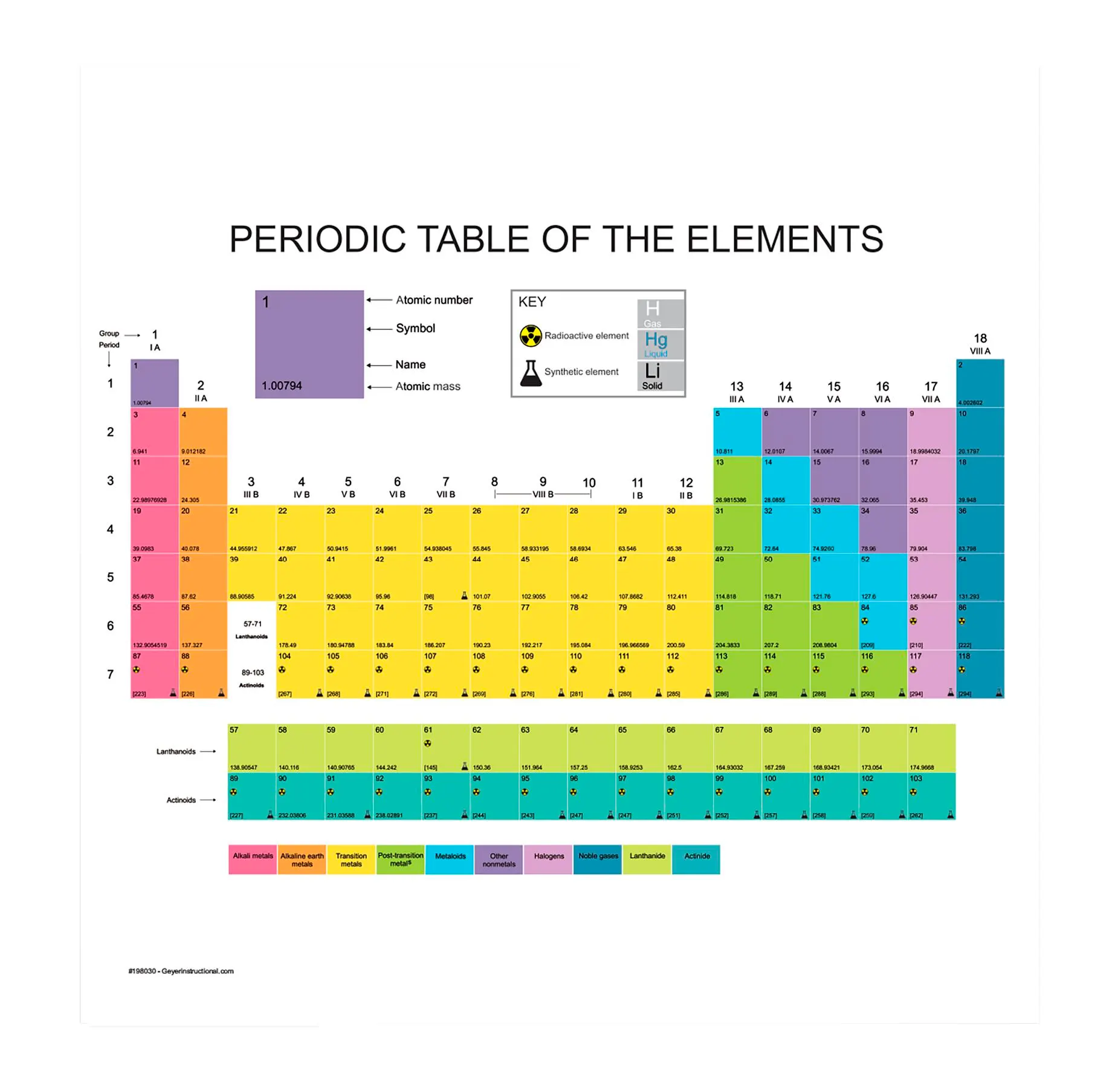
This close-up emphasizes the kind of details to zoom in on in DHgate listing photos: edge thickness, magnet coverage, and whether the printed grid and text look crisp.
Choosing the right size and layout for your teaching space
- Decide whether you need a small personal or fridge-sized magnetic periodic table (good for individual reference or decoration), a medium board that occupies part of a whiteboard or small wall area (suited to small-group or close-range teaching), or a large classroom board that spans a substantial section of a wall or whiteboard (best for whole-class viewing from the back of the room).
- Match board size to viewing distance: the farther students will stand from the board, the larger the overall table and text need to be. If you expect learners to read element symbols and atomic numbers from several metres away, aim for a board large enough that individual squares and letters are clearly visible in listing photos, not just up close.
- Plan placement in your actual teaching space. For example, a medium board might sit on one side of a shared whiteboard next to lesson notes, while a large board could occupy a dedicated section of wall above a lab bench or next to a projector screen. Think about how students move around the room and where their typical sightlines are during lessons.
- Consider layout style as well as size. Standard long-period tables with main blocks plus separate lanthanide and actinide rows and clear grid lines are usually more useful for formal teaching, especially when they include color-coded families and a legend explaining categories. Simplified layouts with fewer labels, playful graphics, or heavy decorative elements can work for younger learners or purely decorative use but may be less effective for serious chemistry instruction.
- Measure your available wall or board space before you search: note width, height, and any obstacles such as projector screens, bulletin boards, doorways, or other displays. Choose a size that fits comfortably without blocking other teaching tools and that leaves enough room around it for writing, diagrams, or classroom management materials.
- Prioritize legibility over compactness or low price. For regular teaching, it is usually better to choose a board that is large enough for students to read easily and uses a clear, uncluttered layout, even if it costs more or takes up more space, than to compromise on size and end up with a chart that only works at arm’s length.
- When you later look at DHgate search results, carry these size and layout decisions with you by checking listed dimensions and layout images against your measurements and teaching needs, rather than relying on generic photos or assuming that “large” or “classroom” in the title will automatically match your space.
Preparing to search and buy on DHgate
- Define your needs before you open DHgate: decide whether your goal is formal teaching or decoration, choose between a full-board chart and movable magnetic tiles, set a minimum usable size based on your room and viewing distance, and list must-have content such as a complete element set, clear symbols and atomic numbers, and any desired color coding or category labels.
- Translate those needs into DHgate-friendly search phrases, such as “magnetic periodic table board,” “magnetic element tiles classroom,” or “magnetic periodic table 118 elements,” so you can quickly narrow results toward the formats and content that fit your teaching plan without expecting this guide to retrieve or evaluate specific listings for you.
- Review product descriptions carefully for material and build details: look for mentions of a full magnetic sheet versus strips or dots, substrate type and thickness, coatings or laminations, stated dimensions, and listing photos that show the grid and text clearly enough that you can judge readability from your typical teaching distance.
- Check seller ratings and reviews exposed by DHgate, focusing on overall scores, the number of completed orders, and review comments about build quality, magnet strength, print clarity, shipping reliability, and whether the item matched its description and photos. Prefer sellers with consistent positive feedback and substantial order history for classroom-oriented items.
- Confirm shipping and delivery information, including estimated delivery windows and any DHgate-listed return or dispute terms. Make sure the timeline works for when you plan to use the board and that you understand what options you have if it arrives damaged, incomplete, or significantly different from the description.
- Save key listing details before ordering by taking screenshots or notes of the description, dimensions, layout images, and any close-up photos. If the page changes later or you need to open a dispute, this record helps you show what was originally promised.
- Double-check the total cost at checkout, including item price, shipping fees, taxes, and any extras, so you can compare options fairly and avoid surprises that might make a seemingly cheap board less attractive once all charges are included.
- Treat this checklist as a practical way to use DHgate cautiously but constructively: by defining your educational needs clearly, inspecting listings closely, and using the platform’s ratings and protections, you can search for a magnetic periodic table that suits your teaching space without relying on recommendations for specific sellers.
Common pitfalls and red flags when buying magnetic periodic tables
- Watch for outdated or incomplete element lists. For classroom use, you usually want a full, up‑to‑date table with all 118 elements; zoom listing photos to see whether the grid looks complete and scan reviews for comments about missing or wrong entries.
- Check for incorrect labels or symbols. Typos, swapped symbols, or misaligned atomic numbers make teaching harder; use close‑up images to spot obvious errors and treat any reviewer complaints about accuracy as a serious warning sign.
- Assess magnet strength and backing quality. Boards or tiles that slide down a metal surface or fall off during use are frustrating in lessons; look for photos showing the product on a vertical board and reviews that explicitly mention magnet strength and how well it sticks.
- Be cautious about misleading scale or unclear dimensions. A small fridge‑style board can be photographed to look classroom‑sized; rely on written measurements, convert them into units you understand, and compare them with the space and viewing distance in your teaching area.
- Scrutinize print quality and color choices. Blurry text, low contrast between text and background, or confusing color schemes can make element groups hard to distinguish; inspect any close‑up photos and pay attention when reviewers mention readability or visibility from a distance.
- Treat thin evidence as a signal to slow down. Listings with very few reviews, only polished studio renderings, or vague descriptions deserve extra caution on DHgate, especially for formal teaching where accuracy and durability matter more than decoration.
- Use these pitfalls as a pre‑check before you focus on content verification. Once a listing seems solid on magnet strength, size, and print quality, the next step is to compare its element information against a trusted reference to confirm that the periodic table itself is current and complete.
Making sure the periodic table content is up to date
- Start with a recent periodic table from a trusted educational or scientific reference you access separately, such as a modern textbook or a widely used teaching chart, rather than relying only on marketplace descriptions.
- Compare the product’s table in listing photos or sample images against your reference, checking that all 118 officially recognized elements appear and that the names and symbols for newer elements match your external source.
- Look at how elements are placed in the grid: groups and periods should follow the familiar layout, and any color coding or category labels should be consistent enough that students are not misled about relationships between elements.
- For magnetic tile sets, count the tiles and confirm that each real element appears exactly once with the correct symbol and name; be wary of sets that omit tiles, duplicate a few popular elements, or add non‑element tokens in ways that could confuse learners.
- For printed boards, scan the grid for missing blocks, duplicated entries, or obvious spacing errors; accept minor stylistic differences in fonts or colors, but treat missing elements, wrong symbols, or major layout problems as disqualifying for formal teaching.
- Apply stricter standards when the board will be a primary teaching tool and consciously relax them only if you are buying a decorative or novelty design that will not be used for serious instruction, so your expectations match how you plan to use the magnetic periodic table.
Practical FAQs: surfaces, mounting, and alternatives
Will a magnetic periodic table work on non‑metal surfaces like glass or wood?
Magnets only stick reliably to ferromagnetic metals such as steel, so a magnetic periodic table will not cling to glass boards, wooden doors, or many aluminum or composite boards on its own. If your main surface is non‑metal, you can add a thin steel sheet or metal-backed panel in the area where you want the table, then place the magnetic board or tiles on that. Otherwise, treat the magnetic set as a movable resource and use a different display method (such as a poster) for your main wall reference, keeping the same priorities of clear printing, durable materials, and accurate content that you would apply to DHgate listings.
What tools or accessories might I need to mount a magnetic periodic table safely?
For a board designed to stick directly to a metal surface, you may only need the compatible metal backing; for heavier or larger boards, simple accessories like hooks, rails, or frames can help keep them secure. On non‑metal walls, many teachers use adhesive strips or hooks that are rated for the board’s weight and compatible with the wall material, or place the magnetic sheet inside a frame that is then hung normally. Always follow the manufacturer’s instructions for any mounting hardware and respect local safety expectations in classrooms, especially above student seating or traffic paths.
Is it reasonable to make a DIY or custom magnetic periodic table if I can’t find a suitable ready‑made one?
A DIY or custom approach can be reasonable if you have specific needs that ready‑made boards on DHgate do not meet. A common high‑level method is to print a clear, up‑to‑date periodic table on paper or card and bond it to flexible magnetic sheets, or to create individual element tiles by mounting small prints onto cut magnetic pieces. Some buyers also commission custom prints from local or online print shops and then add magnets. If you take this route, apply the same checks as for purchased products: use an accurate, modern table, choose materials that will survive handling, and aim for fonts and colors that students can read easily from your typical viewing distance.
Are there non‑magnetic alternatives that still work well for teaching the periodic table?
Yes. If magnets are impractical in your space, you can use posters, laminated wall charts, flip‑charts, or digital displays such as projector slides or interactive whiteboard software. Posters and laminated charts provide a constant visual reference, while digital tools can add color coding, animations, or zooming for detailed discussion. These alternatives can complement or fully replace a magnetic board; the same principles still apply wherever you obtained them, including DHgate products or your own materials—prioritize clear, accurate content, durable enough construction for your setting, and layouts that students can read comfortably from where they sit.