
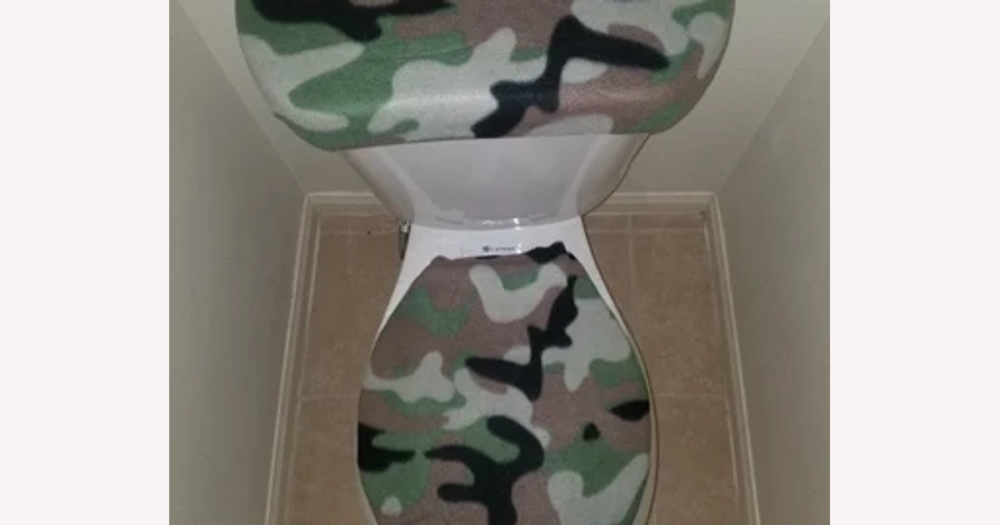
On DHgate, the “best” camouflage toilet seat for outdoor-style use is usually a standard residential seat with camo graphics that still fits your toilet securely and holds up in a cabin or shed—not a piece of survival gear. This guide explains how to judge materials, fit, and hardware for semi-outdoor bathrooms and how to combine that with simple DHgate checks on sellers, shipping, and refunds before you commit to a specific listing.
What “camouflage toilet seats for outdoor use” really means
On DHgate, most “camouflage toilet seats for outdoor use” are regular residential toilet seats with camo graphics, often promoted for hunting cabins, rustic bathrooms, or outdoor-themed homes—not heavy-duty survival toilets or fully weatherproof gear. They’re designed for standard bowls in spaces where the toilet itself is still sheltered.
In this guide, “outdoor-style use” means semi-sheltered setups such as hunting cabins, sheds, garages with a toilet, or lodge bathrooms where the seat is protected from direct rain and strong sun but may face temperature swings, more dirt and mud, and rough handling. In these spaces, I care much more about a seat that fits securely and feels solid than about having the most detailed camouflage print.
For semi-outdoor or rougher bathrooms on DHgate, it makes sense to prioritize clear sizing information, sturdy materials, and solid hinges and mounting hardware before you worry about how intricate the camo graphics are. If someone just wants a decorative indoor look on a tight budget, it’s reasonable for them to pick a cheaper, more visually dramatic camo seat and accept that it may be lighter and less durable.
This page does not cover medical or wellness outcomes such as posture or back support, and it treats these seats as ordinary toilet accessories rather than specialized health products. For truly exposed outdoor toilets—like open outhouses that see direct rain, snow, and UV—many camo seats sold on DHgate may not be suitable, and buyers may need more specialized, weather-resistant solutions than a typical decorative camo seat can provide.
How materials and finishes handle semi-outdoor conditions
For a conventional camo seat in a semi-sheltered bathroom, the next question is which materials and finishes will cope best with that environment. The main options you’ll see on DHgate are solid plastic, solid wood, MDF or other engineered wood, and specialty camo finishes such as hydro-dipped patterns or 3D lens overlays on top of those cores.
Solid plastic seats are generally lighter, non-porous and more moisture resistant, so they’re less prone to swelling and are easier to wipe clean when a cabin or shed bathroom gets damp or muddy. They can feel less substantial than heavy wooden seats, but for spaces with humidity, condensation, or big temperature swings, plastic often behaves more predictably over time.
Solid wood seats usually feel heavier and more substantial, which many people like in a rugged setting, but they depend on good sealing. If the clear coat or paint is thin or damaged, wood can absorb moisture, leading to warping, cracking or roughened edges. In a semi-outdoor bathroom where the air is often damp or the seat sees frequent cleaning, a well-sealed wood seat from a careful manufacturer is very different from a roughly finished one with exposed grain or poorly protected screw holes.
MDF and other engineered-wood cores are common in budget camo seats. They can be comfortable and keep costs down, but they are especially vulnerable wherever edges, cut-outs and screw holes are not properly sealed. In a cabin or shed, repeated exposure to moisture around the hinges or underside can make MDF swell, chip, or crumble, even if the top surface looks attractive at first. That’s why unclear descriptions about sealing or very thin-looking edges in photos deserve extra scrutiny.
Camo finishes themselves—printed films, hydro-dipped coatings, or 3D lens overlays—add the pattern but don’t change the underlying material’s basic behavior. These decorative layers can scratch, fade or peel over time, especially if you use harsh cleaners, scrub aggressively, or keep the seat in a space with more humidity and temperature change. In a practical sense, that means the finish is something you protect with gentle cleaning, not a guarantee that the seat is “outdoor-tough.”
All of these are general tendencies, not promises for a specific DHgate listing. Real durability depends on the overall manufacturing quality, how well joints and edges are sealed, and how the seat is used and cleaned. If I expect more humidity, larger temperature swings, or rough use in a cabin or shed, I would lean toward moisture-resistant plastic or a well-sealed quality wood seat rather than bare or cheaply finished MDF, even if MDF offers a more dramatic camo pattern at a lower price. Practical drawbacks like swelling or chipping in poorly sealed MDF and visible wear in camo coatings are realistic risks to factor into expectations, not guaranteed failures, but they’re worth considering before you place an order.
Getting the right fit and compatible hardware
- Confirm your bowl shape. Look straight down at the toilet and check whether the rim outline is more circular (round) or stretched into an oval (elongated). For a clearer check, measure from the center of the mounting holes near the tank to the very front edge of the bowl: shorter measurements usually indicate a round bowl, longer ones an elongated bowl. Many camouflage seats are elongated by default, so matching this first avoids obvious misfits.
- Measure the key dimensions. With a tape measure, note three numbers: the bowl length (from the center of the mounting holes to the front edge), the width at the widest point, and the distance between the two mounting holes. Write these down so you can compare them directly with any dimensions shown in DHgate listings or photos.
- Compare your measurements with the listing specs. Most camo toilet seats follow standard residential sizes, but there are small variations between brands and toilet models. Look for a dimension diagram or clearly listed length, width, and hole spacing, and check that they closely match your measurements, allowing only for minor differences of a few millimetres rather than whole centimetres.
- Check the mounting hardware style. In the description and photos, look for whether the seat uses traditional top-mount bolts that drop through the holes near the tank, a top-fix system designed for access only from above, or a bottom-fix style that needs access under the rim. Note any mention of quick-release hinges. Make sure this style fits your toilet’s existing holes and that you can realistically reach the bolts from above or below in your cabin or semi-outdoor setup.
- Treat vague fit information as a warning sign. If a listing doesn’t clearly state whether the seat is round, elongated, or “universal,” and offers no basic measurements or hinge spacing, treat it with caution—especially if replacing a seat in a harder-to-access semi-outdoor bathroom. In those cases it’s safer to skip the listing than risk a seat that ends up short, misaligned, and prone to shifting around under use.
A camouflage pattern only matters if the seat actually fits and stays put, so on DHgate I would always choose a camo seat with complete dimensions, hinge spacing, and clear photos over a more dramatic design that leaves the fit details vague and risks feeling wobbly or incompatible once installed.
Full installation steps are beyond this guide; the goal here is to handle the basic shape, measurement, and hardware checks before you order so you avoid the most obvious misfits in your cabin or semi-outdoor bathroom.
Features that make camo seats easier to live with
Most camouflage toilet seats on DHgate advertise a familiar set of extra features: slow-close or soft-close lids that lower themselves instead of slamming, quick-release hinges that let you detach the seat for cleaning, easy-clean or anti-stain surface claims, and non-slip pads or adjustable fittings meant to keep the seat stable. Slow-close hinges are designed to control the lid’s descent so it doesn’t bang against the bowl, which can be useful in cabins or thin-walled rooms where noise carries. Quick-release hinges are meant to let you pop the seat off the bolts so you can wipe away the extra dust, cobwebs, or mud that often collects around fixtures in semi-outdoor bathrooms. Non-slip pads and adjustable fittings aim to reduce side-to-side movement when people sit down, which matters more when users may be wearing heavier gear or sit with more momentum.
These design ideas are helpful in theory, but their value in a rugged setting depends on how well the hinges, bolts, and plastic parts are made. Low-cost slow-close mechanisms can start dropping faster or become uneven over time, and quick-release parts can loosen if they’re repeatedly removed and snapped back on in a rough way. Coatings or films marketed as easy to clean can still scratch, dull, or discolor if you use abrasive pads or strong chemical cleaners, especially in bathrooms where you are tackling heavier dirt.
Because of that, I would rather have a solid-feeling seat with simple, dependable hinges than a long list of convenience features built on flimsy hardware. If budget is tight, I’d sooner skip the soft-close function or a quick-release mechanism than accept thin bolts or a seat that flexes when you sit down, particularly in a semi-outdoor or cabin bathroom where use can be rougher.
Camo graphics themselves add another tradeoff. A patterned lid and seat can hide minor marks, dust, or hair more effectively than a plain white surface, which some people like because the seat looks cleaner between deep scrubs. At the same time, that camouflage can make it a little harder to see exactly where dirt or scratches are building up, so it’s worth running a hand and cloth over the whole surface rather than relying on a quick glance to judge cleanliness.
Decorative indoor camo vs more rugged designs
When you scan camouflage toilet seats on DHgate, you’ll see two broad types. Decorative indoor camo seats lean heavily on appearance: thin plastic or unsealed MDF cores, sometimes with plush or fabric covers, and listing copy that talks more about hunting themes, novelty graphics, or 3D patterns than about build quality. These can be perfectly adequate in low-use, climate-controlled bathrooms where the toilet isn’t exposed to big temperature swings or rough handling and the main goal is a bold visual statement.
More rugged designs usually look simpler but feel more substantial. They tend to use solid plastic or well-sealed wood, with thicker lids and fewer frills, plus hinges that appear reinforced or incorporate metal components. Descriptions are more likely to emphasize durability, heavy-duty or family use, and easy cleaning rather than just the camo print. Even so, nearly all of these products are still fundamentally indoor residential seats, not industrial outdoor fixtures, so it’s better to think in terms of relative sturdiness rather than expecting true weatherproof gear.
For hunting cabins, sheds, unheated bathrooms, or garage setups, I would lean toward this sturdier, cabin-ready category even if the graphics are simpler or less intricate. In a low-use, fully indoor bathroom where conditions are stable, choosing a lighter, more decorative camo seat can be a reasonable trade if you’re prioritizing style over robustness. As you read DHgate listings, use cues like the stated materials, visible hinge quality in photos, and whether the description highlights durability and easy cleaning or just novelty to decide which camp a seat belongs to before you buy.
A pre-purchase checklist for DHgate camo toilet seats
- Confirm the seat material and camo finish type in the description, looking for clear terms such as solid plastic, wood, MDF, printed pattern, or hydro-dipped coating so you know how it’s likely to behave in your bathroom.
- Check that the bowl shape indicated (round, elongated, or universal) and any listed dimensions match your own measurements for length, width, and mounting-hole spacing to avoid obvious fit problems.
- Review hinge and hardware details, noting whether hinges and bolts are metal or plastic, whether the seat includes slow-close or quick-release features, and what mounting style is described so you can judge sturdiness and compatibility.
- Inspect product photos for views of both the top and underside of the seat, including hinges and bolts, and be cautious of listings that rely only on mock-ups or omit clear hardware close-ups.
- Assess listing quality by checking whether materials, dimensions, and features are spelled out precisely instead of being described only in broad, promotional language about comfort or style.
- Check DHgate seller information: overall ratings, feedback trends, how many orders of similar items have been fulfilled, and any recurring comments about build quality or shipping issues when those are available.
- Review shipping options and estimated delivery times, watch for unusual costs or long delays, and skim DHgate’s dispute and refund terms so you understand how damage or mis-shipped items would be handled if something goes wrong.
Risks, red flags, and when to skip a listing
- Be cautious of listings that omit basic seat dimensions or mounting-hole spacing, leaving you to guess whether the camo seat will fit your toilet.
- Treat vague material descriptions—such as “premium material” or “high-quality seat” with no clear mention of plastic, wood, or MDF—as a sign to slow down and seek clarification before ordering.
- Watch out for listings that rely on only one or two low-quality or heavily edited images, especially if there is no view of the underside, hinges, or bolts, because important details can be hidden.
- Consider extremely low prices compared with similar camouflage seats a potential indicator of thinner materials or weaker hardware, particularly when the description and photos are incomplete.
- Look carefully at DHgate seller history: very few completed orders or consistently poor feedback across items should prompt extra caution before you commit to a purchase.
- When several of these red flags show up together—missing specs, vague materials, sparse photos, rock-bottom pricing, and weak seller history—it is usually safer to skip that listing and choose a clearer alternative, even if it costs a little more, than to assume everything will be fine and risk avoidable hassle later.
What specs can tell you—and what they can’t
Concrete specs in a DHgate listing are your most useful clues about how a camouflage toilet seat might behave. Knowing whether the core is solid plastic or MDF, whether the hinges are metal or plastic, and whether slow-close hardware is clearly stated can support reasonable expectations about moisture resistance, sturdiness, and how the seat will feel in everyday use, even in a cabin or semi-outdoor bathroom.
By contrast, broad marketing phrases like “ultra-durable,” “heavy-duty,” or “perfect for outdoor use” are not tied to measurable data in the description. They can signal how the seller wants the product to be perceived, but they don’t prove long-term performance on their own, especially when the environment is more demanding than a standard indoor bathroom.
A single glowing review or polished promotional paragraph also doesn’t establish what most buyers will experience. Different toilets, installation quality, cleaning routines, and humidity levels all affect how a camo seat holds up, so real-world outcomes will always vary.
Treat the specific specs as comparison points you can rely on more—material type, hinge construction, clearly stated features—and treat broad marketing language as aspirational rather than guaranteed. That cautious, practical approach lets you use product descriptions to narrow options without assuming any listing can promise a particular level of durability or comfort in your own outdoor-style setup.
Camouflage toilet seat FAQs for outdoor-style setups
Can I use a standard camouflage toilet seat on a bucket or portable toilet?
Most bucket and portable toilets need purpose-built seats or lids that lock onto their specific rim shape. A regular residential camo seat is designed for ceramic bowls with standard mounting holes, so it usually won’t attach securely to a bucket or portable base. Only consider using one if the product explicitly states compatibility with that type of system and shows how it mounts; otherwise, treat it as suitable for standard toilets only.
How should I clean and care for a camouflage toilet seat so the pattern lasts longer?
Use a soft, non-abrasive cloth or sponge and cleaners that are appropriate for the underlying material—such as mild bathroom cleaners for plastic or sealed wood. Avoid scouring pads, stiff brushes, and strong solvents or bleach-heavy products on printed, hydro-dipped, or coated camo finishes, because they can speed up fading, scratching, or peeling. Wiping the seat regularly with gentle products is better than occasional aggressive scrubbing in an outdoor-style bathroom.
Are there any special outdoor-use certifications for camouflage toilet seats?
Camo toilet seats are typically sold as standard residential accessories and do not carry dedicated outdoor-use certifications. You’ll rarely see formal ratings for weather exposure or cabin environments. Instead, judge suitability by the core material (for example, moisture-resistant plastic versus vulnerable MDF), how well edges and hardware appear to be finished, and the overall quality cues in the description and photos, then match those to your bathroom’s humidity and temperature conditions.
Can I use a camouflage toilet seat in an unheated bathroom or garage?
Yes, many camo seats can be used in unheated spaces as long as the toilet itself is protected from direct weather. In those rooms, temperature swings and occasional dampness are more likely, so it’s sensible to favor sturdier materials like solid plastic or well-sealed wood and decent hardware over thin, decorative MDF. Some wear to the pattern or surface over time is normal in harsher conditions, so treat the camo graphics as an aesthetic bonus rather than proof of special outdoor durability.