
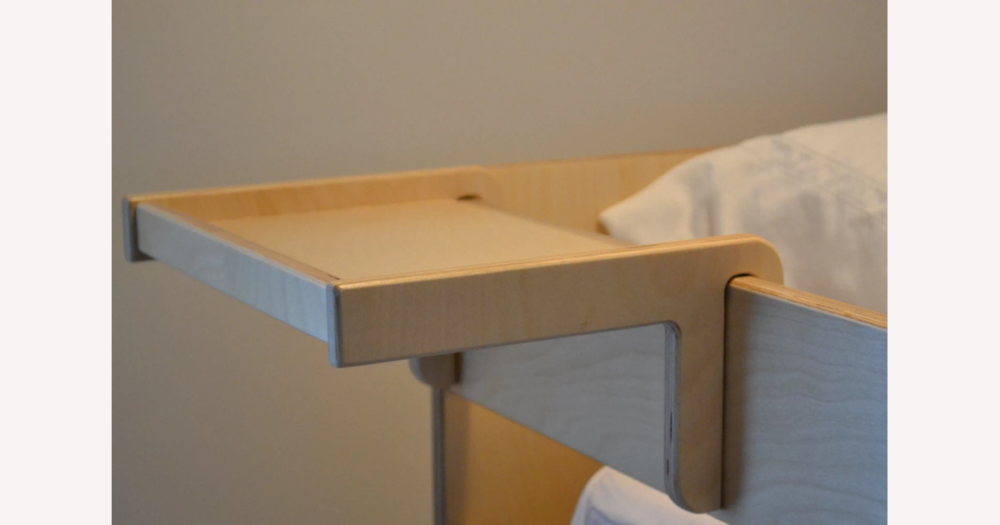
If you’re browsing DHgate for bunk bed shelves or clip‑on nightstands, begin with a clear attachment method, measured fit and believable weight capacity. Check basic material quality next, and leave price and style until later. This guide doesn’t test specific products, but it shows you how to read DHgate specs, photos, feedback and buyer protections so you can tell which low‑priced options are likely to be solid enough for everyday use and which vague listings are too risky to bother with.
How to trade off durability, affordability and compatibility
On DHgate, the safest way to choose bunk bed shelves or clip‑on nightstands is to put secure attachment and fit first, then basic durability, and only after that price and style. I would pass on any shelf that doesn’t clearly show how it attaches, what bed types it suits, and what load it can carry, because this guide doesn’t test or endorse specific products—it only shows you how to read DHgate listings and infer likely quality from specs, photos and buyer feedback.
Before you even think about price, check four non‑negotiables: a clear attachment method that matches your bunk layout (for example, hooks over flat rails or clamps that open wide enough for round posts); full dimensions and a stated clamp or rail range you can compare to your own measurements; a stated or at least plausible weight capacity for what you plan to place on the shelf; and material and construction details that don’t look disposable, such as brackets that aren’t paper‑thin and hardware that isn’t flimsy plastic for heavy loads.
If a DHgate listing is vague about how the shelf mounts, skips key measurements, hides its materials, or says nothing about load capacity, the safer move is to treat it as higher risk or skip it entirely, even if the price is tempting. In practice that often means paying a little more for shelves with transparent specs, clearer photos and robust‑looking construction, or—if your budget is extremely tight—accepting simpler styling and cheaper but still functional materials only when seller ratings, order terms and DHgate’s buyer protections give you enough confidence that you won’t be stuck with something useless or unsafe. The next sections break down attachment styles, materials, compatibility checks, seller reliability and platform protections so you can apply this trade‑off step by step on DHgate.
Main types of bunk bed shelves and how they attach
Most DHgate bunk bed storage falls into a few attachment styles. Clip‑on or clamp‑on shelves hook over or grip the bunk rail using brackets or jaws; when the hooks are deep and the clamps tighten firmly, they usually feel solid enough for a book, phone and water glass, but thin metal hooks or shallow clamps can wobble, rattle or tilt if the sleeper bumps them or leans on them. These designs depend heavily on how well the bracket shape matches your rail and how much surface the clamp actually grips.
Hanging fabric or felt bed pockets either hook over the rail or slide under the mattress with a flap. They add soft storage for lightweight items like glasses, a small book or a remote, but the fabric and stitching limit their load: overfilling them or putting hard, heavy objects inside can stretch the pockets, cause tearing or make them sag. They’re usually quieter than rigid shelves but still move when the bed shakes, so they’re best treated as light‑duty organisers rather than mini bedside tables.
Wall‑mounted floating shelves near bunks are fixed to the wall with screws and anchors, then positioned at a reachable height for the sleeper—especially the top bunk. Their stability depends on proper wall anchors, the wall material and room layout; securely anchored shelves can hold heavier items, but they require careful installation and enough clearance so the sleeper doesn’t bump their head when getting in or out of bed.
Integrated nightstands or shelves are built into the bed frame or sold as a dedicated add‑on kit for a particular bunk model. Because they share structure with the frame, they tend to feel the most stable and move least when the sleeper turns over, but they’re less flexible: you usually need a matching bunk or a kit designed for your exact bed, and they may be harder to replace or reposition later.
At budget level, all of these types can be made with thinner brackets, cheaper fabric and basic hardware, which increases wobble and wear; mid‑range versions typically use thicker metal, stronger fasteners and better stitching, reducing rattle and improving confidence when you put weight on them. Whatever you choose, attachment type is a major safety factor—a shelf that can be knocked off with a bump is a bad trade‑off no matter how cheap it is. The next section looks more closely at materials and construction details so you can separate flimsy from genuinely solid examples within each attachment style.
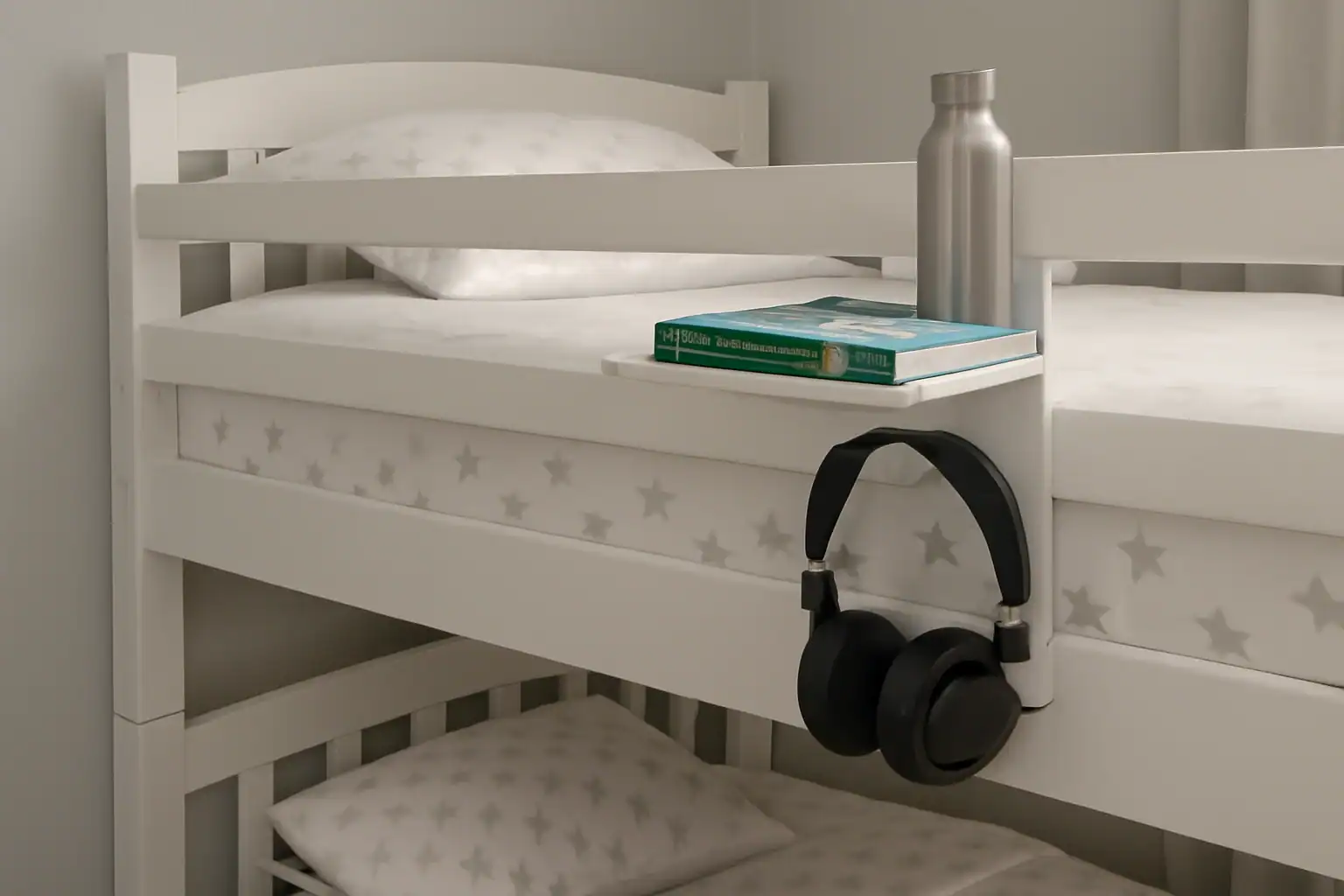
Examples of clip-on bunk bed shelves and other add-on storage mounted at the side of a bunk bed.
Materials and construction: what feels solid at a budget price
For bunk bed shelves and nightstands on DHgate, the material and how it’s put together matter more than decorative design. Powder‑coated steel is usually the most predictable at a budget price: if the metal is reasonably thick and the brackets wrap well around the rail, it resists flexing and sagging and is less likely to creak. Very thin steel that bends when you press it, or narrow hooks that only touch the rail at one small point, tend to wobble and rattle whenever someone climbs the bunk.
Solid wood can feel warm and substantial, but its sturdiness depends on board thickness and how it’s joined. A chunky, well‑sanded shelf with smooth edges and firmly fixed brackets will usually feel solid; a narrow, lightweight board with visible cracks, rough edges or minimal fixings is more likely to splinter or loosen over time. Engineered boards like MDF or particle board are common in budget shelves: they can work well if they’re reasonably thick, sealed with decent edge banding and supported by metal brackets, but very thin MDF with exposed crumbly edges is prone to swelling, chipping and long‑term sag.
Plastic components and fabric pockets suit lighter loads. Rigid plastic rails or hooks can be fine for small items if they don’t flex easily when squeezed, but very soft or brittle plastic can crack. Fabric or felt pockets rely on stitching, fabric weight and reinforcement: heavier fabric with double‑stitched seams and a wide flap over the rail will cope better with nightly use than thin material with single stitching. These pockets are best treated as light‑duty organisers for glasses, remotes or a slim book rather than a full bedside table for heavy devices or drinks.
Construction details tell you a lot about stability and noise. Look closely at welds and joints in listing photos: neat, continuous welds and firmly screwed brackets usually feel quieter and more stable than spotty welds, loose rivets or brackets that only touch the rail at two tiny points. Multiple contact points along the rail spread the load and reduce tilting; a single hook right in the middle makes the shelf easier to knock sideways. Screws and bolts that can be tightened are generally more reassuring than flimsy press‑fit hardware you can’t adjust.
Because this guide can’t test individual products, you have to read DHgate photos and descriptions critically. I look for close‑ups of brackets, welds and underside views, mentions of board or metal thickness, and a stated maximum load in kilograms. Claims like “unbreakable”, “industrial strength” or “super heavy duty” don’t mean much on their own; treat them as advertising unless they’re backed by specific specs, clear photos and, ideally, buyer pictures that show real‑world use.
Reasonable budget compromises include choosing MDF instead of solid wood when the board looks thick, edges are neatly banded and the shelf is well supported; picking a plain powder‑coated steel shelf with simple but deep brackets instead of a decorative design; or using lighter‑duty fabric pockets for soft, lightweight items while keeping heavier objects on a more robust surface. What I wouldn’t compromise on is basic safety: anything that looks sharp, poorly finished, rusty, splintered or likely to peel where a child sleeps should be avoided, no matter how cheap it is or how stylish the photos appear.
Checking fit: will this shelf work on my bunk bed?
- Measure your bunk bed rails carefully: note their height and thickness, and whether they’re round, square, or flat bars. Measure the distance from the top of the mattress to the top of the rail so you know how much space a shelf or pocket has to hang or clamp.
- Measure the clearance from the mattress surface to the ceiling or any overhead obstacle, especially for the top bunk. Make sure there’s enough headroom for the sleeper plus any shelf height without risking bumps when sitting up.
- Check the listing dimensions against your measurements. For clip‑on shelves, compare your rail thickness with the hook opening shown in the specs or diagrams; for clamp‑on designs, make sure your rail falls comfortably within the stated minimum and maximum clamp range.
- For hanging fabric pockets, look for the length of the flap or straps in the listing and compare it with your mattress thickness and rail height. The flap needs to be long enough to wrap securely over the rail and sit at a sensible height beside the sleeper.
- Confirm whether the shelf is meant to mount on the side or the end of the bed, then think about ladders, guard rails, walls or windows that might block that position or make it awkward to use.
- Use any diagrams, scale drawings or photos with rulers that appear in the listing to visualise how the shelf will sit on your rails and in your room. Cross‑check these images against your own measurements rather than relying on rough impressions.
- Once you’ve compared all measurements, rule out any shelf that cannot clamp or hook securely to your rail shape or would sit uncomfortably close to the ceiling. A poor fit or tight headroom is not worth the risk, even if the price is low.
Short video demonstrating how to measure bunk bed rails and ceiling clearance, then attach a hook‑on shelf so the brackets grip firmly and the shelf sits at a safe height.
Reading DHgate product pages without being misled
On a DHgate product page for a bunk bed shelf, start by separating hard information from marketing gloss. The title, bullet specs, size charts, detailed description, images and buyer reviews each play a different role, and your goal is to lean on the elements that can actually be checked: numbers, materials and clear attachment diagrams.
Use the title mainly to confirm you’re looking at the right general type—clip‑on shelf, hanging pocket, wall‑mounted rack—then move quickly to the bullet specs and any size chart. Here you’re looking for measurements given with units (for example, centimetres), clear material names such as powder‑coated steel, pine, MDF or canvas, mentions of thickness for metal and boards, and a stated maximum weight capacity. Diagrams or line drawings that show how the shelf clamps or hooks to a rail or wall are especially useful, because they help you compare the design to the rail measurements you’ve already taken.
Cross‑check these details wherever they appear. If the bullet list says the shelf is 30 cm deep but the size chart shows a different number, treat that as a warning sign and assume the dimensions are uncertain. Look for photos that include rulers, tape measures or familiar objects (books, phones, mugs) to give a sense of scale, and check that this visual impression matches the written measurements. When depth, width or height are only shown in a diagram, make sure those figures also appear in text somewhere, not just as unlabeled lines on an image.
Treat the detailed description as supporting material, not your main evidence. Phrases like “super strong”, “premium quality” or “heavy‑duty” are marketing unless they are backed by concrete data: metal gauge or thickness, load limits, close‑up photos of brackets and welds, and specific notes on how the clamps grip the rail. If the language is bold but the numbers are vague or missing, assume the listing is trying to sell you a feeling rather than a proven capability.
Apply the same scepticism to heavily styled lifestyle photos. These can make a shelf look attractive but often hide hardware, clamp range or how much of the rail the bracket really covers. Scroll through the full image gallery for plainer shots that show the underside of the shelf, the clamps or hooks from different angles, and any scale references. Buyer‑uploaded photos and reviews are often more revealing for finish quality and fit: comments about accurate measurements, solid construction or the shelf feeling stable when bumped are more useful than generic praise.
Any missing key specification should be treated as an unresolved risk, not a minor detail. If you cannot find weight capacity, clamp or hook opening range, primary shelf dimensions, or clear images of how it attaches, you’re being asked to guess. For a structural accessory like a bunk bed shelf, that guess can easily lead to wobble, misfit or unsafe loading. If a listing otherwise looks promising, message the seller to ask for exact measurements or clearer photos; if they cannot provide them, it is safer to skip that shelf and choose a listing with full specs, even when the vague one is cheaper. This method can’t guarantee perfect performance, but it significantly improves your chances of buying a shelf that behaves as described.
Judging DHgate sellers for a medium‑risk purchase
Once you understand how to read an individual DHgate listing, you still need to decide whether the seller behind it is trustworthy enough for a medium‑risk item like a bunk bed shelf. DHgate seller pages usually show an overall rating score, the number of reviews or completed transactions, how long the store has been active, and the content of buyer feedback, often with photos. These are signals, not guarantees, but they help you judge whether a low price is backed by a stable business or a shop you’d rather avoid.
In general, a seller with a longer history on the platform, many successful transactions and consistently high ratings inspires more confidence than a brand‑new shop with only a handful of reviews. A store that has been active for years, has handled a substantial volume of orders and still sits near the top of the rating range is less likely to be cutting corners on quality or service. By contrast, a newly opened shop with very few sales and only vague feedback simply hasn’t had enough time to prove itself, which matters when you’re buying something that has to support weight at the side of a bunk.
Look closely at patterns in the comments, not just the average score. Warning signs include multiple buyers saying items didn’t match the description, hardware felt flimsy, shelves were smaller than expected, measurements were inaccurate, packaging arrived damaged, shipping took far longer than estimated, or communication was poor when problems arose. Clusters of similar complaints about mis‑sized products or weak clamps are especially serious for bunk bed shelves, because they point to systematic issues rather than one‑off mistakes. Ratings that have recently dropped, or a stream of new negative reviews after a change in product range, are further red flags.
Positive signals are the mirror image: detailed feedback that mentions accurate measurements, solid construction, brackets that grip well, finish that looks like the photos, and responsive customer service when buyers ask questions or report minor issues. Photos from buyers showing the shelf installed on a bunk, with comments that it feels stable and matches the listed dimensions, support the idea that this seller takes specs seriously rather than relying on marketing language alone.
Personally, I would be cautious about trusting a very cheap, structurally important bunk shelf from an untested seller, especially if the listing itself is vague about materials, thickness or clamp range. For this kind of accessory, I’d rather pay a little more to buy from a seller with a reasonable track record, clear specs and solid feedback than gamble on the absolute lowest price. If my budget were extremely tight, I might accept simpler materials or a plainer design, but only if the seller history looked reliable enough that I wasn’t likely to end up with a mis‑described or unsafe shelf.
When you weigh up a listing, factor seller reliability into how much uncertainty you’re willing to tolerate. Missing specs or modest quality compromises are easier to accept from a store that has delivered accurate, durable products before than from one with no track record. DHgate’s protection systems exist to help when things go wrong, but they work best when you start with sellers who already show a pattern of fulfilling orders as described. Treat the seller page as part of the product decision, not an afterthought, so that your bunk bed shelf choice reflects both the hardware you see and the behaviour of the shop behind it.
Common problems with bunk bed shelves and how to reduce the risk
Step‑by‑step DHgate buying checklist
- Measure offline first. Note bunk rail thickness, height and shape, mattress thickness, and room height, and decide who will use the shelf (child, teen, adult) and what they’ll store on it—small items like a phone and book, or heavier objects like textbooks.
- Shortlist attachment styles that fit those needs and constraints. If rails are sturdy and accessible, clip-on or clamp-on shelves or hanging pockets may suit; if rails are awkward or obstructed, consider wall-mounted shelves near the bunk or integrated nightstand-style units instead.
- Scan DHgate results with broad filters such as material, colour or rough size, then quickly discard any listing that doesn’t clearly show how the shelf attaches, omits key dimensions, or uses only generic marketing phrases without concrete specs.
- For remaining options, compare each listing’s measurements and attachment diagrams to your notes. Rule out designs whose clamp range cannot cover your rail thickness, whose hooks won’t sit securely on your rail shape, or whose position would interfere with the ladder, guard rails or typical movement around the bunk.
- Check the seller behind each shortlisted listing. Look at overall rating, number of transactions, shop age and detailed buyer feedback, and drop sellers with repeated complaints about mis-described products, flimsy hardware, inaccurate measurements or poor communication, especially for items similar to bunk shelves.
- Review shipping costs and estimated delivery times to Australia, and note any general customs or GST information shown in DHgate’s interface. Make sure the total cost, possible taxes and delivery window are acceptable for your budget and timing.
- Check available payment methods and read DHgate’s order protection or refund information where it appears in the checkout flow or help sections, so you understand in broad terms how long you have to raise an issue and what conditions apply if the shelf arrives damaged or different from the description.
- Pause before placing the order. If any important detail about fit, materials, weight capacity or protections is still unclear, message the seller with specific questions or choose a listing with clearer specs and stronger evidence instead of buying on hope. Treat unanswered questions as a signal to step back rather than a minor inconvenience.
Following this sequence—measure first, choose attachment styles that suit your bunk, then work through specs, photos, seller signals, shipping and DHgate’s protections—turns scattered checks into one coherent decision. Instead of chasing the lowest price, you build confidence that the shelf you pick is likely to fit, feel solid and come from a seller and order setup that leave you better protected if something goes wrong.
What DHgate order protection and disputes can (and can’t) do for you
On DHgate and similar marketplaces, physical goods like bunk bed shelves are usually covered by an order‑protection window: a period during which you can open a dispute if the item arrives damaged, significantly different from the description, or fails very soon after delivery. Within that window, possible outcomes often include a full refund, a partial refund, or another negotiated solution, but the exact rules and options depend on DHgate’s current policies and the details of your case, so it’s important to read the latest buyer‑protection and refund information on the site before you place an order.
There are several practical steps you can control if something goes wrong. Keep all communication with the seller inside DHgate’s messaging system so there is a clear record. As soon as you notice a problem, take clear photos or short videos of any damage, obvious defects, or mismatches in size or attachment, and save screenshots of the original listing showing the key specs, dimensions or features that were not met. Disputes are much easier to argue when you can show that you followed the listing instructions, used the shelf as intended, and that the issue is genuine rather than the result of misuse or a misunderstanding.
Order protections are time‑limited, so don’t wait: inspect and test the shelf shortly after it arrives instead of leaving the box untouched for weeks. If you do need to raise a dispute, submit it within the stated protection period and include your evidence and on‑platform message history. These systems can reduce risk and give you recourse when a shelf is damaged or not as described, but they are not a substitute for careful pre‑purchase checks on materials, fit, seller reliability and shipping terms—the more thorough you are upfront, the less likely you are to need the dispute process at all.
FAQ: edge cases and missing details
Can I use a bunk-style shelf on a standard bed frame or loft bed?
Yes, many bunk-style clip-on or clamp-on shelves can work on standard frames or loft beds, but only if the rails match the shelf’s hook or clamp range. Treat it as a fresh compatibility check: measure the rail thickness, height and shape on the new bed, compare those numbers to the listed clamp or hook opening, and check ceiling or wall clearance so nobody hits their head. If the rail is much thinner, thicker, rounder or lower than the shelf was designed for, the attachment can wobble or slip, so it’s safer to skip that setup or choose a design clearly meant for your frame.
How noisy are clip-on bunk bed shelves in everyday use?
Some movement and light noise are normal, especially when someone climbs the ladder or turns over, but well-designed shelves shouldn’t rattle constantly. Designs with multiple contact points along the rail, brackets that wrap deeply, rubber or silicone pads between metal parts and the rail, and clamps that tighten firmly tend to stay quieter. Thin hooks that only touch in one small spot, loose hardware and bare metal-on-metal contact are more likely to creak or buzz. If you’re noise-sensitive or buying for a child, favour listings that show padded contact surfaces and sturdy, wrap-around brackets rather than minimalist hooks.
What should I do if a DHgate listing doesn’t show key measurements or weight capacity?
Treat missing specs as a real risk, not a minor omission. If clamp range, hook opening, main shelf dimensions or weight capacity aren’t clearly stated, message the seller with specific questions and ask for exact numbers or clearer diagrams. Only proceed if their answers are concrete and consistent with the photos. When a seller can’t provide details, or replies vaguely, it’s better to walk away and choose a listing with full specs and clearer attachment photos—even if the vague option is cheaper—because accessories used around sleeping areas shouldn’t rely on guesswork about fit or strength.