
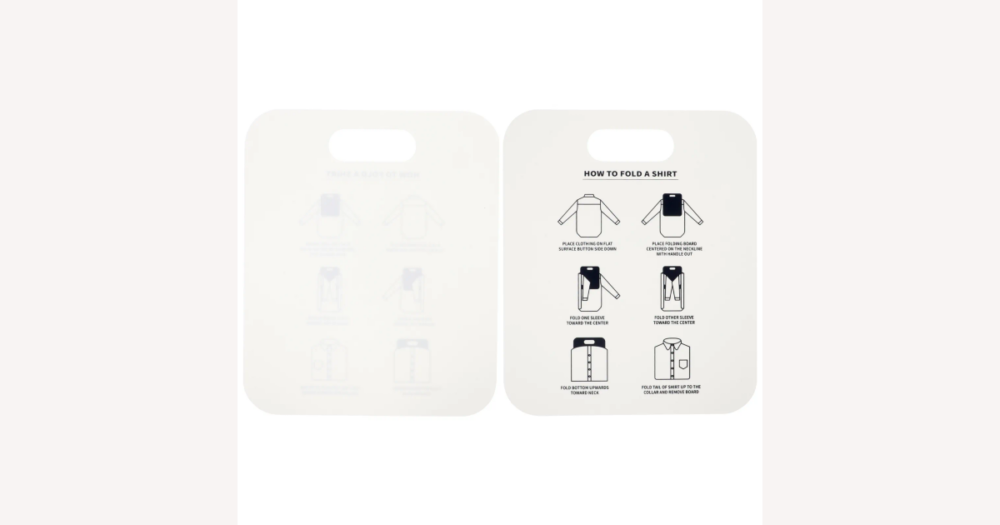
If you’re browsing DHgate for a shirt folding board or clothes folder, the most reliable options aren’t just the ones that say “high quality”—they’re the ones where the seller clearly shows what you’re getting. Named materials like ABS or PP, specific measurements in the 30–40 cm range for adult shirts, straightforward multi‑panel designs, and consistent photos and descriptions all matter more than a low price with no detail. When a listing or seller leaves those basics vague, it’s a sign to lower your confidence and keep searching.
What makes a folding board or clothes folder feel “reliable” on DHgate?
On DHgate, a folding board or clothes folder feels reliable when both the product itself and the seller’s information give you confidence, not just a promise of “high quality.” In practical terms, that means suitable materials, adequate dimensions for the garments you actually fold, a simple, stable structure, and a seller who is open about the details.
For solid folding boards, reliability usually starts with named plastics such as ABS or PP and panels that look thick enough to resist bending or cracking. These boards are marketed as reusable tools, so a DHgate listing should at least tell you which plastic is used and show clear photos of the multi‑panel design. For paper or cardboard inserts, dependable options describe the thickness and size of each piece and are realistic about a shorter lifespan: they’re meant for bulk organization or temporary packing, not years of heavy use.
Dimensions are just as important. Common marketplace examples for adult shirts sit around 30–40 cm wide with similar lengths, which is enough for typical T‑shirts and button‑downs to fold neatly without hanging off the edges. More compact folding boards—around the low‑30 cm by mid‑20 cm range—can work for travel bags, children’s clothes, or tight drawers, but may feel cramped for broader adult garments. When a DHgate listing only says “large” or “small” without exact measurements, you can’t really judge whether it matches your wardrobe.
Personally, I would rather choose a DHgate listing that gives specific measurements, names the material, and shows honest‑looking photos—even if the price is a bit higher—than one that leans on phrases like “durable,” “premium,” or “high quality” with no detail. Clear specs and transparent photos make it easier to spot whether the board suits your clothes and storage space; vague marketing copy doesn’t.
Reliability also depends on the seller’s behaviour. On DHgate, that means checking ratings and review history as well as how carefully the product is described. If materials, dimensions, quantity, or design are missing, inconsistent, or contradicted by the photos, or if the seller has weak or very limited feedback, your confidence in that folding board should drop. When key details are unclear, it’s safer to treat the listing as a risk and keep looking for a seller who is more forthcoming.
Common materials, sizes, and designs you’ll see for folding boards and inserts
Across large marketplaces, solid shirt folding boards tend to follow a similar pattern. Many are made from ABS or PP plastic, with several hinged panels that open to a flat rectangle for folding and then collapse for storage. Unfolded, standard adult‑size boards are often around 40×48 cm or in that general range, giving enough surface for T‑shirts, shirts, and light sweaters. Smaller versions—roughly 30×25 cm—aim at travel use, children’s clothes, or narrow drawers, trading surface area for portability.
Paper or cardboard inserts look different but show recurring specs as well. They are lightweight, flat pieces typically in the mid‑30 cm by about 20–21 cm range and are sold in packs of 20–200. Instead of acting as a single tool, they sit inside folded shirts or stacked garments to keep piles neat in wardrobes, stockrooms, or suitcases. Listings that take durability seriously describe not just the size but also the thickness or stiffness of the insert, so you can judge whether it will hold shape for your use.
You can use these patterns as quick benchmarks when you read DHgate product pages. A reliable listing for a plastic board will usually name the material type (for example, ABS or PP), give precise unfolded dimensions, and show photos that match the described panel layout and intended uses—shirts, T‑shirts, hoodies, sweaters, or travel packing. For inserts, look for clear measurements, quantity per pack, and a stated purpose such as closet organization or packaging. When a DHgate listing only says “plastic” without a type, omits measurements, or shows a board that looks obviously narrow for adult shirts, treat that as a reliability concern and consider choosing a better‑documented offer instead.
Plastic boards vs paper inserts: which type fits your needs?
Solid plastic folding boards made from named materials like ABS or PP behave more like a single, durable tool. You usually buy one or a small set, use the same board every time you fold laundry, and rely on its hinged panels and stiffness to keep shirts, T‑shirts, and light sweaters neat over many cycles of use at home or during travel.
Paper or cardboard shirt inserts work differently. They come in larger packs—often dozens or even hundreds of pieces—and slip inside individual garments or piles to keep stacks tidy in wardrobes, stockrooms, or suitcases. They’re lightweight and space‑saving, but they’re also more vulnerable to bending, creasing, or wearing out, so they suit bulk organization or temporary packing rather than years of repeated folding as a tool.
If, like me, you care most about having one reliable helper that won’t feel flimsy, I would lean toward a plastic folding board and accept that it takes up a bit more physical space. I would only choose paper or cardboard inserts when I’m dealing with many shirts at once, need flexible, flat pieces for stacking, and I’m comfortable with the idea that some inserts will bend or need replacing over time.
Decide which category fits you best—sturdy plastic tool versus bulk paper inserts—before you start looking at DHgate listings. Once you’ve chosen the type, the later DHgate checklist can focus on judging reliability within that category, using material, dimensions, photos, and seller history as your main filters.
DHgate checklist: how to vet a folding board listing before you buy
- Confirm that the product type on the DHgate listing matches what you decided earlier—solid plastic folding board or paper/cardboard inserts—and check the stated quantity so you know whether you’re buying a single tool, a pair, or a multipack of inserts.
- Find the material information and prefer listings that name specific plastics such as ABS or PP or clearly describe the paper or cardboard used. Treat generic “plastic” with no detail, or missing material fields, as a warning sign rather than a neutral omission.
- Read the exact dimensions and compare them with the sizes of the shirts, hoodies, or other garments you actually fold. Avoid listings that skip measurements, only show them in hard‑to‑read images, or give numbers that look obviously too narrow for adult clothing.
- Look closely at the design details: how many panels the board has, how it folds, and how thick or rigid it appears, or how stiff and straight the inserts seem. Make sure these details in the photos match the written description and your expectations for everyday use.
- Check the stated intended clothing types—such as shirts, T‑shirts, hoodies, sweaters or kids’ clothes—and make sure they align with what you plan to fold, instead of relying on vague claims like “for all clothes.”
- Compare all photos with the text to confirm that design, color, panel count, and quantity shown in images are consistent with the specs. Be cautious if pictures look generic, recycled from another product, or don’t clearly match the item being described.
- Review seller ratings, review content, and store history. Favour DHgate sellers with steady, positive feedback over time, and be wary of offers from stores with very low scores, many recent negative comments, or almost no transaction history.
- If any major spec—material, dimensions, or quantity—is missing, contradictory, or unclear, I would personally skip that DHgate listing even when the price looks attractive. A folding board or set of inserts that turns out flimsy or undersized is effectively wasted money, so it’s safer to wait for a clearer, better‑documented offer.
Safer payment and shipping choices for DHgate folding board orders
- Use DHgate’s official payment methods and keep all payments within the platform. If a seller asks for bank transfers, third‑party apps, or other off‑platform payments, treat that as a reason to walk away.
- Before you confirm the order, review the total cost in detail: product price, shipping fees, currency, and any notes about taxes or possible import charges that could apply to deliveries into Australia.
- Compare the available shipping methods on the listing, checking estimated delivery times, costs, and whether tracking is included. Avoid options that are described vaguely or are much slower than others without a clear explanation.
- Before you pay, check that your delivery address, contact details, and any special instructions are correct on DHgate. That can help prevent avoidable delivery problems from turning into disputes later.
- Save copies of your order confirmation and payment details—screenshots or email receipts—so you have clear documentation if you need to follow up about delays, missing parcels, or other issues.
- I would personally rather choose a DHgate seller whose shipping and payment information is clear and well documented, even if the delivery estimate is slower, than a faster option with poorly explained terms and little transparency.
Reading return and refund terms before you commit
On most online marketplaces, return and refund rules depend on who sells and fulfils the item and on its category. When the platform itself fulfils an order, there is often a standard return window and clearer conditions, while third‑party sellers are usually allowed to set their own, sometimes stricter, policies.
On DHgate, that means reading each seller’s return and refund section carefully for a folding board or clothes folder. Look for specific time limits (for example, a certain number of days after delivery), which reasons are covered (faulty or misdescribed items versus change‑of‑mind returns), and who pays the cost of sending an item back if a return is approved.
Policies that only cover defective items, use short time frames, or rely on vague wording tend to shift more risk onto you as the buyer, so treat them with extra caution. If you need to understand DHgate‑wide dispute or buyer‑support options, check the latest information directly on DHgate’s official help or policy pages rather than relying on any summary here.
I would personally avoid sellers whose refund language is very short, unclear, or appears to push almost all responsibility onto the buyer, and instead focus on listings that spell out reasonable time limits, accepted reasons, and return‑shipping responsibilities in plain, consistent terms.
Red flags that suggest you should skip a DHgate folding board listing
- Missing or obviously undersized dimensions. If a DHgate listing doesn’t give clear measurements, or the numbers look too small for adult shirts, you have no way to judge fit. That greatly increases the chance the board won’t match your clothes or storage space.
- Vague material descriptions such as only saying “plastic” or “cardboard.” Reliable listings usually name materials like ABS or PP or describe the thickness of paper or cardboard. Generic labels can hide flimsy construction that bends, warps, or tears quickly.
- Inconsistent or stock-looking photos. When images don’t match each other, look heavily edited, or appear identical to photos you’ve seen on unrelated listings, it’s harder to trust that they represent the actual folding board you’ll receive.
- Mismatch between described quantity and what images show. If the text says “single board” but photos show multiple pieces, or a multipack claim isn’t backed up by clear pictures, that confusion can lead to disappointment and disputes over what was actually ordered.
- Very restrictive, unclear, or unusually short refund and return language. Policies that only mention defects, use vague terms, or give you very little time to act shift most risk onto you and can make it hard to resolve a problem if the board arrives damaged or not as described.
- Weak seller ratings or almost no history. A seller with low scores, a high rate of negative comments, or very few completed transactions gives you less evidence that they deliver as promised or handle issues fairly.
- If I see more than one of these red flags on a DHgate folding board listing, I would rather skip it—even if the price looks tempting. The risk of ending up with a useless product or a frustrating refund process is too high compared with choosing a better‑documented offer.
What you can verify from a listing—and what stays uncertain
On a DHgate product page, you can only rely on information that is clearly visible and specific. That includes numerical dimensions, stated materials, the number of panels or sections in the board, quantity per pack, and whether the photos consistently show the same design. You can also check seller ratings, read review content for patterns of praise or complaints, and read the written return and refund terms attached to the listing.
What you cannot truly know in advance are the experiential details: how thick and rigid the plastic feels in your hands, how sturdy the hinges or folding panels are after repeated use, how firm or floppy cardboard inserts are, and how well the product holds up over months or years. Those aspects only become clear once the folding board or inserts arrive and you use them in real laundry or storage routines.
Because of that uncertainty, it’s important not to treat promotional phrases such as “extends life of clothing,” “high quality,” or “excellent long-term durability” as guarantees. They are marketing language, not proven facts, and should never outweigh concrete specs and seller behaviour when you judge reliability.
To reduce risk, I would combine multiple strong, verifiable signals before ordering: clear measurements and material names, coherent photos, solid seller ratings and reviews, and refund terms that seem reasonable. Even with all of those in place, some uncertainty is unavoidable, so go in expecting a practical tool that matches its description rather than a perfect, guaranteed upgrade to your laundry routine.
Practical FAQs for DHgate folding board shoppers
Should I start with a single folding board or buy a multipack on DHgate?
If you’re unsure how often you’ll use a folding tool, start with one sturdy plastic board. A single ABS or PP board is usually enough for everyday household laundry and lets you test whether the design and size suit your clothes. Multipacks of paper or cardboard inserts make more sense when you already know you need to organize many shirts or garments at once—such as for a larger wardrobe, stockroom-style storage, or bulk suitcase packing.
How do folding board measurements relate to adult shirts, hoodies, and children’s clothes?
As a rough guide, boards around 30–40 cm wide generally suit most adult T‑shirts, shirts, and lighter hoodies, giving enough surface for the garment to sit neatly without hanging far over the edges. Boards much narrower than 30 cm are better suited to children’s clothes or very compact travel setups, where small dimensions are an advantage but may feel cramped for broader adult tops. Always compare the stated width and length on the DHgate listing with your actual garment sizes before buying.
What should I do if a DHgate folding board listing doesn’t clearly specify materials or dimensions?
Treat missing or vague specs as a warning sign. You can send the seller a clear message asking for the exact material type and measurements and give them a reasonable time limit to reply. If the seller stays vague, contradicts the photos, or doesn’t respond at all, it’s safer to skip that listing and look for another offer with clear, consistent details. A non‑responsive or evasive seller about basic specs is a strong signal that the product and service may not be reliable.