
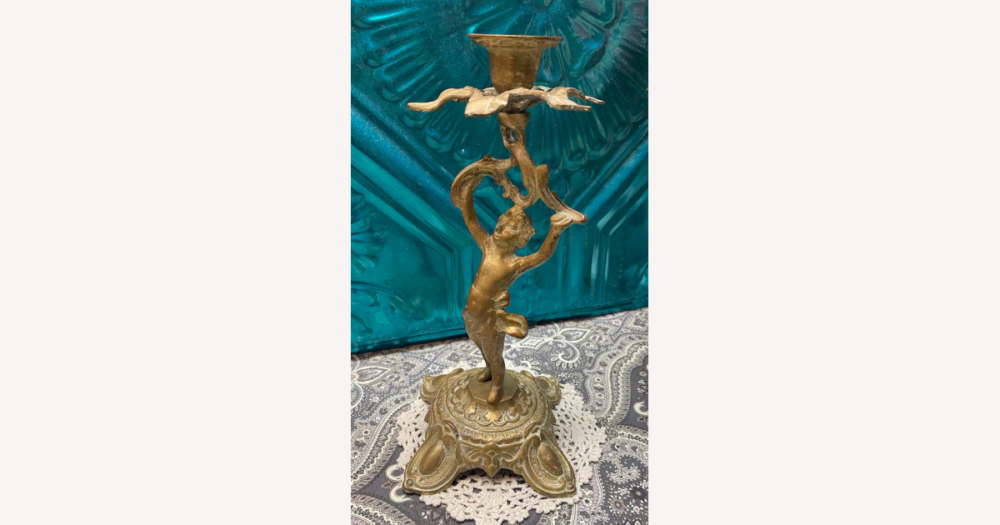
DHgate and other multi-seller marketplaces can be rich hunting grounds for ornate brass cherub candle holders, but the real challenge is telling solid, well-made pieces from generic brass-tone decor and choosing sellers you can trust. This guide focuses on how to read listing photos, descriptions and DHgate-style seller information so you can judge cherub designs, material clues and risk for yourself, knowing that some uncertainty about exact age or alloy will always remain when you buy online.
Where do unique brass cherub candle holders show up online, and what will this guide help you do?
Unique brass cherub candle holders most often show up on large multi-seller marketplaces such as DHgate, along with other marketplace-style sites and a handful of niche decor sellers, but this guide won’t point you to specific live listings or shops.
Instead, it will help you read DHgate-style listings more critically—looking at photos, wording in the description, and seller information—so you can tell whether a piece really seems to be a brass cherub design, how likely it is to be solid brass rather than brass-tone, and whether the seller looks reliable enough to risk a decorative purchase.
Some details, like the exact alloy or whether a piece is truly vintage, can’t be fully confirmed from an online listing alone, so the goal here is to give you enough tools to recognize strong clues, spot red flags, and decide when the remaining uncertainty is small enough for your comfort level.
What makes a brass cherub candle holder and how do styles vary?
Brass cherub candle holders usually feature a small winged figure—often called a cherub, angel or putto—supporting or embracing the candle cup. You’ll see them as tabletop candlesticks where the figure stands on a base and holds a taper, as wall sconces where the cherub is mounted on a backplate with an arm and cup projecting outward, and occasionally as multi-arm pieces that hold two or more candles at once.
Most designs are cast in brass with varying finishes: bright polished brass that looks shiny and reflective, warmer mid-tone brass with only light aging, or darker, patinated surfaces where recesses and details have a deeper brown or greenish cast. Many are sized for standard taper candles, but some have wider cups, shallow dishes or glass inserts intended for votives or tealights, so the shape of the cup or dish in photos is a useful clue to candle compatibility. The proportions of the base or wall plate also matter for stability and how comfortably the piece fits on a mantel, shelf or wall space.
Pairs are common—especially for wall sconces and candlesticks meant to flank a mirror or doorway—so listings may show two cherub holders together and describe them as a set, while a single piece might be marketed as a one-off or “rare” find. Sellers often use descriptive terms like “angel,” “putto,” “Rococo,” “Baroque” or “French style” to signal an ornate, swirling design with scrolls, shells and flowing drapery around the figure, but those tags are not always precise. When you scan a listing, treat those words as hints and rely most on what you can clearly see in the photos: a recognisable cherub or angel figure, the candle cup or dish, and the overall brass form that matches the style you have in mind.
How can you tell solid brass from brass-plated or brass-tone pieces online?
For cherub candle holders, “solid brass” means the metal is a brass alloy all the way through, while “brass-plated” pieces have only a thin brass layer over another metal, and “brass-tone” items are usually non‑brass materials such as painted metal, resin, or plastic made to look like brass. Solid brass is typically heavier for its size, can develop natural tarnish or patina where the surface darkens or shows subtle color variation, and is often described with phrases like “solid brass,” “all brass,” or “cast brass.” Plated or brass‑tone listings are more likely to use wording such as “brass finish,” “brass color,” “gold‑tone,” “antique brass look,” or simply “metal.”
Because you’re shopping online, you have to rely on small clues. Listings that give a specific weight, mention patina or tarnish, or show close‑up photos where edges and recesses have slightly different tones often indicate real metal and sometimes solid brass. In contrast, photos where the “brass” looks flat, overly uniform, or slightly plastic‑like, or where chips reveal a different base color, may point to plating or a brass‑tone coating. Still, sellers on DHgate and other marketplaces don’t always provide full specs or may not be material experts, so these signs are indicators, not proof. If getting solid brass really matters to you and the description only says something vague like “metal” or “gold color,” take a cautious approach: message the seller with specific questions about material and approximate weight, and be prepared that the piece could turn out to be plated rather than solid brass.
How should you search DHgate and narrow down promising cherub brass listings?
- Start by combining focused keywords such as “brass cherub candle holder,” “angel candlestick,” or “cherub wall sconce,” optionally adding terms like “vintage style,” “antique style,” or “Rococo” to surface more ornate designs on DHgate and similar marketplaces.
- Scan the search results at thumbnail level and ignore anything that clearly lacks cherub or angel figures; give priority to photos where you can clearly see a winged figure, a brass‑colored metal body, and at least one extra photo showing a different angle or close‑up of the metal.
- Open only the listings that pass that first glance and immediately discard any where the photos don’t really show cherubs, where the object looks like a generic candle holder with no figure, or where the images and title seem mismatched or misleading.
- From what’s left, build a small shortlist of a few listings that visibly feature cherub motifs and look like plausible brass or brass‑plated metal so you can move on to deeper checks on dimensions, material details, and seller reliability in the next steps.
What listing details should you confirm before deciding a cherub holder fits your space?
- Dimensions: Confirm overall height and width, plus the base diameter or footprint, so you know whether the cherub holder will fit your shelf or wall niche and whether the base looks wide enough to stay stable under a tall taper candle.
- Candle compatibility: Check what type of candle it’s designed for—standard taper, pillar, votive, or tealight—along with the number of candle cups and whether the listing is for a single holder or a matching pair, so you’re not surprised by scale or quantity.
- Placement and mounting: Note whether the piece is a tabletop candlestick or a wall-mounted sconce, and how it attaches if it’s on the wall (for example, screw holes, keyhole slots, or hooks), then think about whether that mounting method works with your wall and hardware.
- Finish, coating, and weight: Read any finish description (polished, brushed, antique, patinated) and look for mentions of clear coats or protective lacquers that might slow or prevent further patina; if weight is listed, use it both as a clue to material and to judge how heavy a wall piece or large candlestick will be. Treat missing measurements, candle details, or weight as a cue to message the seller for clarification or, if you can’t get a clear answer, to move on to a better-documented listing.
How can you spot more unique or vintage-style cherub designs?
Uniqueness in brass cherub candle holders usually shows up in the design details and context, not in a single magic keyword. More distinctive pieces often have elaborate Rococo or baroque-style scrollwork, asymmetrical or sculpted bases, cherubs in dynamic or unusual poses, and mixed motifs such as flowers, instruments, or ribbons. In a pair, small differences in the figures or bases—rather than two perfectly identical molds—can hint at a less generic design.
Subtle signs like slightly uneven patina, minor casting imperfections, or non-identical “twin” pieces may point to older or small-batch production, but they can also be the result of deliberate distressing or just light factory variation, so they’re clues rather than proof. Listings may describe items as “vintage,” “antique style,” “rare,” or “only 1 available”; on DHgate and similar marketplaces, that often means a new or reproduction piece with a vintage-inspired look. Weigh those claims against what you can actually see in the photos—wear on high-contact areas, darker tones in recesses, or mixed surface colors—and treat both age and uniqueness as degrees of likelihood instead of guaranteed facts.
How do you judge whether a DHgate seller is trustworthy for niche decor items?
Once you’ve found a cherub candle holder you like on DHgate, treat the seller’s track record as part of the piece’s value. Start with overall ratings and the number of completed transactions: a seller who has handled many orders with consistently solid feedback, especially in home decor or metal items, is generally a safer bet than a brand‑new account or one with only a handful of sales.
Look at the pattern, not a single score. Recent reviews matter more than very old ones, and written comments tell you far more than stars alone. For heavier, fragile items like brass cherub holders, I’d prioritize reviews that mention accurate descriptions, sturdy or “as pictured” metal, and careful packing or intact arrival. Buyer‑uploaded photos are particularly helpful because you can compare the real item to the listing images and see how finish, size, and detailing look outside studio lighting.
Be cautious when you see warning signs: very few sales, no written reviews, or a mix of complaints about items not matching photos, obvious material differences, poor packing, or repeated shipping problems. One-off review can be an outlier, but repeated issues in similar language suggest a pattern. Even strong metrics aren’t a guarantee, yet they do shift the odds in your favor; when the style and price seem appealing but the seller history is thin or messy, it’s usually worth either choosing a more proven seller or accepting that you’re taking on more risk with that order.
How can you cross-check listing details and clarify doubts before buying?
- Compare the listing photos closely with the written description. Count how many cherubs and candle cups you actually see, and check whether the overall shape, base, and arms match what’s described. If dimensions are given, imagine or measure them against a familiar object so you can tell whether the scale in the photos looks realistic for those numbers.
- Scan the text for internal inconsistencies. Titles and tags may shout “solid brass,” while the fine print quietly says “brass finish,” “alloy,” or “metal.” Likewise, double‑check that any measurements, weight figures, or candle size references agree across bullet points, diagrams, and any size tables; conflicting details are a sign to slow down and clarify before buying.
- If something matters to you—height, weight, whether it’s solid brass or plated—message the seller with focused questions. Ask whether the photos show the actual item or a generic sample, request the exact height and approximate weight, and, if needed, ask for extra angles that show the base, underside, and close‑ups of the cherub details and finish.
- Pay close attention to how the seller responds. Clear, specific answers and additional photos are reassuring, even if they confirm that a piece is plated rather than solid brass. Vague, copy‑paste replies, evasive wording about materials, or refusal to clarify key details are strong signals to reconsider the purchase and move on to a listing where the information—and the seller’s communication—feels more reliable.
What pitfalls should you watch for with “vintage” labels, materials, and shipping?
How do DHgate’s protections and policies affect your purchase decision?
DHgate operates as a multi-seller marketplace that sits between you and individual sellers, rather than you paying each seller directly. In general, orders and payments are processed through DHgate’s system, which typically means your payment is handled securely, an order record is created, and tracking information is provided once the seller ships. If an item never arrives or shows up significantly different from the listing—for example, a clearly brass-tone piece sold as solid brass—you can usually open a dispute or refund request through DHgate rather than negotiating solely by private message.
The exact rules for protections—eligibility, timelines, required evidence, and how disputes are resolved—can change over time and may vary by seller or order, so treat any description of buyer protection as high-level only. Before relying on a specific safeguard, review DHgate’s current help and policy pages so you understand what is actually covered for your account and region. Think of these systems as a safety net that may help if something goes wrong, not as a guarantee that every problem will be fixed in your favor. Careful upfront vetting of listings, materials, and sellers remains essential, especially for niche decorative items like brass cherub candle holders.
When is a DHgate cherub brass listing strong enough to buy?
- Photos show clear cherub figures and brass-like metal from multiple angles, and the listing states dimensions, candle type (e.g., taper, tealight, pillar), and at least basic material information.
- The style and finish match the look you want, and details such as stated weight, mention of solid or cast metal, or visible patina make the described material plausible for your expectations.
- Seller signals are reassuring: overall ratings are reasonable, recent reviews and buyer photos show items similar to the listing, and there is no pattern of complaints about “not as described.”
- There are no major unresolved inconsistencies between photos and text, the seller has answered any crucial questions, shipping costs and timelines fit your budget and schedule, and you’re comfortable accepting some remaining uncertainty about true age or exact alloy composition for this purchase.
Lingering questions about vintage cherub pieces and patina
Can you realistically find genuinely vintage cherub candle holders on DHgate?
It’s possible for individual sellers to list genuinely vintage cherub candle holders on DHgate, but the platform is mainly geared toward new and reproduction pieces. If you want verified antiques—with details like approximate production date, maker, and provenance—you’ll usually have better odds on specialized vintage, auction, or collectible channels that focus on authentication. On DHgate, treat “vintage” more as a style cue than a guarantee, and avoid paying a true antique-level premium unless the seller provides unusually strong documentation and you’re comfortable with some uncertainty.
Does patina or tarnish in photos prove that a cherub candle holder is old or solid brass?
Patina and tarnish can be helpful clues but they’re never proof by themselves. Solid brass often develops uneven darkening, especially in recesses and on high-contact areas where hands touch, and close-up photos showing subtle color variation can support a solid-brass or older-piece claim. However, patina can be accelerated, staged with chemical treatments, exaggerated by lighting, or appear on plated items as the surface oxidizes. Treat patina as one data point alongside wording about material, any stated weight, seller type, and overall listing consistency, and be cautious about paying a large premium based solely on tarnish you see in photos.