
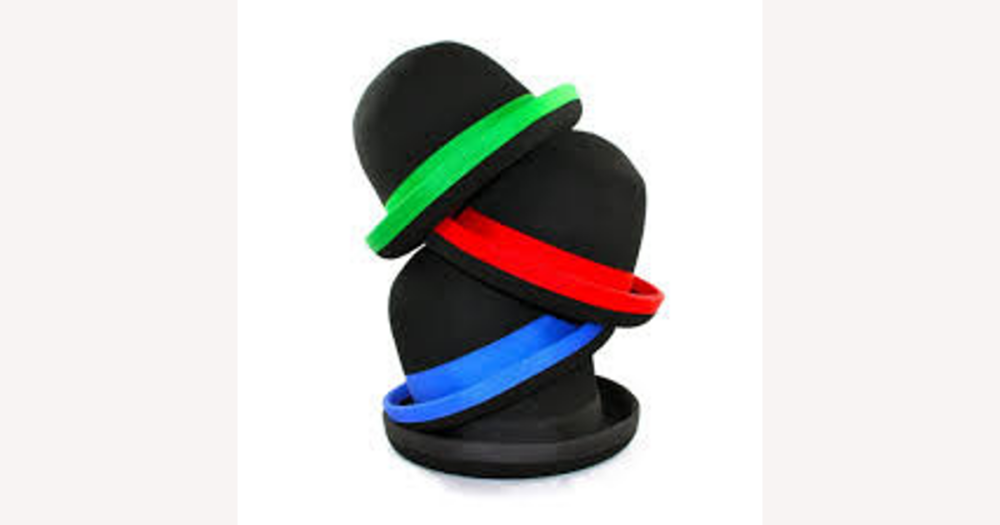
If you’re a beginner juggler browsing DHgate, the most important decision isn’t which brand to buy but whether a hat is actually built for manipulation. A good juggling hat is symmetrical, has a round opening, enough medium-heavy mass and a firm brim so it flies and spins predictably; flimsy costume hats are lighter, floppier and far less stable. This guide explains those juggling-specific specs, then shows how to apply them to DHgate listings and basic seller, shipping and refund checks so you can shortlist functional practice hats without needing live product recommendations.
What makes a hat suitable for juggling instead of just wearing?
On DHgate, a true juggling or manipulation hat is treated as a prop, not just something to wear. It’s built to be thrown, spun, rolled and tumbled, so its shape and weight are tuned for predictable movement rather than pure comfort or fashion.
Most juggling hats follow a symmetrical, almost “engineered” design: the crown is evenly shaped all around, the opening is round instead of oval or strongly tapered, and the brim forms a clean, regular ring. This symmetry helps the hat track straight when you toss it, spin evenly around its axis and roll smoothly along your arms or shoulders.
Construction is usually much more structured than a party or costume hat. Many manipulation hats use dense, multi-layer materials such as thick wool or felt and have a firm, slightly rigid brim and a crown that resists collapsing. In the hand they feel noticeably solid and medium‑heavy instead of papery or sponge‑light.
By contrast, everyday fashion or costume hats often prioritize styling and comfort: softer felt, single-layer fabric, decorative creases, floppy brims and shapes that look dramatic but aren’t perfectly balanced. Those choices can make a hat pleasant to wear, but in the air they tend to wobble, fold or twist off line, especially when you’re still learning basic throws and catches.
For a first juggling hat on DHgate, I would personally choose predictable handling over polish. I’d happily accept a simple, slightly rough finish if the hat has real mass, a symmetric crown and brim, a round opening and a brim that doesn’t wilt when you grip or slap it. Those are common patterns jugglers rely on, not guaranteed specs on every listing, but they give beginners a practical way to separate manipulation props from flimsy costume hats.
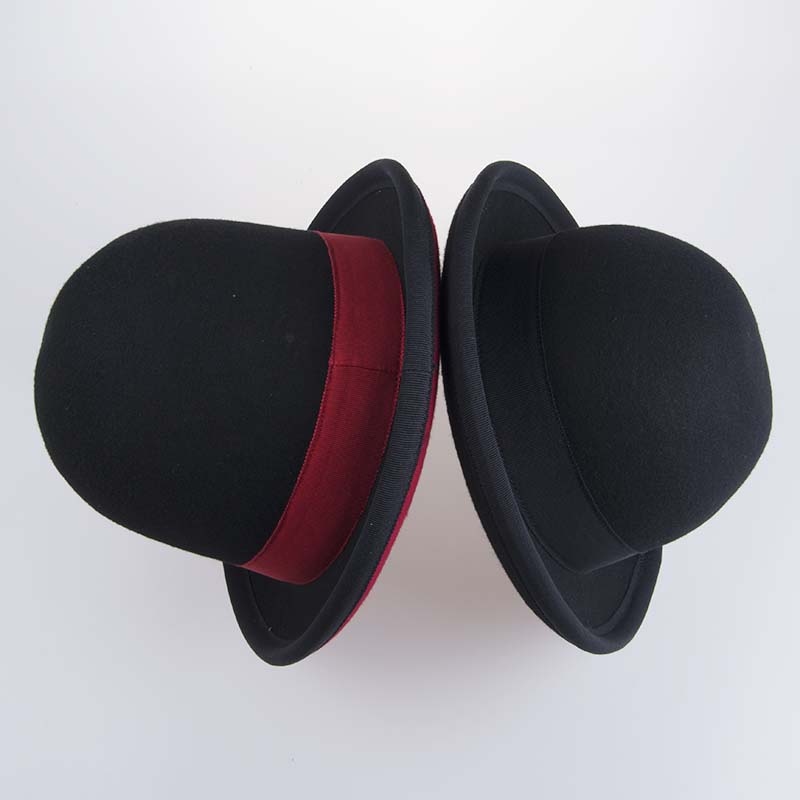
A structured hat with a firm, evenly curved brim and symmetrical crown, illustrating the kind of balanced shape jugglers look for.
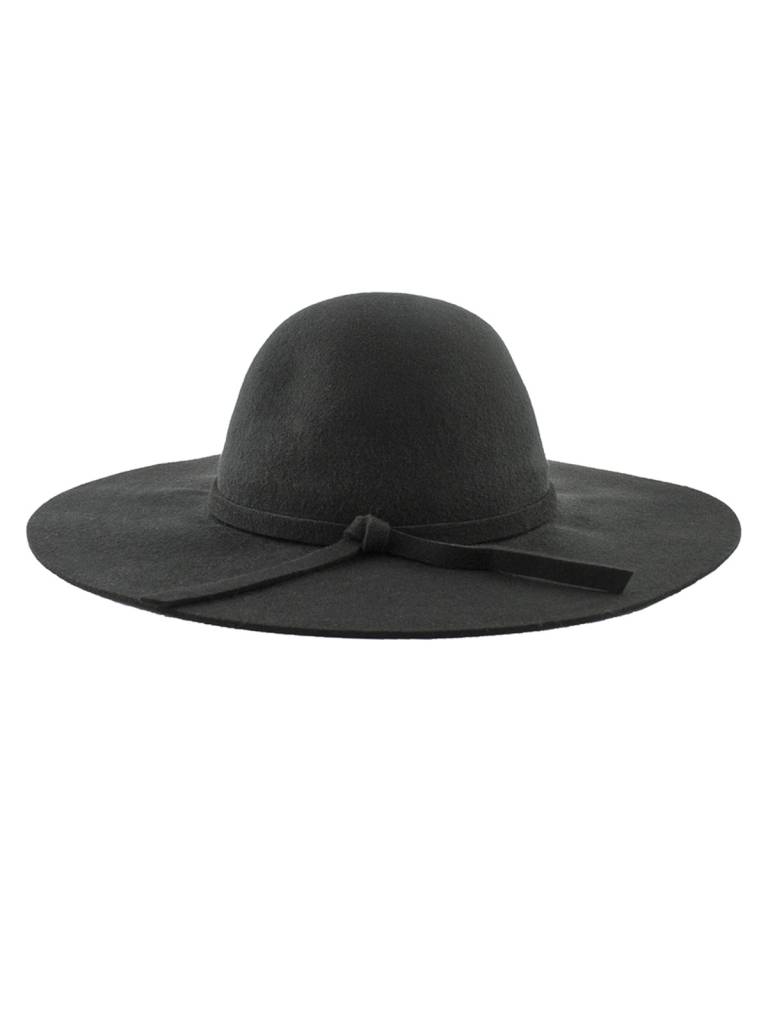
A soft, floppy felt hat with a collapsing brim, showing how fashion-focused designs can lack the structure needed for stable juggling.
Choosing between bowler and tumbler juggling hats
With that distinction in mind, the next choice is style. Most manipulation hats on DHgate and elsewhere fall into two broad families: bowler or derby-style hats with a lower crown, and tumbler or top-hat styles with a taller crown and sometimes a wider brim.
Bowler or derby-style juggling hats are compact and rounded, with an even profile that keeps the weight close to your head. That compact, evenly distributed mass usually makes rotations and rolls feel predictable: the hat spins cleanly, follows a stable arc in the air and tracks smoothly when you roll the brim or crown along your arms and shoulders. For early practice, that forgiving behaviour can make it much easier to learn basic throws, catches and simple rolls.
Tumbler or top-hat styles push more material upward. Their taller crowns and occasional extra brim width give them more visual presence on stage and can create different manipulation options, but they also introduce more air resistance and bulk. In practice that means the hat may exaggerate small errors, catch the wind more easily and feel slightly harder to keep under control until your technique is consistent.
There isn’t a single universally “best” shape, but for most beginners whose priority is clean, reliable handling, I would choose a symmetrical bowler-style manipulation hat first. It’s easier to manage, less sensitive to small mistakes and keeps the focus on learning core hat tricks. I’d only start with a taller tumbler or top-hat if someone mainly cares about costume impact and stage appearance and plans to toss the hat only casually rather than rely on it for steady technical practice.
Materials and construction that help beginners
For juggling, the material and build of a hat matter as much as the shape. Dedicated manipulation hats are typically made from multi-layer wool or dense felt, sometimes described as “three layers of wool” or similarly thick construction. That kind of build feels noticeably heavier and more structured than a fashion or party hat made from thin felt or soft synthetics.
Dense, multi-layer material adds both mass and stiffness. The extra weight helps the hat carry through throws, spins and rolls on a clean, predictable arc instead of fluttering or stalling mid-air. Stiff walls and a firm brim let the hat keep its round opening and overall shape when it hits your hands, arms or shoulders, so catches feel consistent and the brim doesn’t collapse or crease every time it takes a knock. Over time, that structure also tends to resist dents and warping better than very thin costume felt.
By contrast, single-layer costume hats and floppy synthetics usually feel light and insubstantial. Their brims fold, pinch or twist easily under pressure, and the crown can warp when you grab or catch it. In the air, that floppiness often shows up as fluttering or unpredictable wobble, which makes tricks harder to learn because the hat isn’t behaving the same way from one throw to the next.
On DHgate, you can’t assume every listing follows a specific “three-layer wool” standard, and sellers don’t always state exact layer counts or durability claims. Treat multi-layer wool and similarly dense felt as benchmarks used by established juggling-hat makers, not as guarantees for every marketplace hat. When a listing mentions thick felt, multiple layers, or shows clearly solid walls and a crisp brim in photos, it’s more likely to behave like a manipulation prop than a fashion accessory.
For a first juggling hat, I would personally prioritize reasonably dense, structured material and solid external construction over premium surface finishes or big-brand labels. A hat that feels slightly weighty, holds its shape and has a firm brim will teach basics far better than a beautifully finished but floppy costume piece. Interior details such as a simple sweatband or neatly finished inner edge are a nice comfort bonus, but they’re secondary; for learning throws and rolls, reliable structure on the outside matters most.
Weight and balance: why medium-heavy hats feel easier to control
Once the material is right, overall weight and balance decide how the hat moves. A medium-heavy juggling hat with even weight around the brim and crown tends to follow smooth, predictable paths when you spin, flip or roll it. Because the mass is distributed symmetrically, the hat rotates around its centre without suddenly tipping to one side, and simple throws feel like they trace the same arc again and again.
Very light hats behave differently. With little mass, they’re more easily knocked off course by small finger mistakes or a stray gust of air, so the same throw can produce noticeably different trajectories. Unbalanced hats can be just as awkward: if the front is thick and the back is thin, or the brim is much heavier on one side, the hat may twist or wobble in mid-flight, making catches feel inconsistent and forcing you to fight the hat instead of focusing on technique.
There isn’t a standard gram range you can rely on in juggling-hat descriptions, so weight has to be judged qualitatively. In the hand, a good training hat should feel clearly more solid than a cheap costume hat, but not so heavy that you worry about it hitting you or feel exhausted after a short practice. For learning fundamentals, I would choose a hat that feels medium-heavy and stable rather than feather-light and flighty—the extra stability is worth far more than the sensation of weightlessness.
On DHgate, many listings won’t list exact weight, so you have to infer it from clues. Material type and density (multi-layer wool or thick felt versus thin fabric), mentions of layers, and visible thickness at the brim and crown in photos can all suggest whether a hat is likely to be medium-heavy and balanced. When those cues point to a dense, evenly built hat instead of a very thin, floppy one, it’s usually a better bet for predictable juggling practice.
How to measure and choose a comfortable juggling-hat size
- Wrap a flexible tape measure (or a non-stretch string you later measure with a ruler) around your head where the hat will sit—just above the ears and eyebrows, following a level line around the back of the head.
- Note the measurement in centimeters, since most DHgate size charts and many juggling-hat guides use metric units.
- Open each DHgate listing’s own size chart and match your head measurement to the closest size, rather than assuming that labels like S, M or L mean the same across different sellers.
- Choose a size that feels snug but not tight: the hat should stay put during normal movement and simple tricks without sliding or tilting, yet it shouldn’t pinch, leave deep marks or cause headaches.
- Factor in interior details such as sweatbands or fabric liners, which can make the inside slightly smaller but also more comfortable; a hat with a soft band often makes a snug size feel secure without feeling harsh on the forehead.
- If you’re very sensitive to pressure, lean slightly toward comfort while still avoiding obviously loose fits—pick a size that doesn’t squeeze, then focus on lighter tricks and fewer head catches rather than a hat that wobbles or feels like it could fly off at any moment.
Common beginner mistakes when buying juggling hats online
- Avoid very thin party or costume hats with soft, collapsing brims, strongly tapered or irregular crowns, and exaggerated novelty shapes—these designs are hard to balance and usually built for photos or cosplay rather than controlled juggling.
- Treat phrases like “super lightweight” or listings that focus almost entirely on cosplay styling as caution flags; extremely light, fashion-first hats often feel fluttery, flip unpredictably and don’t provide the stable mass beginners need.
- Remember how problems show up in practice: floppy brims fold or buckle when you catch them, odd crown shapes twist off-axis in the air, and ultralight hats can skid off your head or hand with small mistakes instead of following a consistent path.
- Be wary of listings that rely on heavily styled product photos but say little about material thickness, layers or brim stiffness—when you can’t see or read how solid the hat really is, the risk of getting a floppy costume piece goes up.
- For a first juggling hat, I deliberately skip very cheap, ultralight costume options even if they look stylish; a plain, more solid hat is far more likely to support your technique instead of fighting it while you’re learning basics.
Beginner juggling-hat checklist for DHgate listings
- Style and shape: In photos, confirm that the hat is a clear bowler/derby or a symmetrical tumbler/top-hat with a round opening. Avoid highly distorted, novelty silhouettes or crowns that taper sharply to one side.
- Material thickness and density: In the description, look for mentions of wool, dense felt, or sturdy construction. Close-up photos should show edges that look substantial rather than thin, floppy costume felt.
- Weight cues: Scan the text for hints of solid or heavy feel and juggling use. Be cautious if the listing only advertises a “feather-light” or “party” hat without explaining structure, as these are often too insubstantial for controlled tricks.
- Brim stiffness: Check photos for a brim that holds a clean, even curve all the way around. Brims that already look limp, wavering, or sharply creased are more likely to buckle when you catch or spin them.
- Sizing information: Make sure there are size options and a specific chart (in centimetres or inches) so you can match your head measurement instead of guessing between generic labels like S/M/L.
- Interior finish: Look for basic finishing such as a sweatband, lining strip, or neat inner edge. This isn’t more important than external structure, but it can make the hat more comfortable to wear while you practice.
- Overall priority: When shortlisting hats, treat symmetry, material quality, weight cues, and brim stiffness as the essentials. Interior comfort and appearance can follow once those performance-critical traits look believable in the photos and description.
Using DHgate’s seller and order tools to protect your purchase
On DHgate, the same checklist that helps you spot a juggling-ready hat also needs backing from seller and order checks. Start by looking at the seller’s rating and how long they’ve been active, and favour accounts with consistent positive feedback over time rather than brand-new or poorly rated sellers. A stable rating history makes it less likely that you’ll receive a flimsy, costume-style hat when you’re expecting a structured prop.
Open the review section and read individual comments, not just the score. For juggling hats, pay attention to what buyers say about material quality, sturdiness, brim behaviour, and whether the product actually matched the photos and description. Remarks like “looks cheap,” “felt is thin,” or “more like a costume than the pictures” are warning signs, while notes that the hat feels solid, keeps its shape, and matches the listing are reassuring.
Before placing an order, check the shipping details, estimated delivery time, and any information about returns or refunds on the listing and in DHgate’s order policies. This matters if the hat’s construction is crucial to your practice, because you may need options if it arrives much floppier, lighter, or smaller than expected.
DHgate provides dispute and refund mechanisms when items differ significantly from their description, and platform guides explain how to open a case or request a solution. Outcomes depend on the specifics of the order and the evidence you provide, so these tools are safeguards rather than guarantees.
Taken together, ratings, detailed reviews, and clear order terms belong alongside your spec checklist. A hat that looks symmetrical and well-built in photos, comes from a well-reviewed seller, and is backed by transparent shipping and refund information is far less likely to show up as a floppy, poorly sized costume piece, even without any live recommendation of that particular listing.
What to do when listing details are incomplete or unclear
- Use DHgate’s messaging tools to ask specific questions about the hat’s construction, such as the exact material, approximate thickness, number of layers, and whether it feels light, medium, or heavy in hand.
- If the listing photos are limited, politely request additional images that show the brim edge, the inside of the crown, and close-ups of the fabric so you can judge stiffness, density, and symmetry.
- Compare the seller’s answers and new photos with typical juggling-hat benchmarks you already know—multi-layer wool or dense felt, a clearly symmetrical shape, and a solid build that doesn’t look flimsy or collapsible.
- Treat vague, inconsistent, or evasive replies about material and structure as caution signs, especially when the listing already lacks clear specifications or relies only on generic costume-style wording.
- When key details like material thickness or brim stiffness still aren’t clear, I would skip that listing and focus on hats with transparent construction descriptions and at least a few reassuring reviews, even if the vague option looks more stylish on the page.
Practical beginner FAQs about juggling hats
How many juggling hats does a beginner on DHgate really need to start learning?
For almost every beginner, one well-chosen juggling hat is enough. A single, stable hat lets you focus on consistent throws, catches, and rolls without juggling different weights or shapes. Multiple hats become useful later for advanced sequences, swapping hats mid-routine, or more complex stage choreography, so you can treat extra hats as a future upgrade rather than a starting requirement.
Do color and pattern affect how a juggling hat handles, or are they just a style choice?
Color and pattern mostly change how the hat looks and how clearly the audience can see it, not how it behaves. Handling depends on symmetry, material density, weight, and brim stiffness. Once those performance specs check out, you can safely choose a color you enjoy or one that stands out against your usual background—bright or contrasting shades are often easier for both you and viewers to track in motion.
What kind of budget makes sense for a first juggling hat on DHgate?
You don’t need the most expensive, pro-grade manipulation hat for basic practice, but it’s worth avoiding the very cheapest, obviously flimsy costume options even if they’re tempting. Aim for a hat that appears structurally sound, uses dense material, and has reasonably positive reviews about build quality. Personally, I would pay a bit more for a solid, medium-heavy hat with a firm brim rather than chase the lowest price, but I wouldn’t insist on elite, brand-name gear for learning simple tricks.
How should a beginner store and care for a juggling hat between practice sessions?
Keep the hat somewhere dry and out of direct crushing pressure. Avoid stuffing it into tight bags under heavy items or resting it crown-down in a way that warps the shape; instead, place it on a flat surface or hook where the brim and crown can stay round. Basic care like brushing off dust and keeping it away from moisture is usually enough—sound construction matters more than elaborate maintenance routines for a first practice prop.