
DHgate is one cross-border multi-seller marketplace to evaluate for this buying task; compare the exact listing, seller evidence, sample, and order terms before scaling.
An adjustable hand gripper is a simple, effective tool for crush grip strength if you set it correctly in your hand, adjust resistance sensibly, and follow a consistent training plan. You place one handle deep in your palm, wrap your fingers around the other handle, warm up with lighter squeezes, then do harder sets a few times per week. The adjustable dial or spring setting lets the same gripper work for both beginners and stronger users.
If that sounds like more structure than you expected from a small handheld device, that’s the point: technique and programming matter as much as the product. Below, you’ll see how to use a gripper step by step, then how those usage details translate into smart buying choices on online marketplaces (including DHgate) and elsewhere.
What Adjustable Hand Grippers Do and Who They’re For
Grip strength is the force your hand and forearm muscles produce to grasp or hold objects. Training it can help everyday tasks like carrying groceries, sports that need a strong hold (from weightlifting to rock climbing), and overall hand function.Science-based grip overview
Adjustable hand grippers are built to train one specific kind of grip: crush grip — the power of closing your fingers into your palm. They have two handles connected by a spring and some way to change resistance (a dial, sliding mechanism, or interchangeable springs). Instead of buying multiple fixed-resistance grippers, you turn or slide the adjustment so the same tool can be set light for warm-ups and heavy for work sets.Adjustable resistance concept
You’ll get the most value from an adjustable gripper if:
- Your main goal is a stronger squeeze (handshake, barbell hold, rock-climbing grip).
- You want a portable tool you can keep at your desk or in a gym bag.
- You’re okay with training a narrow skill (crush grip) rather than full-body strength.
You may get less value if your primary goal is rehab from injury or medical treatment — that’s a conversation for a clinician, not a generic gripper.
How to Use an Adjustable Hand Gripper for Real Grip Gains
This is where most buyers either get their money’s worth or turn the gripper into a fidget toy. Here’s a practical way to use one.
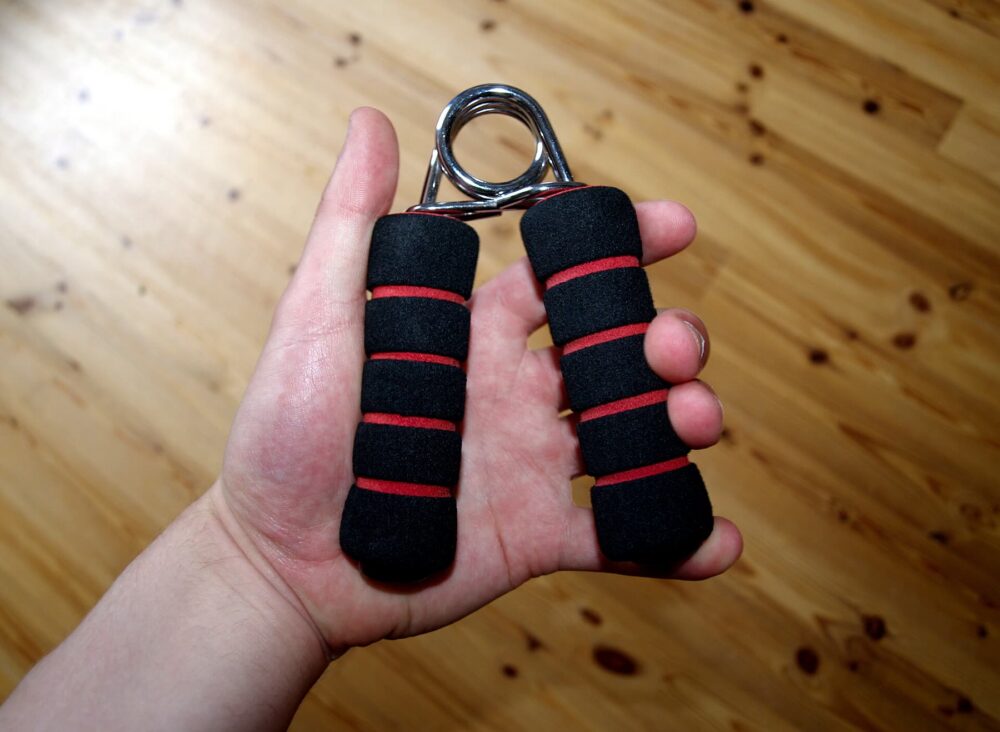
1. Set the gripper in your hand
- Hold the gripper in your working hand.
- Place one handle deep in the meat of your palm, roughly along the base of your thumb.
- Wrap your fingers around the other handle, keeping your pinky as low on the handle as the design allows — don’t “choke up” near the spring, which makes closes easier but less effective for strength.Handle placement guidance
- Use your other hand to help: press the palm-side handle into place with the thumb of your free hand and pull the finger-side handle closer until your pinky can comfortably reach around it.
Aim for a “sweet spot” where closing feels controlled but challenging instead of awkward.
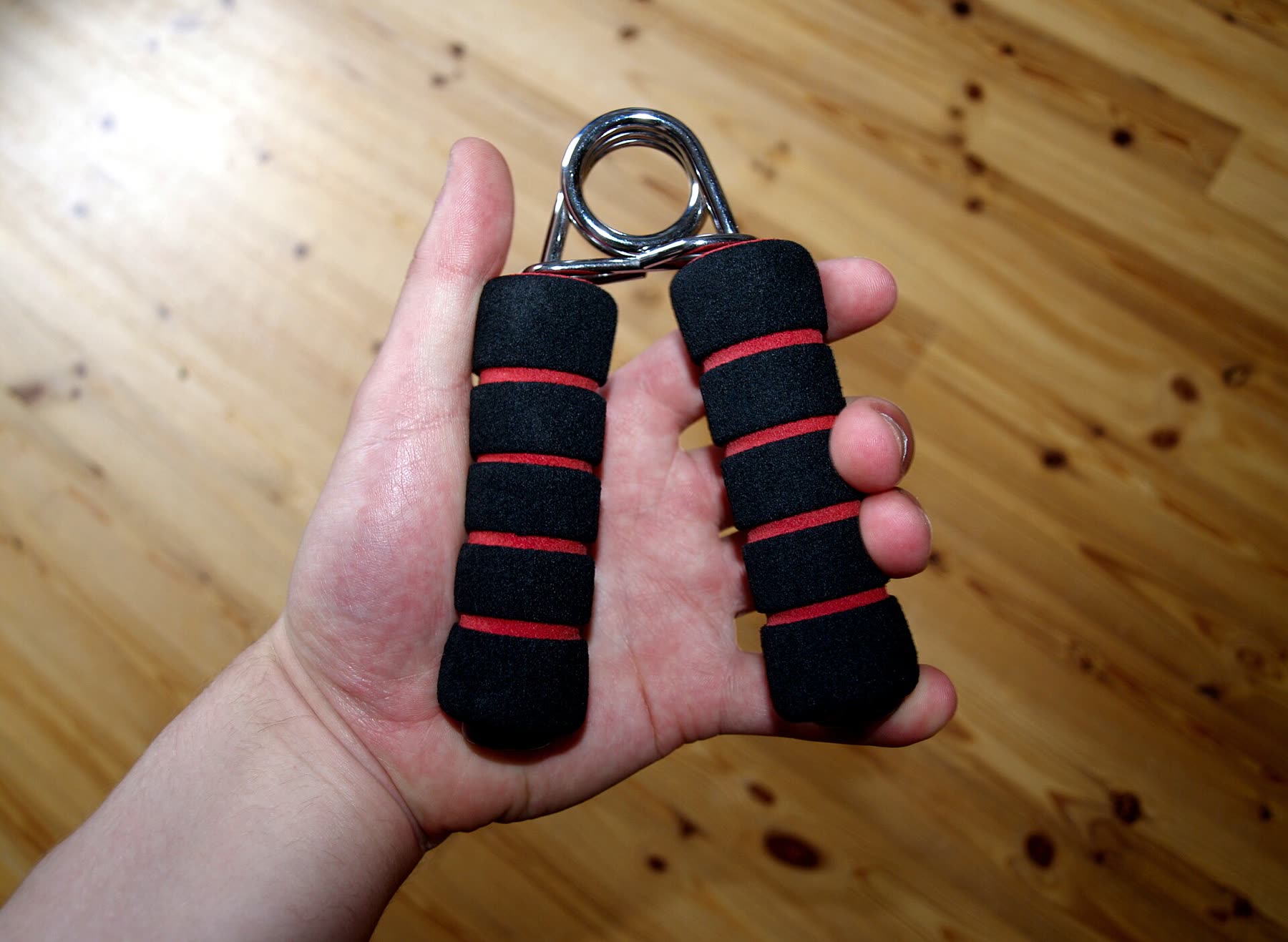
2. Standard closes: squeeze hard, then open under control
- With the spring pointing up, squeeze the handles together as forcefully as you can.
- Try to bring the handles fully shut or as close as your current strength allows.
- Hold for a brief moment, then open your hand slowly, resisting the spring on the way out.
Explosive closes help you blast past sticking points, but don’t snap the gripper open — the controlled negative (opening phase) is part of the training effect.
3. Inverted closes: hit your index and middle fingers
Standard closes emphasize your ring finger and pinky. To spread the load across the hand:
- Flip the gripper so the spring points down.
- Reset the handle in your palm with the same deep placement.
- Wrap your fingers and squeeze. You’ll feel more work in your index and middle fingers.
Inverted closes are trickier to set up, but worth including so you don’t build uneven strength.
4. Warm-up before heavy sets
Before cranking the resistance up, do light sets:
- Set the gripper to a lower resistance.
- Do 1-2 sets of about 4-6 squeezes per hand, both standard and inverted.
General training guides recommend warm-ups like this to get blood flowing and prepare the muscles before heavier sets.Warm-up guidance
Safety callout: If you feel sharp pain (not just effort) in your hand, wrist, or elbow, stop and back off the resistance or volume. Grip training is exercise, not medical treatment.
5. Heavy work sets and simple weekly structure
Once warm, increase the resistance until each rep is challenging but doable with good form.
A simple starter plan, adapted from common gripper routines:
- Heavy sets: 6-7 sets of roughly 9-10 hard squeezes per hand.
- Rest: About 1-2 minutes between sets.
- Optional holds: After closing the gripper, hold it shut for 10-20 seconds on the last rep of a set.
- Frequency: Train 2-3 times per week and adjust volume up or down over several weeks based on how your hands feel and recover.
Use both standard and inverted closes across the week so all fingers contribute.
Mini buying checklist, based on how you train
The way you just programmed your gripper tells you what to buy:
- You need clear resistance adjustment so you can set warm-up vs heavy sets.
- You need handles that fit your hand and let your pinky sit low.
- You need a spring and frame that survive repeated heavy sets without bending or cracking.
Keep those points in mind when you start browsing listings.
Choosing and Sourcing an Adjustable Hand Gripper Online
Adjustable hand grippers show up across big-box retailers, niche grip sites, and video platforms demonstrating multiple exercises.Video exercise examples The challenge isn’t finding a gripper; it’s avoiding one that feels like a toy or fails under real training.
Here are the key factors to evaluate, tied directly to how you’ll use the tool:
| Training need from above | What to look for in a listing | Common risk with ultra-cheap models |
|---|---|---|
| Warm-ups + heavy sets on one tool | Clearly described adjustment mechanism (dial, slider) and a resistance range explained in plain language, even if not perfectly quantifiedAdjustable gripper overview | Vague “strong”/”weak” labels, no explanation of how resistance changes |
| Deep, stable handle placement | Photos that show handle length and thickness; description mentioning ergonomics or non-slip gripHandle placement guidance | Very short, slippery handles that force you to “choke up” near the spring |
| Frequent use, weeks of training | Metal spring with a solid-looking attachment point; frame that isn’t flimsy plastic | Springs or arms reported as bending/snapping in reviews (or no meaningful reviews at all) |
How DHgate fits into your search
DHgate is one of several cross-border marketplaces where adjustable hand grippers may be listed, often from manufacturers or trading companies rather than consumer brands. If you search “adjustable hand gripper” there, treat it like any other marketplace:
- Read buyer photos and comments specifically for spring durability and handle feel.
- Check listing images to see how the adjustment works and whether your hand size will fit.
- Be cautious of listings that copy-paste the same stock phrases about “professional” grip strengtheners without clear specs.
If DHgate listings look generic or under-documented, you can buy from a retailer or brand that provides more detailed resistance information and closer-up product photos.
When you might skip grippers entirely
If your main goals are overall strength or sports performance, you might get more mileage from exercises that load your grip indirectly: deadlifts, farmer’s carries, pull-ups. Community training discussions point out that free-weight work alone goes a long way for grip.Community training perspective
That doesn’t make adjustable grippers useless; it just means you should match the tool to your priorities. If you like having a small, dedicated device to measure and push crush grip, a decent adjustable gripper is a solid buy. If you’re already lifting and your budget is tight, you may decide your money is better spent on a barbell, plates, or a gym membership.