
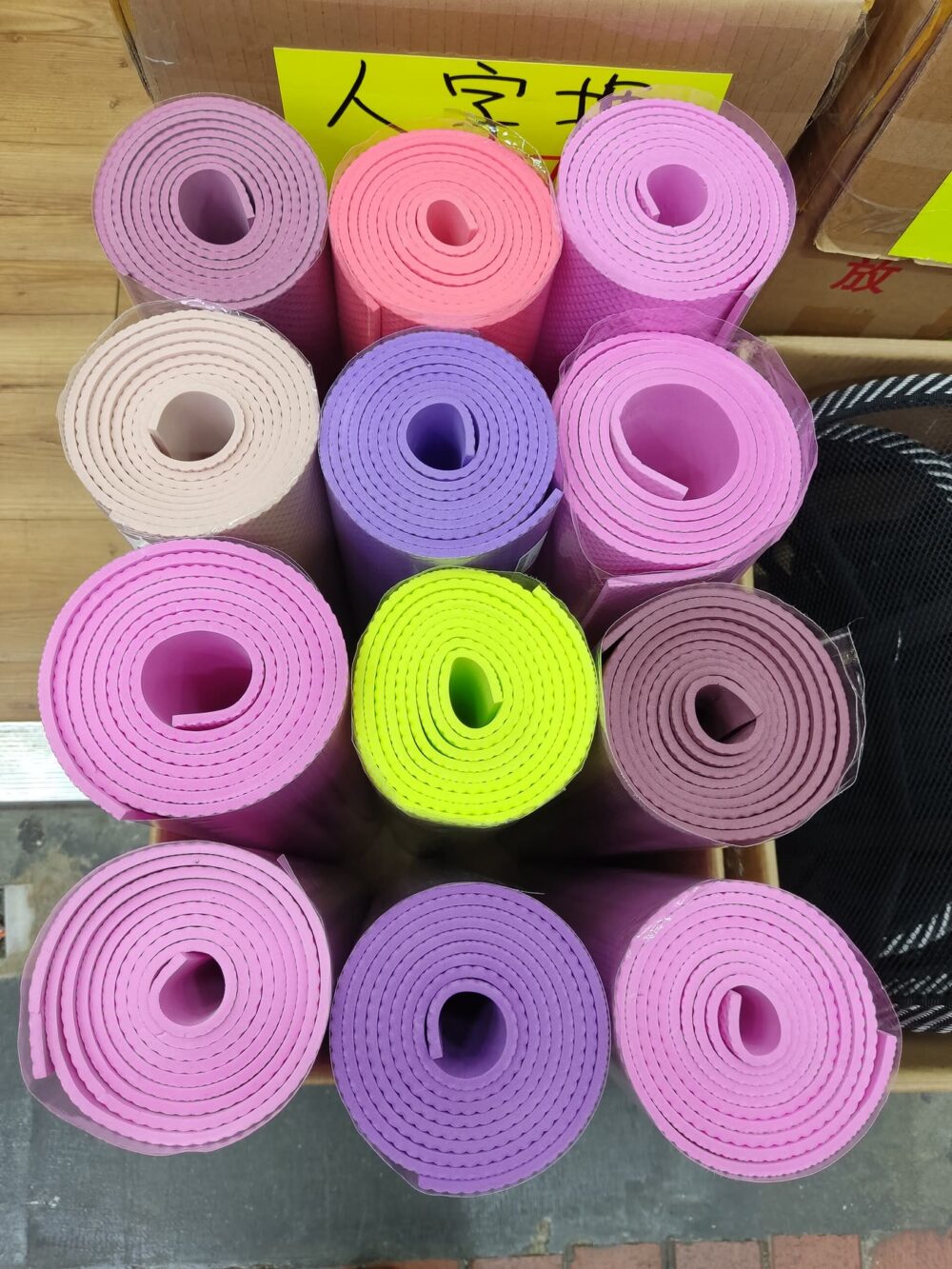
You can get a solid cheap yoga mat by matching three things to your practice: material, thickness, and grip, then deciding whether to buy it from DHgate or a more local marketplace. For most US beginners and casual yogis, a low-cost NBR, TPE, PVC, jute or basic rubber mat in the right thickness will feel fine for gentle flows and stretching. Premium mats that reviewers praise for durability and strong grip can be worth it later, but platforms like DHgate, Amazon and eBay are full of budget options that are good enough if you know what to look for and what to avoid, especially for hot yoga and joint issues.
Below, we’ll use ten historic DHgate-style yoga products (five mat materials plus acupressure pads and a yoga blanket) to explain how each one behaves, then show how to hunt for them on DHgate and weigh that against buying locally.
Cheap Yoga Mats 101: What They Are and Who They Suit
For this guide, “cheap” yoga mats means mass-market mats roughly under the price range that sites like BestReviews’ yoga mat guide call budget-friendly—often around $50 and well below that on discount and cross-border platforms.
These mats are usually:
- Made from common foams or plastics: NBR, PVC, basic rubber, or entry-level TPE, sometimes blended with jute.
- Built for comfort first, durability second.
- Sold in standard size around 183 × 61 cm (about 72 × 24 inches).
Cheap mats are usually a good fit if:
- You’re new to yoga and trying out home videos or an occasional studio class.
- Your practice is mostly gentle flows, restorative, yin, or stretching.
- You want more knee cushioning than floor feel and don’t mind replacing the mat in a year or two.
They’re less ideal if:
- You do hot yoga several times a week and sweat heavily.
- You’re working advanced standing balances and want a very stable, grounded feel.
- You care strongly about long-term durability and environmental profile.
Reviewers at places like OutdoorGearLab and Wirecutter highlight premium mats for their long-term grip and durability. The trade-off is cost: a single premium mat can equal the price of several budget mats. For many beginners, starting cheap and upgrading later is a reasonable path.
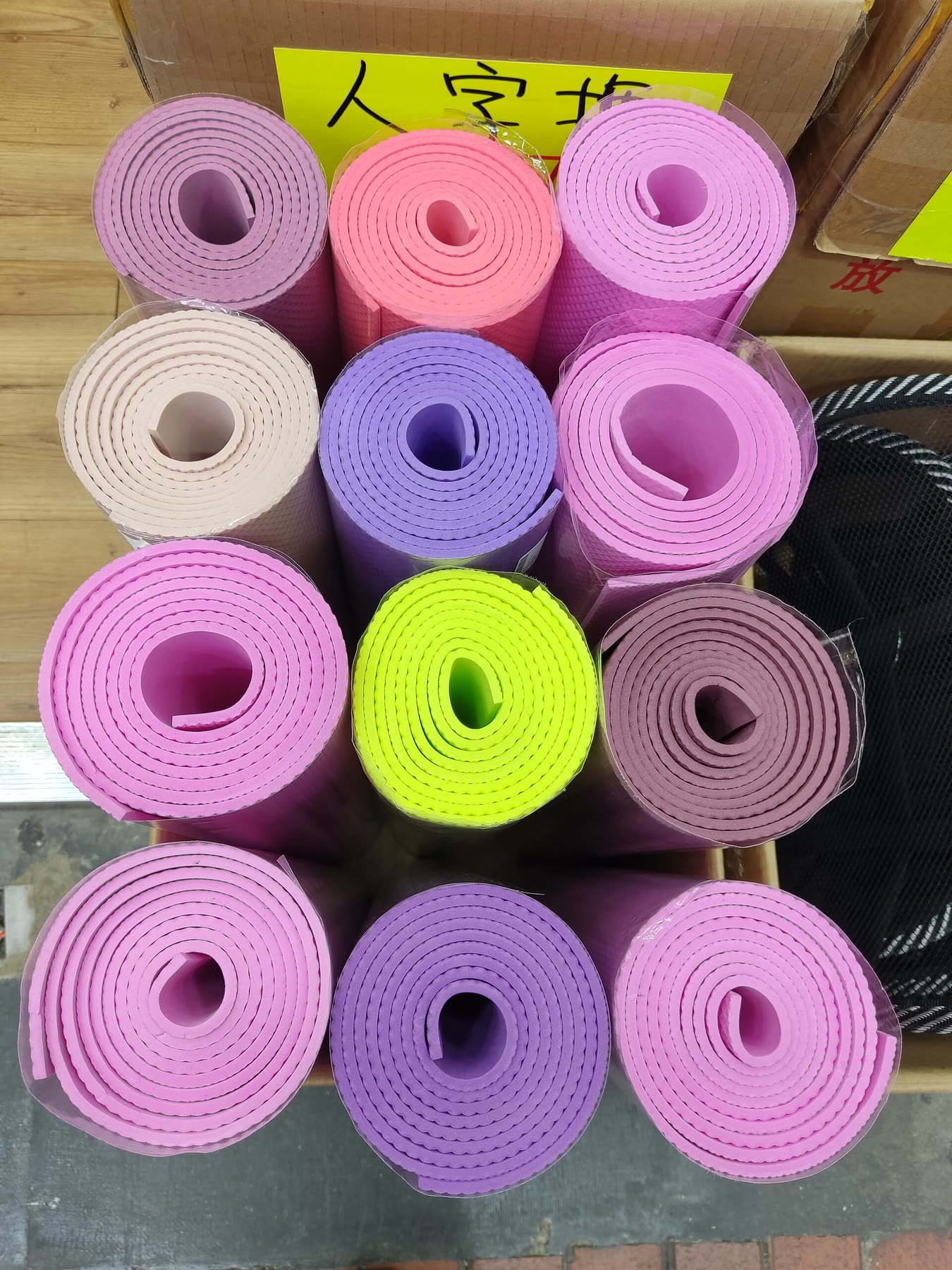
Material, Thickness and Grip: How to Choose the Right Budget Mat
Budget yoga mats tend to cluster around a few materials. Historic DHgate editorial highlighted jute, NBR, TPE, rubber and PVC mats, along with acupressure pads and a microfiber yoga blanket. Here’s how those materials typically behave and who they suit.
Quick comparison: common cheap mat materials
| Material | Typical feel & grip | Sweat handling | Better for… | Poor fit for… |
|---|---|---|---|---|
| NBR foam | Very cushioned, spongy, decent dry grip on smooth floors | Resists water, may feel slick when very sweaty | Floor-based poses, Pilates, sensitive knees | Fast, sweaty vinyasa or hot yoga where you need strong traction |
| TPE | Balanced cushioning, lighter and springy, often textured | Usually resists moisture and cleans easily | Beginners, mixed yoga/fitness, home practice | Very heavy practitioners who want a dense, grounded mat |
| PVC | Dense feel when made well, surface can be sticky | Does not absorb sweat; can become slippery when wet | General studio-style use at normal temps | Hot yoga or very sweaty flows without towel coverage |
| Jute blend | Firm, slightly rough texture, good dry grip | Breathable; surface can feel scratchy if you slide a lot | Eco-minded buyers, stable standing poses | Sensitive skin or lots of kneeling/restorative work |
| Basic rubber | Stable, naturally grippy, moderate cushioning | Often handles sweat fairly well; can smell at first | Daily all-round practice, balances, moderate sweat | Latex-sensitive users, those needing extra plush cushioning |
These are broad tendencies, not lab results. Individual mats vary even within the same material.
Picking thickness for your body and floor
Most cheap mats fall between 5 mm and 15 mm thick:
- Around 5-6 mm (common for jute blends and TPE): A good compromise. Enough cushion for knees on wood floors, but you still feel the ground. This works for many mixed-flow practitioners.
- Around 10 mm: Common for cushioned TPE and fitness-style mats. Helpful if your wrists or knees complain on thinner mats, or if you practice on tile or concrete.
- Around 15 mm (seen in thick NBR mats): Feels more like a plush exercise mat. Great for sit-ups, stretching and restorative poses, but can make one-legged balances and strong standing poses feel wobbly.
On carpet, you can go thinner because the floor already gives. On hard floors, err slightly thicker, but be cautious about going past 10 mm if balance work is important to you.
How the historic DHgate “top 10” styles map to real-world use
A past DHgate editorial listed ten yoga-related products. Think of them as a menu of cheap-but-functional options you might encounter on DHgate or other marketplaces:
- Jute yoga mat (around 5 mm, standard length) – Better for eco-minded buyers who want firm, non-slip texture on smooth floors and can tolerate a slightly rough feel.
- 15 mm thick NBR non-slip mat – Very soft, forgiving cushioning for fitness and gentle yoga. Good if you mainly lie, sit or kneel; less ideal for fast, sweaty flows.
- TPE yoga mats around 6-10 mm – Often marketed as “high elastic” or reversible. These are solid all-rounders for beginners who want something light, easy to clean, and comfortable.
- Rubber fitness/yoga mat – Compact, stable and grippy, often promoted as suitable for yoga plus camping or workouts. Think of these as jack-of-all-trades mats for people who cross-train.
- Extra-thick PVC mat with anti-tear surface – Dense and bouncy, designed to spread impact and shield joints. Works well for casual practice at normal temperatures; for hot classes you’ll likely need a towel to keep it from getting slick.
- Lotus-style acupressure pad and pillow – Not a yoga mat, but a spiky acupressure set used for relaxation, meditation, or stress relief alongside yoga. It can help with tension and blood flow while you rest, not while you’re moving through poses.
- Microfiber yoga blanket or round beach-style throw – A microfiber blanket/throw can double as a light yoga prop or top layer over a mat. Handy for beach yoga or covering a studio mat whose texture you don’t like.
A practical way to decide: choose one main mat type for practice (e.g., 6 mm TPE or 5 mm jute), then add an accessory only if you actually see a use for it (e.g., acupressure pad for evening relaxation, blanket for beach sessions).
Red-flag scenarios for cheap mats
There are a few situations where a very cheap mat often disappoints:
- Hot yoga on PVC or smooth NBR without a towel – As your hands and feet get sweaty, smooth PVC or foam can turn into a slip-and-slide, which is both frustrating and unsafe.
- Serious balance work on ultra-thick foam – The more cushioning under your feet, the more your joints wobble. Great for comfort, less helpful for building stable balance.
- Heavy daily use by big-bodied practitioners on low-density foam – Over time, the mat can compress, form permanent footprints, or tear.
If any of those describes your practice, you may want to stretch your budget or look specifically for higher-density TPE or rubber, even if it costs a bit more.
Finding These Mats on DHgate and Alternative Marketplaces
Cheap yoga mats are widely sold on major marketplaces like Amazon and eBay, as well as cross-border platforms such as DHgate. The same general mat types—NBR fitness mats, reversible TPE, PVC exercise mats, jute blends, rubber training mats, acupressure pads, and yoga blankets—often show up across sites, just under different brand names.
How to search and filter on DHgate
On DHgate, you’re usually dealing with a mix of factory-direct and reseller listings aimed at international buyers. Because inventory changes, treat the historic “top 10” list as examples, not a promise of what you’ll find.
A simple workflow:
- Search by material plus thickness: Use keyword pairs like “TPE yoga mat 6mm,” “NBR yoga mat 15mm,” or “jute yoga mat 183×61” to narrow the field.
- Check the specs in the listing: Look for:
- Material keywords (NBR, TPE, PVC, rubber, jute).
- Stated thickness (e.g., 5 mm, 10 mm, 15 mm).
- Size around 183 × 61 cm if you’re average height.
- Scan photos for texture and grip: Close-up photos will show whether the surface is smooth, ridged, or a jute-like weave. Match that to your sweat level and comfort preferences.
- Read buyer reviews for real-world behavior: On any marketplace, the useful comments mention things like “hands slip when sweaty,” “good cushioning on concrete,” or “started flaking after a few months.” Prioritize those over generic five-star ratings.
DHgate vs Amazon, eBay and premium-brand sites
DHgate can be useful if you:
- Are open to unbranded or lesser-known brands as long as specs look right.
- Might be buying multiple mats for a home studio or group and care about bulk-friendly pricing.
You may be better off at Amazon, eBay, or a specialty retailer if you:
- Are ready to invest in a premium mat like the Manduka or JadeYoga styles that independent reviews praise for long-term grip and durability.
A practical strategy for many people is: start with a cheap but decent TPE, NBR, or rubber mat from DHgate or another mainstream marketplace, learn what you actually like and dislike (too soft, too slippery, too smelly), then upgrade later to a higher-end mat once your practice is established.
Sources like OutdoorGearLab’s yoga mat tests, Wirecutter’s best yoga mats guide, and BestReviews’ budget mat picks are helpful if you want to compare how higher-priced mats perform against the kind of cheap options covered here.