
When you buy festoon lights for an outdoor space on DHgate, the crucial step is matching each listing and seller to the realities of your setup—weather exposure, power source, cable run and installation—rather than chasing the very cheapest option. This guide focuses on how to use DHgate’s seller history, listing detail, shipping terms and dispute protections to filter out risky offers and keep only festoon lights that can realistically work in your Australian outdoor space.
Match DHgate festoon-light listings to your actual outdoor setup
When you search DHgate for festoon lights similar to those you might find on Amazon, the real decision isn’t which photos look nicest; it’s which listing and seller can reliably deliver lights that fit your outdoor space and your tolerance for risk. Festoon lights are fairly standard decorative strings or cables with bulbs along the run, but DHgate adds extra variables: independent sellers with different levels of experience, cross-border shipping to Australia, and a heavy reliance on how clearly each listing describes the product and its protections.
I would start from the physical realities of your setup: how exposed the area is to rain and wind, what power source you have, how far the cable needs to run, and how you plan to hang the lights. On DHgate, those needs translate into a short checklist that every listing has to clear before it even makes your shortlist: a stated waterproof or IP rating that matches your weather exposure, bulb material that suits your durability and safety expectations, a power type and plug or voltage that works in Australia, enough total length and sensible bulb spacing to cover your deck or courtyard, and brightness and colour that match the mood you want. Only once a listing and seller look capable of meeting those basics is it worth comparing prices, shipping promises, and DHgate protections in more detail.
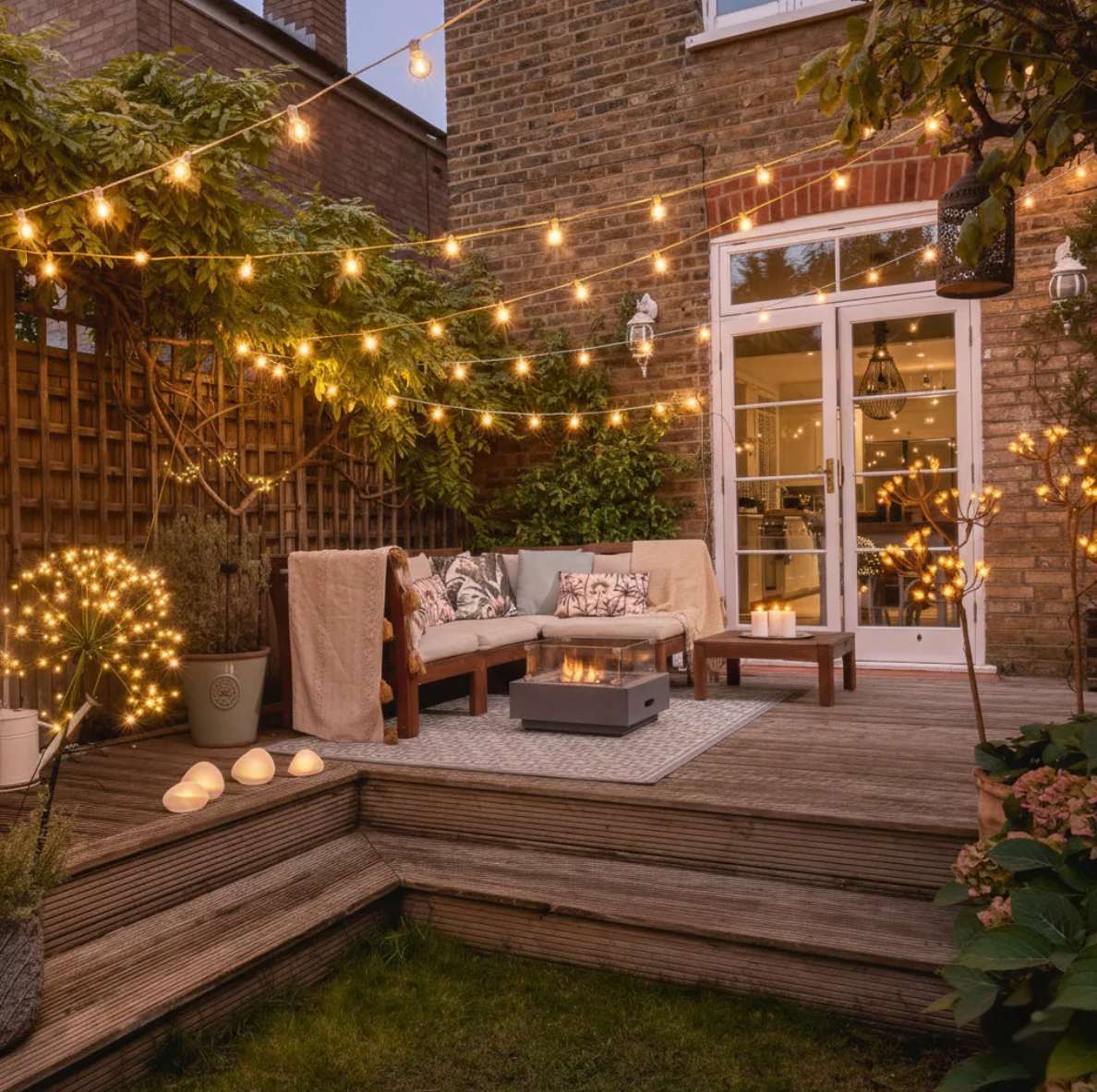
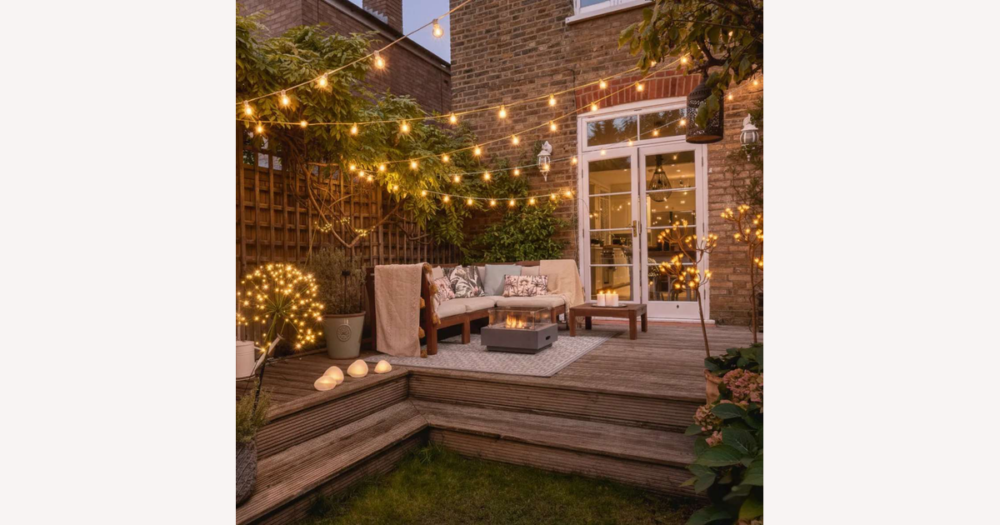
Festoon string lights stretched over an outdoor seating area, with visible cable runs and evenly spaced bulbs, showing the kind of installation you’ll be checking listings against on DHgate.
Know the key outdoor specs festoon lights need
Festoon lights are decorative string or cable lights with regularly spaced bulb sockets, often run in lines or zigzags over patios, courtyards and gardens to add ambience as well as some practical light. On DHgate they usually appear in the same category as other string lights, so having this picture in mind helps you recognise which listings are actually festoon-style products before you start checking any technical details.
- Waterproof or IP rating: look for a stated IP code (for example, codes like IP44 or IP65 are commonly mentioned in general guides for outdoor use) instead of vague terms like “waterproof” or “outdoor” with no detail.
- Bulb material: glass bulbs can look more traditional but are easier to break in transit; plastic bulbs are usually more impact-resistant, which can matter for cross-border shipping and windy areas.
- Power type and plug: confirm whether the lights are mains-powered, low-voltage or solar, and that the stated voltage and plug style are suitable for use in Australia or with your planned adapter or transformer.
- Total cable length and bulb spacing: check how long the run is and how far apart the bulbs are so you know whether a single string can span your deck or if you’d need multiple sets.
- Brightness and colour temperature: note whether the listing describes the light as warm, neutral or cool and, where given, the brightness in lumens or watts, so you can decide if it’s for soft ambience or closer to task lighting.
- Missing basics as a warning sign: if a listing skips several of these details or only uses broad phrases like “outdoor decorative lights” without an IP rating or power information, treat that as a prompt to ask the seller for clarification before you consider buying.
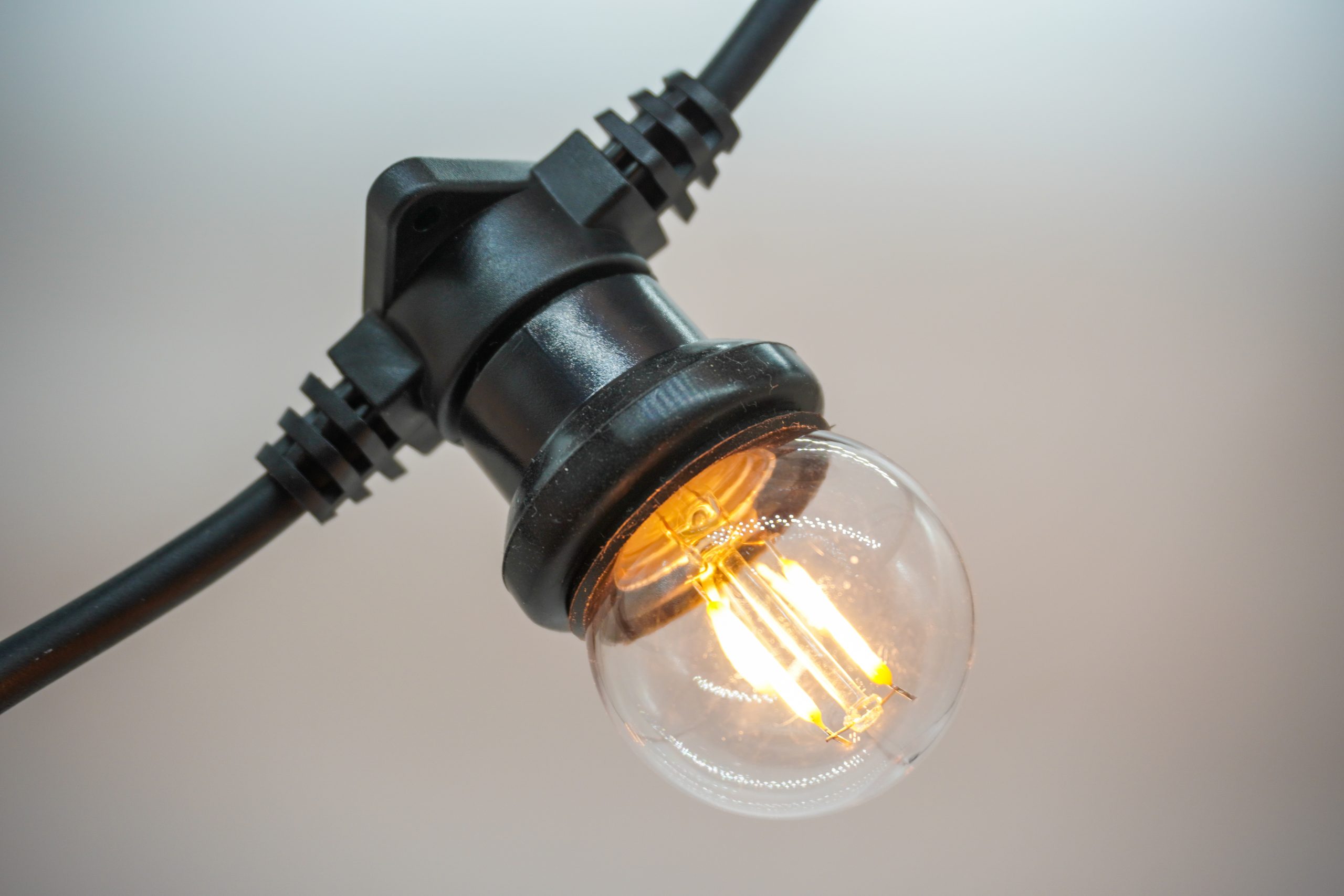
Close-up of festoon lights showing the bulb sockets, cable thickness and spacing, illustrating the physical features you’ll be checking in DHgate specs.
Read DHgate seller verification and shop history alongside your lighting needs
On DHgate, the safest starting point for festoon lights is the seller panel beside the listing. Verified badges, a visible overall rating, and a steady history of completed transactions all suggest that the shop has handled enough orders for buyers to leave feedback, even though no badge can guarantee a perfect outcome.
For an outdoor setup where IP rating, voltage, plug type and total cable length must be right, lean toward sellers with higher ratings, more orders and a longer shop history. Reviews that mention outdoor use, weather exposure, real cable length or packaging quality are especially useful, because they hint at whether the lights arrived as described and survived cross-border shipping without smashed bulbs or damaged cables.
If you’re considering a newer or less-established shop, treat the same signals as a prompt for extra checks rather than an automatic “no”. A new seller with a clear description, a few detailed positive reviews and responsive messaging can still be a reasonable choice, but it’s more important to ask direct questions and get written confirmation through DHgate before ordering—especially if you need the lights ready for a specific event or have limited room for error in your outdoor space.
Overall, it’s usually worth paying a little more or accepting a slightly longer delivery estimate for a festoon-light listing from a clearer, better-rated seller. Those seller signals are only indicators, not guarantees, but prioritising them reduces the chance of misdescribed specs, poor packaging or unresponsive after‑sales support when something goes wrong.
Follow a simple checklist before buying festoon lights on DHgate
- Scan the product description for the core outdoor specs: a stated IP rating for water resistance, the bulb material (glass or plastic), total cable length and bulb spacing, voltage and plug type that can be used in Australia (or with your planned adapter), and basic information on brightness and light colour.
- If any of these points are missing or vague, use DHgate’s internal messaging to ask the seller specific questions, such as “What IP rating do these lights have?” or “Is the plug compatible with Australian sockets?”, and keep their written confirmation in the message thread.
- Read product-level reviews and, where available, buyer photos to see how the lights perform outdoors in real use. Look for comments about actual cable length, whether the lights feel bright enough, how well the bulbs and cables survived weather and wind, and how securely everything was packed for shipping.
- Cross-check what you find in reviews with the seller’s overall profile from the previous section, favouring listings where the feedback and specs line up with a solid rating history rather than relying on one vague positive comment.
- Once you’re satisfied that the specs fit your space and the feedback looks consistent, add the festoon lights to your cart, double-check the selected shipping method and estimated delivery window, and complete payment through DHgate’s checkout instead of agreeing to any off-platform payment suggestion.
- If you’re under time pressure for an event or have stricter safety or durability requirements, prioritise listings where these questions are already answered clearly in the description and reviews, and avoid sellers who stay vague or slow to respond when you ask for detail.
Use DHgate’s order and payment flow to protect your purchase
Once you’ve run through your checklist and are happy with the specs and terms, the safest way to finish the purchase is to follow DHgate’s standard flow. Choose the exact variant and quantity of festoon lights you need, add them to your cart, confirm the selected shipping option and delivery window, and then pay through DHgate’s own checkout using one of the methods it supports.
Keeping every step inside DHgate—messages with the seller, the cart, and the payment—creates a clear record that ties your order to a specific listing and shop. That record is what DHgate can refer to if you later need tracking updates, help with a delayed parcel, or support in a dispute about damaged or not-as-described lights.
If a seller asks you to pay by direct bank transfer, a separate app, or any arrangement that takes payment outside DHgate, treat that as a red flag and decline. Paying off-platform can make it much harder, or sometimes impossible, for DHgate to step in if something goes wrong, even when everything else about the listing looked suitable for your outdoor space.
In practice, that means: once you’ve confirmed the IP rating, plug type, length, and other key details through the listing and DHgate messages, stick to the official add-to-cart and checkout path. It may feel slower than sending money directly, but it keeps your protections intact if the festoon lights arrive late, broken, or not as described.
Check shipping, delivery times, and packaging for Australian outdoor use
Avoid common pitfalls in DHgate festoon-light listings
- Missing or vague IP rating for weather exposure. If the listing doesn’t clearly state an outdoor-appropriate IP rating, you risk hanging festoon lights that can’t cope with rain or heavy dew, leading to early failure or unsafe use in exposed areas.
- Unspecified or incompatible voltage and plug type for Australia. When the description doesn’t spell out voltage and plug style—or only shows a non‑AU plug in photos—you could receive lights that don’t match your sockets or require extra adapters, adding cost and potential safety concerns.
- Ambiguous total length and bulb spacing. Listings that only quote one number for “length” or omit spacing details can leave you with a string that stops short of your pergola or terrace, forcing awkward gaps or last-minute re‑planning of your layout.
- Thin or confusing return and refund information. If it’s unclear how damaged bulbs, dead-on-arrival strings, or wrong specifications will be handled, you may find it much harder to obtain a refund or replacement if something arrives broken or not as described.
- Sellers pushing for off-platform payment or problem-solving. Requests to pay outside DHgate, or to “sort it out privately” instead of using DHgate’s tools, are serious red flags because they can leave your order outside DHgate’s protections and make refunds far harder to pursue.
- When you notice any of these issues, pause rather than pushing ahead for the lowest price. Use DHgate messaging to ask the seller for precise answers on IP rating, voltage and plug type, length and spacing, and after‑sales terms; if they stay vague, contradict the listing, or avoid answering, I would move on to a clearer, better-documented listing instead of accepting avoidable hassle later.
Know how DHgate disputes and refunds support your decision
If your festoon lights never arrive, arrive badly damaged, or differ clearly from the DHgate listing—for example, the plug type or waterproof rating doesn’t match what was shown—you can normally open a dispute through DHgate. In that dispute you describe the problem and upload evidence such as photos of broken bulbs, packaging, or plugs that don’t match the description so DHgate and the seller can see what went wrong.
Once a dispute is opened, DHgate and the seller work within platform timelines to respond and negotiate a resolution. Outcomes can include a full refund, a partial refund, or another arrangement, but there’s no guarantee of a particular result in any individual case; decisions depend on the details, the evidence, and how both sides respond within those timeframes.
The process works best when the original listing is clear and everything stays on-platform. Keeping your payment inside DHgate’s checkout and using DHgate messages instead of external chats gives the platform a visible record of what was advertised and agreed. I’d keep order confirmations, screenshots of key spec claims like IP rating and plug type, and your message threads so you can show the difference between the listing and what you received.
This is also why it’s worth favouring transparent listings from established sellers. Clear specs, consistent photos, and a solid history of orders not only reduce the chance that your festoon lights will be wrong, they also make it much easier to prove your case and use DHgate’s dispute and refund system effectively if something still goes wrong.
Adjust expectations when moving from Amazon to DHgate
If you’re used to buying festoon lights on Amazon, you may expect fast shipping, familiar return flows, and fairly standardised product descriptions. DHgate can still work well for the same kind of outdoor lights, but it leans more on diverse, often cross-border suppliers, so delivery to Australia is usually slower and logistics can be more complex.
Both platforms use ratings and reviews, yet DHgate listings often vary more in how clearly they spell out details and policies. Instead of assuming the same baseline you’re used to on Amazon, treat each DHgate festoon-light listing as a fresh check: confirm the stated IP rating and whether it really suits exposed outdoor use, check voltage and plug type for your setup, and look for clear information on length, brightness, and how returns are handled for damaged or unsuitable items.
Your product sense still applies—you want weather-appropriate, correctly powered festoon lights—but on DHgate it pays to slow down. Read the description line by line, scan the seller’s history and feedback, check shipping methods and estimated delivery windows to Australia, and make sure protections like dispute and refund options are clear before you order. The goal isn’t to treat DHgate as better or worse than Amazon, but to be more active about verifying specs and policies so you can use the earlier DHgate-specific checks to protect yourself.
FAQ: Can I assume DHgate festoon lights are all-weather like the ones I’ve seen on Amazon?
Do festoon lights sold by DHgate sellers usually meet IP65 or similar all‑weather standards, or should I treat this as a per‑listing question?
You should treat waterproofing and “all‑weather” claims as a per‑listing question on DHgate, not something that’s automatically IP65 or equivalent just because you’ve seen similar festoon lights on Amazon.
DHgate is a marketplace with many different suppliers, and their waterproof ratings, materials and build quality can vary widely. Some strings may be designed for fully exposed outdoor use, while others are better suited to covered patios or indoor decorative setups. This guide can’t guarantee that IP65 festoon lights are always available on DHgate, or that any specific set will perform in Australian weather.
Instead, treat waterproofing as a concrete spec to verify:
– Look for a clear IP code (for example, IP44, IP65) in the description rather than vague terms like “waterproof” or “outdoor”.
– Check whether that IP rating appears to apply to the whole assembly—bulbs, sockets, and connections—not only to one component.
– Note the bulb and cable materials; more robust cables and well‑sealed sockets are usually better for exposed areas.
– If anything is unclear, message the seller through DHgate and ask directly which IP rating the lights have and whether they are suitable for exposed outdoor use in rain.
If a listing omits any IP information or only uses loose phrases like “for outdoor use” without a rating, assume the product is not fully weatherproof until proven otherwise. In that case, either choose a better‑documented listing with a stated IP code or plan to use those lights only in more sheltered spots, such as under a covered pergola or veranda, where they are less exposed to wind and rain.