
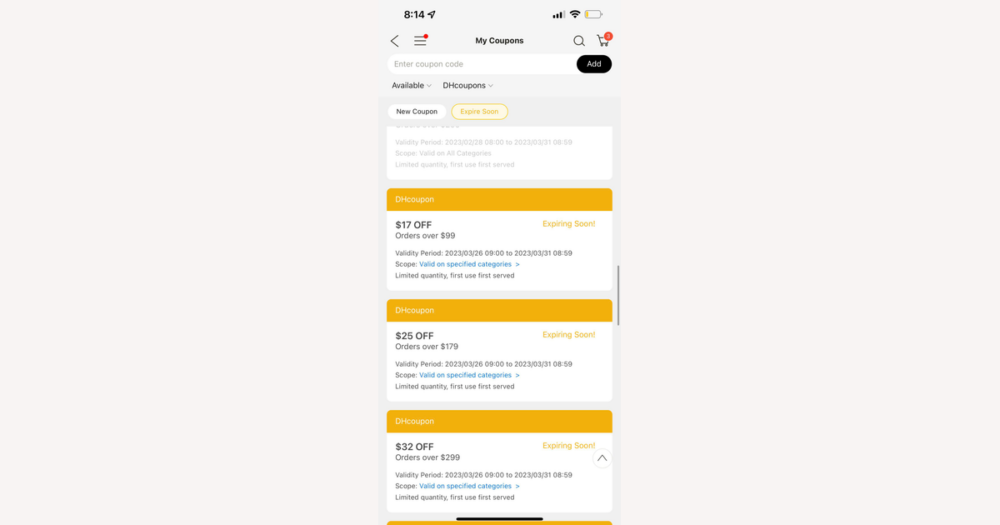
On DHgate, a promo or share code is only useful if it actually reduces the amount you pay after shipping, fees, and any taxes are counted. Instead of chasing the biggest-looking percentage from random search results, focus on understanding what a code can and cannot change in your checkout total, and then use a repeatable way to find and test offers that fit DHgate’s current rules for your order.
What share promotion codes actually do for a DHgate order
On DHgate, share promotion codes and coupons are short alphanumeric strings you enter into a promo or coupon box at checkout. When a valid code is accepted, it triggers a specific type of discount: a percentage off your item subtotal, a fixed amount taken off the order, reduced or free shipping, or sometimes a gift or bonus tied to spending a certain amount.
These codes are different from automatic deals. An automatic deal is already baked into the price or shown as a platform campaign or seller promotion that applies without you typing anything in. With codes, you only see the benefit if you enter them correctly and meet the terms; they can fail if the order doesn’t qualify or the promotion has expired.
For a DHgate order, each kind of discount touches only part of your landed cost. A percentage or fixed-amount code usually changes the item price portion of the total. A shipping code affects the shipping line only, and gift-style promotions add value without lowering the payable amount. Taxes, duties where applicable, and any extra fees are governed by DHgate’s current rules and your location and may not be reduced by a coupon at all.
This is why a headline discount like “10% off” can be less meaningful than it looks. On a low-value item, the absolute saving may be tiny, and high shipping or other costs can still dominate what you pay. The practical way to judge any DHgate code is to focus on the final payable amount shown in the checkout summary after the code is applied, not just the advertised percentage.
DHgate’s actual promotion rules—such as who is eligible, which categories are included, and whether codes can be stacked with other offers—are defined by DHgate’s own terms and can change over time. Treat every code as a starting point, and rely on the current checkout page to confirm how that promotion really affects your full order total today.
A repeatable way to look for DHgate share promotion codes
Once you know how a code affects your DHgate total, the next step is to look for promotions in a systematic way rather than grabbing the first result from a search engine. Start on DHgate itself by checking platform and seller-side offers—sitewide events, platform or store coupons, and individual seller discounts—because first-party promotions are designed to work with DHgate checkout and usually have clearer terms and eligibility.
After you’ve checked DHgate, use general coupon ecosystems as a supplement. Search for DHgate-related entries on reputable coupon aggregators or deal blogs that organize offers by store and show DHgate-specific codes or campaigns. Treat these external sources as helpers, not guarantees: many large coupon sites list expired or unverified codes, and labels like “verified today” can be marketing language rather than evidence of recent testing.
Prioritize the most promising share codes before you spend time trying them. The best candidates are codes that have been updated or checked recently, show a real expiration date, and clearly state their usage terms—minimum spend, new-user-only restrictions, eligible categories, or regional limitations. Focus on codes that match your cart value, currency, and country, and assume that some external offers simply will not apply to every DHgate seller or order configuration.
I’d rather start with a modest, clearly documented discount that fits my DHgate order than chase a huge but vague code that may fail at checkout. You can treat heavily hyped but poorly explained codes as experimental extras: try them if you have time and the order is low-risk, but base your budget planning on smaller, predictable promotions backed by clear terms and a DHgate or DHgate-store context.
Step-by-step: searching and testing a DHgate code on your order
- Prepare your DHgate cart first. Add the items you genuinely plan to buy, check each seller’s rating and recent feedback, and note the available shipping options and estimated delivery times so you know your baseline cost and risk.
- Scan DHgate for built-in promotions. Look for platform or seller offers such as sitewide campaign banners, platform or store coupons, and seller-specific discounts, then follow DHgate’s instructions to claim and apply any internal coupons to your account or cart.
- In a separate tab, search for DHgate-related share codes on reputable coupon directories or deal blogs. Use each site’s store search or on-site search for “DHgate” instead of relying only on generic search engine results, which often surface expired or misleading codes.
- For every promising code, open its detail page and read the conditions carefully. Check the minimum order amount, eligible categories, new-user-only restrictions, region or currency limits, stacking rules, and the stated expiration date so you know exactly when the code should work.
- Go back to DHgate checkout and find the promotion or coupon field. Paste or type the code there, then see whether DHgate accepts it and how much it deducts from the order summary, including any change to shipping or fees.
- If the code is rejected or the discount is smaller than you expected, compare what happened with the terms. Decide whether to adjust your cart—such as increasing the order value to meet a threshold—or to skip the code entirely if the total still doesn’t make financial sense.
- Treat DHgate’s checkout summary as the final test. A share promotion code is only real if you see the discount applied before payment, and it’s usually better to accept a modest, clearly working code than to burn time on endless trial-and-error chasing a bigger but unreliable offer.
How to check if a code is valid and really saves you money
- Check verification signals. Favor codes from sources that show a recent “last checked” date or timestamp for DHgate offers, or otherwise indicate regular update activity, instead of pages that look abandoned.
- Look for recent user feedback. Notes like “worked for me” or short comments can be useful, but treat very old or sparse feedback as a weak sign that the code still functions today.
- Confirm expiration and key terms. Make sure the code lists a clear expiry date and a simple summary of conditions such as minimum spend, new-user-only status, category exclusions, region or currency restrictions, and whether it can be stacked with other offers.
- Verify DHgate compatibility directly. Prefer codes that explicitly mention DHgate or appear in a DHgate-specific context, then test them in the promo field at checkout to confirm DHgate accepts them without error.
- Compare landed cost with and without the code. Look at the full order total in DHgate checkout—including item prices, shipping, and any estimated taxes or duties—and decide whether the discount meaningfully improves what you pay, not just the item subtotal.
- Weigh risk and effort against the savings. Ask whether meeting the code’s conditions (such as higher cart value or slower shipping) and the time spent testing are worth the actual discount; lean toward smaller but dependable savings from transparent sources over speculative big offers.
- Use this checklist before you rely on any share promotion code, and treat the DHgate checkout summary as your final confirmation that the code both works and genuinely lowers your total payable amount before you authorize payment.
Common coupon pitfalls that can erase DHgate savings
- Expired or mis-labeled codes from generic search results. Many “DHgate coupon” pages surface old, copied, or never-valid codes, so treat anything you find via a quick search as unproven until you’ve checked its date, terms, and whether it actually mentions DHgate in context.
- Narrow eligibility you don’t notice until checkout. A lot of share codes only work for specific categories, regions, first-time buyers, or particular sellers. Assuming they are sitewide can lead to failed discounts or smaller savings than expected when you reach the DHgate payment screen.
- Marketing-heavy “verified today” claims. Large aggregators sometimes highlight huge numbers of codes with labels like “tested” or “verified” that are more about attracting clicks than about genuine recent checking. If a page lists dozens of DHgate codes with little detail or user feedback, treat it as low-trust and double-check everything at checkout.
- Overspending just to hit minimum spend thresholds. It’s easy to add extra items or upgrade options purely to unlock a coupon condition. On DHgate cross-border orders, once you include full product cost, shipping, and possible import charges, that extra spending can erase or even outweigh the discount the code promised.
- Ignoring cross-border cost and dispute complexity. For many DHgate orders, high or opaque international shipping, potential customs or import fees, and the effort involved in disputes or refunds can quickly outweigh a small percentage-off code. A risky seller or unclear refund path can turn a “cheap” order into a loss even if the promo technically worked.
- Practical counter-measures. Before you rely on any DHgate share code, read the expiry date and full terms, avoid growing your cart just to use a coupon unless the math clearly favors you, prioritize well-rated sellers and straightforward shipping, and be skeptical of sources that list huge, uncurated code collections with little sign of recent testing.
Why DHgate buyer checks matter more than any code
On DHgate, a promo code only improves the deal if the underlying transaction is solid. Before letting any discount sway your decision, look closely at the seller’s rating, number of completed orders, and recent feedback. This gives you a sense of how reliable they are and how often buyers report issues with delivery or item quality.
You should also understand how refunds, returns, or disputes would work for this order. Check the seller’s stated policies and the platform’s dispute procedures for the type of item you’re buying. If getting your money back would be complex or uncertain, a small discount is unlikely to compensate for the hassle of a failed transaction.
Keep payment within DHgate’s official checkout. Be cautious of any request to pay off-platform, through direct transfers or external links, even if the seller promises extra discounts or special codes. Staying inside DHgate’s payment flow is part of protecting yourself if something goes wrong with the order.
I would personally choose a modest, clearly applied discount from a highly rated seller with transparent shipping and refund information over chasing a bigger-looking code that nudges me toward a questionable listing or unclear terms. The predictable landed cost and easier problem resolution matter more to me than the largest headline percentage.
For very low-value, low-risk items, it can be reasonable to experiment with less verified codes or cheaper, slower options if you’re comfortable with possible delays or minor losses. That should be a conscious trade-off, not something you stumble into because a coupon looked tempting.
Seen this way, DHgate share promotion codes are a bonus layered on top of a safe, cost-effective transaction. Let seller reliability, sensible shipping, secure payment, and workable dispute handling be your baseline; only then decide whether a particular code genuinely improves the deal instead of distracting you from those fundamentals.
DHgate’s own promotions vs external share codes
For most DHgate buyers, the most reliable discounts are the ones that come directly from the platform or individual sellers. Platform coupons, store-level discounts, and sitewide campaigns are built into DHgate’s own checkout system, so they are more likely to apply cleanly according to current DHgate rules. The terms are usually visible on the platform—such as minimum spend, eligible categories, or campaign dates—and the discount is calculated automatically when you meet those conditions.
Third-party share codes and generic coupon lists sit outside that system. They can occasionally offer extra or even stackable savings, but they are more prone to problems: expired codes that no longer work, codes scoped to a different region or campaign, or offers that were never intended for DHgate at all. Treat anything you find off-platform as unverified until you have read the fine print and tested it in DHgate checkout on your actual cart.
A practical rule of thumb is to start with DHgate’s own promotions for everyday orders. Check platform events, built-in coupons, and seller discounts first, and see what total landed cost you get once product price, shipping, and any fees are included. Only when the order value is higher, or when you have time to work through the full verification steps you’ve learned, does it make sense to invest extra effort in hunting external share codes.
Experienced bargain hunters may still choose to experiment with third-party codes, especially on low-risk, low-value items where a failed code or small delay is acceptable. In that case, I would only try a few recent, clearly described codes and always confirm the final total at DHgate checkout before paying, accepting that many external offers simply will not apply.
Avoid assuming that promotions will always stack or follow a predictable pattern. DHgate’s own terms and technical implementation decide whether a platform coupon, seller discount, and any code can combine on a single order, and those rules can change over time. In practice, predictable, transparent discounts from DHgate’s built-in system deserve more attention than speculative external codes, but carefully verified off-platform offers can sometimes add a bit of extra savings when the conditions line up and you are willing to test them at checkout.
Answers to common questions about DHgate share codes
Are share promotion codes from generic coupon sites supposed to work on every DHgate seller?
No. Most share promotion codes are scoped to specific campaigns, categories, sellers, regions, or buyer types (such as new users only). Generic coupon pages often don’t show all of these limits clearly, and some codes may not be intended for DHgate at all. There is never a guarantee of sitewide applicability: only the actual DHgate terms shown with a promotion and the result in your checkout summary can confirm whether a particular code works for your cart.
What should I do if a promo code fails at DHgate checkout?
First, recheck the code’s details: confirm the expiry date, minimum spend, eligible categories, region or currency limits, and whether it’s restricted to new users or certain sellers. If you still want the items and the terms are reasonable, you can adjust your cart to meet the conditions and try once more. If the code continues to fail or the required changes no longer make financial sense, treat the code as unusable, rely on DHgate’s own platform or seller promotions instead, or postpone the purchase if the discount was essential. Keep payment inside DHgate’s official checkout and do not follow external links or off-platform payment requests just to “make” a code work; that increases risk and removes DHgate’s protections.
How often should I look for new codes before a larger DHgate order?
For higher-value orders, it’s reasonable to check DHgate’s current promotions and then a small number of trusted coupon or deal sources shortly before you plan to pay, and again around major sale periods or platform campaigns, because codes and internal offers can change frequently. For small, routine purchases, constant re-checking is usually not worth the time or extra complexity; in those cases, relying on DHgate’s built-in coupons or seller discounts and a quick verification step at checkout is often enough. This timing guidance comes from general coupon habits rather than DHgate-specific rules, so your default should still be the core practices from this guide: treat off-platform codes as unverified until tested, confirm any discount in the DHgate checkout summary, and judge every promotion against your total landed cost and overall transaction quality.