
If you want to cut the landed cost of your DHgate order this month, don’t waste time hunting for a mythical “best coupon site”—start with the discounts DHgate itself puts in front of you, then add only the few external deals that visibly lower your checkout total. DHgate’s platform coupons, seller promotions and in‑cart shipping or bulk discounts are built into its payment and shipping system, so you can see the real effect on your order before you pay; once those are in place, it’s usually better to spend your remaining time checking seller reliability and shipping terms than chasing long lists of generic promo codes.
Why there’s no single “best coupon site” for DHgate—and what to rely on instead
There isn’t a single honest answer to “what’s the best coupon site for DHgate this month?” Most big coupon round‑ups are built around major retailers and local services, not cross‑border marketplaces like DHgate, and their DHgate entries come and go too quickly for anyone to reliably crown a winner. Offers change, codes expire, and some “DHgate” deals on those sites are really just general payment or bank promos with fine print, not marketplace‑specific savings you can depend on in Australia.
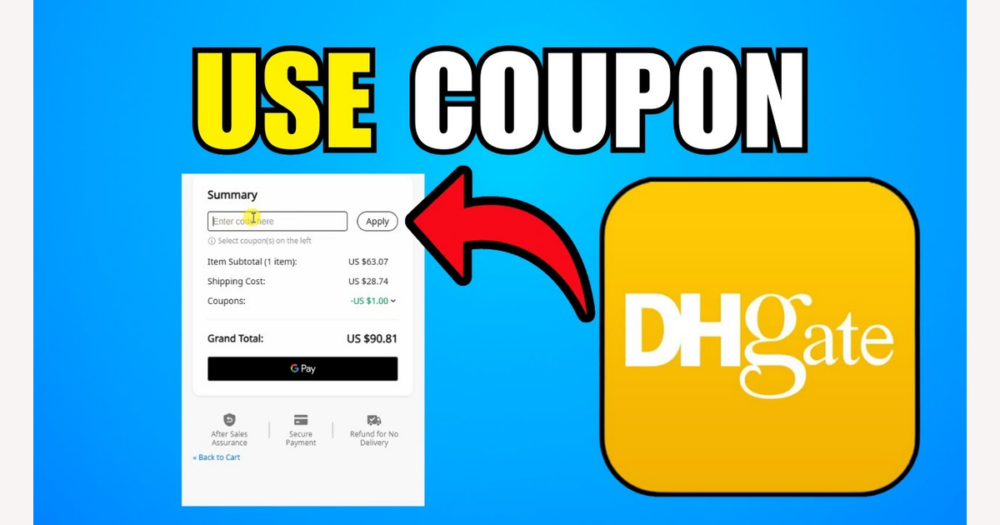
The part you can actually control is DHgate itself. DHgate runs platform‑wide coupons you’ll see on the homepage or in the app, individual seller promotions on product and store pages, and sometimes in‑cart shipping or bulk‑order discounts. These are native to the platform, wired into the cart, and designed to work with DHgate’s own fee and shipping structure, so you can see the discount apply to your order total before you pay and judge how it changes your landed cost.
Because I care more about predictable, stackable savings than chasing every code on the internet, my hierarchy is simple: I would start by claiming any DHgate platform coupon I’m eligible for, then layer on seller‑specific discounts and in‑cart shipping or quantity deals. From there, I might spend a few minutes trying one or two easy external tools—like a well‑known promo extension, a bank offer, or cashback that clearly shows up against my DHgate payment. If I don’t see the final payable amount drop or a clearly documented cashback percentage, I stop instead of testing dozens of coupon sites. For DHgate, native coupons and promotions are the core of a realistic savings plan; external tools are optional extras when they visibly move the checkout total, not something to build your monthly budget around.
How DHgate coupons and promotions actually change your landed cost
For landed cost, think of a DHgate order as several layers: the base item price set by the seller, whatever shipping charge they quote, any platform fees or protections that appear in the order summary, taxes or import duties that may be assessed when the parcel enters Australia, and any currency conversion or foreign‑transaction fees your bank adds on top. Your profit or true delivered cost depends on the sum of all these pieces, not just the headline discount percentage you see on a coupon banner.
DHgate platform coupons and seller promotions usually target the item price, sometimes with extra incentives like free or reduced shipping on certain services or order sizes. When you apply one of these native discounts, you see the item subtotal and, in some cases, the shipping line move inside DHgate’s checkout. What they almost never do is remove Australian GST, customs duty or your bank’s own foreign‑transaction fees, because those are handled by customs and your payment provider, not by DHgate. The exact pattern can vary by product category, shipping method and destination, so you should always read the terms of each coupon or promotion rather than assuming it touches every part of the bill.
For buyers in Australia and other import‑heavy markets, the important question is which number the discount is changing. If a DHgate coupon reduces the declared item value, that may in some cases lower the base used to assess certain duties or keep a small order under a threshold, which can quietly improve landed cost and margins. By contrast, a flashy offer on a third‑party coupon site that only gives you a discount on an unrelated gift card or a different retailer doesn’t change any line of your DHgate cost breakdown, so it has no effect on the real landed cost of that order. Whenever you see a “deal,” interpret it by asking: does this reduce my DHgate item price or shipping in the cart, or is it just attached to something adjacent? Only the former truly matters for what reaches your door and, if you resell, for the margin you can safely plan on.
Which kinds of “coupon tools” are actually useful for DHgate?
| Tool type | What it does for DHgate | How reliable for DHgate orders | Effort it deserves |
|---|---|---|---|
| DHgate-native coupons, seller promotions and in-platform shipping discounts | Directly reduce item price and sometimes shipping inside the DHgate cart, so they change the subtotal that drives landed cost and profit. | High: when a coupon or promotion is valid, DHgate applies it automatically and shows the new totals before you pay. | Essential: always check these first and spend most of your effort understanding and applying them. |
| General promo-code databases and browser extensions | May surface occasional DHgate-specific codes or broader payment, card or wallet offers that reduce the payable total or add cashback on DHgate transactions. | Low to moderate: coverage is patchy, codes often expire or only work in certain regions, and many attempts won’t change your DHgate checkout. | Optional: worth a quick test with one trusted extension or familiar site once you’ve applied DHgate’s own discounts, but don’t invest time cycling through many tools. |
| Daily-deal or group-buy sites focused on local services | Typically offer vouchers and bundles for local restaurants, activities or domestic retailers rather than discounts on cross-border marketplaces like DHgate. | Very low: most deals don’t apply to DHgate orders at all and won’t affect your item price, shipping or fees. | Minimal: for DHgate-specific savings you can usually ignore these platforms and focus on DHgate-native tools plus any proven promo or cashback options. |
A 10-minute routine to stack the best discounts before paying
- Open your DHgate cart and scan for platform coupons, store-wide offers and seller promotions. Check any minimum spend, item restrictions or usage limits so you know which parts of your order are eligible.
- Review available shipping options and any shipping promotions. Balance lower cost against delivery time and reliability, then select the option that fits your budget and risk tolerance for this order.
- Apply the eligible DHgate coupons and seller discounts to your cart and confirm that the item or order subtotal visibly decreases. If the numbers don’t move, treat the coupon as ineffective for this order.
- Optionally run one trusted promo-code browser extension or quickly test one or two familiar promo sites you already know. Only keep a code if DHgate accepts it at checkout and the payable total clearly drops.
- If you use cashback or bank offers, confirm they are activated, valid for DHgate or cross-border payments, and note the expected rebate. Check the terms so you understand when and how the cashback will be credited.
- Follow a simple rule: once extra code attempts stop changing the final amount you’ll pay or adding credible cashback, stop experimenting and place the order. Treat any savings beyond DHgate-native discounts as a bonus, and spend remaining time on seller ratings and order details instead of chasing more codes.
When chasing extra promo codes isn’t worth it
How to verify if a DHgate coupon you found is real and worth using
- Enter the code in the DHgate checkout coupon field and see whether the system accepts it cleanly. If you get an error or the code is marked invalid, move on instead of trying third‑party tricks to force it.
- Check any on‑screen terms or fine print linked to the code: minimum spend, eligible categories, seller or store limits, geographic restrictions and expiry dates. Make sure your cart and location actually match those conditions.
- Watch which line item changes when the code is accepted: item subtotal, shipping, fees, or a separate cashback or reward balance. Only count savings that clearly apply to your DHgate order or its payment, not unrelated rewards you may never use.
- If you plan to rely on a discount or cashback in your profit calculations, take a quick screenshot or note of the accepted code, the terms and the new total. Later, confirm that the rebate or discount was delivered as promised.
- Use a simple rule of evidence: codes and offers listed on external sites are marketing claims until DHgate accepts them and shows a reduced payable amount or a credible, documented cashback confirmation. Treat those visible changes—not the listing on the coupon site—as the only trustworthy proof of savings.
Planning profit when external coupons and cashback aren’t guaranteed
If you’re using DHgate as a sourcing channel, treat external coupons, promo extensions and cashback schemes as unpredictable extras, not part of your core profit maths. These offers change rates, add new exclusions and disappear with little notice, and some won’t apply to marketplaces or cross‑border payments at all. Building target margins on that kind of uncertainty is a fast way to be disappointed when a code fails or a rebate doesn’t track.
For baseline profit planning, I would only use what is clearly visible and under your control at the moment you place the order: the DHgate item price, any platform or seller coupons already applied in your cart, confirmed shipping costs, and any taxes or duties you expect to pay in Australia. That total is your landed cost. If the numbers work at that level, your deal is sustainable; if they don’t, no speculative promo tool will reliably rescue the margin.
In practice, assume zero external savings when you’re testing new suppliers, working to tight timelines, or dealing with cashback rates and bank offers that keep changing or have vague exclusions. An experienced buyer might cautiously factor in a small average benefit from long‑running, stable programs they’ve seen pay out many times, but even then I’d treat those as upside or buffer, not guaranteed income. A modest, reliable DHgate coupon that directly reduces your order value usually does more for predictable margin than a larger third‑party offer that may never materialise. Under‑promising and over‑delivering on profit is safest: if external tools pay out, that’s extra; if they don’t, your core landed‑cost calculations still hold.
Are coupon-site newsletters and loyalty programs worth it for DHgate buyers?
Are coupon-site newsletters and loyalty programs worth joining if I mainly care about saving on DHgate orders?
Most newsletters and loyalty programs promoted on coupon and deal sites are built for broad retail shopping or local services, not for marketplaces like DHgate. They rarely deliver consistent, DHgate-specific savings, so if your main goal is lowering DHgate landed cost, they’re usually low priority.
It’s more efficient to focus on DHgate-native tools first: platform coupons, seller promotions, and any membership or points features DHgate itself offers. If you already belong to a general rewards or cashback ecosystem that clearly supports DHgate payments (for example, a bank or card program that reliably gives cashback on DHgate or cross-border transactions), lean on that instead of chasing new memberships.
Signing up for a new newsletter or loyalty scheme is only worth considering when it has explicit terms or a clear track record showing that its offers apply to DHgate or to the payment method you use for DHgate—and you can see that benefit more than once. Otherwise, the main “cost” is extra email, more logins to manage and attention pulled away from higher-impact DHgate checks like seller quality and shipping terms. Treat these programs as nice-to-have bonuses, not requirements for getting good DHgate savings.