
If you’re eyeing Miniverse-style botanicals or mega plant sets and wondering whether DHgate is a smart way to buy them, the crucial question isn’t just who has the lowest sticker price—it’s what you’ll actually pay once shipping, taxes, and fees are included. This guide stays strictly DHgate-focused and walks through how to read listings, costs, and protections so you can estimate your real landed cost for these miniature botanical sets and decide whether a DHgate order fits your budget or resale plans.
How this guide uses Miniverse-style botanicals to frame DHgate cost decisions
Many people first search for where to buy Miniverse botanicals or mega botanical sets at the best price, but this guide is deliberately focused on DHgate. It doesn’t list or rank other retailers or give live price comparisons; instead, it uses DHgate as the example platform for understanding the full landed cost of these sets and how that cost fits your budget or profit plans.
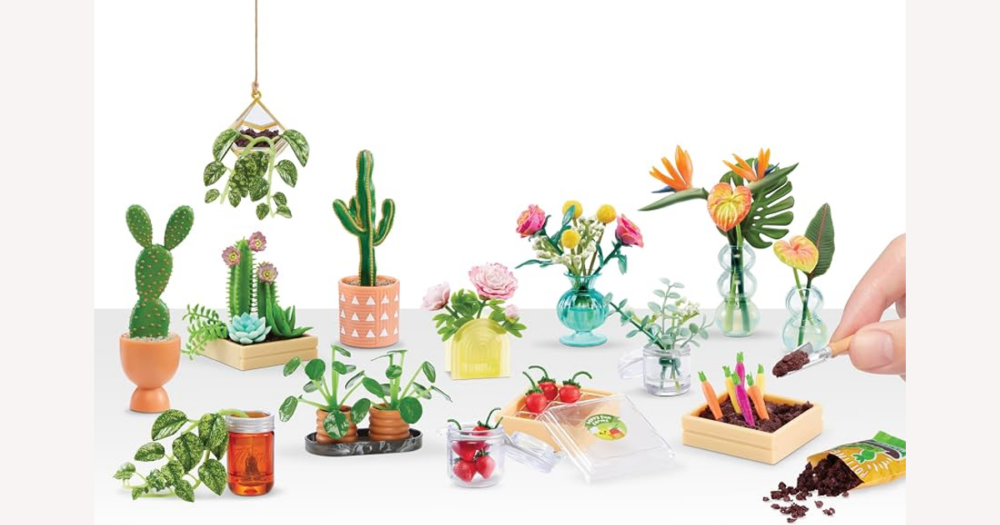
Miniverse-style botanicals and mega botanical sets are usually miniature, plant-themed collections: tiny potted plants, leaves, flowers, and decorative accessories meant for display, crafting, dollhouse scenes, or play. They are typically made from plastics, resins, or mixed materials at a very small scale, and may come as a single compact set or a larger bundle with many tiny pieces. Some versions are packaged as collectible or gift-style boxes with printed inserts or trays that present the pieces.
On DHgate, those attributes translate directly into cost drivers. The pieces are lightweight, so item weight is low, but fragility and fine detail can make protective packaging and careful shipping more important than the headline price. A simple single set may ship cheaply with basic protection, while larger “mega” bundles or several sets in one order can change both the shipping method and the risk of damage. This guide uses generic, illustrative examples rather than specific listings, so the key point is that piece count, packaging quality, and accurate descriptions matter. Small differences in what is included, how it is packed, and which shipping method is used can shift the real value of a DHgate order and its effective cost per set.
What goes into the landed cost of a DHgate botanical set for a Canadian buyer?
For a Canadian buyer, the landed cost of a Miniverse-style botanical set on DHgate is the total amount you expect to pay by the time the parcel is delivered and any import charges are settled. In practice, that means adding together several components: the item price shown on the listing, the shipping cost for your chosen method, any platform or service charges and visible taxes in the DHgate order summary, the effect of currency conversion when you pay in CAD for a listing priced in another currency, and any duties, GST/HST, or other import-related taxes that may be collected either at checkout or on delivery.
The item price is your starting point, but it is rarely a single fixed number. DHgate listings for botanical sets may offer different prices for variants (for example, a basic plant set versus a larger “mega” bundle), quantity options, or tiered pricing if you order multiple sets at once. A low headline price might only apply to the smallest variant or a minimum order quantity, so you need to look at how the price changes when you select the specific version and number of sets you actually want. For a single set, the item price is often straightforward; for multiple sets or mixed variants, the per-set cost can shift once you configure the order.
Shipping charges are the next major piece of landed cost. On DHgate, these usually appear on the listing or at checkout and can vary by shipping method (economy, standard, or faster courier options) and destination. Because Miniverse-style sets are small and light, you might see inexpensive economy options with long delivery windows and more expensive tracked or expedited options. For a single set, shipping can be a surprisingly large share of the total; when you buy several sets in one order, some sellers keep shipping roughly fixed or scale it slowly, which can reduce your effective per-set shipping cost even though the absolute shipping fee is higher.
Platform-level charges and payment-related effects can add cost even when the listing price looks low. DHgate may display service fees or estimated taxes in the order summary, and your bank or payment provider can apply currency conversion fees when you pay in CAD for an order priced in another currency. Those conversion margins and potential foreign transaction fees are small on one order but material if you’re calculating tight profit margins, and they tend to scale with total order value, so larger or multi-set orders feel the impact more.
Duties, GST/HST, and other import-related taxes are conditional costs: they may apply depending on factors like declared value, product category, and how the parcel is shipped and assessed by customs or the carrier. Some charges might be collected upfront at checkout when DHgate or its partners estimate tax, while others are assessed on arrival and requested by the courier or postal service before delivery. Small, low-value toy or craft sets may fall under thresholds that reduce or eliminate certain duties, but that isn’t guaranteed, and thresholds and practices can change. Because of that uncertainty, it’s safer to treat import taxes as a possible extra line item, especially if your total order value creeps up with multiple sets.
Across all of these components, the safest budgeting approach is conservative. I would rather overestimate my landed cost than be surprised later by shipping upgrades, service fees, or tax bills. For a single set, that might mean assuming that the cheapest shipping will take longer and that a modest import charge could still appear. For larger or multiple-set orders, I would assume that higher shipping tiers or taxes are more likely and only treat any savings as a bonus. If any part of the cost breakdown—especially shipping, taxes, or fees—is missing, vague, or inconsistent on the listing or in the checkout summary, that’s a signal to pause, ask the seller for clarification, or pick a listing where the full cost picture is clearer before committing your budget.
A simple step-by-step way to estimate landed cost on a DHgate listing
Use a single DHgate listing for a Miniverse-style botanical or mega set to approximate what you’ll really pay. The goal is not a perfect number but a careful estimate based on the price, shipping, visible fees, and plausible import charges, so you can decide whether the order fits your budget or profit target before committing.
- Select the exact variation and quantity you want—such as a basic botanical set versus a larger mega set—and note the item price that appears for that configuration, including any tiered pricing changes when you add multiple sets.
- Check every available shipping option for your address. Record the cost and estimated delivery window for each, then decide which method you would realistically choose based on speed, tracking, and reliability.
- Review the listing and cart for coupons, promotions, or bulk discounts (for example, money off above a certain subtotal or reduced price per set at higher quantities), apply anything you can use, and update your subtotal after those reductions.
- Look carefully at the order summary for platform-listed taxes, import fees, service charges, or insurance, and add any amounts shown there to your running total so they’re included in your estimate.
- Add a contingency amount for possible duties, GST/HST, handling fees, and currency conversion costs that are not clearly included—larger or resale-intended orders deserve a bigger buffer than a single set bought for personal use.
- Treat the final figure as an estimate with that buffer built in. If shipping, taxes, or other major cost elements remain vague or contradictory, I would walk away or choose a clearer listing, especially for higher-value or resale orders; personal collectors who can tolerate more variance may still proceed, but only after running these steps and accepting the risk that the actual total could be higher.
Reading DHgate seller signals so low prices don’t backfire
Once you have a landed-cost estimate, you still need to ask whether the seller behind a cheap botanical listing is likely to deliver on it. DHgate usually shows several seller signals: an overall rating score, the number of completed transactions or order volume, written feedback or review comments, and indicators of store longevity or badges. For Miniverse-style botanicals and plant sets, those details matter because problems like missing pieces, flimsy or crushed packaging, and noticeable color variation can turn a seemingly good price into a disappointing purchase or a costly replacement.
A listing with a very low price but a seller who has limited history, few reviews, or mixed feedback carries hidden costs: higher chances of non-delivery, long delays while you message the seller or open a dispute, and the possibility that you’ll need to reorder from someone else and pay shipping twice. I would generally rather pay a bit more for a seller who has consistent positive feedback on similar small collectibles or craft sets, especially if I’m ordering multiple sets or planning to resell them, because the extra stability reduces the risk of unhappy buyers and time-consuming disputes that eat into any savings.
Seller ratings are still only one input, not a guarantee. Use them alongside the landed-cost estimate and the risk checks from other parts of this guide: a strong rating with clear photos and accurate descriptions supports treating a low price as credible, while weak or sparse ratings, vague details, or contradictory reviews should push you to either factor in more risk or shift your budget to a more reliable seller.
How DHgate shipping choices affect what you pay and when it arrives
On DHgate, small items like Miniverse-style botanical sets are often shipped through low-cost or free economy methods that trade price for time. These options usually show broad delivery windows and may rely on slower postal networks, so the cash cost looks attractive but the parcel can take several weeks or longer to arrive.
Standard or expedited shipping typically costs more but comes with tighter, better-defined delivery estimates and sometimes more reliable tracking. For a single lightweight set, the shipping charge can still be a large part of your landed cost—sometimes as significant as the item price itself—so you need to look at the shipping line just as closely as the headline price when you judge the value of the order.
Shipping structures also change once you add more sets. Some DHgate sellers offer combined shipping or per-order rates, so adding multiple botanical or plant sets to the same cart can reduce the effective shipping cost per set, especially when they ship in one package. Others charge per item, use separate parcels, or limit discounts, which means each extra set brings almost its own full shipping cost and can quickly erode any apparent savings.
Delivery estimates on DHgate are approximate rather than guaranteed. Long, vague windows increase uncertainty and opportunity cost, particularly if you plan to resell, stock a market stall, or need the sets as gifts by a specific date. In those situations, I treat unclear or very slow shipping terms as a warning sign and would usually pay more for a clearer, reasonably fast option from a seller whose shipping track record looks reliable.
If you are buying purely for your own collection and have no deadline, choosing the cheapest economy method can still be reasonable as long as you consciously accept the extra uncertainty as part of the cost-risk trade-off. Either way, plug the shipping method you select into your landed-cost estimate and expectations: check whether shipping is included in the item price or added at checkout, note the stated delivery window, and only treat a deal as attractive if both the cost and timing make sense for your plans.
Single set vs. bulk order: how order size changes your per-set cost
For small DHgate orders, shipping and some fees often behave like fixed or semi-fixed costs per order. If you buy only one Miniverse-style botanical set, that single item carries the full weight of those costs. When you add more sets to the same order from the same seller, you may be spreading one shipping charge and one set of fees across several items, which can lower the effective cost per set.
In practice, sellers sometimes reward larger orders by offering lower per-unit prices, tiered pricing for buying multiple identical sets, or coupons that only apply once your cart reaches a given threshold. A hypothetical example would be ordering three related botanical sets from one store, where the shipping charge barely increases compared with a single-set order and a coupon triggers at that quantity; your total spend is higher, but the cost per set and your potential margin look better.
The opposite can also happen. Additional sets may not reduce shipping at all, or the seller may ship each parcel separately, so every set carries almost a full shipping charge. If you mix sellers to get different styles, each order comes with its own shipping, payment, and risk profile, which can cancel out much of the benefit of buying more items. That’s why it helps to compare per-set cost within each seller’s listing and cart structure rather than assuming that “bulk” is automatically cheaper.
Buyers thinking about resale can take the landed-cost components described earlier—item price, shipping, visible fees, currency effects, and plausible taxes—and divide the total by the number of sets in the order to get an approximate per-unit landed cost. That number is only a planning tool, not a guarantee of profit, but it can show whether your target selling price leaves enough room once you account for platform fees, packaging, and the possibility of a few damaged or unsellable units.
I tend to be cautious about scaling up with new or uncertain sellers. When ratings, reviews, or shipping histories are ambiguous, I would rather place a smaller test order first, even if that means paying a slightly higher per-set cost. Once I see that quality, packaging, and delivery match expectations, then it makes more sense to use larger, combined orders and coupons to reduce per-unit cost. That approach keeps potential losses contained if something goes wrong while still letting you benefit from DHgate’s bulk-friendly pricing when a seller has proven trustworthy.
Budget risks and hidden costs to watch for on DHgate botanical listings
How DHgate’s order protection affects your financial risk
DHgate’s buyer protection is designed to give you a defined window in which you can challenge problems with an order, but it only works if you understand the basic flow. You place an order, the seller ships the botanical set, and there is a protection period during which you can open a dispute if the parcel never arrives, arrives in poor condition, or differs significantly from the listing. Within that period, DHgate can review the case and, depending on the situation, help arrange a refund or other resolution.
For Miniverse-style botanical sets, typical dispute reasons include non-delivery, incomplete sets where promised pieces are missing, and products that are clearly different from what was described or shown—such as much smaller scale, visibly lower-quality materials, or damaged items caused by inadequate packaging. The more specific and concrete your claim, the easier it is for DHgate to see that you didn’t receive what you reasonably expected based on the listing.
Protection usually comes with deadlines: there is a latest point at which you can open a dispute, and further cutoffs for providing evidence such as photos, tracking screenshots, and conversation records with the seller. If you miss these windows, it becomes much harder to obtain a refund because DHgate may treat the order as completed. From a budget perspective, that means more of your money is truly at risk once those deadlines pass.
I’m only comfortable placing larger or resale-oriented orders when I know roughly how long I have to act, and I’m prepared to document issues promptly. That means tracking order status, saving chat logs and shipping updates, and taking clear photos of packaging and contents as soon as the parcel arrives. Doing this gives you usable evidence if you need to show that a botanical set was incomplete, damaged, or misdescribed.
It’s important to see DHgate’s protections as a way to manage risk, not as a guarantee of effortless refunds. Disputes take time and attention, and outcomes can vary, so the effort involved is part of your real cost. Before relying on any specific rule, check the current buyer protection information on DHgate’s policy pages and the protection details shown in your order screen; those sources will give the most up-to-date timelines and conditions you need to factor into your overall cost–benefit calculation.
Pre-purchase checklist for DHgate Miniverse-style botanical orders
This checklist is the quick filter I would run before committing to a DHgate order for Miniverse-style botanicals or mega sets. It condenses the earlier cost, trust, and risk points into simple checks you can apply directly on a listing, with some items I treat as non‑negotiable and a few that personal‑use buyers might treat more flexibly.
- Confirm that the selected variation and quantity match what you actually want, especially when there are multiple colors, styles, or bundle sizes.
- Verify how many pieces and which components are included by cross‑checking the written description, any spec fields, and the photos.
- Look for clear scale cues in the photos so the miniature size matches what you expect for display, crafting, or play.
- Check the estimated delivery window and chosen shipping method to make sure the timing works for your plans.
- Confirm whether shipping is included in the item price or added at checkout, and note the exact amount in your landed‑cost estimate.
- Run through your landed‑cost estimate—item price, shipping, visible fees, and plausible taxes—and add a small buffer so the total still fits your budget if costs edge up.
- Review seller ratings and feedback, focusing on comments about small collectibles or craft items and how well they’re packaged.
- Skim recent reviews for recurring problems such as missing pieces, color mismatches, or damaged boxes.
- Read the listing and order pages for key refund, return, and protection terms that apply to your order size and purpose.
- Treat clear contents, shipping, and basic seller reliability as non‑negotiable; if several of these checks fail—especially for bulk or resale orders—I would skip the listing. For personal‑use collecting, you might relax strict margin expectations, but you should still understand and accept the core cost, contents, and delivery risks before buying.
Mentally benchmarking DHgate deals against other options
Even without checking other sites one by one, you can still judge whether a DHgate botanical deal makes sense by comparing your landed‑cost estimate to what you normally see in your own market. Think about what you typically pay for similar miniature or craft sets locally, how domestic shipping usually behaves, and whether importing adds a premium. Treat the DHgate total—item price plus shipping, fees, and taxes—as just one data point: if it’s roughly in line with or lower than your usual cost for comparable quality and variety, it may be reasonable. If it’s noticeably higher, then the value has to come from something else, such as rarer designs, larger or more interesting bundles, or features that genuinely matter to you. I look for a clear, defensible reason—either lower all‑in cost or higher perceived value—before choosing DHgate over local options, and I prefer to skip orders where that rationale feels weak or unclear.
FAQ: Are DHgate botanical prices stable enough for future planning?
Can I rely on today’s DHgate price and shipping for a botanical set when planning future purchases or resale, or should I expect those numbers to change?
You should expect DHgate prices, shipping costs, and promotions for botanical sets to change over time. Individual sellers can adjust item pricing, switch shipping methods, or revise their fees; DHgate can update platform policies or coupon structures; and broader market conditions can affect costs, especially for imported goods. That means a landed‑cost estimate you calculate today is time‑bound, not a stable reference for future orders.
For budgeting or resale, it’s safer to recalculate landed cost each time you place a new order: re‑check the current item price for your chosen variation and quantity, the shipping options and amounts, any visible taxes or service fees, and a reasonable buffer for duties and currency conversion. When margins are thin or you’re buying larger quantities, treat each restock as a fresh evaluation rather than assuming past numbers still apply.
I plan conservatively by assuming variability: I avoid committing to fixed future prices or pre‑selling based on the idea that a DHgate listing will stay the same, and I prefer to test smaller batches first. Once I see how current costs and quality behave, then I decide whether a new order at its updated landed cost still fits my budget or profit goals.