
Buying bulk 3D printer filament means sourcing large quantities of thermoplastic materials like PLA, ABS, PETG, Nylon, or TPU directly from manufacturers or wholesalers. Instead of grabbing individual 1kg spools at retail, you’re negotiating cases, multi-spool bundles, or extra-large spools so your cost per kilogram drops and your supply becomes predictable. For a US print farm or small ecommerce business selling prints, that tradeoff—lower unit cost vs higher exposure to quality and logistics issues—is the heart of the decision.
Bulk filament is produced on extrusion lines that melt plastic pellets, push them through a die, and pull the filament under tension while measuring diameter. The same lines can run everyday PLA or more demanding engineering materials; the difference is the resin used, process control, and quality checks. Many US-focused brands and manufacturers offer wholesale programs. For example, Overture advertises a formal wholesale program with percentage discounts on bulk filament orders, and specialized manufacturers such as Polymaker’s US wholesale site cover PLA, PETG, ABS, Nylon, TPU and other engineering materials.
On the retail side, brands like SUNLU let buyers mix and match multiple 1kg PLA spools into a bulk order instead of committing to a single color or material. That’s useful if your volume is moderate and you need color variety for consumer prints.
How Bulk 3D Printer Filament Is Produced and Sold
Most bulk filament you’ll consider falls into a few material families:
- PLA: Cornstarch‑ or sugarcane‑derived, easy to print, good detail, but not very strong or heat‑resistant. Good for decorative items, prototypes, and general consumer products.
- ABS: Petroleum‑based, tougher and more heat‑resistant, better for functional parts, but can warp and release fumes; demands dialed‑in settings and ventilation.
- PETG: Strong, durable, more flexible than PLA/ABS, UV‑resistant and chemically resistant. Common for mechanical components and outdoor parts.
- Nylon: Very strong, abrasion‑ and chemical‑resistant, with some flexibility. Great for gears, bearings, and industrial use, but absorbs moisture and needs careful storage.
- TPU: Flexible and rubber‑like, used for phone cases and wearable or impact‑resistant items.
In bulk, these materials are typically sold as:
| Bulk format | Typical use case | Pros for buyers |
|---|---|---|
| 1kg spools in 6-12 packs | Small print farms, hobby shops, schools | Easy handling, mix colors, retail-like convenience |
| Single 10kg (or larger) spools | Continuous production on one material/color | Fewer changeovers, strongest price leverage |
| Mixed-material bundles | Ecommerce sellers offering varied SKUs | Stock diversity while still getting volume discounts |
Domestic US manufacturers such as Coex3D or Filamatrix (see Filamatrix’s premium filament page) generally focus on 1kg spools, then scale up with case quantities or custom spool sizes for business buyers. Some, like Push Plastic, promote spool sizes up to 25kg for industrial users.
Choosing and Vetting Bulk Filament Suppliers
Once you leave single-spool retail, supplier choice matters more than the brand name on the box. The two problems that show up most often in bulk filament are inconsistent diameter and poor moisture/impurity control. Cheap PLA, in particular, is often reported as having more diameter variation and being more prone to clogging, while higher‑quality PLA tends to hold tighter tolerances and prints more smoothly—but costs more.
Useful signals to check before committing to a pallet’s worth:
- Diameter and tolerance claims: Look for clearly stated nominal diameter (usually 1.75mm) and a tolerance figure (for example, +/- 0.02mm). Suppliers that don’t publish this or use very loose tolerances are riskier for long unattended prints.
- Material range and specialization: A supplier offering PLA, ABS, PETG, Nylon, and TPU in bulk—like Polymaker’s US wholesale site—shows you they’ve built processes for more demanding materials. That’s not a guarantee of quality, but it’s a sign they invest in extrusion control.
- Wholesale program structure: Overture’s wholesale page advertises percentage discounts for bulk orders instead of ad‑hoc emails. A formal program usually means the supplier expects repeat B2B customers and has thought through inventory, pricing tiers, and basic support.
- Mix-and-match options: SUNLU’s bulk PLA product lets you freely mix different colors or PLA variants in a single multi‑spool order. For many small businesses, that flexibility is more valuable than squeezing out the last cent of discount from a single‑color case.
Red flags specific to filament sourcing:
- Vague descriptions like “high quality PLA” without diameter tolerance, print temperature range, or mention of drying/storage.
- No mention of moisture handling for Nylon or TPU, which are known to be hygroscopic.
- Very aggressive pricing compared to the mainstream bulk programs, with little to no real‑world print photos or customer feedback.
For any serious wholesale relationship, treat small orders as tests. Order a case or a few spools across colors, run test prints that stress overhangs, bridging, and fine detail, and document nozzle clogs or layer adhesion issues. It’s far cheaper to reject a supplier after 6kg than after half a pallet.
Order Size, Pricing and Channel Choices for Bulk Filament
For US buyers, bulk filament usually comes through four channel types:
- US manufacturers and wholesale sites – Coex3D, Filamatrix, Overture, Polymaker US wholesale, Push Plastic and others focus on consistent quality and known material specs. You’re dealing with higher base prices but clearer communication, shorter domestic transit, and easier returns policies.
- Retail brands with bulk bundles – SUNLU’s mix-and-match PLA packs and 12-pack cases from sellers like MatterHackers are aimed at prosumers and small print farms. These often have better per‑kg pricing than single spools and let you keep color variety.
- Cross-border marketplaces – Platforms listing many independent filament makers, primarily in Asia, where pricing can be lower and bulk formats more aggressive (10kg+ spools, factory-direct mixes). Lead times, communication, and quality consistency are more variable.
- Resellers and distributors – Regional distributors who stock multiple brands and consolidate logistics. You pay a margin for convenience but reduce the number of suppliers you manage.
Within cross-border marketplaces, you’ll see bulk-specific listings that don’t exist in US retail. For example, on DHgate there is a product labeled “3D Printer 10KG PLA PETG Filament 3D Printing Plastic Material 1.75mm 100% No Bubble Spool” aimed directly at high‑volume printing. That’s a useful proof of what’s available at scale, not an automatic recommendation. If you explore an option like this, you still need to:
- Read the listing details carefully for material specs, diameter, and tolerance.
- Check whatever seller history or reviews are visible.
- Clarify shipping and customs responsibilities before placing a large order.
If you want more help just on evaluating DHgate sellers, DHgateWiki has focused guides such as Find wholesale suppliers on DHgate and Choose a DHgate wholesale supplier.
Mini case: domestic vs cross-border for a small print farm
Imagine a US print farm running 10 FDM printers, consuming roughly 40-60kg of PLA/PETG per month:
- Domestic wholesale route: You might work with a US manufacturer via a wholesale program, buying 12-packs of 1kg spools every month. Your per‑kg cost is higher, but the material is consistent, support is local, and reorders are quick.
- Cross-border bulk route: You might instead import a 10kg PLA or PETG spool from an overseas producer every couple of months. You cut the listed price per kg but take on longer lead times, import complexity, and the risk that one bad batch disrupts weeks of production.
The right choice depends on how costly downtime is in your business. If you sell custom parts on tight deadlines, the stability of domestic wholesale can easily outweigh the savings of cross-border bulk. If you run a flexible print‑on‑demand shop with price‑sensitive customers, exploring overseas bulk formats—including marketplace listings—may be worth the extra verification work.
Don’t Forget Bulk Storage and Moisture Control
Bulk filament only pays off if the last kilogram prints as well as the first. That’s a storage and handling problem, not just a purchasing one.
PLA and especially Nylon and TPU absorb moisture over time. In a US workshop with seasonal humidity swings, that means:
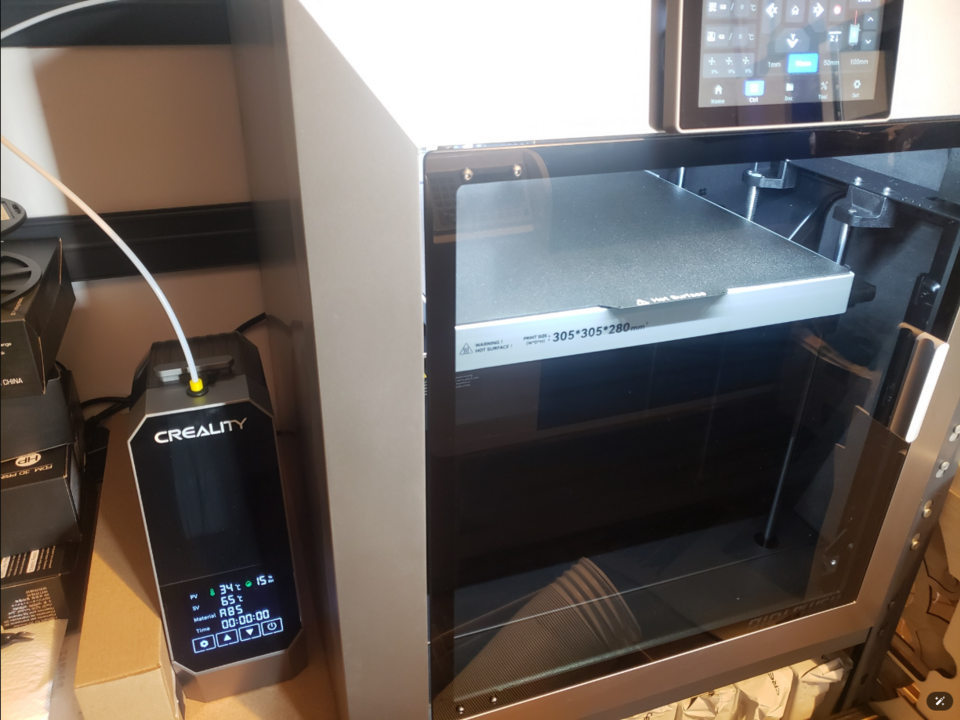
- Keep unopened spools in sealed bags or containers; vacuum bags and rigid drawers designed for filament can help.
- Once you open a spool, store it in a dry box or cabinet when not in use.
- If prints start to show popping sounds, rough surfaces, or poor layer adhesion, you may need to dry the filament before use.
If your operation is large enough to justify 10-25kg spools, plan where those spools will sit, how they’ll feed multiple printers, and who is responsible for rotating stock. A chaotic shelf of half‑used spools is the fastest way to turn bulk discounts into wasted material.
Bulk 3D printer filament can absolutely improve margins and reliability for US print operations, but only if you approach suppliers, channels, and storage as part of a single system. Decide which materials really matter to your business, test suppliers in smaller volumes, and then scale with the channel—domestic or cross‑border—that best matches your risk tolerance.