
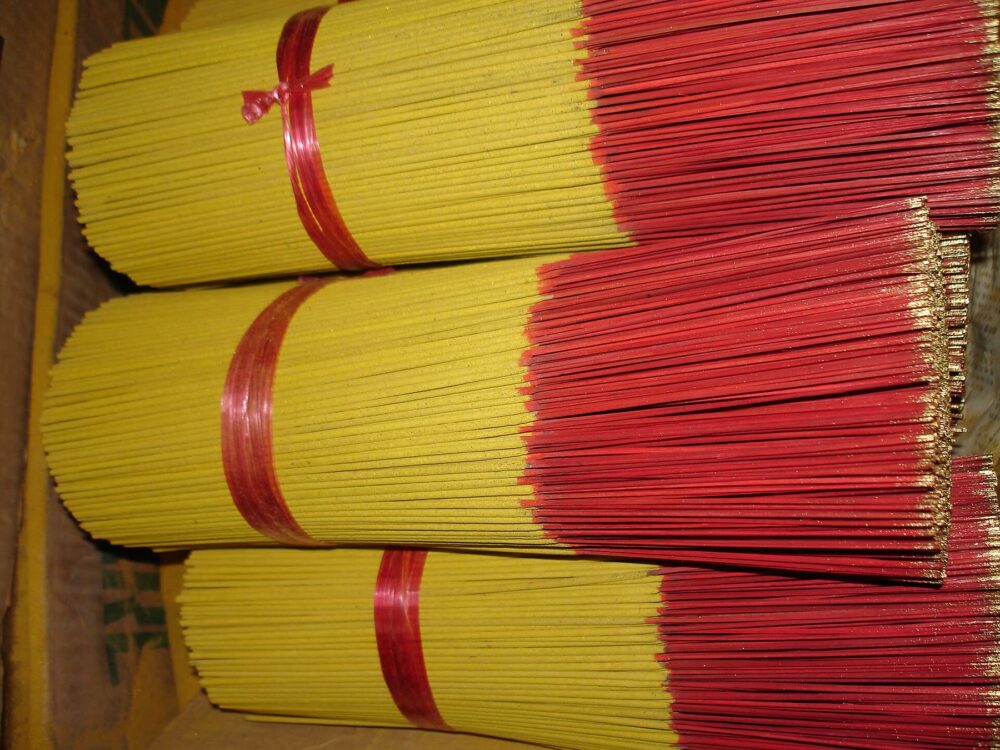
Wholesale incense cones are bulk quantities of molded incense sold to businesses for resale or private label. For a US retailer or ecommerce shop, your main decisions are: which cone type fits your customer base, which supplier model (domestic wholesaler, brand-direct, cross-border marketplace) you trust, and whether the total landed cost justifies buying in large quantities instead of topping up at retail.
In practice, you’ll get the most predictable results by pairing a clear product strategy—traditional vs backflow cones, scented vs unscented—with a realistic order size. Small boutiques often start with assortment boxes from domestic wholesalers; larger incense-focused stores sometimes move to pallet-level imports or custom unscented cones for private label work.
How Wholesale Incense Cones Are Made and Distributed
Incense cones are typically made from a mix of wood powders, plant-based binders, resins, and fragrance oils, pressed into a cone or pyramid shape and dried. Wholesale inventory tends to be produced in countries with strong incense traditions (India, parts of East Asia), then distributed through importers and brand-owned channels.
You’ll see several supply models in the US market:
- Specialized import wholesalers. Phoenix Import, for example, positions itself as a B2B supplier with multiple cone lines like Nag Champa and Palo Santo, plus display solutions aimed at retailers. Their wholesale incense cones page illustrates what a multi-brand importer’s assortment looks like: many fragrances, often organized by series.
- Fragrance-focused cone suppliers. Aroma Warehouse sells small scented cones in bulk with a wide fragrance range, targeting meditation and home relaxation buyers. Their incense cones section shows how a fragrance specialist emphasizes scent variety and use cases (yoga, home relaxation) rather than cultural brand names.
- Brand-direct wholesale. Some incense brands offer their own wholesale deals directly to retailers. Huss Incense, for instance, has a dedicated wholesale page aimed at resellers. This route typically means a narrower brand set but clearer identity and marketing story.
- Component and private-label suppliers. Wellington Fragrance’s unscented 1″ incense cones are an example of bulk unscented cones that buyers can scent themselves. This suits private-label aromatherapy brands that already buy oils and want control over fragrance profiles.
- Niche formats like backflow cones. Backflow cones are designed to work with special burners so the smoke flows downward. Sites like IncenseFan’s backflow incense page show that there are specific wholesalers catering to this format, which matters if your retail concept leans heavily on visual effect.
Most US resellers will deal with a wholesaler or brand that has already handled import logistics. Only once your volume is high—and your cash flow stable—does it make sense to consider importing directly from overseas manufacturers.
Evaluating Incense Cone Suppliers: Quality, Safety, and Assortment
Quality problems with incense cones usually show up as inconsistent burn, harsh smoke, or scents that don’t match their descriptions. Because you’re buying in bulk, a bad batch can sit on your shelves for months, so supplier vetting needs to be specific.
Here are practical, incense-specific checks:
- Product format and fit.
- Do they clearly distinguish traditional cones from backflow cones and sticks? Phoenix Import’s category labeling of cones vs other incense forms is a useful benchmark.
- If you sell meditation and home relaxation, fragrance-focused assortments like Aroma Warehouse’s 50+ scents can be more relevant than heavily religious or temple lines.
- Fragrance and ingredient transparency.
- For scented cones, look for detailed scent lists, any mention of natural vs synthetic fragrance, and clear series names so you can merchandise easily.
- For private-label, unscented cones like those from Wellington Fragrance let you choose your own oils. That’s helpful if you already trust a fragrance supplier and want to avoid mystery blends.
- Burn behavior and niche formats.
- Backflow cones need precise shaping to work in backflow burners. IncenseFan’s focus on backflow suppliers illustrates that this is now a distinct subcategory. When you test samples, check whether the smoke actually “falls” as expected and whether cones leave heavy residue.
- Assortment depth vs focus.
- A multi-brand wholesaler (Phoenix Import, True Essence’s incense page) gives breadth—good for stores where incense is one of many categories.
- A brand-direct wholesaler (Huss Incense) offers a focused story—good if incense is central to your brand and you want consistent packaging and fragrances.
- Wholesale signals and terms.
- Look for clearly labeled wholesale or B2B sections, minimum order guidance, and whether they mention displays or merchandising aids—that’s often a sign they understand retail needs.
- For scenting-your-own cones, verify that the supplier sells compatible oils or at least provides basic usage directions so your staff can produce consistent results.
Red flags specific to incense include vague scent descriptions, no mention of cone size or approximate burn time, and websites that mix cones with unrelated products in a way that feels opportunistic rather than curated.
Order Size, Pricing, and Choosing a Wholesale Channel (Including Marketplaces)
For incense cones, your order size drives almost everything: price per cone, shipping method, and whether domestic or cross-border sourcing makes sense.
Here’s a channel-focused way to think about it:
Typical order patterns and channel fit
| Buyer scenario | Usual order size (editorial estimate) | Better channel type | Why it tends to fit |
|---|---|---|---|
| Small boutique testing incense | A few mixed cases across scents | Domestic wholesaler (e.g., Phoenix Import, Aroma Warehouse) | Pre-imported, quick replenishment, curated assortments and displays |
| Established incense retailer | Regular multi-case or pallet orders of known lines | Brand-direct wholesale (e.g., Huss Incense) or specialized importer | Strong brand identity, repeatability, potential for better tiered pricing |
| Private-label aromatherapy brand | Bulk unscented cones + separate oils | Component suppliers (e.g., Wellington Fragrance unscented cones) | Control over fragrance, branding, and margin structure |
| Experimenting with niche formats (backflow, waterfall cones) | Small mixed batches | Niche importers or marketplaces | Access to visual-effect cones and burners not widely distributed yet |
These are editorial ranges, not hard rules, but they illustrate that the more central incense is to your business, the more you’ll care about stable long-term relationships and predictable tiers.
Landed cost components for cross-border cones
If you do start sourcing incense cones cross-border (for example, importing directly or buying via a marketplace), factor in:
- Product price per unit: bulk listings may look cheap, but check cone count and packaging (plain polybag vs retail box).
- International shipping: for cones, weight adds up quickly; small parcels can make sense for trial runs, larger orders benefit from freight solutions handled by importers.
- Duties and fees: depending on HS classification and order value, you may face customs duties and brokerage charges.
- Domestic handling: storage, labeling, and any re-packaging for your retail shelves or ecommerce fulfillment.
Where marketplaces like DHgate fit (and their limits)
Cross-border marketplaces can be a way to experiment with formats you cannot easily find through US wholesalers, particularly backflow cones packaged with burners. On 2026-10-13, DHgate listed multiple bulk cone products, mainly in mixed scent sets and often tied to backflow burners, such as:
- 60PCS Bulk Incenses Aromatherapy Natural Small Incense Cones – a bulk cone listing under an incense category with a price range around USD 24-25 at research time.
- 100Pcs Mixed Incense Cones Use For Backflow Incense Burner – mixed cones intended for backflow burners.
- Mixed Waterfall Smoke Backflow Natural Incense Cone – cones marketed for tea rooms and yoga rooms.
Prices and availability on these listings can change, and none of them are vetted or endorsed by dhgatewiki.com. If you explore DHgate or similar marketplaces for wholesale incense cones, treat each listing like an individual supplier relationship: examine product photos and descriptions closely, request samples when possible, and confirm packaging, cone count, and fragrance assortments before placing any significant order.
For ongoing stock that needs consistent fragrance and packaging, US-based wholesalers and brand-direct channels generally expose clearer terms and are easier to reach if you need to adjust your assortment. Marketplaces are best used as a supplementary channel for niche formats or trial batches rather than your sole source of core incense inventory.