
DHgate can work for small US beauty brands that want budget-friendly wholesale cosmetics or private label eyeshadow palettes, but only if you treat it like a sourcing tool, not a finished solution. You’ll need to search with specific terms, use filters and supplier metrics, insist on samples, and verify ingredients and branding yourself. For small-to-mid-size runs and testing product ideas, DHgate’s flexible lots and private-label listings can be useful; for a heavily regulated, prestige line, you’ll likely be better off with a dedicated private-label lab.
Where Wholesale Cosmetics and Private Label Eyeshadow Fit in the DHgate Supply Chain
DHgate sits in the middle of the global cosmetics supply chain. It connects overseas buyers directly to factories and trading companies, especially in China, that produce bulk makeup, unbranded palettes, and OEM/private label runs. DHgate’s own editorial content describes the platform as one option for sourcing health and beauty products, including color cosmetics, from manufacturers and wholesalers in Asia.
In practice, you’ll find three broad types of eyeshadow and cosmetics listings:
- Generic or fashion-brand palettes: e.g., multi-color palettes marketed for everyday consumers, often bundled as kits. Current examples include 9-color palettes and 26-color palettes with price ranges around $11.59–$23.76 or $23.00–$23.59 per lot as observed on 2026-10-13.
- Private-label palettes: listings that explicitly mention “private label” or OEM. One example is a “Wholesale Eyeshadow Palette Private Label Vegan Pigment” palette priced about $23.12–$23.72 per lot, and a “Private Label Waterproof Eye Shadow Palette 4 Colors” at roughly $30.16–$30.93 per lot (snapshots from 2026-10-13).
- Broader makeup sets and accessories: eyeshadow as part of full kits or organizers, such as a makeup kit with palette, foundation, lip gloss, blush, brushes, and eyeliner in the $22.81–$31.94 range.
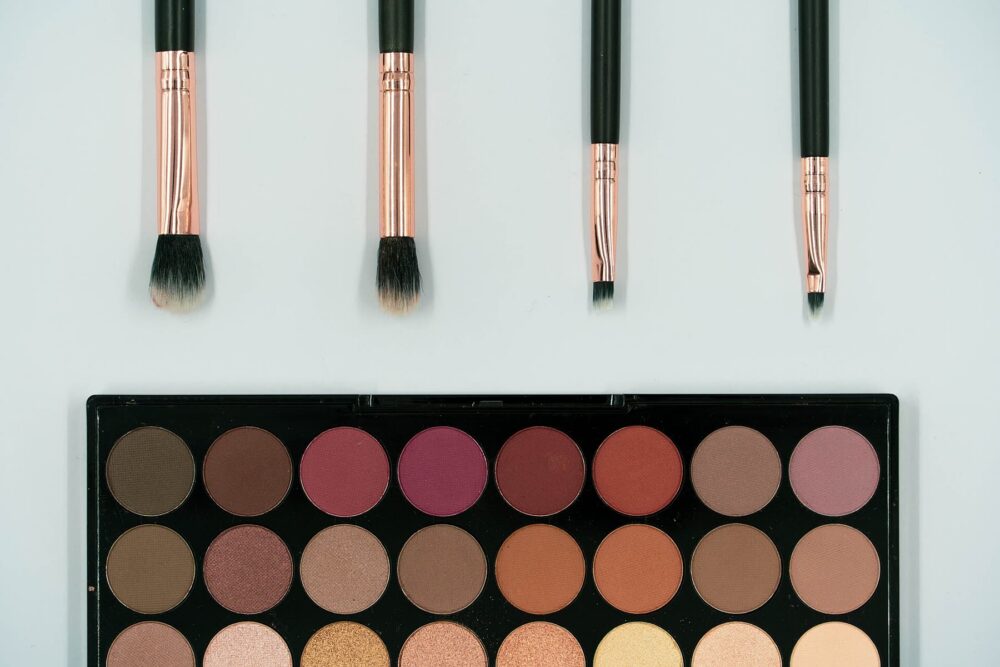
DHgate’s blog on pink eyeshadow highlights a wide selection of palettes with matte, shimmer, and glitter finishes, which matches what you’ll see in search: everything from compact 9-color travel palettes to large 26-color boards, plus glitter-heavy party palettes. Your job is to map these listings to your business model:
- Reselling finished palettes as-is (low effort, lowest control).
- Buying bulk palettes and adding your own packaging/branding locally.
- Working with a supplier on OEM/private label runs using your logo and chosen color stories.
Finding and Vetting Cosmetics & Private Label Eyeshadow Suppliers on DHgate
DHgate’s own ecommerce sourcing guides recommend a few concrete tactics for any category: use filters, evaluate suppliers via ratings and reviews, request samples, and leverage OEM where available. For cosmetics and eye makeup, you should apply those tactics with extra care.
Step 1: Use specific search terms and filters
Start with focused keywords in the DHgate search bar:
- For wholesale finished palettes: `”eyeshadow palette”`, `”wholesale eyeshadow”`, `”makeup palette”`.
- For private label: `”private label eyeshadow palette”`, `”OEM eyeshadow”`, `”custom eyeshadow palette”`.
Then narrow down with filters:
- Category: stick to Eye Shadow, Makeup Sets, or closely related cosmetics categories (some palettes are misfiled under broader categories, so scan results carefully).
- Price range: set a range that fits your budget per lot, then compare contents (number of colors, finish types, extras like brushes).
- Minimum order quantity (MOQ): many palette listings have relatively low MOQs compared with big B2B sites, which can be helpful for testing.
For more general tactics on supplier discovery, DHgateWiki’s guides on finding wholesale suppliers on DHgate and finding DHgate suppliers are useful context.
Step 2: Read listings like a product developer
For each candidate listing, treat the product page as your first screening document:
- Ingredients and safety: Does the seller list full ingredients, shelf life, and usage instructions? If not, message them and ask. You’ll need this for US regulatory and labeling compliance; consult a regulatory or legal professional rather than relying on marketplace copy.
- Photos and shade names: Are swatches clear? Do shades look consistent across photos? Are there any references to well-known brands that could indicate lookalike or copycat products?
- Customization options: On private-label listings, look for mentions of logo printing, custom packaging, or tailored color combinations.
Be skeptical of listings that show a famous brand name in images or title without being an authorized channel; for a long-term brand, you want clean, non-infringing product.
Step 3: Evaluate the supplier, not just the product
DHgate’s editorial guidance on health and beauty sourcing emphasizes supplier evaluation through ratings, reviews, and transaction history. On palette and cosmetics listings, you’ll often see:
- Supplier ID and name (e.g., `love7070`, `love8080`, `ddmyhappy`).
- Years in business and any badges (where present).
- Aggregate rating and review count.
Favor suppliers with:
- Multiple cosmetic SKUs (palettes, kits, brushes) rather than random mixed goods.
- A history of transactions and genuine written reviews mentioning product quality.
To go deeper on choosing among several candidates, you can cross-check with how to choose a DHgate wholesale supplier.
Step 4: Order samples and request documentation
DHgate’s health-and-beauty sourcing guide explicitly suggests sample testing before committing to larger orders. For cosmetics, that’s non-negotiable:
- Samples: Ask for a few units of the exact palette (and formula) you intend to buy. Test for pigmentation, fallout, wear, and any irritation among willing test users. Do not represent this as formal safety testing—use it as practical quality screening.
- Documentation: Request ingredient lists, manufacturing location, and any available quality certifications or test reports. Even if you later choose a domestic lab, this process will teach you what to demand.
If a seller refuses reasonable documentation requests for eye products, treat it as a red flag.
DHgate Listing Snapshot: Eyeshadow Palettes & Private Label (2026-10-13)
To see what’s actually available, here’s a snapshot of several eyeshadow-related listings observed on DHgate on 2026-10-13. Prices are per lot in USD and can change at any time; this is not an endorsement, just data you can use for benchmarking.
| Product (linked) | Type / Category | Price range (USD per lot) | Private label noted? |
|---|---|---|---|
| Wholesale Eyeshadow Palette Private Label Vegan Pigment | Eye palette, Eyebrow Enhancers | $23.12–$23.72 | Yes, “Private Label” in title |
| Private Label Waterproof Eye Shadow Palette 4 Colors | 4-color palette, Eyebrow Enhancers | $30.16–$30.93 | Yes, “Private Label” in title |
| Eyeshadow Palette 26 Colors Matte High Gloss | 26-color palette, Eye Shadow | $23.00–$23.59 | No explicit private label wording |
| 18 Colors Eyeshadow Palette Matte Makeup Products | 18-color palette, Eye Shadow | $22.40–$22.97 | No explicit private label wording |
| Bestseller Makeup Kit With Full Eyeshadow Palette | Full kit incl. palette, Makeup Sets | $22.81–$31.94 | Some branding potential via packaging, not inherently private label |
You’ll see wider ranges too—single-color professional shimmer palettes can reach around $93–$131 per lot, while compact 9-color palettes may show in the $11–$17 bands. The spread reflects differences in size, finish, and target use (consumer vs “professional” positioning), not necessarily true quality.
Use these snapshot prices to sanity-check any offer you’re considering. If a palette looks similar in size and complexity but is dramatically cheaper or more expensive, dig into why—formula, packaging, MOQ, or simply seller positioning.
Order Sizes, Pricing & When DHgate Is (and Isn’t) the Right Channel
From the listing snapshot and broader search, DHgate’s strengths for a small US beauty business are:
- Small-to-mid MOQs and flexible lots: Many palettes and kits are offered in lots that don’t require thousands of units, which makes it viable to test SKUs or run micro-collections.
- Accessible pricing for experimentation: Private-label palettes around $23–$31 per lot and generic palettes in similar bands let you experiment without committing to lab-level minimums.
- Breadth of styles and finishes: Matte, shimmer, glitter, all-in-one face-and-eye palettes—useful for quickly assembling a line concept.
That doesn’t automatically mean DHgate should be your long-term backbone. There are clear cases where you should look elsewhere:
- Highly regulated or prestige brand: If you aim for Sephora/Ulta-level distribution or claim specific performance or skincare benefits, a specialist private-label lab or domestic manufacturer is usually more appropriate. They can handle custom R&D, stability testing, and detailed compliance support that marketplace suppliers generally don’t advertise.
- Strict brand IP and formula control: For proprietary formulas and ironclad IP, direct contracts with manufacturers or labs, or larger B2B platforms with audited factories (such as those highlighted in external guides like Alibaba’s private-label makeup buying guide) may fit better.
- Risk tolerance: If your risk tolerance on gray-area branding, incomplete documentation, or variable quality is low, you’ll spend a lot of time filtering DHgate listings for suppliers who meet your bar.
A practical way to use DHgate is as a testing ground:
- Prototype color stories and packaging ideas with small lots from private-label or generic palette listings.
- Build a real-world sense of what your audience likes and what price they’ll pay.
- Once you have traction, decide whether to stay with a proven DHgate supplier under a tighter agreement or to migrate the concept to a specialist lab or domestic manufacturer for more formalized quality and compliance.
If you keep DHgate in the mix long term, document everything: ingredients, batch numbers where available, photos of packaging, and sample test results. That discipline matters far more than the marketplace you choose.