
You can use DHgate to source Lord of the Rings‑style cloaks and capes, but you should treat every listing as unverified. For both cosplay buyers and small resellers, the decision is simple: only trust a cloak listing if seller history, reviews, photos, materials and sizing all line up, and walk away when those signals are weak or missing. DHgate’s own editorial content stresses ratings and reviews as central to judging product quality when you can’t touch the item, but they’re only one piece of the puzzle.
For Australian buyers and small ecommerce businesses, that means reading every LOTR‑style cloak listing as if you’re buying a tailored garment sight‑unseen: check how the fabric will drape, how long the hood and hem actually are on your height, and whether the photos look like a generic goth cape or something genuinely close to a ranger or elven cloak.
What buyers are really risking with LOTR cloaks on DHgate
With LOTR cloaks and capes, the risk isn’t just “cheap vs expensive.” You’re betting on how the cloak will look and move in real life.
For casual cosplay or a one‑off event, a generic “medieval” cloak can be fine even if it’s polyester and a bit shiny. Your main risks are:
- A cloak that arrives shorter or narrower than expected, breaking the silhouette.
- Fabric that’s too thin, stiff or glossy, so it looks like a Halloween costume, not Middle‑earth.
- A hood that’s small or oddly shaped, making it impossible to get that ranger or wizard vibe.
If you’re buying for resale or aiming for screen‑accurate LOTR looks, the stakes go up:
- Quality mismatch kills resale value. Your customers may expect wool‑blend or heavy cotton and be unhappy with unlined polyester.
- Branding or licensing issues: DHgate is a marketplace with many sellers; unless a listing clearly shows legitimate licensing (which most don’t), you should assume you’re buying “LOTR‑style” rather than official merchandise.
- Inconsistent batches: small businesses risk one good batch followed by a weaker one if the seller’s sourcing isn’t stable.
Trust matters more here than for a simple accessory because cloaks are big garments that interact with body shape, lighting and motion. The difference between a convincing Ithilien ranger cloak and something that looks like a cheap Halloween cape is usually fabric, cut and workmanship—details you have to infer from the listing.
Universal trust checks for fantasy cloaks and cosplay capes
Wherever you shop for LOTR‑inspired cloaks—DHgate, a cosplay marketplace, or an independent costume maker—you need a set of concrete checks. Think of these as your micro‑checklist.
1. Seller history and feedback volume Independent guides to DHgate shopping, such as China‑Electronics, advise focusing on seller history, feedback and realistic pricing when judging listings. That logic applies directly to cloaks:
- Prefer sellers with visible years of activity and a substantial number of transactions, not a brand‑new store.
- Look for consistent positive feedback across multiple products, not just one cloak.
- Treat ultra‑low prices from new, unreviewed sellers as a red flag, especially for complex garments.
If you’re buying for resale, this is doubly important: unstable or short‑lived sellers are risky supply partners.
2. Photos: stock vs real garment DHgate’s editorial blog on decoding listings recommends looking for detailed descriptions and non‑stock, high‑quality images. For cosplay cloaks, zoom in on:
- Wrinkles and folds: do you see real fabric drape, or a flat, heavily edited image?
- Seams and hem: is there topstitching, lining, or is it a simple raw edge?
- Hood shape: does it sit deep and pointed/rounded like in LOTR, or small and costume‑y?
If all photos look like generic catalogue art, assume the actual garment may differ.
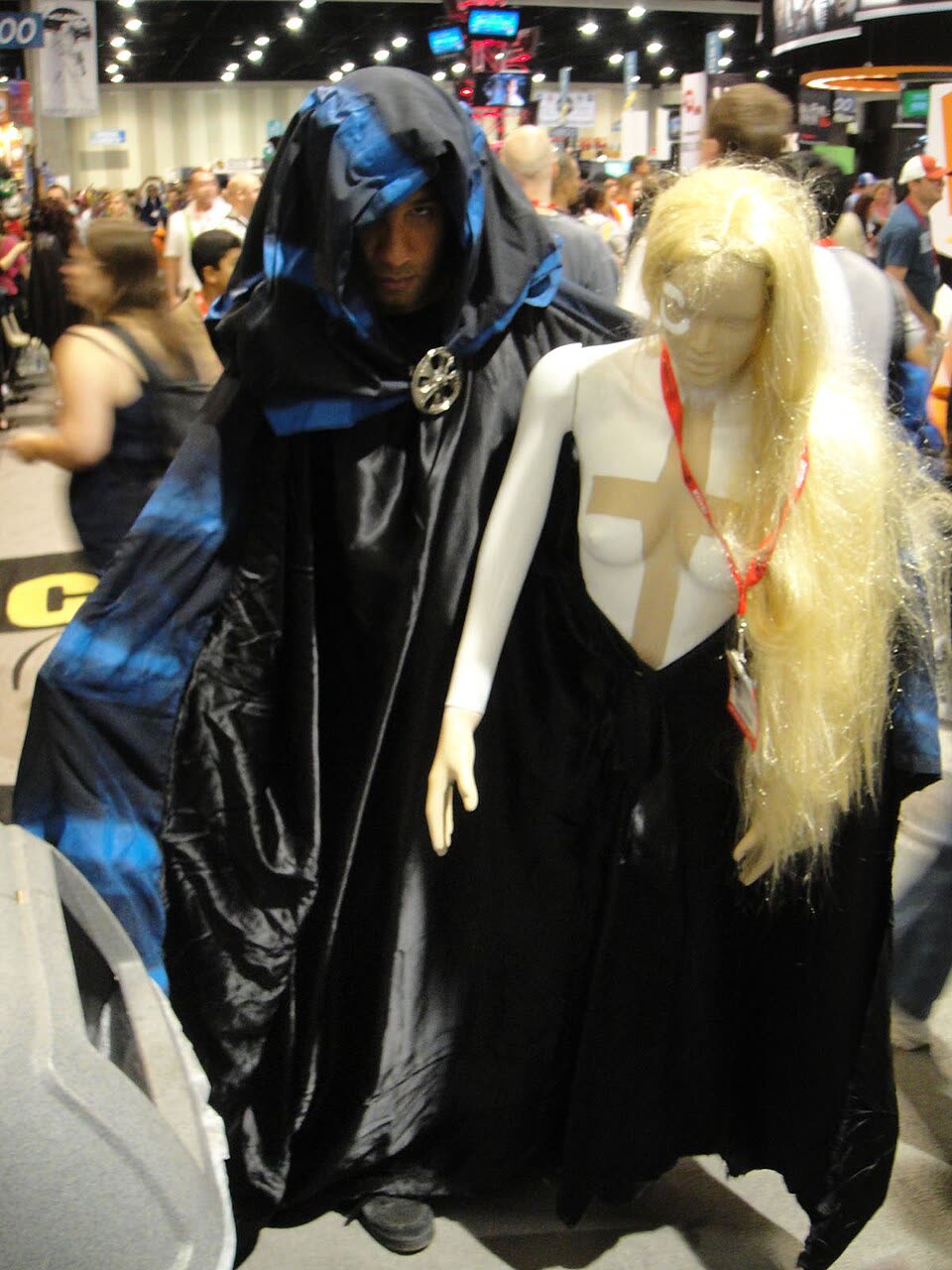
3. Material and weight clarity A LOTR‑style cloak lives or dies on fabric choice. Cross‑border listings often just say “polyester” or “wool blend” without detail. Protect yourself by:
- Treating vague fabric names (“high‑quality fabric”, “soft material”) as a warning.
- Asking the seller directly for GSM or weight (“Is this heavy like a coat or light like a costume?”).
- Matching material to use: heavy for outdoor shoots and LARP, lighter for indoor conventions.
If you plan to resell in Australia, document the fibres and care instructions for your own product pages.
4. Sizing and length specifics, not just S/M/L Cosplay cloaks fail most often on length. You want:
- Full measurements: total length from shoulder, width across shoulders, hood depth.
- A clear sizing chart; if it’s missing, message the seller before buying.
- Buyer photos or reviews mentioning height (e.g., “I’m 175 cm and it hits the ankle”).
Without this, you’re guessing how it will look on you—or on your customers.
5. Price realism vs claimed quality Guides like Dhgatesite’s breakdown of fake DHgate sellers call out “too good to be true” pricing as a core red flag. A multi‑layered cloak with lining, metal clasps and thick fabric cannot be produced at ultra‑low prices without compromises.
You don’t need exact production costs—just ask: does the claimed material and detail level make sense at this price? If not, assume the cloak will be simpler or cheaper than described.
6. Documentation for your own peace of mind For small ecommerce buyers, take screenshots of:
- The listing description and photos you relied on.
- The seller’s name and current ratings.
This is basic risk management if you later need to explain a quality issue to your own customers.
For more accessory‑focused checks that also apply to cloaks (image reuse, seller name tricks, etc.), see Assess DHgate listing and seller risk.
Query-time DHgate listing example
Observed on 2026-10-13, Cloak Halloween Hat Cape Cat Clothes Small And Medium-Sized Dog Pet Supplies appeared in Dog Coats & Jackets. This is a time-bound, illustrative listing example, not an endorsement; availability and listing details may change. Verify the specifications, seller evidence, applicable compliance, and any intellectual-property or commercial-use rights required for the intended use. A sample can test the physical product, but it cannot establish legal permission or licensing.
Applying DHgate’s trust signals to LOTR‑style cloak listings
DHgate’s editorial content repeatedly highlights ratings, reviews, years on the platform and sales volume as indicators of more trusted sellers. You can use those signals—but you still have to do the cosplay‑specific work above.
DHgate listing snapshot (2026-10-13)
Here’s a small snapshot of cloak/cape‑style listings on DHgate observed on 2026-10-13. These are not LOTR‑licensed products, but they show the kind of data you’ll be judging:
| Listing title (linked) | Category | Price range (USD) | Rating | Reviews |
|---|---|---|---|---|
| Winter Cloak Hooded Trench Coat Women Gothic Cape | Women’s Cape | 71.79-79.37 | 5.0 | 3 |
| High Quality Gothic Women Cape Winter Fur Collar Larp Viking Cosplay Cape coat | Others Apparel | 39.51-55.12 | — | 0 |
| Hooded Cloak Unisex Cloak Vampire Witch Cape Cosplay Costume | Others Apparel | 95.72-100.25 | — | 0 |
| Medieval Renaissance Knight Cape Cloak Shoulder Half Cape | Theme Costume | 29.15-31.19 | — | 0 |
| Halloween Costume for Women Hood Tulle Cape Cloak | Theme Costume | 104.99-109.96 | — | 0 |
Prices, ratings and availability can change at any time. The key pattern for LOTR buyers is obvious: most cloak‑style listings show no reviews; only the winter cloak above had a 5.0 rating from three reviews at the time of checking. That means you can’t rely on crowd feedback alone—you have to inspect each listing.
Reading DHgate ratings and reviews for cloaks
DHgate’s blog describes ratings and reviews as central signals for assessing product quality and seller performance when buyers can’t examine items in person. For LOTR‑style cloaks, treat them this way:
- A handful of photo reviews showing the actual cloak on real bodies is far more useful than a high star rating with no comments.
- Look for mentions of thickness, warmth, hood depth and length, not just “nice coat.”
- Be wary of dozens of short, very similar 5‑star reviews; DHgate’s own editorial guidance warns that overwhelming, too‑perfect feedback can be fabricated.
If a cloak has zero reviews, that doesn’t automatically make it bad—but it moves the trust burden onto materials, photos and seller history.
For broader seller‑quality signals on DHgate, you can cross‑reference Find trusted sellers on DHgate.
Decoding DHgate cloak listings step by step
DHgate’s blog on decoding product listings suggests checking years in business, response rate, detailed descriptions and non‑stock photos to identify more genuine offers. Here’s how that looks for a LOTR‑style cloak:
- Seller profile: open the store page from the listing. Has this seller been active for years with many products, or does the profile look freshly created? A mature clothing store offering multiple capes and coats is less likely to vanish after your order.
- Listing text vs photos: read the full description and compare it to every image. If the text says “heavy wool cloak” but photos look like thin polyester tulle, assume the photos are closer to reality.
- Category and price alignment: the winter cloak above sits in “Women’s Cape” and is priced in the 70-80 USD range. For a full‑length, hooded outerwear piece, that’s plausible. A supposedly similar garment at 20 USD from an untested seller is probably much lighter or shorter.
- Communication: send a short, specific question (e.g., “What is the full length from shoulder for size XL?”). A prompt, clear answer is a soft positive signal; no reply or a vague response is a warning sign.
When DHgate is weaker than specialist cosplay options
DHgate’s mixed seller base can work for you if you want budget‑friendly, “LOTR‑inspired” cloaks for casual cosplay or if you’re testing low‑risk products for a small store. You might accept a simpler fabric and some variance as long as the silhouette is decent.
DHgate is a weaker fit when:
- You need screen‑accurate cloaks matched closely to specific LOTR characters.
- Your business model depends on repeat purchasing the exact same cloak over multiple seasons.
In those cases, specialist cosplay or fantasy costume shops, bespoke makers, or licensed merchandise vendors usually offer clearer sizing, fabric information and consistency—even if unit costs are higher.
If you do decide DHgate is a viable route for your cloak line, treat it as one sourcing channel among many and apply the same disciplined checks you would for any cross‑border supplier. Articles like Find wholesale suppliers on DHgate can help you think about longer‑term sourcing beyond one‑off cloak orders.