
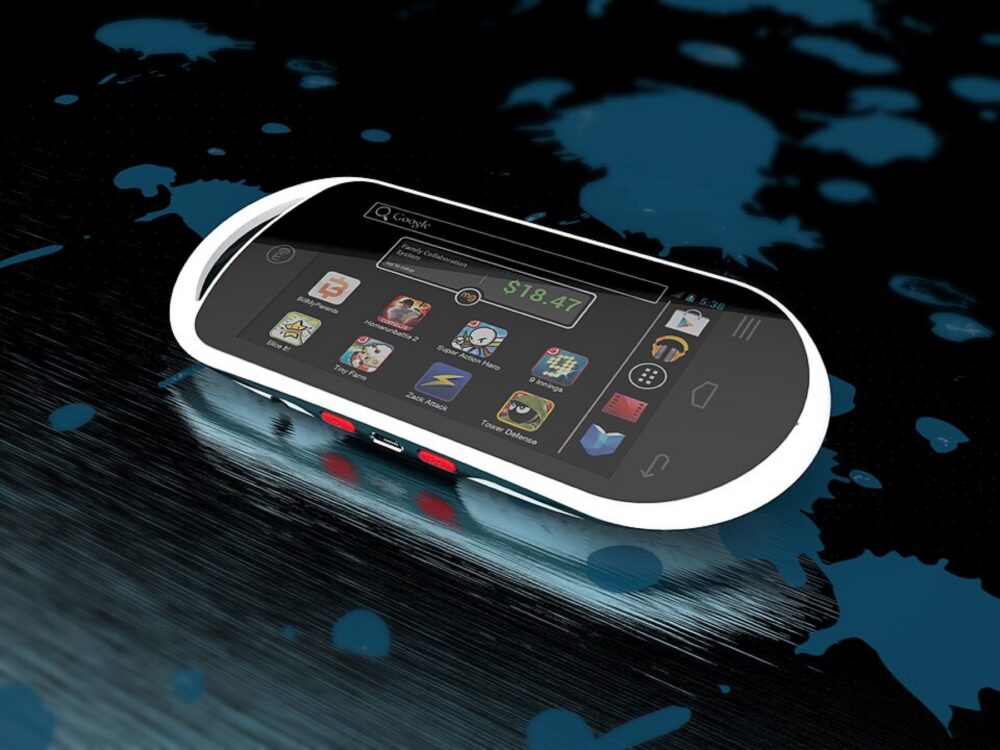
You can source handheld open-source gaming devices profitably if you treat them as a niche hardware ecosystem, not generic toys. The safe play is to start with well-documented projects or reputable OEMs, use small test batches to confirm hardware, firmware, and legal risk, then scale only through suppliers you can verify.
These devices range from tiny Linux handhelds that emulate Game Boy Advance-style systems to community-designed FPGA or microcontroller projects. Each type has different sourcing realities, margins, and failure modes. If you’re a US reseller or small ecommerce shop, your main decisions are: which ecosystem fits your customers, whether you work with original project creators or anonymous OEMs, and which wholesale channel matches your order size and risk tolerance.
How the Open-Source Handheld Market Works for Wholesale Buyers
Handheld open-source gaming devices are portable consoles where the hardware design, firmware, or operating system is openly documented. Many run Linux or similar open systems, others use FPGA or microcontrollers with open schematics and code.
On the community/project side, you’ll see:
- Game Bub – an FPGA-based handheld offered via Crowd Supply. It focuses on hardware-level recreation of classic consoles with open design files.
- Pico Pal – a Raspberry Pi RP2350-based handheld described by Notebookcheck as open source, aimed at retro gaming and general-purpose tinkering.
- Playard One – a modular Linux handheld where both hardware modules and software stack are documented for users and developers (Playard site).
- Mecha devices – tiny Linux “pocket computers” that can be used as handhelds and are built around open, hackable platforms (Mecha homepage).
These are often produced in smaller runs, with manufacturing handled through a contract factory in China or another electronics hub. As a reseller, you’re typically buying:
- From the original project’s storefront or distributor.
- From a small batch arranged directly with the project team.
In parallel, there’s a large ecosystem of mass-produced retro Linux handhelds (often made in Shenzhen) that use open-source OS images to emulate platforms like Game Boy, NES, SNES, and Sega Genesis. Editorial sources mention devices such as Anbernic RG350M/RG351P, which run open-source operating systems and emulate classic platforms similar to the Game Boy Advance, though those specific units may or may not be fully open-source at the hardware level.
These mass-produced handhelds are what you’ll usually see:
- On global marketplaces as “open source” consoles.
- Sold under many different brand names with similar shells and chipsets.
Understanding which world you’re in matters. Community projects tend to have stronger documentation and clear provenance but limited volume and higher costs. Mass-produced Linux handhelds offer lower per-unit prices and flexible MOQs but carry more variance in build quality and firmware.
Device types and sourcing implications
Here’s a compact view of how the main device types map to sourcing realities:
| Device type | Platform, sourcing pattern, and wholesale fit |
|---|---|
| FPGA handheld, such as Game Bub | FPGA with open HDL, normally sourced from the project store or a distributor. Documentation is strong, but unit cost is higher and volume is limited. |
| Microcontroller handheld, such as Pico Pal | RP2350 or a similar MCU, often sold in project-run batches or as kits. It suits DIY buyers and smaller runs but may add assembly work. |
| Modular Linux handheld, such as Playard One or Mecha devices | Linux single-board computers sourced from the project or a small OEM partner. They are flexible and mod-friendly, but cost more and target technical buyers. |
| Mass-produced Linux retro handheld, such as R36/R36S or RG-style devices | Linux and emulators sourced from OEMs or marketplace sellers. Lower prices and higher volume suit broad resale, but firmware and build quality vary. |
If your customers want a Game Boy Advance-like experience with a nostalgic shell, you’re most likely dealing with the mass-produced Linux handheld category, sometimes styled like GBA or GBA SP as highlighted by Retro Catalog’s GBA handheld overview.
Choosing and Vetting Suppliers for Open-Source Handhelds
Supplier selection in this niche isn’t just about price. You’re judging three things at once: technical competence, commitment to open-source principles, and basic reliability as a cross-border seller.
Signals that a supplier is more credible
For community-designed devices (Game Bub, Pico Pal, Playard One, Mecha, similar projects):
- Public design assets – Check whether schematics, firmware, and OS images are published on project sites like Playard One or Mecha. This suggests the team can support open-source users.
- Recognizable launch partner – Platforms like Crowd Supply usually vet hardware campaigns to some extent and host documentation, which helps when you’re reselling.
- Clear licensing and branding – Projects that state how their designs may be reused give you a cleaner path if you plan any co-branding or bundled services.
For mass-produced Linux handhelds from OEMs or marketplace sellers:
- Consistent model naming – Devices like R36 or R36S often appear under similar names with small spec variations. Consistency across listings makes it easier to compare and confirm what you’re getting.
- Detailed spec sheets – Look for explicit mention of chip (e.g., RK3326), RAM, storage (64GB vs 128GB), screen resolution (e.g., 640×480 IPS), and OS type. DHgate’s R36S listings tend to include this level of detail.
- Firmware source or references – Even if the hardware isn’t fully open, sellers who can point to open-source OS builds, GitHub repos, or community images show they’re plugged into the ecosystem rather than shipping a black-box clone.
Red flags specific to open-source handhelds
Because these devices lean on emulation, they carry extra legal and support risks. Watch for:
- Vague or boastful game claims – Listings that promise “20,000+ games” or “all PS1/PSP/DC” with no detail on licensing are a legal risk area. The presence of emulators for systems like Game Boy, NES, SNES, Sega Genesis, and more is common, but legality hinges on how ROMs are obtained and used. If you resell in the US, talk to counsel before importing devices preloaded with large ROM libraries.
- No firmware update path – An open-source handheld without a documented OS image or update method is effectively closed for your customers. That hurts support and returns.
- Inconsistent shells/labels for the same model code – If one R36S listing shows a different button layout or port placement than another, you may be dealing with loosely cloned variants. That’s workable for hobbyist resale but risky for a more polished brand.
Practical communication tactics
When you talk to suppliers:
- Ask for photos of PCB and internal layout, not just the shell. Open-source or at least well-engineered units usually have clean, repeatable layouts.
- Request a current OS build link or image hash. This is standard in communities around devices like Playard One or Mecha; OEMs that support this are easier to manage.
- For community projects, ask about batch sizing and lead times. An FPGA handheld like Game Bub might ship in limited runs; that may limit your launch quantity.
Cost, MOQ, and Channel Choices for Test Batches and Scale
Pricing and MOQs for open-source handhelds vary widely. Community projects often price higher and ship fewer units; mass-produced Linux handhelds trade depth of documentation for lower prices and flexible quantities.
Realistic price bands from marketplace data
As of 2026-10-12, DHgate’s Portable Game Players category shows multiple Linux-based handhelds marketed as “open source” with model codes like R36 and R36S. A snapshot of a few listings gives a sense of wholesale price bands (prices can change and each listing must be checked individually):
| DHgate listing snapshot | Category, observed price range, and notes |
|---|---|
| R36S handheld, 3.5-inch 640×480 IPS, RK3326, 64G/128G | Portable Game Players; $35.01–$76.97 in the reviewed snapshot. Linux-based with multiple storage options; GBA-like emulation is common in this class. |
| R36S all-in-one handheld for PSP/GBA/NESFC/arcade emulation | Portable Game Players; $42.21–$86.58 in the reviewed snapshot. The listing emphasizes emulation across several classic systems. |
| R36 64G Linux handheld | Portable Game Players; $36.98–$75.87 in the reviewed snapshot. It represents a mid-range 64GB configuration. |
| Retro Linux handheld with IPS screen | Portable Game Players; $72.79–$93.33 in the reviewed snapshot. The listing positions the IPS-screen model as a higher-priced gift option. |
| MINILOONG Game POCKET, 4-inch IPS with HD output | Portable Game Players; $84.22–$202.64 in the reviewed snapshot. This premium range adds HD output and custom OS branding. |
For a US reseller, this snapshot suggests:
- Entry-level and mid-range “open source” retro handhelds often sit roughly in the $35–$90 wholesale price band on marketplaces for small to moderate quantities.
- Premium or more niche open-source systems with HD output or unique OS may reach into the $80–$200+ band.
Community project devices like Game Bub or Pico Pal don’t show up in this snapshot but, based on their positioning, you should expect higher per-unit pricing and limited volume rather than deep wholesale discounts.
Thinking through test batch economics
Say you test a batch of 20 units of a mid-range Linux handheld roughly in the $45–$80 band:
- Unit cost (landed) – Allocate for base price plus international shipping, import duties, and basic packaging. Your true landed cost per unit may sit noticeably higher than list price.
- Target retail price – Many US buyers treat GBA-capable retro handhelds like Anbernic-style devices as $80–$150 retail items depending on specs and branding, based on editorial lists like Retro Catalog’s GBA handheld round-up. To cover fees and returns, you’ll usually want your landed cost at no more than ~40-60% of retail.
- Support load – Open-source or emulation-focused handhelds attract questions about firmware, ROMs, and controller mapping. Budget time and margin for support or publish clear guides.
FPGA or microcontroller-based open-source handhelds are better suited to higher-price, lower-volume plays: specialty bundles, modding services, or educational kits. The audience is smaller but more engaged, and margin can come from services rather than sheer volume.
Matching channels to order size
Different sourcing routes fit different stages:
- Direct from open-source projects (Game Bub via Crowd Supply, Pico Pal’s project contacts, Playard, Mecha) – Best for small, curated runs and bundles where you highlight the open nature of the device. Strong documentation, limited volume, and closer relationship with creators.
- Specialized distributors or retailers – Some distributors carry retro handhelds and open-platform devices in bulk. You pay more per unit but gain easier logistics and sometimes domestic warranty arrangements.
- Global marketplaces (including DHgate) – Useful for small-to-medium test batches of mass-produced Linux handhelds styled like GBA-era devices. As the 2026-10-12 snapshot shows, DHgate hosts many R36/R36S-style listings with price ranges from the mid-$30s to roughly $130 depending on configuration.
If you use a marketplace such as DHgate:
- Treat every listing and seller as unverified until you do the work. Check the model naming, specs, and photos across several sellers.
- Ask the seller directly about OS images, update paths, and game content origin. Avoid reselling devices preloaded with large ROM libraries without legal guidance.
- Use a small initial order to validate build quality and packaging before scaling.
For larger volumes or stronger brand promises, many US businesses eventually move from marketplaces to either direct OEM relationships or partnerships with the original open-source project teams. That’s where you can negotiate BOM changes, custom shells, or preconfigured firmware in a more controlled way.
Sourcing handheld open-source gaming devices is viable, but it’s not a blind price play. The buyers who do well in this niche know which ecosystem they’re serving, stay honest about ROM and copyright risks, and keep supplier relationships tight enough to influence hardware and firmware over time.