
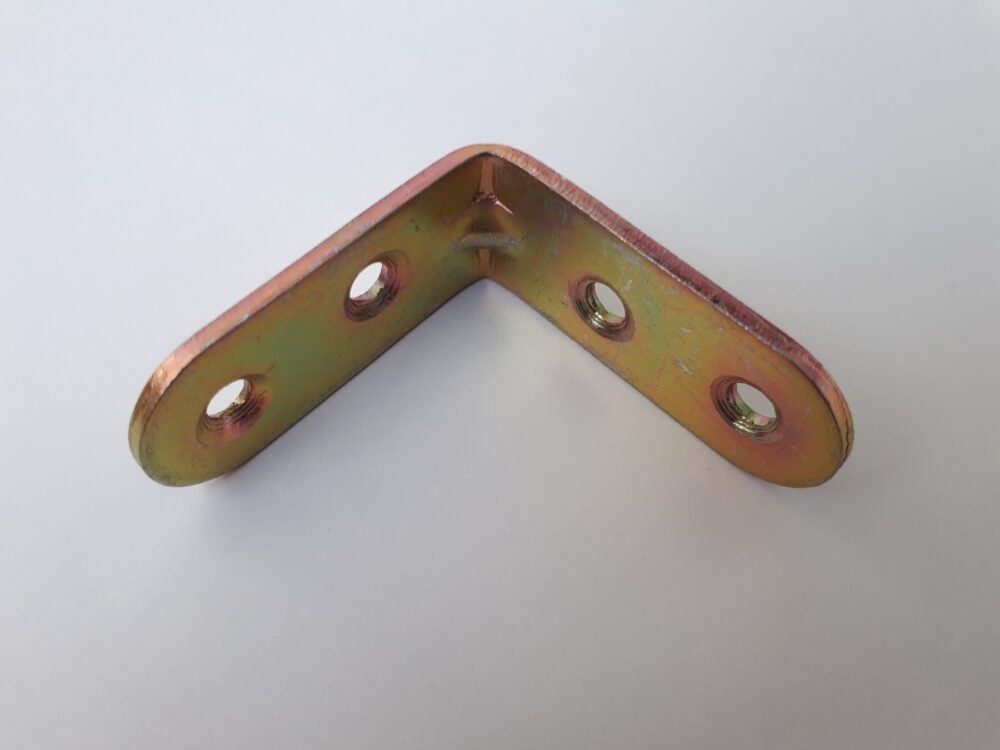
If your project truly needs a 60° angle—roof brackets, sloped metal framing, or a specific robot geometry—your best bet is established industrial and specialty hardware suppliers. Use brands and catalogs that already serve construction and engineered products for anything load‑bearing, then reserve bulk marketplace sourcing for light-duty or price‑driven brackets where failure is low risk.
For structural or exposed applications, buyers in the US typically source 60° brackets from industrial catalogs like McMaster‑Carr, metal specialists such as Metals4U Online, framing systems like Unistrut, or corrosion‑resistant hardware brands stocked by retailers like Hardware Hut. Educational and robotics projects can use dedicated component ecosystems like Pitsco’s Tetrix. Cross‑border marketplaces, including DHgate, are best treated as supplemental options for non‑critical furniture, DIY, or resale packs once you’ve validated samples.
Where 60° Angle Brackets Fit in Construction and Hardware Supply
A 60° angle bracket is a connector that fixes two elements at a 60‑degree angle instead of the usual 90°. That matters anywhere you’re dealing with pitched structures or specific frame geometries.
Typical variants include:
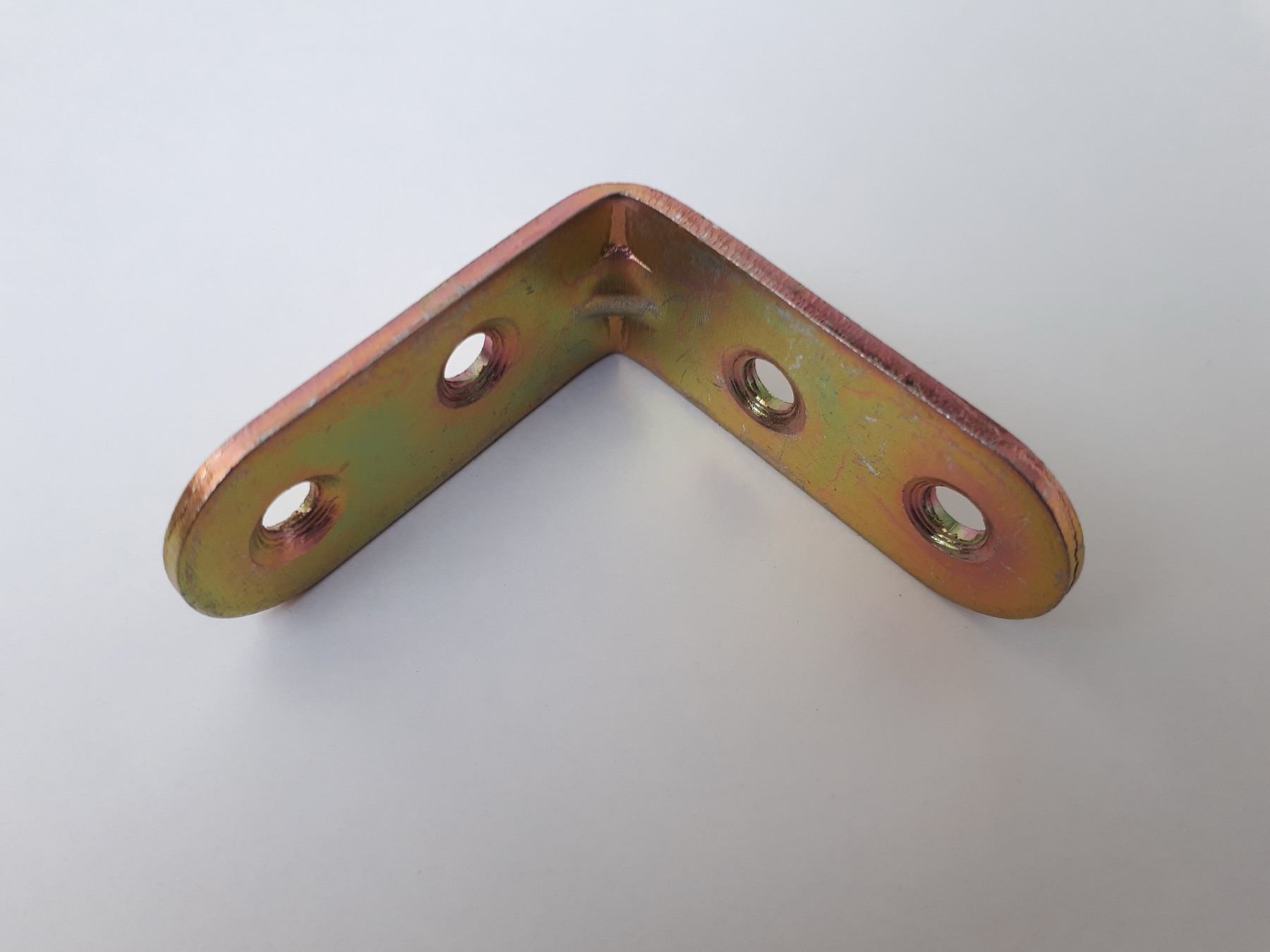
- Open structural angles. Metals4U Online sells a galvanized 4‑hole open 60° angle designed to connect members at 60° while giving multiple bolt patterns. The open design makes it easy to bolt into dimensional lumber or metal framing.
- Inside angle brackets. McMaster‑Carr offers 60° inside angle brackets as part of its industrial hardware catalog. These typically sit inside a joint, bracing two legs to keep a 60° connection fixed.
- Roof brackets. Super Arbor lists stationary roof brackets with 60° and 90° angles sized for 2×4 or 2×6 lumber. These illustrate how 60° hardware shows up in roofing, securing planks or staging at the pitch of the roof.
- Robotics and light structures. Pitsco’s Tetrix Prime 60° beam bracket is a small-format connector used in educational robotics kits to create hexagonal or triangular frames.
- Corrosion‑resistant hardware. Hardware Hut carries a Sugatsune 304 stainless steel angle bracket that’s suited to damp or outdoor environments thanks to its 304 stainless construction.
From these examples, you can group your needs:
- High-load structural (roof brackets, metal framing, industrial racking) → galvanized or heavy‑gauge steel, tested patterns.
- Corrosion‑sensitive (marine, exterior architectural) → stainless steel like Sugatsune’s 304 bracket.
- Light-duty and educational (robotics kits, small fixtures) → proprietary systems like Tetrix or generic light brackets.
Matching your application to these families is the first step before you choose a supplier.
Choosing Brands and Suppliers: Industrial, Specialty, and Bulk Options
The right supplier type depends on whether you need engineering reliability, aesthetic finishes, or just cheap bulk.
Supplier types at a glance
| Supplier type | Typical examples | Best for | Trade-offs |
|---|---|---|---|
| Industrial hardware catalog | McMaster‑Carr 60° brackets | High-load, repeatable specs, wide size range | Higher per‑piece price, limited branding flexibility |
| Metal specialists | Metals4U galvanized 60° angles | Structural connections in steel, galvanized finishes | May require larger orders; focused product range |
| Specialty hardware retailers | Sugatsune 304 stainless bracket on Hardware Hut | Design‑forward or corrosion‑resistant fixtures | Narrow brand set; pricing geared to retail customers |
| Robotics/edu component brands | Tetrix Prime 60° beam bracket | Educational kits, hobby robotics, lightweight structures | Not rated for heavy construction loads |
| Bulk & marketplace sellers | Cross‑border packs of angle brackets (e.g., DHgate listings) | Low‑risk DIY, furniture reinforcement, ecommerce bundles | Quality variance, must self‑verify specs and consistency |
What to actually check in a 60° bracket listing
Instead of generic “check reviews” advice, focus on hardware‑specific details:
- Material and finish.
- Galvanized steel like the Metals4U bracket suits structural outdoor use.
- 304 stainless in the Sugatsune bracket resists corrosion in kitchens, bathrooms, and coastal installs.
- Thin aluminum or mild steel in robotics brackets is fine for light loads but not for joists.
- Hole pattern and size.
- Metals4U’s 4‑hole open 60° angle shows how multiple bolt holes allow flexible mounting to different members.
- Compare hole diameter to your fasteners; mismatched holes lead to sloppy joints or field drilling.
- Bracket geometry.
- Confirm the bracket actually fixes a 60° joint (not 45° or 90°). Industrial catalogs like McMaster explicitly label “60° inside angle”; generic marketplace listings may just say “angle bracket” without a clear spec.
- Use-case alignment.
- Pitsco’s Tetrix bracket is perfect for a classroom robot; it’s not intended to hold up a roof.
- Roof brackets from Super Arbor are designed to sit on pitched roofs with 2×4/2×6 lumber—very different duty than a small furniture brace.
Quick supplier vetting checklist
For a recurring hardware order, ask each potential supplier:
- Do you publish engineering drawings or dimensional PDFs for your 60° brackets?
- What base material and finish options are available (galvanized, stainless, powder‑coated)?
- Can you maintain the same tooling for repeat orders, or will brackets change shape or hole pattern over time?
- For branded items (Sugatsune, Tetrix), are you an authorized distributor or buying through another intermediary?
Suppliers who can answer these specifically—and provide documentation—tend to be safer for repeat or load‑critical use.
Order Sizes, Pricing, and Channel Choice (Including One Marketplace Example)
Once you know the bracket style you need, the channel choice is mostly about quantity, customization, and risk tolerance.
Small, high‑stakes orders
If you’re buying dozens or a few hundred brackets for structural or safety‑critical use—roof staging, metal framing, machinery guards—domestic industrial channels generally make more sense:
- Industrial catalogs & specialists. McMaster‑Carr and Metals4U typically let you order small lots while still getting industrial‑grade hardware. Per‑unit prices may be higher than offshore bulk, but you avoid unknown alloys or inconsistent forming.
- Specialty brands for corrosion. For exterior or sanitary environments, brackets like Sugatsune’s 304 stainless model at Hardware Hut combine known material with quality control, which matters more than shaving a few cents per piece.
Customization (special hole patterns, thicknesses, or coatings) usually pushes you toward metal fabricators or OEM manufacturing rather than off‑the‑shelf brackets, even cross‑border. That’s outside most marketplace listings and is best handled through direct RFQs.
Bulk, low‑risk orders and marketplaces
For low‑risk uses—furniture reinforcement, light shelving, DIY kits for an ecommerce store—bulk packs from marketplaces can be cost‑effective. DHgate, for example, lists many metal angle brackets and corner braces, mostly at 90° rather than 60°, from small suppliers.
A snapshot on 2026-10-09 showed listings such as:
- A “90 Degree Standard Support Bracket Metal Angle Piece Code” from seller zkxmy in a fencing and gates category, priced roughly in the USD 0.31-0.42 range per piece in the listing tier (product page).
- Bulk packs of stainless right‑angle brackets for shelves and furniture, often 10-50 pieces per lot, with prices varying by pack size, such as the “10/20/40/50pcs Stainless Steel Right Angle Brackets” pack (product page).
These examples illustrate DHgate’s role: it’s a marketplace of many small hardware sellers, not a single bracket brand. For your purposes:
- Treat each listing as a separate supplier to vet.
- Ask for dimensional drawings and angle confirmation (especially if you specifically need 60°, since most listings are 90°).
- Order a small test lot before committing to hundreds of units for a resale brand.
If you’re new to cross‑border buying, it’s worth reading broader guidance on finding wholesale suppliers on DHgate and how to choose a DHgate wholesale supplier so you can apply the right screening to bracket sellers.
Micro‑case: a small ecommerce brand
Say you’re a US ecommerce seller launching a modular plant shelf system that uses visible metal brackets:
- For the first production run, you might use a branded stainless bracket from Hardware Hut or an industrial catalog. Your margin is thinner, but tolerances and finish are predictable while you refine the design.
- Once you’ve validated the geometry and volume (and confirmed a 60° angle is part of your design), you can explore cross‑border bulk sourcing—either direct from a fabricator or via a marketplace—for a cosmetically similar but unbranded bracket.
- Throughout, keep one reliable domestic source in the mix as a fallback in case overseas supply fluctuates or a batch deviates in angle or finish.
Thinking this way—critical vs cosmetic, small pilot vs bulk, domestic vs marketplace—will help you place 60° angle brackets in your supply chain instead of treating them as interchangeable shelf hardware.