
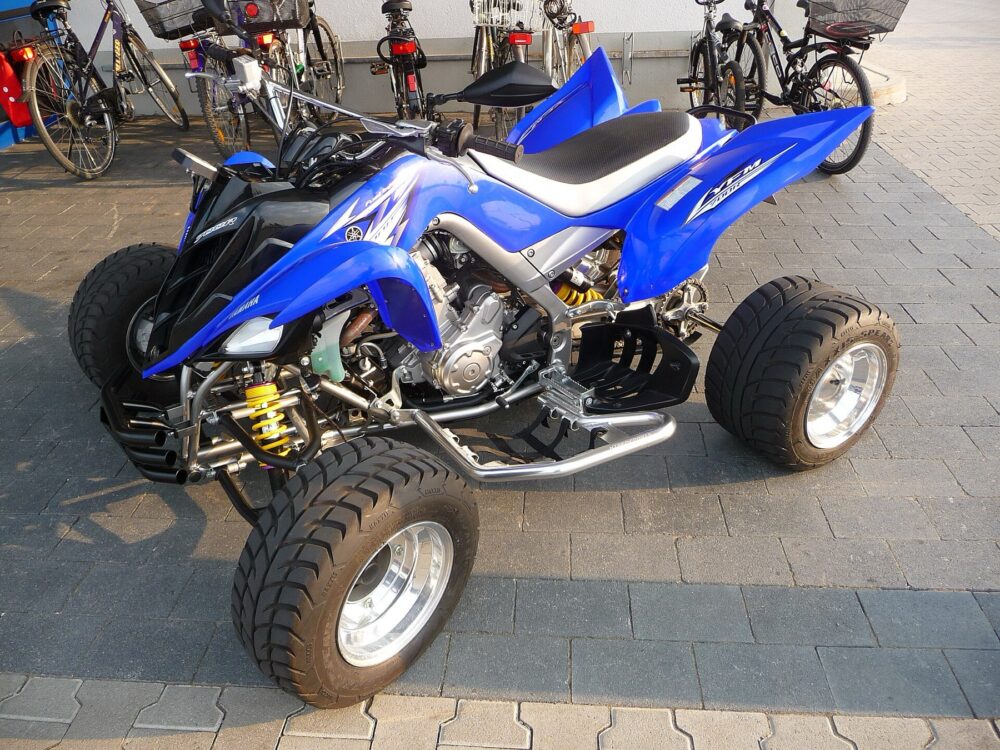
The Yamaha Raptor 660 carburetor setup is a bit more involved than a single bolt-on unit, and that’s why buyers run into misfit parts so often online. The 2001-2005 Raptor 660/YFM660/YFM660R uses a dual constant‑velocity carburetor arrangement: two 33 mm Mikuni BSR CV carbs working together, with different main jet sizing left versus right to balance fuel across the cylinders, as described in Raptor buyers’ references like Off-Road Official. When you shop for replacements or rebuild parts, anything marketed as “OEM-spec” should match that dual 33 mm CV Mikuni layout and be explicitly listed for 2001-2005 Raptor 660/Raptor 660R.
What the Yamaha Raptor 660 Carburetor Does and Why OEM Spec Matters
On the Raptor 660, the carburetors meter fuel and air before the mixture enters the engine. The dual 33 mm Mikuni BSR CV design uses vacuum slides to smooth throttle response, which matters for trail riding and dune use where the 660 is popular. Each carb handles one side of the engine and is jetted slightly differently in OEM form to keep fueling balanced across the rev range.
That dual‑carb layout is why you can’t treat the Raptor 660 like a generic single‑carb ATV. Physical spacing, throttle linkage routing, choke setup, and fuel inlet orientation all have to line up with the intake boots and frame. If a listing doesn’t clearly call out Raptor 660/YFM660/YFM660R 2001-2005 compatibility, you risk buying a carb that will bolt up only with major modification or not at all.
When sellers advertise “OEM replacement” or “fit OEM quality” without specifying Mikuni BSR style, dual-carb configuration, or the year range, that’s marketing language, not a guarantee. For anything beyond a quick flip, you want fitment detail that matches what Yamaha used from the factory.
Types of Raptor 660 Carb Parts: Complete Units, Kits, and Components
Raptor 660 carb products online fall into three practical buckets. Which one makes sense depends on whether you’re fixing a single machine or stocking parts to resell.
1. Complete replacement carburetors
These are fully assembled carb sets marketed as bolt‑on replacements for the 660.
Examples include:
- A replacement unit from Duraforce described as “Yamaha Raptor 660 Carburetor YFM660 660R Carb 2001-2005 Replacement Part” with explicit year and model coverage for 2001-2005 Raptor 660R/YFM660R (Duraforce listing).
- A JDMSPEED-branded carb advertised as “NEW CARBURETOR FOR 2001-2005 YAMAHA RAPTOR 660 660R YFM660 YFM 660R” (JDMSPEED listing).
Most of these are aftermarket, not genuine Yamaha/Mikuni. They’re aimed at buyers who want to rip out a gummed‑up factory setup and start fresh. You trade OEM brand for convenience and price, so the key is verifying dual‑carb configuration in the photos and checking that both carbs, the throttle linkage, and choke/throttle cable bracketry are included.
2. Carburetor rebuild kits
Rebuild kits target owners with intact OEM carbs that are dirty or leaking rather than physically damaged. On Amazon and similar marketplaces, you’ll see multi‑piece kits like the All Balls Racing carburetor rebuild kit for Yamaha YFM660R Raptor 2001-2005 positioned as an OEM replacement rebuild kit within a Raptor 660 carburetor shopping cluster (Amazon category page).
These kits typically include wear items:
- Float bowl gaskets and o‑rings
- Needle valves and seats
- Miscellaneous seals and screws
They usually do not include full bodies, slides, or throttle linkages. Rebuild kits are best when your dual Mikuni carbs are structurally sound but suffering from age, old fuel, or minor wear. For small resale operations, stocking rebuild kits is a low‑risk way to support customers who prefer to keep their original Mikuni hardware.
3. Individual carb components and small assemblies
Marketplaces like Amazon, eBay, and Walmart host a mix of single components marketed for Raptor 660 use. Examples on eBay and Walmart include listings for “Carburettor fit for Yamaha Raptor 660 660R YFM660” or “Autu Parts Yfm660R Carburetor Compatible Yamaha Raptor 660 2001-2005 660R”, as well as Walmart’s Raptor carb listing for YFM660R (Walmart example).
These can range from:
- Standalone carb bodies called out as Raptor 660 compatible
- Carb kits bundled with an air filter and fuel petcock
- Miscellaneous valves, jets, and seals
Because individual parts often share photos and naming across multiple models, fitment clarity is weaker than with complete assemblies. For component‑level buying, match part numbers where possible and cross‑check against a Yamaha parts diagram or manual to avoid ordering generic pieces that don’t quite match the dual 33 mm Mikuni layout.
Quick checklist: Which type should you buy?
Use this focused checklist when you’re staring at several Raptor carb listings:
| Scenario / Need | Best Product Type | Why it Fits |
|---|---|---|
| Carbs are missing or physically damaged | Complete replacement carb set | You need full dual‑carb assembly, linkage, and brackets |
| Carbs are present but leak or run poorly | Rebuild kit | Refreshes wear items while keeping OEM Mikuni bodies |
| You resell and offer repair services | Mix of complete units + kits | Covers catastrophic failures and routine maintenance |
| You only need a small seal or jet | Individual components | Lower cost, but requires careful part‑number cross‑checking |
Where to Buy Raptor 660 Carb Parts Online and How to Judge Listings
For US buyers and small ecommerce sellers, Raptor 660 carb sourcing breaks down into general marketplaces and niche powersports retailers.
General marketplaces like Amazon, eBay, and Walmart carry a wide range of generic and branded Raptor 660 carburetor listings. Search results show phrases like “For Yamaha Raptor 660 Carburetor 660 660R YFM660 2001-2005”, bundled kits with air filters and fuel valves, and multiple unbranded carb sets advertised as fitting Raptor 660/YFM660R. This breadth is useful if you’re price‑sensitive or need fast availability, but listing quality varies. Some sellers reuse the same photos and copy across different models, which increases the risk of misfit.
By contrast, powersports‑focused retailers such as PirateMX stock carburetors and fuel‑system parts specifically filtered by make and model. On PirateMX, you can browse a “Carburetors” category narrowed to Yamaha Raptor 660R and see options described as aftermarket replacement carburetors with tailored fitment (PirateMX Raptor 660R carb section). This kind of site typically offers clearer fitment and tech support, which matters if you’re stocking inventory for customers and want fewer returns.
For quick listing triage, focus on these four signals:
- Year and model coverage spelled out – Prefer phrases like “2001-2005 Yamaha Raptor 660/660R YFM660/YFM660R” over vague “fits Yamaha ATVs.”
- Visual proof of dual‑carb configuration – Photos should show two linked carbs, not a single generic unit. Look for throttle linkage and mounting points that match the Raptor’s layout.
- Positioning language – “Replacement part” and “OEM‑style” are fine as descriptions, but don’t treat them as proof of genuine Yamaha/Mikuni origin.
- Support channel – Niche powersports retailers often list contact numbers for fitment questions and returns; marketplace sellers may not. For ecommerce operations, that support can be the difference between a smooth sale and repeated refunds.
If you’re a small seller planning to stock Raptor 660 carbs, consider building your assortment around at least one named aftermarket brand (such as JDMSPEED or Duraforce) plus a reliable source of rebuild kits from a powersports‑specific supplier. That balances price appeal with fitment confidence and gives you options when a customer wants to keep their original Mikuni hardware instead of swapping to a generic assembly.