
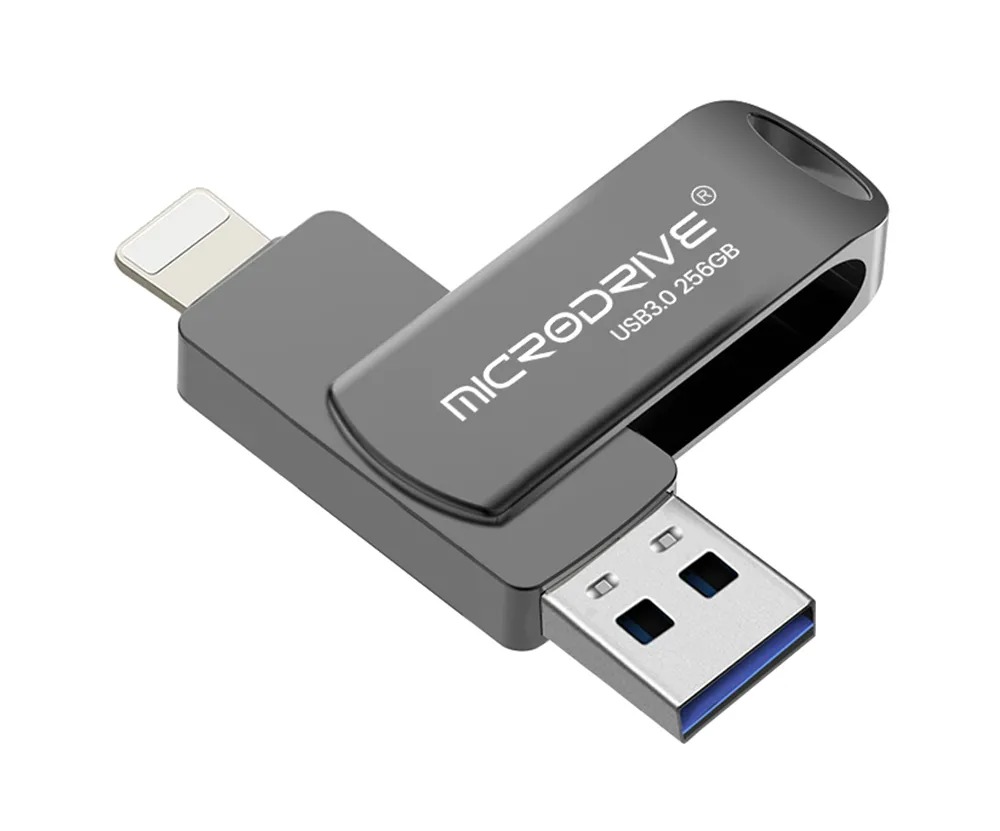
Quick answer: buy custom bulk USB drives only after a sample passes a full-capacity write-and-read test, your real file-transfer workload, connector and operating-system checks, malware controls, and artwork approval. Put capacity, interface, housing, preload, packaging, quantity and acceptance rules in the order record. For sensitive data or critical deployment, use an established specialist with documented security and support rather than an unknown promotional supplier.
Define the job before comparing USB-drive quotes
| Use case | Main risk | Better starting route |
|---|---|---|
| Event giveaway with public files | wrong logo, low usable quality or late delivery | promotional supplier with a physical proof and small pilot |
| Software, media or document distribution | corrupt preload, slow copying or incompatible format | supplier able to document duplication, verification and master-file control |
| Routine staff file transfer | malware, data leakage and unmanaged devices | approved IT reseller and an organization-owned removable-media policy |
| Sensitive or regulated data | unauthorized access, loss and weak key management | security-focused encrypted storage selected with the IT/security owner |
| Boot, recovery or device provisioning | hardware variation, failure under repeated writes or image mismatch | documented, repeatable product from a specialist channel |
A low-cost marketplace can be useful for discovering unbranded promotional drives or testing a concept. It is not the right default when failure could expose confidential information, interrupt a deployment or damage many computers. Start with the loss you must prevent, then choose the supplier route.
Write a USB-drive specification that can be tested
“64 GB custom USB” is not a complete specification. Give every candidate the same requirements:
- nominal capacity for each model;
- connector type, such as USB-A, USB-C or a defined dual-connector design;
- required USB data-performance claim, if any, tied to the exact product;
- housing material, dimensions, moving parts and key-ring or cap design;
- logo artwork, colors, print area and approval method;
- file-system or formatting requirement, if your deployment needs one;
- preloaded files, permissions and whether files must be read-only;
- individual packaging, labels, barcodes and lot identification;
- sample quantity, production quantity and defect-handling rule;
- destination, delivery requirement and items included in the quote.
If you are still finding candidates, use the product-first supplier search workflow. Keep the sample and final order tied to one written specification; a photo of a similar shell or a generic speed claim is not evidence for your unit.
Test the entire claimed capacity
Do not approve a sample after copying one small folder. A useful capacity test writes data across the whole addressable device, reads it back and reports errors. Run the test on a non-production computer using a reputable tool approved by your IT team. Record the drive identifier, claimed capacity, test method, elapsed time, errors and result.
Repeat the test on several units when the order is large enough for variation to matter. A single passing sample shows that one unit passed one test; it does not prove that every unit in a later batch uses the same memory or controller. Put change control and batch inspection in the purchase terms.
Measure performance with the files people will actually use
A headline interface label does not guarantee a particular transfer speed. Test representative workloads:
- one large video or image file;
- a folder containing many small documents;
- the complete preload package;
- repeated reads or writes if the drive will be reused;
- the slowest computer or port in the intended environment.
Define an acceptable result before the supplier sees the outcome. Use a range or maximum completion time that reflects the business task, not an invented benchmark. Confirm whether the performance requirement applies to every unit, a sample from each lot or only the approved prototype.
Check connector, system and file compatibility
List the computers, tablets, kiosks or other hosts that will use the drive. Confirm physical clearance, connector orientation, operating system, file-size needs and whether users have permission to mount removable storage. A dual-connector shell should be tested on both connector types.
If the supplier displays a certified USB logo, verify the exact model rather than relying on packaging. The USB Implementers Forum product search is limited to products certified to bear a USB-IF logo and notes that older listings require current verification. USB-IF also states that its certified logos may be used only with qualifying products under its logo license and compliance process. Absence from the public search does not by itself prove a product is unusable, but an unsupported logo claim is a reason to stop and investigate.
Treat every supplier sample as untrusted removable media
Do not plug an unknown drive into a production laptop, point-of-sale device or company network. CISA documents scenarios in which threat actors use removable media to introduce malware into organizational systems. Use an isolated test device or environment approved by your security team, disable automatic execution, scan the media and record the result before broader use.
The risk is operational as well as malicious: a preloaded file could be wrong, corrupted or replaced during production. Keep one controlled master, calculate a cryptographic hash using an approved process, and compare duplicated files against it. Preserve the final master and release record so that an affected batch can be identified.
For an organization-wide deployment, follow a removable-media policy that defines approved devices, owners, permitted systems, encryption, loss reporting, sanitization and disposal. A supplier’s statement that a drive is “secure” does not replace those controls.
Use encryption when the data risk requires it
CISA recommends encrypting removable media and maintaining secure backups when stored information could be exposed through theft, loss or unauthorized access. NIST SP 800-111 explains storage-encryption approaches and emphasizes matching the solution to the storage type, information and threats.
Encryption is a system, not a label on a drive. Decide who manages keys or recovery information, which computers can unlock the device, what happens when a user leaves, and how lost media is reported. For regulated, confidential or high-impact data, involve the organization’s security and legal owners before purchasing.
Approve artwork without creating trademark risk
Provide vector artwork or another production-ready file that your organization owns or is authorized to use. The proof should show:
- the exact logo version and text;
- print, engraving or molding method;
- position, orientation and maximum area;
- approved colors or material finish;
- front, back and connector-open views;
- packaging artwork and labels.
Do not ask a supplier to copy another company’s logo, character or event mark without permission. A seller’s willingness to print it is not evidence of authorization. Keep the dated proof and approval with the order.
Control preloaded files and privacy
If the drives will contain files, supply a clean final master through an approved transfer route. Document file names, versions, size, hash, directory structure, autorun behavior and whether users may delete or modify the files. Do not send customer data, credentials or production secrets merely to test duplication.
Inspect finished samples for unexpected files, hidden partitions or executable behavior. If analytics, device identifiers or software activation are involved, have the appropriate privacy and security owners review the design before distribution.
Calculate landed cost per accepted drive
Add the sample, drives, customization setup, preload, packaging, freight, insurance where applicable, duties and taxes, payment fees, inspection, security testing, replacement reserve and delivery to the final location. Divide by accepted units, not ordered units.
Compare three quantities: proof batch, operational pilot and full order. A lower unit quote can be more expensive if failures require rework, event replacement or manual file loading. Use the Budget & Profit hub to separate landed inventory cost from promotion or deployment cost.
Use a staged order and batch-acceptance plan
- Digital proof: approve dimensions, artwork, packaging and written specification.
- Physical sample: run capacity, performance, compatibility, security and durability checks.
- Pilot quantity: test several units and the complete preload/packaging workflow.
- Production approval: freeze the sample, bill of materials or measurable attributes that cannot change without consent.
- Batch inspection: sample units across cartons and record capacity, files, artwork and physical defects.
- Acceptance: release the batch only when the agreed evidence is complete.
For a repeatable supplier comparison, use the wholesale supplier evaluation guide. If a sample fails, the supplier corrective-action test helps you request a measurable cause, correction and prevention response before a reorder.
When DHgate may fit — and when it may not
DHgate may be a reasonable discovery route for generic promotional drives and a controlled order small enough to inspect. Verify the current listing, seller, selected capacity, customization record, destination and policy before paying.
Choose an established specialist, authorized distributor or IT-approved source when the drives will carry sensitive data, enter managed networks, require certified performance, support a critical rollout or need a dependable warranty. The cost of one failed device may be small; the cost of distributing an untrusted or incorrectly duplicated batch may not be.
Final buyer checklist
- The exact connector, capacity, housing, preload, artwork and packaging are written into the order.
- Several units pass a full-capacity write-and-read test.
- Real file workloads and intended host devices have been tested.
- Unknown media is isolated, scanned and handled under an approved security process.
- Encryption and key recovery are defined when data sensitivity requires them.
- Artwork is owned or authorized, and a dated physical proof is approved.
- Landed cost is divided by accepted units.
- The production batch has sampling, change-control and rejection criteria.
Conclusion: a custom USB-drive order is ready to scale only when the storage, performance, compatibility, security, artwork and batch controls have been tested on real units. Buy evidence in stages, keep the first exposure small and use a specialist route whenever the consequences of failure exceed the savings.
Last reviewed: September 3, 2026. Verify current USB-IF listings, supplier terms, import requirements and your organization’s removable-media policy before ordering.