
A car dropshipping business means you sell vehicles or auto-related products online, but your suppliers ship directly to your buyers. You don’t run a lot, or any, physical inventory. In practice, most small US sellers find that dropshipping full cars is complex and high-risk, while dropshipping accessories and tools (detailing brushes, covers, lights, mirrors) is far more realistic.
The right structure for you depends on capital, legal comfort, and how much logistics you’re willing to manage. Below, we’ll break down how the supply chain works, how to vet suppliers, and which sourcing channels – auctions, fleets, logistics firms, and online marketplaces – actually fit a car-focused dropshipping operation.
How the Car Dropshipping Supply Chain Works
Before you pick suppliers, decide what you really plan to sell:
- Full vehicles (used cars, trucks, SUVs)
- Auto products (accessories, detailing tools, minor parts, emergency gear)
Those two options use very different supply chains.
Model 1: Trying to Dropship Whole Vehicles
For full vehicles, the basic flow looks like this:
- You list vehicles on your site or marketplace profile.
- You source those vehicles from dealer-oriented platforms (wholesale auctions, fleet providers) or online dealerships.
- When a customer pays, you arrange purchase, title transfer, and transport from the supplier to the buyer using a carrier.
A few real-world pieces of that chain:
- Wholesale auctions for dealers. Platforms like ACV Auctions run online wholesale auctions where licensed dealers buy used vehicles remotely. You’re not buying retail; you’re bidding against other dealers on cars that may need reconditioning.
- Online car dealerships. A licensed retailer such as AutoExpo sells used cars online. A small seller could, in theory, act as a marketing front and route buyers into a purchase, but that’s more lead generation than classic dropshipping.
- Fleet providers. Companies like Arslan Fleet focus on sourcing and placing vehicles for platforms such as Turo. That’s useful if you want access to multiple cars for rental or shared-fleet models, but it’s not plug‑and‑play dropshipping of individual vehicles to private consumers.
- Auto transport logistics. A carrier such as Y7 Logistics handles the actual vehicle shipping for dealers and exporters. In a vehicle “dropship” setup, you’d be the one interfacing with transport, coverage for damage, and scheduling.
This kind of business quickly stops looking like low-risk ecommerce. You’re touching:
- Titles, registration, and financing
- Condition disputes (e.g., auction cars arriving with more damage than expected)
- Transport damage risk while the car is in transit
You should treat vehicle dropshipping as a capital-intensive, heavily regulated business. That usually requires licenses, legal advice, and deeper industry experience than a typical new dropshipper has.
Model 2: Dropshipping Auto Accessories and Tools
Selling auto products uses a more familiar ecommerce flow:
- You list car accessories or tools in your online store.
- When someone orders, you send that order to an auto product supplier or marketplace seller.
- The supplier packs and ships directly to your customer.
DHgate’s own editorial blog describes dropshipping broadly as a setup where the seller forwards orders to manufacturers or suppliers, who then fulfill and ship directly to customers. That definition fits the accessory side of the car niche much better than it fits whole vehicles.
This is where cross‑border sourcing makes sense: detailing brushes, car covers, blind‑spot mirrors, emergency flashlights, etc. They are small, easier to ship, and don’t involve vehicle titles.
Choosing and Vetting Car Dropshipping Suppliers
Your vetting process should match the kind of product you’re selling.
If you’re touching full vehicles
Here, your “suppliers” are auctions, fleets, online dealers, and transport companies. A practical way to evaluate them:
- Access and licensing. Dealer auctions such as ACV typically serve licensed dealers, not casual online sellers. Make sure you understand and meet their access rules before you build a business on them.
- Condition transparency. Focus on platforms that invest in condition reports, photos, and third‑party inspections. With ACV, for example, the entire pitch is remote wholesale sourcing supported by digital inspections and detailed listings; you still need internal rules for what you’re willing to buy (e.g., age, mileage, damage codes).
- Specialization. Fleet providers like Arslan Fleet are optimized for Turo‑style placement, not one‑off retail sales. If your model is renting via a marketplace rather than dropshipping to end buyers, a fleet partner may make more sense than trying to sell individual cars.
- Logistics partners. Evaluate carriers such as Y7 Logistics on their ability to handle dealer/export work, whether they cover your key lanes, and how they document pickup, delivery, and damage. Ask for their standard process if a vehicle arrives damaged.
Because vehicles bring legal and regulatory exposure, you should not rely on general ecommerce templates. Talk to a qualified attorney or compliance specialist before you promise buyers anything about titles, registration, or financing.
If you’re dropshipping auto accessories
For accessories, you’re vetting wholesale or marketplace sellers. Make your checks specific to auto products:
- Product relevance. Some cross‑border sellers are generalists; you want suppliers who consistently carry auto accessories or detailing tools.
- Durability risks. For items that will be used outdoors or under mechanical stress (brushes, covers, mirrors), ask for material details, expected lifespan, and failure modes.
- Order handling. Since you won’t see the product yourself, ask how they handle mis‑picks, defects, or missing packages. You need a clear process you can mirror in your own customer service.
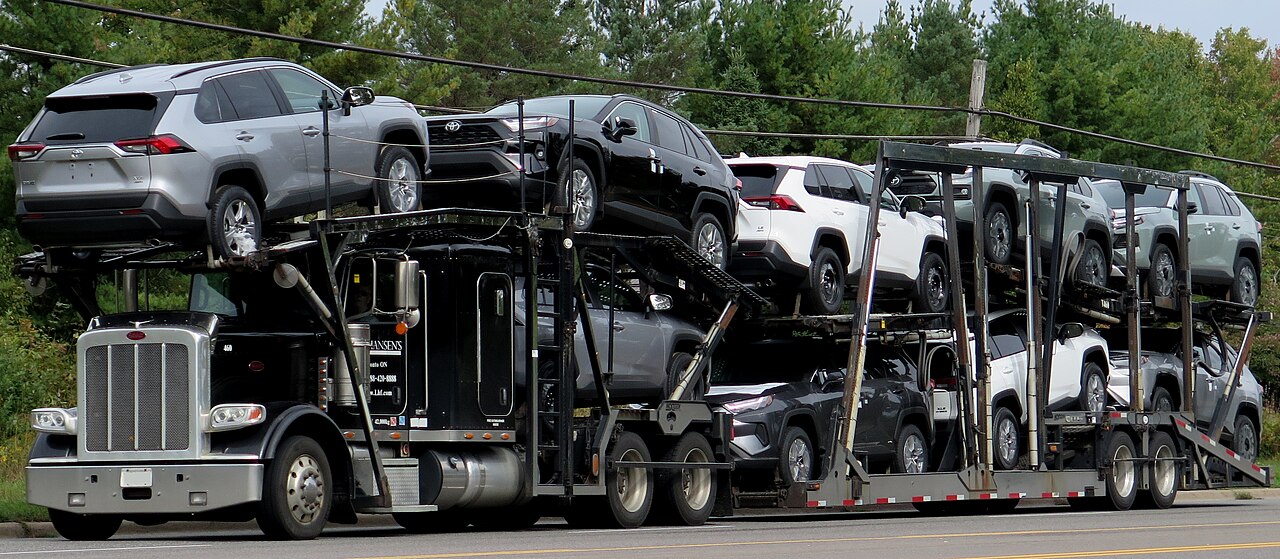
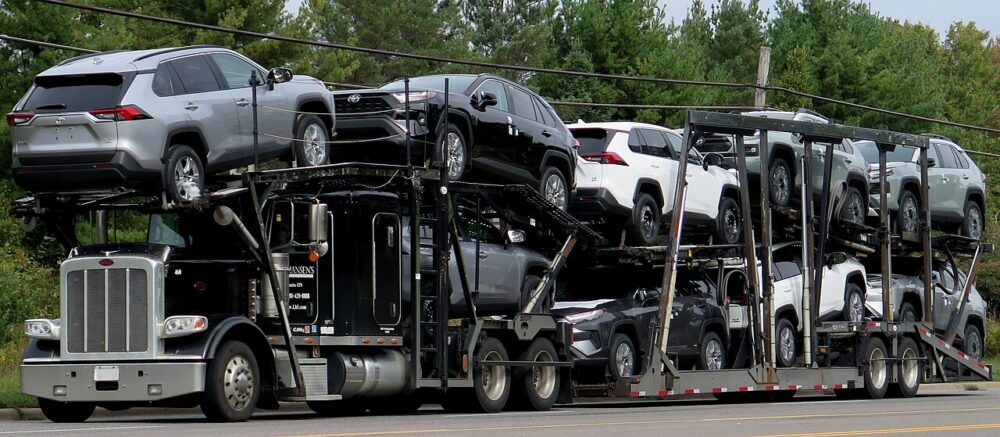
A purpose-built car hauler illustrates the logistics burden behind full-vehicle sales. Photo: Elise240SX, CC BY-SA 4.0.
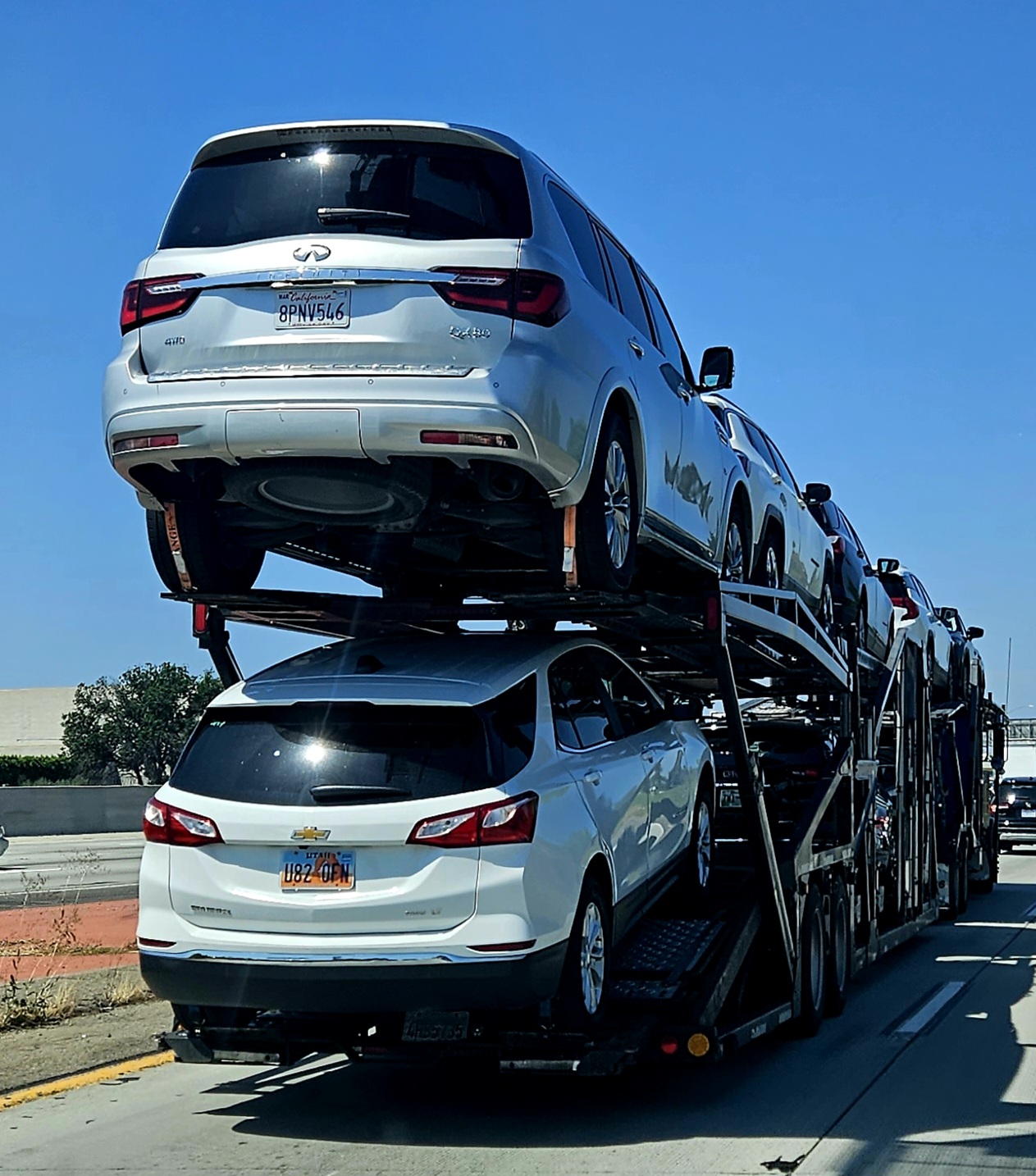
A loaded automobile carrier in transit. Photo: Epolk, CC BY-SA 4.0.
Pricing, MOQs, and Picking the Right Sourcing Channel
Your margin depends on the channel you choose and the type of product.
How channels typically behave
Here’s a simplified comparison of common routes for a car-focused business:
| Channel | Best for | Capital profile | Typical risks (editorial) |
|---|---|---|---|
| Dealer wholesale auctions | Used vehicles in volume | High (bids + transport) | Condition disputes; licensing requirements |
| Online car dealerships | Retail vehicle sales | High per unit | Smaller margins; complex title/financing |
| Fleet providers (e.g. Turo use) | Rental income from multiple cars | High but spread | Platform policy changes; utilization risk |
| Auto transport logistics firms | Moving vehicles you already own | Medium per move | Transit damage; scheduling delays |
| Cross‑border marketplaces | Auto accessories & tools | Low to medium | Variable seller quality; long transit times |
This table is editorial judgment based on how these businesses position themselves, not a guarantee of outcome.
Where online marketplaces, including DHgate, can fit
For auto accessories, detailing tools, and small car-related gear, online B2B marketplaces can be a practical dropshipping source.
DHgate’s own blog positions the platform as an option for starting a dropshipping business with low upfront capital, where you act as the middleman and forward orders to suppliers. For a car-focused shop, that would mean sourcing items like:
- Car wash and detailing brushes
- Car covers and protective accessories
- Blind‑spot mirrors and small add‑on safety items
- Emergency flashlights and multi‑function tools
Around 2026-10-08, DHgate listings included, for example:
- A car wash brush detailing tool for interior, engine, tires, and wheel rims, in the “Bathroom Shower Heads” category, priced roughly between US$12.73 and US$13.06 from sellers such as `ddmyperfect` and `ddmyapr` (example listing).
- A full car cover auto accessory described as a waterproof disposable car body cover, with a price range around US$28.25-36.83 from seller `ddmyhome` (example listing).
- An auto blind‑spot mirror listed as a high convex rear view auxiliary mirror, priced roughly US$15.94-16.78 from seller `ddmyapr` (example listing).
- A multi‑function car flashlight marketed specifically for dropshipping, combining USB‑rechargeable light, compass, power bank, and magnet, in the US$32.67-36.85 range from seller `long07` (example listing).
Prices and availability can change, and none of these listings are endorsements. For each seller, you’d still need to:
- Check how long they’ve been active and what other products they carry in the auto niche.
- Read any existing reviews and look for patterns in complaints.
- Confirm order handling: whether they support single‑unit orders (informal dropshipping) or require a minimum batch size.
For deeper how‑to detail on vetting sellers, you can build on general marketplace checks described in articles like Find wholesale suppliers on DHgate and Choose a DHgate wholesale supplier, then adapt them to car accessories specifically.
A simple cost structure walkthrough
If you focus on auto accessories, your basic math per product looks like:
- Cost of goods (COGS): The per‑unit price you pay the supplier (e.g., US$13 landed cost for a detailing brush).
- Marketing and platform fees: What you spend to acquire the customer (ads, marketplace fees, payment processing).
- Buffer for returns or reships: Even in dropshipping, you’ll occasionally need to replace or refund.
You can then set retail pricing to cover those, plus margin. DHgate’s editorial blog uses generic examples like selling a US$4.99 product at US$19.99 to illustrate the idea that dropshippers need to avoid underpricing; for auto accessories, your own numbers will depend on category norms and brand positioning.
How to choose your mix
For most small US ecommerce businesses, a viable plan is:
- Treat full‑vehicle activity as a separate, more advanced project that may require licensing and professional legal advice.
- Start with dropship-friendly auto accessories using marketplaces or wholesale suppliers, testing demand and supplier reliability with small batches.
- Use specialist firms – auctions, fleets, logistics – only once you have both capital and clear processes for condition, transport, and compliance.
That way, you benefit from car demand without tying your entire business to the riskiest part of the automotive supply chain.