
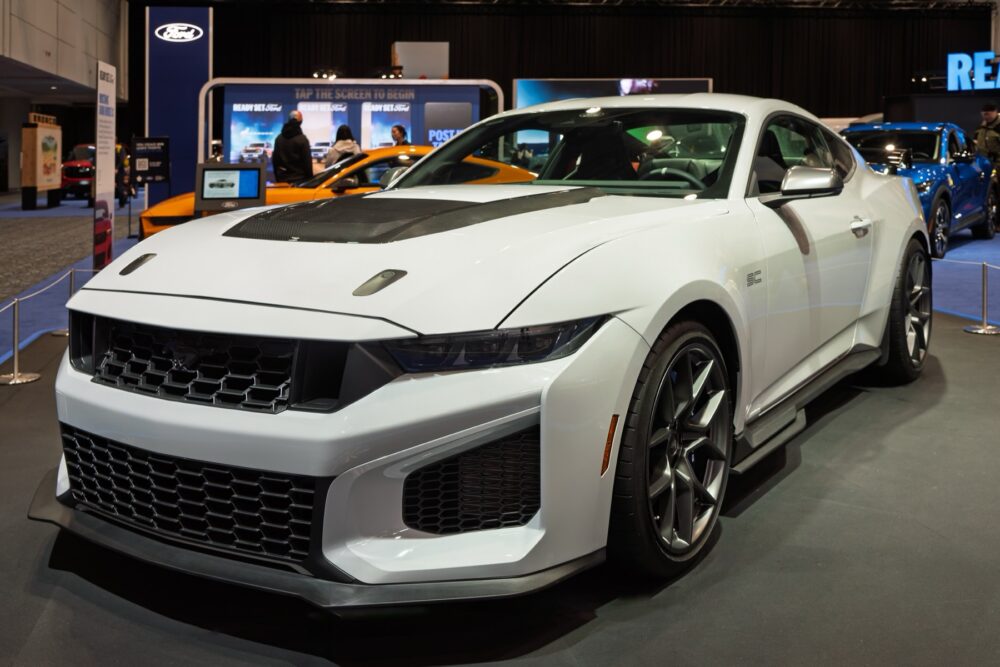
For 2026 Mustang rear-end and differential parts, start with a VIN-based lookup through a Ford dealer or Ford parts catalog. The correct axle ratio and limited-slip unit vary by engine, transmission, trim, and package. Performance retailers can be useful for documented gear sets, differentials, bushings, and suspension parts, but a listing that merely says “Mustang” is not enough to establish 2026 fitment.
What the 2026 Mustang Rear End and Differential Actually Include
On the 2026 Mustang, the “rear end” isn’t just the differential housing. It’s the entire rear axle assembly: differential case, ring and pinion gears, limited-slip mechanism (on equipped trims), axle shafts, bearings, and the mounting hardware that ties into the suspension.
Ford’s official 2026 order guide lists several limited-slip and TORSEN limited-slip rear-axle configurations, depending on the engine, transmission, and package. Confirm the current build by VIN before ordering.
So when a seller describes a “2026 Mustang rear end,” treat that as an incomplete description. You still need the vehicle identification number, engine, transmission, factory axle ratio, differential type, and any relevant package code.
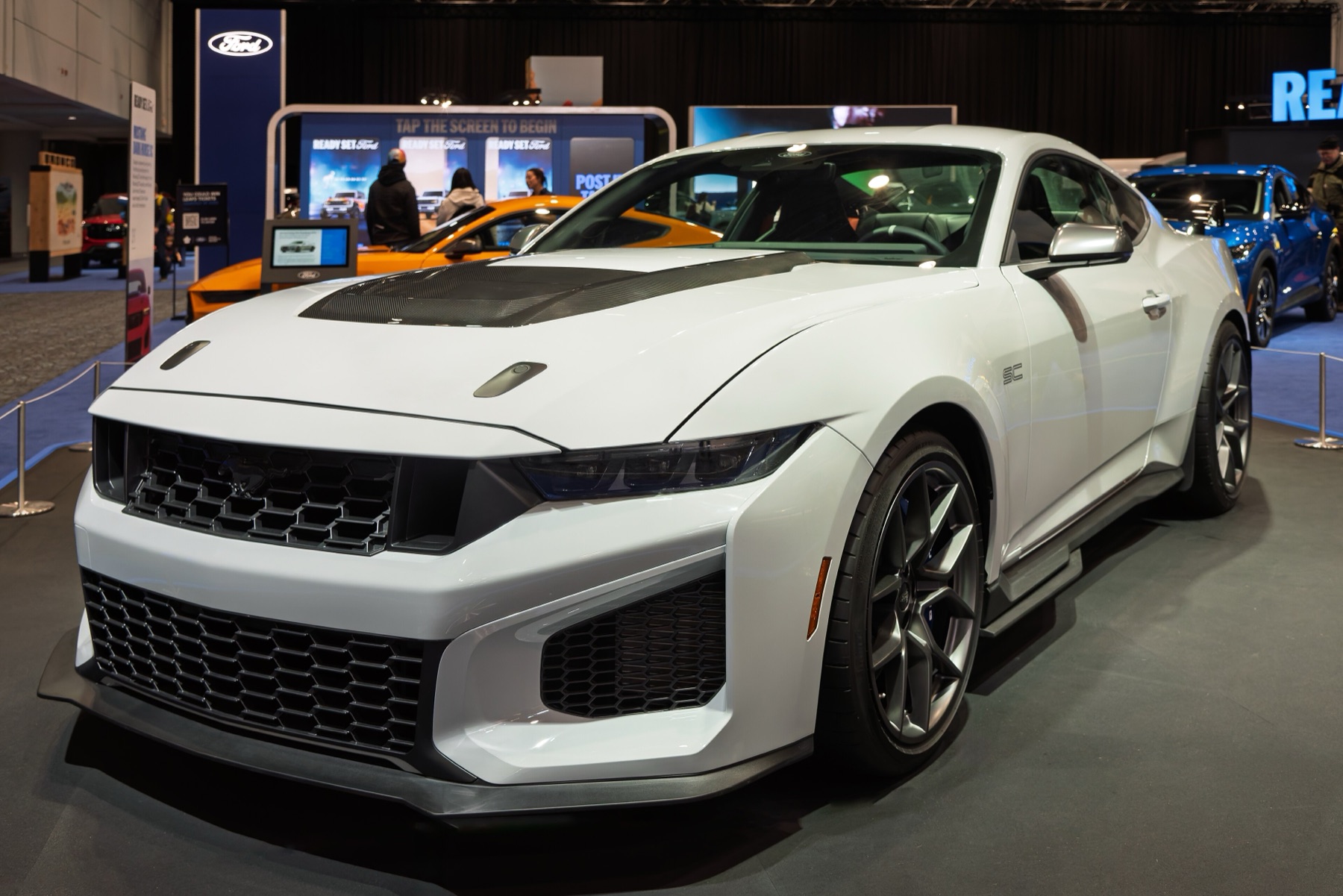
Key Choices: Ratios, Limited-Slip Types, and Use Case Fit
You don’t pick a rear end in isolation; you pick a ratio and LSD type that match how the car is used.
Ford lists multiple rear axle ratios and TORSEN limited-slip options for the 2026 lineup. In broad terms:
- EcoBoost configurations use a limited-slip rear axle, with the installed ratio and optional configuration determined by the build.
- GT and higher-performance configurations can use different limited-slip or TORSEN limited-slip axles, depending on the transmission and package. Do not infer the installed unit from the trim name alone.
Think about your use case:
- Mostly street/highway: Matching the stock ratio for your trim keeps the transmission shift programming and stability systems happy. Swapping to a much shorter ratio can make the car feel busy on the highway and may require tuning.
- Track/autocross: A factory TORSEN configuration can improve torque distribution across the rear axle, but ratio and package compatibility must still match the VIN. Ford Performance lists its Super 8.8 TORSEN differential for specified 2015-2026 Mustang applications and warns that not every racing part is intended for public-road use.
A practical way to decide: start by confirming the exact axle ratio and LSD type your VIN shipped with via a Ford dealer, then decide whether you want to maintain that behavior or deliberately change it.
Here’s a simplified view of how choices line up:
| Typical trim/use case | Driveline layout | LSD type (common) | Ratio tendency |
|---|---|---|---|
| EcoBoost configuration | RWD | Limited-slip | Confirm the installed ratio by VIN |
| GT configuration | RWD | Limited-slip or TORSEN limited-slip | Varies by transmission and package |
| Higher-performance configuration | RWD | TORSEN limited-slip may apply | Varies by transmission and package |
(Configuration summary based on Ford’s official 2026 order guide; exact specs still depend on the specific build and should be confirmed by VIN.)
Where 2026 Mustang Owners Can Realistically Buy Rear-End and Differential Parts
Because the 2026 Mustang is a current model, complete assemblies and component supersessions are easiest to verify through Ford’s catalog. That shapes the safest sourcing sequence.
1. Ford dealers and affiliated online parts catalogs This is the primary channel for factory parts in the US. Dealer parts departments can:
- Look up the rear axle and differential assembly by VIN, including ratio and LSD type.
- Confirm the current service part number and any supersession against the VIN rather than relying on a marketplace title or an owner-forum thread.
Many dealers also run online storefronts that list the 2026 Mustang with specific rear axle and LSD equipment, often calling out limited-slip rear axles as standard on GT/performance trims.Tenvoorde Ford model research These sites are useful to verify fitment and spec, even if you ultimately buy in person.
2. Authorized or specialist online Ford parts retailers Beyond individual dealers, there are national retailers focused on factory Ford components. For a 2026 Mustang rear end, you’ll typically find:
- Individual components: bearings, seals, bushings, differential covers.
- Gear sets that match or change your factory ratio.
- In some cases, complete differentials for performance trims.
These outlets are helpful if you’re rebuilding an existing axle or upgrading gears rather than replacing the whole assembly. They rely on the same Ford catalog data, so you still need your VIN.
3. Performance retailers and tuners Performance shops stocked for 2024-2026 Mustangs tend to focus on suspension and related driveline improvements, not full OEM assemblies. For instance, Function Factory Performance’s 2024-2026 Mustang category emphasizes shocks, struts, and rear suspension components.Function Factory Performance 2024-2026 Mustang suspension That’s representative of the broader market: they help you stiffen the rear, control wheel hop, or improve traction, but they’re not your go‑to for a complete factory rear end.
Performance retailers are a good fit if:
- You’re addressing wheel hop, squat, or handling rather than a failed differential.
- You want upgraded bushings, control arms, or shocks that work with the stock axle.
For a full assembly, these shops usually point you back to Ford parts or to well‑known gear/diff brands.
4. Cross‑border and non‑OEM options For a new‑generation car like the 2026 Mustang, complete rear-end assemblies outside Ford’s network are rare. Third‑party supply is mainly:
- Universal or earlier‑generation Mustang differential components that may not match 2026 geometry or electronic systems.
- Standalone limited-slip units or gear sets from aftermarket brands, intended for experienced installers who can set clearances and verify compatibility.
If you’re a small ecommerce business considering 2026 Mustang rear-end parts, lower-fitment-risk items such as documented bushings, covers, suspension pieces, and compatible gear sets are easier to merchandise than a complete axle assembly. For any core driveline component, record the manufacturer part number, supported ratios, axle-spline count, model years, installation requirements, and road-use limitations.
Quick scenario check: daily driver vs. track use
- Daily driver with light mods: Stay with the factory ratio and differential type unless a qualified installer has confirmed the mechanical and calibration implications. Use the VIN and current Ford catalog data when ordering.
- Track or autocross build: Consider a performance‑package TORSEN axle and matching ratio. Use Ford parts sources for the core assembly, then layer in performance retailer suspension upgrades to support the added traction and load.
OEM vs. aftermarket: one key question
For the 2026 Mustang rear end and differential, ask yourself first: Do I need a VIN-matched service replacement or a documented performance change? For a service replacement, use the Ford catalog and a qualified installer. For a track build, compatible aftermarket gears or differentials may be appropriate, but setup tolerances, calibration, road legality, noise, and drivability become part of the buyer’s responsibility.