
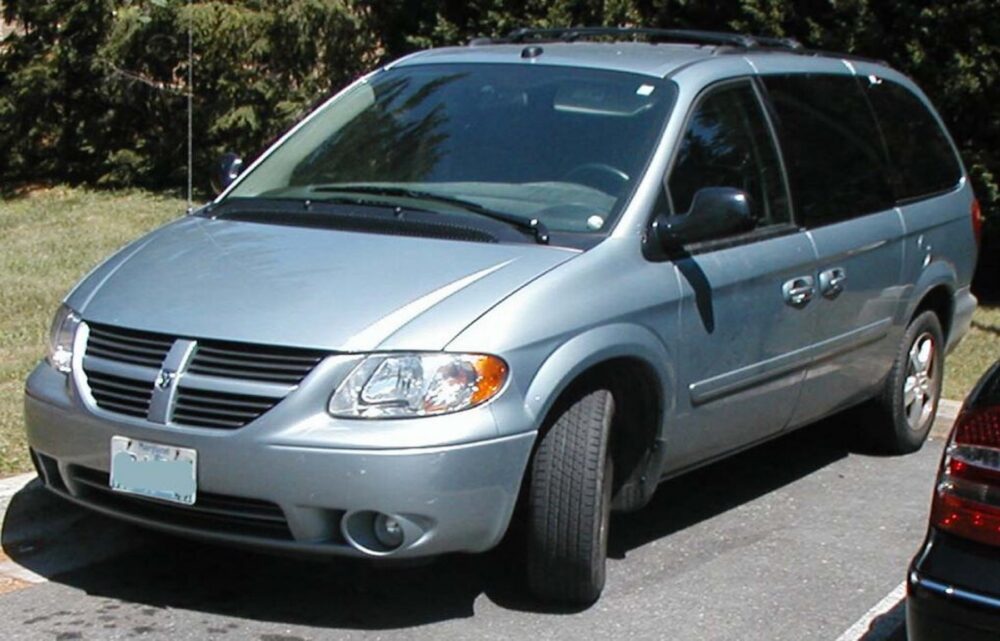
If you need an oil cooler or filter housing for a Dodge Grand Caravan, the practical path is to match the part to your exact model year and engine, decide if you want a genuine Mopar unit or a compatible aftermarket replacement, then buy from a seller who publishes clear fitment data and offers returns. Canadian buyers can usually find both OEM and OE-style coolers through domestic parts retailers or general marketplaces that sell in CAD. The right choice depends less on brand loyalty and more on getting the correct assembly for your engine, avoiding known weak materials, and balancing price against durability.
How the Dodge Grand Caravan Oil System Is Laid Out
The Grand Caravan’s oil system is built around three main components: the engine’s lubrication circuit, the engine oil cooler (on many models), and often a separate transmission cooler. Older Caravans may use simpler external coolers and lines, while later 3.6L vans integrate the cooler and filter housing in one compact unit.
On later Grand Caravan models with the 3.6L Pentastar V6, owners widely report a plastic oil cooler and filter housing assembly that sits under the intake manifold in the engine valley. Because of its location and the material, it’s a common replacement item when drivers see oil leaks, coolant contamination concerns, or repeated gasket failures rather than an official recall part. Access is more involved than on an external cooler, which is one reason many buyers focus on getting a quality replacement rather than planning to redo the job.
Transmission and engine oil coolers for older Grand Caravans are sold as separate units. Retailers like Advance Auto Parts list transmission coolers specifically for a 2002 Dodge Grand Caravan, with fitment framed by year and sometimes by sub-model. That fitment-by-year pattern is typical of oil system parts: you’ll see dedicated listings for 1999 OE transmission coolers or 1996 engine oil coolers marked “not original equipment,” each keyed to a limited set of years and engines.
The usual reasons you’d replace an oil cooler or filter housing are:
- Visible oil leaks around the housing or cooler core
- Evidence of internal cooler failure (oil in coolant or vice versa)
- Cracked plastic housings on 3.6L Pentastar assemblies
- Corroded or damaged external transmission coolers
You don’t replace a cooler as routine maintenance; you do it because something has failed or you’re proactively addressing a known weak point.
OEM vs Compatible Oil Coolers and Filter Housings
From a buyer’s perspective, Grand Caravan oil coolers break into three categories: genuine OEM Mopar parts, OE transmission or engine coolers sold as original equipment, and compatible non-OE units that claim OE-style fit.
For later 3.6L vans, one common choice is the Mopar oil filter housing with integrated cooler. Genuine Mopar housings are sold through brand-oriented sites such as Mopar dealers, and they’re targeted specifically by Grand Caravan model and engine. Canadian buyers will also see OE-style assemblies marketed as “manufactured to OE specification” on marketplaces. For example, a Kessocco engine oil cooler assembly on Amazon.ca is advertised as meeting OEM specs and listed as compatible with several Dodge models, including Grand Caravan years in the mid‑2010s, but it’s not presented as a genuine Mopar-branded part.
On older Grand Caravans, transmission coolers are often sold explicitly as OE or non-OE. A listing of OE transmission coolers for the 1999 Dodge Grand Caravan at Advance Auto Parts differentiates original equipment coolers from aftermarket ones. Likewise, engine oil coolers for a 1996 Dodge Caravan are offered as “not original equipment,” with indicative starting prices and an average range shown for those non-OE units in the retailer’s interface.
For buyers, the meaningful differences across these categories are:
| Part type | Typical material / build | Labeling in listings | Price behavior (indicative) |
|---|---|---|---|
| Genuine OEM Mopar cooler/housing | Plastic housing + cooler core (3.6L) | Branded Mopar, specific OEM part numbers | Usually at the higher end of the range |
| OE transmission/engine cooler | Steel/aluminum, factory-style design | Marked “OE” or “Original Equipment” | Priced above many non-OE alternatives |
| Non-OE compatible cooler | Aluminum or mixed construction | “Not original equipment,” “OE-style” fitment | Often with lower starting prices, ranges |
Genuine Mopar parts emphasize known fit and matching factory specs, which matters if you want to preserve warranty alignment or minimize compatibility risk. OE-labeled coolers from big retailers occupy a similar space, but are sometimes stocked as service equivalents to the exact factory part. Compatible aluminum replacements trade brand assurance for price and, sometimes, improved material in areas where plastic is known to crack. You can’t assume they match OEM reliability, but for a vehicle that’s long out of warranty, many owners accept that trade-off.
Choosing Channels: Where Canadian Buyers Can Source the Right Oil Cooler
From Canada, your main sourcing paths for Grand Caravan oil system parts are:
- Branded or independent online parts retailers
- General marketplaces that sell in CAD
- Local brick-and-mortar parts stores that can special-order OEM or OE-style units
Specialized parts retailers like Advance Auto Parts show how listings are structured: each transmission or engine oil cooler is tied to a specific Caravan year, often with an OE vs non-OE label and a price range. That same pattern appears in Canadian-facing marketplaces. The Kessocco engine oil cooler on Amazon.ca is sold in CAD, marketed as manufactured to OEM specification, and targeted at North American Dodge models including Grand Caravan. A transmission oil cooler listing from Pacific Best Inc. on Walmart Canada is priced in CAD and mentions fitment for Dodge vehicles; it’s an example of how Grand Caravan‑compatible coolers are sold with local shipping options.
A simple way to vet listings when you’re buying cross-border or within Canada:
- Lock in your fitment data. Confirm your van’s model year, engine (e.g., 3.6L Pentastar), and any relevant trim information. Search using “Dodge Grand Caravan [year] engine oil cooler” or “oil filter housing” plus engine size.
- Check labeling carefully. Decide if you’re looking specifically for “Mopar” or are open to “manufactured to OE spec” or “not original equipment.” Treat OE-style marketing as a fitment claim, not a guarantee of OEM origin.
- Compare material and design. For 3.6L Pentastar assemblies, consider whether you want the stock-style plastic housing or an aluminum compatible unit. For external transmission coolers, look at core design and whether the mounting style matches your year.
- Read price ranges as signals, not verdicts. Where retailers show starting and average prices for non-OE coolers, such as the 1996 Caravan engine oil cooler range, use those numbers to gauge whether a listing is unusually cheap (which may warrant extra scrutiny) or roughly in line with typical aftermarket pricing.
- Confirm return and warranty terms before importing. When you’re ordering from a marketplace that ships into Canada, returns on heavy parts can be costly. Favor listings where the seller clearly states return windows and who pays return shipping.
For small ecommerce businesses planning to stock Grand Caravan oil system parts, these same fitment and labeling cues are your foundation. Build your catalog around specific year/engine applications, distinguish OEM from OE-style from non-OE, and be explicit about material and location (e.g., “3.6L Pentastar valley-mounted oil cooler/filter housing”). That clarity reduces misorders and returns on both sides of the border.