
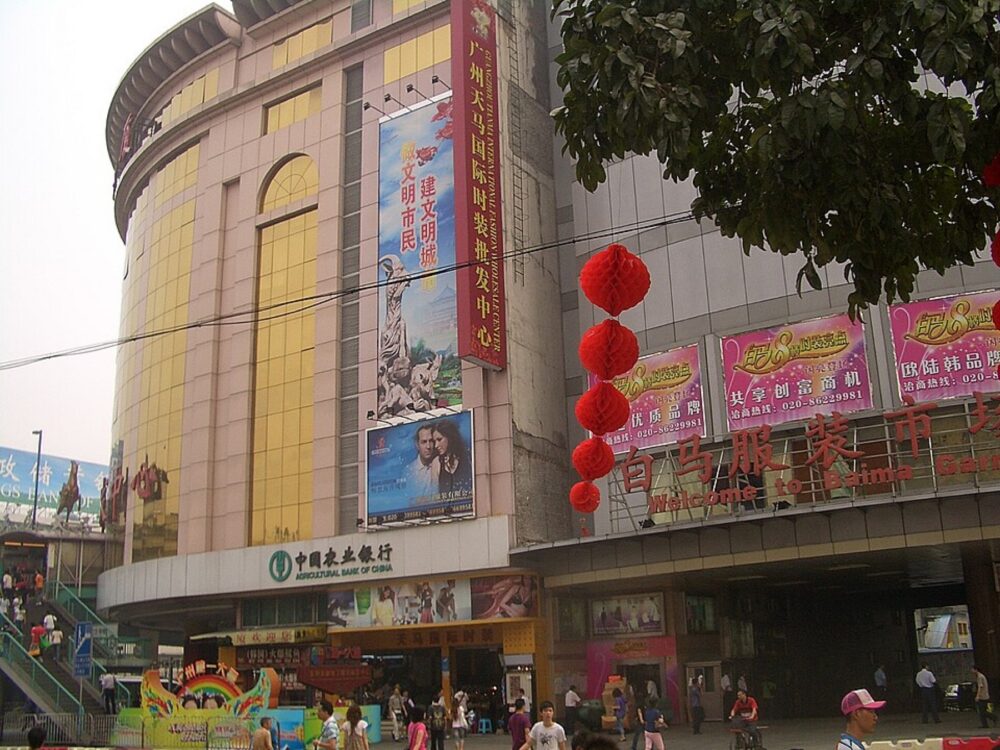
DHgate does give you online access to clothing suppliers tied to Guangzhou and other Chinese manufacturing hubs, but it’s not a digital clone of the city’s wholesale markets. It’s a marketplace layer sitting on top of thousands of individual sellers. For a US boutique or small ecommerce brand, that can be a practical way to test Guangzhou-made fashion in low volumes. The catch: how well it works depends entirely on which sellers you pick, how carefully you trial orders, and when you recognize that your needs have outgrown DHgate and belong on a different platform or an offline sourcing route.
Online Routes into Guangzhou’s Wholesale Clothing Market
If you’re trying to buy “Guangzhou clothing” wholesale from the US, you’re really choosing among three kinds of online routes:
- Wholesale marketplaces. These are platforms where manufacturers and wholesalers list bulk offers. You negotiate or buy in multi-unit lots. DHgate, Alibaba, and Made-in-China all fall into this bucket.
- Retail marketplaces with some bulk options. Sites like AliExpress or Amazon sometimes offer multi-pack fashion, but they’re built around single-unit retail orders, not proper B2B wholesale.
- Supplier directories or sourcing services. These are more like catalogs or agent networks. You don’t transact on-platform; you’re introduced to factories or trading companies that may sit in Guangzhou.
DHgate positions itself in its own editorial content as a China-based online wholesale marketplace that connects global buyers with Chinese manufacturers and wholesalers in many categories, including clothing. Its clothing-focused articles highlight how B2B platforms let you access the booming Chinese apparel sector and hundreds of manufacturers without flying to China.
Independent reviews back up that picture with an important nuance: DHgate is a real marketplace, but it doesn’t make or stock goods itself. SaleHoo’s longform review stresses that legitimacy and safety depend heavily on each individual seller rather than the DHgate brand as a whole (SaleHoo review). That distinction matters if you’re trying to replicate the feel of the Guangzhou clothing markets online—you’re not dealing with “DHgate” so much as with many separate suppliers who happen to use DHgate.
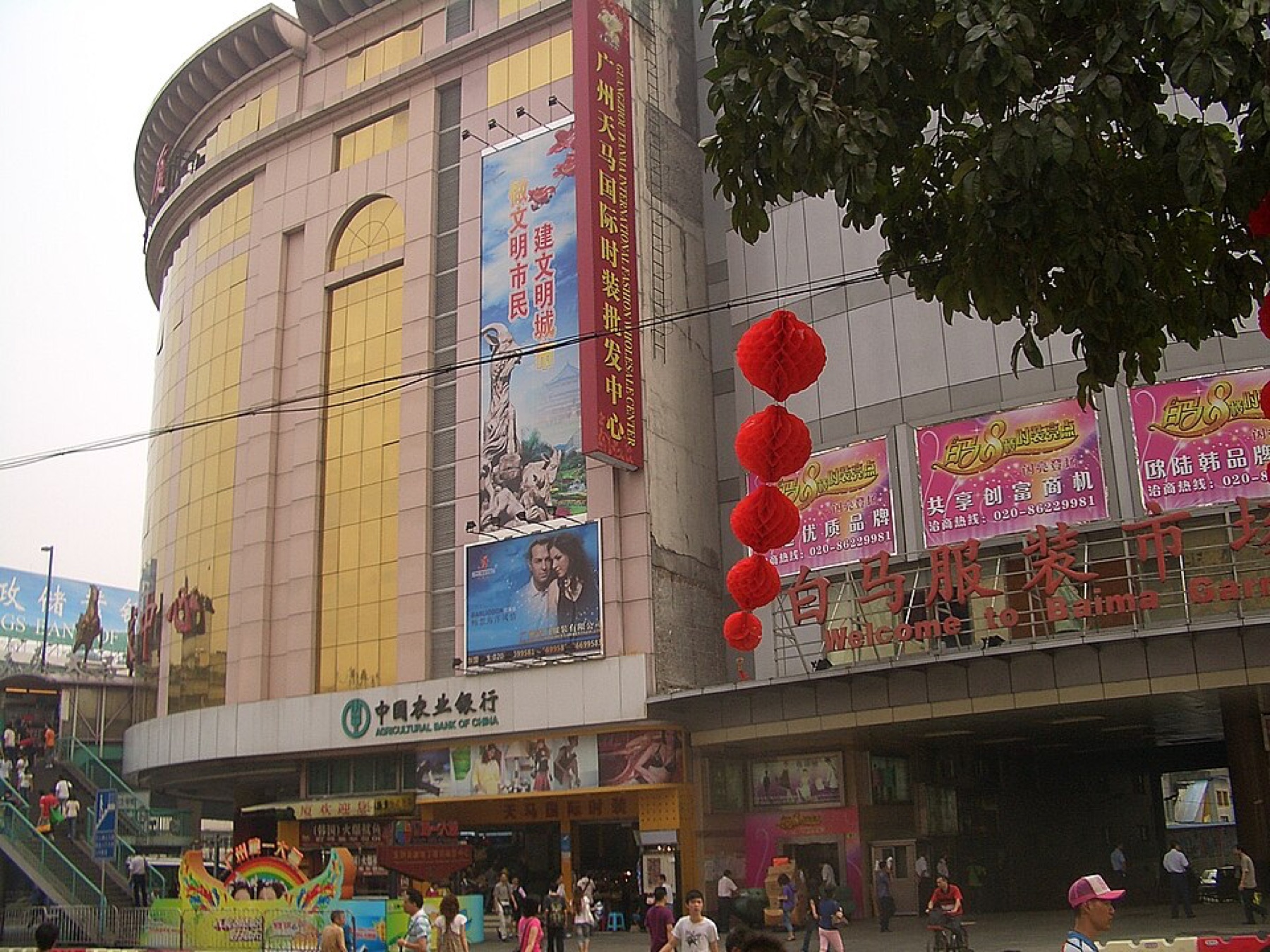
From a US buyer’s perspective, the key question isn’t “Is there a single site that equals Guangzhou’s clothing market?” but “Which mix of platforms and suppliers gives me acceptable risk, MOQs, and variety?” DHgate is one candidate in that mix.
How DHgate Works for Guangzhou-Linked Wholesale Clothing
On DHgate, Guangzhou isn’t a dedicated section; it shows up at the seller and listing level. You’ll see manufacturers and trading companies reference Guangzhou in their product titles or store info when they want to signal ties to that hub.
DHgate’s own clothing guides describe the platform as a major source of wholesale apparel, with direct links to suppliers and suitability for bulk purchasing by small businesses. Its broader sourcing content notes that minimum order quantities (MOQs) tend to be lower than on some B2B competitors, which is one reason many small retailers start there instead of jumping straight into container-scale orders.
DHgate listing snapshot: Guangzhou-related clothing offers (2026-10-04)
To see what “Guangzhou clothing and wholesale market” looks like on DHgate in practice, here are a few live listing examples checked on 2026-10-04. Prices and availability can change at any time—treat this as a snapshot, not a prediction.
| Listing (linked) | Category | Noted origin/positioning | Price range (USD) | Seller ID |
|---|---|---|---|---|
| High-end Women’s Clothing Designer Polo Shirt Hoodie Guangzhou | Women’s Blouses & Shirts | Title explicitly mentions “Guangzhou” and “designer” | 67.06-80.58 | `wanqiang002` |
| Custom High-quality clothing manufacturer, boutique wholesale, new summer fashion women’s shirts | Women’s T-Shirt | Generic manufacturer positioning; typical of Guangzhou-linked traders | 7.34-7.94 | `chenyipavilion` |
| High-quality custom t-shirt wholesale | Men’s T-Shirts | Emphasizes wholesale custom t-shirts, fits small-brand sourcing | 5.03 | `cnqmfs` |
| Chinese Cotton Womens Clothing High-End Tang Style Jacket | Women’s Jackets | “Chinese cotton” and “high-end Tang style” niche fashion | 108.55-126.32 | `tclothes8` |
These listings illustrate a few practical points:
- Positioning varies wildly. Some play up “Guangzhou” in the title; others emphasize “high-end,” “designer,” or “custom manufacturer.” None of that language is verified by DHgate—it’s seller marketing that you must scrutinize.
- Price bands range from mass-market to premium. A wholesale men’s t-shirt listing around $5 and a “high-end” women’s jacket well over $100 can coexist. That lets a US reseller test different price tiers, but you can’t infer quality from price alone.
- Suppliers are individual accounts. Each listing belongs to a different seller ID with its own track record (years active, reviews, repeat buyers). Your real job on DHgate is to pick which of those accounts merit a trial, not to trust the marketplace branding.
For a deeper backbone on how DHgate works overall—registration, general browsing, and payment flows—it’s worth reading a broader explainer like What DHgate is and how the marketplace works. Here we’ll stay focused on Guangzhou-linked clothing.
Practical steps to locate and evaluate Guangzhou clothing suppliers
If you’re a US buyer looking for Guangzhou-area apparel via DHgate, a focused process helps:
- Search with specific terms. Use queries like “Guangzhou clothing manufacturer,” “Guangzhou women’s fashion,” or “Guangzhou garment factory” in DHgate’s search bar. Many sellers mention the city directly in titles or store descriptions to attract buyers.
- Narrow by category and style. Filter into categories like Women’s Blouses & Shirts, Men’s T-Shirts, Hoodies & Sweatshirts, or home clothing, and add style keywords (“streetwear,” “Tang suit,” “boho”) to avoid generic commodity results.
- Scan price ranges and MOQ hints. DHgate doesn’t always show MOQ in the search grid, but you can infer some behavior from price bands and bulk-pack wording. The clothing snapshot above shows ranges from about $5 to $120+ per piece; your job is to map those bands to your retail pricing and risk tolerance.
- Read store-level information. Click the seller name and review their full catalog. Many Guangzhou-linked traders sell coordinated lines—tops, bottoms, outerwear—that matter if you want a coherent brand look.
- Use trial orders as your real vetting tool. Independent reviewers like SaleHoo stress that problems and wins both show up at the seller level, not the platform level. Plan to test a small order with clear expectations, then decide whether that supplier merits a larger run.
If you’d like context on how DHgate compares structurally to AliExpress, Alibaba and Temu, see Compare DHgate with AliExpress, Alibaba and Temu. That can help you understand why DHgate often feels more accessible for small orders and more limited for complex clothing programs.
Who DHgate Suits for Guangzhou Sourcing—and When to Choose Another Path
DHgate’s own editorial content highlights lower MOQs and cross-border payment flexibility as benefits for small and medium-sized businesses importing from China. In clothing specifically, it promotes variety across streetwear, boho, athleisure, formalwear, and niche styles, often tied to Chinese manufacturing hubs.
For Guangzhou-oriented sourcing, that tends to suit three kinds of US buyers:
- Small boutiques testing Asian or Chinese-inspired fashion. If you run a 1-3 person shop or online store and want to try a Tang-style jacket, Chinese-pattern hoodies, or “designer” Guangzhou tops in runs of dozens rather than hundreds, DHgate’s seller mix is workable. You accept that you’ll need to trial multiple suppliers.
- Print-on-demand or micro-brand founders exploring OEM. Some listings and sellers on DHgate highlight OEM or custom capabilities (like the “Custom High-quality clothing manufacturer” shirt seller). For a brand experimenting with its first custom pieces, that can be a gentle entry point before committing to a larger factory through Alibaba or Made-in-China.
- Resellers doing opportunistic buys. If your business model is flipping interesting garments rather than building a long-term brand, DHgate’s breadth of fashion styles and price points can be attractive, as long as you stay disciplined about seller vetting.
By contrast, DHgate is often a weaker fit in these scenarios:
- Large, repeat seasonal programs. If you need strict control over fabric, compliance, and capacity for thousands of units per style, platforms geared toward larger OEM programs (e.g., Alibaba or Made-in-China) or a dedicated sourcing agent are usually better. Those routes make it easier to negotiate factory audits and long-term terms.
- Heavily customized collections. Deep customization—new patterns, tailored fits, complex trims—typically needs a more direct factory relationship than a generic DHgate listing. Many serious fashion brands visit Guangzhou or hire local agents to manage this.
- Highly risk-averse operations. Because reviews and experiences vary from seller to seller, risk-averse businesses that can’t absorb misfires often prefer vetted supplier lists, sourcing companies, or in-person trade shows to standard marketplace browsing.
If you’re still deciding which type of platform matches your risk and order size, the broader guide Compare online marketplaces and shopping platforms is useful context.
The practical way to use DHgate for Guangzhou clothing is to treat it as a testing ground: locate a handful of promising Guangzhou-linked sellers, run structured trial orders, and then either scale with the best of them or graduate to more direct, larger-scale platforms and relationships once you know exactly what you want.