
Most US buyers get the most reliable 5205RS supply by mixing channels: use established brand or industrial distributors for critical applications, and leverage vetted cross‑border manufacturers or marketplaces for bulk or price‑sensitive orders. Whichever route you choose, you need to lock down the exact bearing spec (5205RS is commonly supplied as a double‑row angular contact, rubber‑sealed ball bearing), verify certifications, and inspect samples before committing to larger volumes.
How 5205RS Bearings Are Supplied Globally
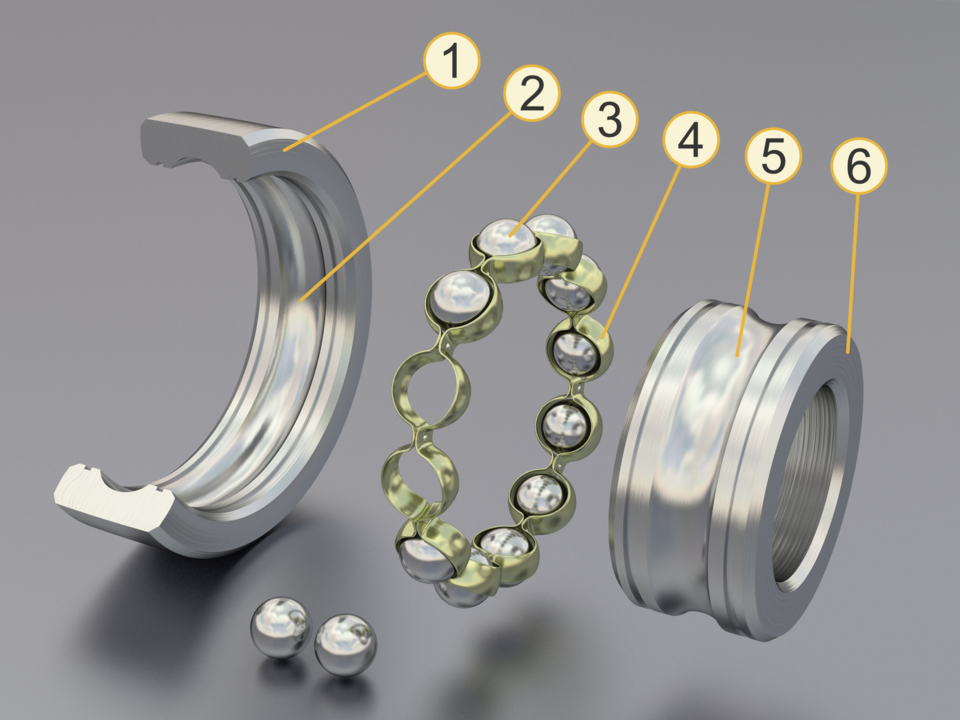
5205RS is a fairly standard catalog part: a double‑row angular contact ball bearing with rubber seals (the “RS”), typically used where you need to support radial and moderate axial loads in both directions in a compact space. You’ll see it in machinery, agricultural implements, and various industrial assemblies as an OEM component and a common replacement part.
Globally, the bearing market is dominated by long‑established manufacturers with large catalogs and engineering support, such as SKF, Timken, NSK, NTN, and Schaeffler, along with major Chinese bearing brands and many mid‑tier producers.Top bearing manufacturer overview content describes these companies as leading global players, but doesn’t tie them to 5205RS specifically. A single 5205RS reference can be produced by multiple manufacturers to the same dimensional standard but with different tolerances, materials, and quality systems. That’s why buyers and mechanics on technical forums often talk about preferring familiar brands like SKF, FAG, or Timken: they’re relying on consistent performance and trusted supply rather than just the part number.Forum discussion of brand preferences illustrates this.
On the distribution side, bearings typically reach US buyers through:
- Industrial distributors and power‑transmission houses that carry multiple brands and can cross‑reference OEM part numbers. Technical communities mention these as common bearing sources for US buyers.Example discussion of bearing supply sources
- Local bearing shops that stock common sizes (including double‑row angular contact types) and can special‑order others.
- Specialized importers and resellers who focus on mid‑tier or generic bearings from Asia.
- Online marketplaces and factory‑direct exporters based largely in China and other Asian manufacturing hubs.
For a commodity part like 5205RS, that means you’re not limited to a single brand or channel. Your challenge is choosing a supplier whose quality, documentation, and support match how critical the bearing is in your application.
Choosing and Vetting 5205RS Bearing Suppliers
The same 5205RS label can hide huge differences in life, noise, and failure risk. A good supplier search starts with a short, specific checklist tailored to this bearing type.
5205RS supplier vetting checklist
Focus your initial screening on:
- Exact spec match: Confirm 5205RS dimensions and type (double‑row angular contact, sealed). Ask for a datasheet showing bore/OD/width, internal design, and seal type.
- Brand and origin transparency: Is the bearing branded (e.g., a known global or Chinese manufacturer) or generic? Who actually makes it, and where?
- Quality system evidence: Request information on ISO certification, material grades, heat treatment, and any in‑house testing the factory performs.
- Application guidance: A credible supplier should be able to discuss whether their 5205RS is suitable for your load, speed, and environment, or suggest a higher spec.
- Reputation and track record: Look for repeat buyers, references, or credible third‑party reviews, especially for cross‑border suppliers.
You can make these criteria practical by how you communicate.
How to verify a cross‑border 5205RS source
For overseas factories or marketplace sellers, treat the first contact as a mini audit:
1. Request detailed technical documentation
Ask for a spec sheet and drawing for their 5205RS. Compare dimensions and tolerances to what your machine or OEM manual expects. If the supplier can’t provide basic drawings, that’s a warning sign.
2. Evaluate samples under real conditions
Request batch‑traceable samples before confirming a production run. Mount them in a test fixture or non‑critical equipment to check:
- Running noise and vibration
- Temperature rise under load
- Early wear, seal leakage, or grease breakdown
You’re not trying to replicate full laboratory testing here—just enough comparison to weed out obvious quality problems.
3. Check quality, reliability, and support
Editorial guidance on technical components from cross‑border suppliers emphasizes quality and reliability, technical support, and supplier reputation as central selection criteria.Supplier‑selection commentary makes this point using magnetic beads as an example, but the logic applies to bearings too:
- Does the supplier explain their materials and testing, or just send a price list?
- Can they answer questions about load, speed, and environment for 5205RS bearings?
- Are they responsive when you ask for clarifications or corrective actions?
4. Assess supplier reputation and focus
Look at how long the company has been active and whether they specialize in bearings. Factors to check include:
- A catalog that consistently focuses on bearings or power‑transmission components
- References from other buyers (even informal forum mentions)
- Reasonable sample turnaround times and clear packaging/markings
For US‑based distributors and bearing houses, vetting is often simpler: they usually carry multiple brands and can help you pick between a premium 5205RS and a mid‑tier alternative, but you should still ask for brand, origin, and any available application guidance rather than buying only on price.
Order Sizes, Pricing, and Best Sourcing Channels for 5205RS
The best channel for 5205RS depends on how many you need, how critical the application is, and how much risk you’re willing to manage. The table below compares common routes in practical terms.
| Sourcing channel | Best for order size & use case | Typical advantages (editorial judgment) | Key trade‑offs |
|---|---|---|---|
| Local industrial distributor / bearing shop | Small to medium orders; maintenance and repair | Brand options, quick availability, local advice | Higher unit price vs factory‑direct; limited discount leverage |
| US importer / specialist reseller | Medium to larger recurring orders | Access to mid‑tier/generic bearings; some stock in the US | Quality varies by source; tech support may be limited |
| Direct Chinese manufacturer | Larger, planned orders with predictable demand | Lowest unit cost potential; spec customization is sometimes possible | Requires deeper vetting; longer lead times; logistics complexity |
| Online B2B marketplace (e.g., DHgate) | Trial runs, varied brands, and small to moderate wholesale lots | Wide supplier choice; buyer‑controlled pre‑purchase messaging with individual sellers | Product quality depends on each seller; due diligence remains the buyer’s responsibility |
Local industrial distributors and power‑transmission suppliers are widely mentioned in technical communities as a go‑to bearing source for US buyers.Example of buyers using local distributors They’re often the safest choice for safety‑critical or warranty‑sensitive uses: you can get recognized brands, ask questions, and avoid the risk of mis‑spec’d or counterfeit product.
By contrast, if you’re building inventory for resale or for non‑critical machinery, direct imports or marketplaces can make sense. Global online B2B marketplaces connect buyers with wholesale parts suppliers in Asia and allow pre‑purchase communication between buyers and individual suppliers.Marketplace overview DHgate is one such marketplace; Chinese suppliers list a wide range of goods there, including bearings and related components. Because marketplace content and seller behavior can vary, you still need to research each supplier, review their catalog, and verify certifications and technical fit for 5205RS bearings.
Planning orders around maintenance and replacement
For 5205RS bearings in high‑load machinery, you’ll often replace based on condition (noise, heat, play) rather than a fixed calendar, but it’s still smart to align sourcing with maintenance cycles. Editorial guidance on ball bearings stresses that regular cleaning, lubrication, and inspection are important to extend life and avoid unexpected failures.General bearing maintenance advice
In practice, that means:
- Keeping a buffer stock of known‑good 5205RS bearings from a trusted channel for urgent repairs.
- Using cross‑border or lower‑cost suppliers for replenishing non‑urgent inventory, once their samples have passed your checks.
Example: small US ecommerce buyer
Imagine you run a small online store selling replacement parts for compact farm equipment and you want to stock 5205RS bearings:
- For initial listings and early orders (say a few dozen units), you might source from a US distributor, accepting higher cost but minimizing quality risk while you learn your customers’ expectations.
- Once you see stable demand and understand which machines and applications your buyers are using, you could engage a Chinese manufacturer or carefully chosen marketplace supplier for bulk replenishment, using samples and clear specs to ensure their 5205RS matches what your customers need.
In other words: use brand‑backed, local channels to cover critical uptime and early customer trust, and only expand into cross‑border sourcing for 5205RS once you’ve validated both the product and the supplier.