
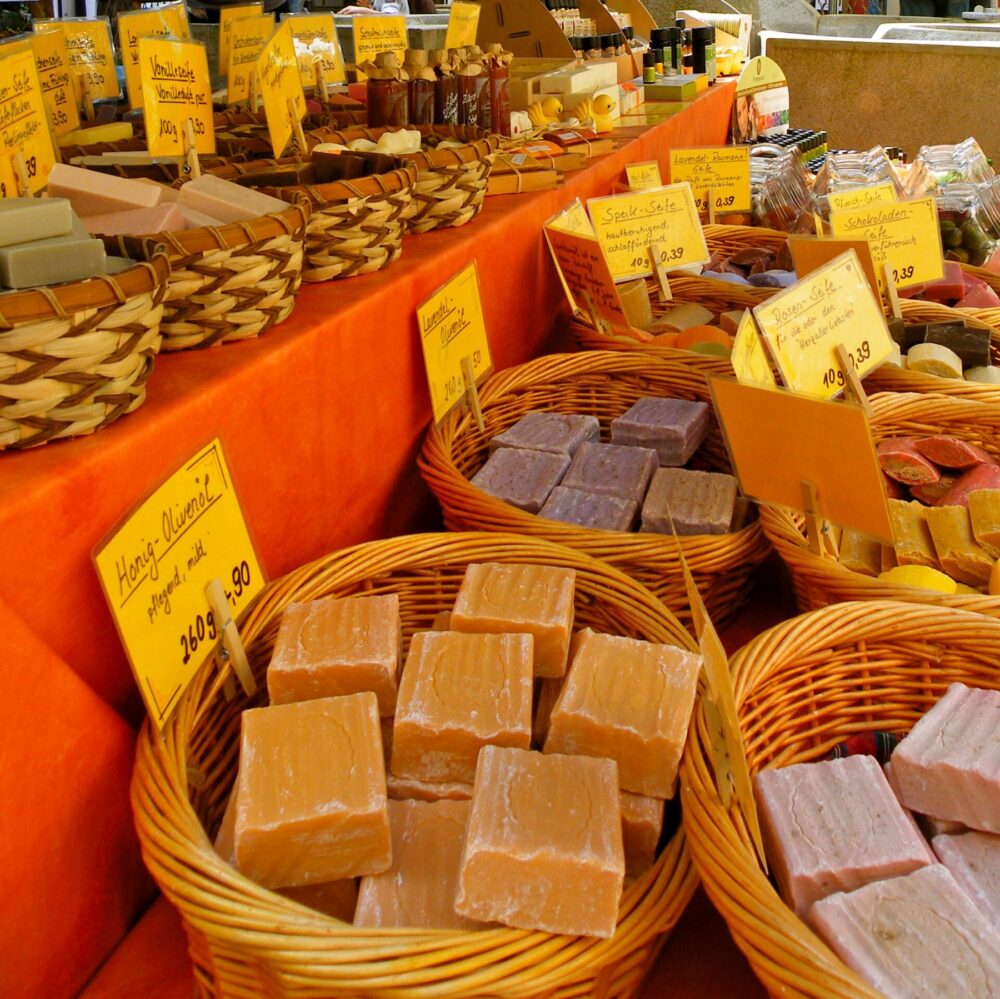
Bulk soap is cheapest when you stop looking only at the per-bar quote and start tracking your full landed cost: product price, freight, import charges (if any), packaging, and storage. The best-value channel then depends on what you’re actually buying (loaves, finished bars, bases, or liquid hand soap), how much customization you need, and how fast you turn inventory. For a lot of US small ecommerce brands, that ends up being domestic wholesale loaves or bars; cross-border marketplaces can make sense only when you’ve done the math and nailed down your requirements.
Below is a budget-first look at how the bulk and wholesale soap market works, so you can make those numbers real.
How Bulk and Wholesale Soap Pricing Really Breaks Down
Wholesale soap is simply soap sold at a discount to another business that will resell it at retail price. As explained by Modern Soapmaking, that discount has to leave room for both the maker and the retailer to earn a margin, which is why understanding the cost structure matters.
For US buyers, think in four buckets:
- Product cost – what you’re actually buying
- Soap loaves: Large blocks (often 2-5 lb) that you cut into bars yourself. US manufacturers like The Soap Guy and similar operations sell loaves and bulk bars direct to business customers. Loaves usually have a lower per-bar product cost but add labor and cutting time on your side.
- Finished bars: Pre-cut, often beveled and labeled. You’re paying for the maker’s extra labor, so unit pricing is higher, but you save time and avoid cutting equipment.
- Bulk hand soap and body wash: Gallons or larger containers for decanting into dispensers. Institutional buyers and retailers often source these through distributors such as Supermarket Distributors of America, which carry multiple brands at wholesale.
- Bases (melt-and-pour or liquid bases): You buy the base and add scent/color yourself. Unit cost is lower than finished bars but you take on more production and compliance work.
- Freight and shipping
Soap is heavy and bulky. A case of loaves or multiple gallons of hand soap quickly shifts you from cheap parcel shipping into higher freight brackets. Domestic bulk buyers often find that manufacturer-direct pallets are cheaper per unit but require storage space and cash up front.
- Import, customs, and brokerage
If you source outside the US, you need to factor in customs duties, brokerage fees, and local taxes on top of freight. These don’t show up on the product page, but they can erase the apparent price advantage of a low overseas unit quote. For detailed planning on this piece, you can use DHgateWiki’s guide on customs, tariffs and import fees.
- Operational costs and fees
Payment processing fees, packaging, labeling, and your own storage costs all chip away at margin. Bulk buyers highlighted by DeShawn Marie Soap note that buying in bulk reduces the frequency of orders and packaging waste, which can save both money and time, but you do tie up more cash in inventory.
Why Prices Jump Around: MOQ, Customization and Seasonality
Two suppliers can show you similar-looking bars yet quote you very different prices. That’s usually driven by:
1. Minimum order quantity (MOQ)
Most wholesale soap makers need a minimum to make a batch worthwhile. A low MOQ (say, a handful of loaves) is friendlier for test orders but carries a higher per-unit price. Higher MOQs push your cost per bar down but increase your cash-flow risk and storage needs.
For a small ecommerce shop, it often makes sense to:
- Start near the listed MOQ with core scents that you know will turn quickly.
- Only move up to larger MOQs once you’ve proven sell-through on that formula.
2. Customization and private label
Modern wholesale practice, as discussed by Modern Soapmaking, distinguishes selling a maker’s existing line wholesale from private label where your brand is printed on the product.
Budget impact:
- Maker’s standard line, bulk loaves: lowest cost; you handle cutting and branding.
- Private-label finished bars: higher unit price due to custom fragrance runs, custom colors, and branded packaging.
- Full custom formulas: usually the most expensive and may have higher MOQs.
If you’re early-stage, using an existing base formula with custom labels (many US manufacturers offer this) keeps your upfront spend far lower than developing a proprietary formula.
3. Fragrance variety and line complexity
Every new scent you request can mean a separate production run. Suppliers often quote sharper prices if you keep your order to just a few fragrances rather than spreading the same order quantity across many.
Tradeoff: a tight scent lineup lowers cost and simplifies inventory but gives you less merchandising variety.
4. Packaging, storage, and seasonality
Bulk buyers like those profiled by DeShawn Marie Soap point out that larger, less frequently shipped orders reduce packaging waste and the admin effort of reordering. That’s a real cost advantage.
However:
- Packaging level (naked bars vs boxed/gift-ready) changes both product cost and shipping weight.
- Hot or humid climates require better storage; if your warehouse isn’t climate-controlled, very large bulk buys can increase spoilage or aesthetic issues.
- Seasonality matters: holiday-themed soaps or summer scents often have short selling windows, so high MOQs can leave you with dead stock.
Picking the Right Channel and Cutting Landed Cost
You have four main channel types for bulk and wholesale soap. Each has distinct cost behavior.
Main wholesale channels for US buyers
| Channel type | Typical offerings | Who it suits best | Cost pattern (editorial judgment) |
|---|---|---|---|
| US manufacturer-direct | Loaves, bulk bars, private label; often many fragrances (e.g., The Soap Guy and similar makers) | Small brands wanting a maker relationship and flexibility | Strong per-unit value, but you manage cutting, storage, and freight from the factory |
| Wholesale distributor | Multi-brand bar soap, body wash, hand soap (e.g., Supermarket Distributors of America) | Retailers and institutions needing mainstream brands | Higher per-unit than generic loaves, but simpler logistics and consolidated ordering |
| Domestic wholesale marketplace | Online catalogs of various suppliers (e.g., Contarmarket’s soap wholesale section) | Small retailers wanting bulk deals from multiple brands with less legwork | Mid-range pricing with frequent deals; you still need to compare sellers on each listing |
| Cross-border marketplace | Overseas sellers of soap-related products and sometimes soaps | Buyers chasing very low ex-factory prices or niche products, willing to manage import logistics | Apparent unit prices can be low, but freight, customs, and risk can increase landed cost |
Domestic manufacturer-direct and marketplace options tend to be the sweet spot for small US brands buying loaves or finished bars. Distributors make sense when you want recognizable national brands or need bulk liquid hand soap for facilities.
Where cross-border platforms and DHgate fit
Global marketplaces can be useful when you’re sourcing soap-adjacent products (dispensers, accessories) or certain cleaning products. DHgate’s own editorial blog describes DHgate as a global marketplace where buyers can source dish soaps and related cleaning products from international sellers.
For a US buyer, cross-border sourcing from platforms like DHgate is usually best reserved for:
- Accessory items (dispensers, holders, packaging) that don’t require you to navigate cosmetic regulations.
- Specific cleaning products where you’ve verified ingredients, labeling, and import classification.
Before using any cross-border marketplace for soap or soap-related goods, tighten your budget view by:
- Estimating duties and import fees for your HS codes using resources like our customs guide: Understand customs, tariffs and import fees.
- Comparing the final landed cost with domestic options.
- Checking listing-level details (minimum order quantity, packaging, and stated ingredients) rather than assuming they match US norms.
If you’re weighing DHgate against other marketplaces more broadly, the comparison article on DHgate vs AliExpress, Alibaba and Temu can help you position it among your options.
Practical Ways to Lower Your Bulk Soap Budget
Once you’ve picked a channel, these moves help cut real dollars without undermining quality.
1. Choose the right product form for your workflow If you have the space and tools to cut and cure, bulk loaves from a US manufacturer are often more cost-effective than finished bars because you aren’t paying for cutting and bar-by-bar packaging. If you’re time-poor or selling online in small volumes, finished bars might actually be cheaper overall once you factor in your labor.
2. Simplify your scent and design lineup Concentrate your first wholesale orders on 2-3 core fragrances and one bar style. Fewer variants generally mean better pricing and lower inventory risk. Introduce seasonal or experimental scents in smaller, higher-priced runs once your core SKUs are paying the bills.
3. Align order size with storage and cash flow Bulk purchases reduce ordering frequency and packaging waste, as highlighted by DeShawn Marie Soap, but only help your budget if you can store product properly and sell it within its aesthetic shelf life. Map out your realistic monthly sales and order 1-3 months of stock rather than a full year’s worth.
4. Negotiate levers that matter (not just unit price) When talking to manufacturers or marketplace suppliers, focus on levers like:
- MOQ flexibility for test runs.
- Including basic private-label printing once you commit to a certain volume.
- Packaging choices that keep freight weight down (e.g., naked or minimally boxed bars for online sales).
You don’t need a huge business to ask; small adjustments here often move your effective cost more than a tiny discount on the per-bar quote.
5. Keep cross-border sourcing scoped If you do experiment with cross-border platforms, use them for categories where regulatory risk is lower or clearly understood, and compare landed cost carefully. For bulk soap itself, many US small brands find that domestic manufacturers and marketplaces deliver more predictable value once shipping and compliance are factored in.
If you eventually decide that DHgate is part of your mix, DHgateWiki’s guide to finding wholesale suppliers on DHgate focuses specifically on how to evaluate individual sellers, which is the level where your budget and risk are actually decided.