
For a U.S. seller building inventory for Korean consumers, there is no single best sourcing platform. DHgate, Alibaba, AliExpress, retail marketplaces, and authorized distributors solve different problems. Compare the exact seller, order quantity, sample quality, landed cost, documentation, and destination-market rules; do not choose on a platform label or displayed unit price alone.
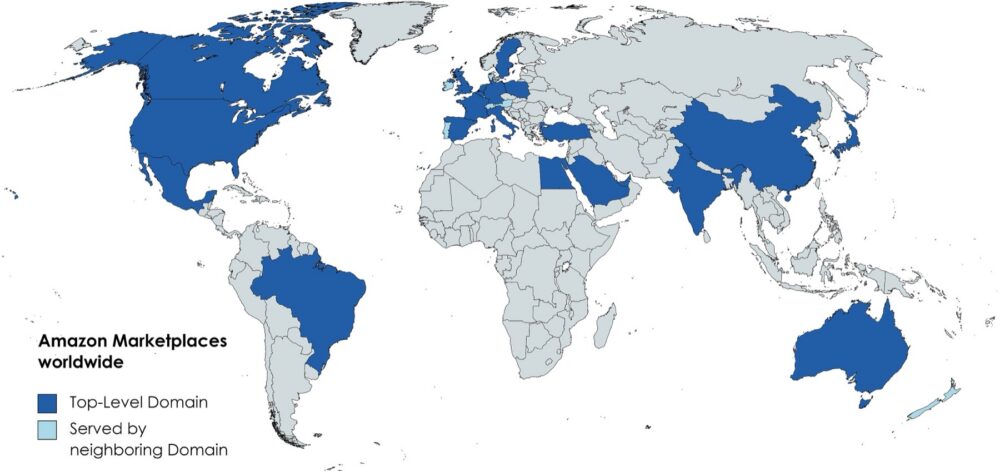
South Korea does not have a dedicated Amazon retail storefront equivalent to Amazon.com or Amazon.co.jp. A seller may instead be serving Korean demand through another marketplace, its own store, or cross-border channels. That distinction matters: a product described as “Korean-style” is not necessarily made in Korea, authorized for resale, compliant in Korea, or accepted by any destination marketplace.
Decide what evidence you need before comparing channels
Start with five questions that apply to every sourcing route:
- What exactly is the product? Record materials, dimensions, labeling, packaging, and any regulated attributes.
- What quantity are you testing? Ask for the seller’s current minimum, sample terms, and price at your exact quantity.
- What is the landed cost? Include product price, shipping, duties, inspection, defects, payment costs, and expected returns.
- What proof is required? A style label or seller claim is not evidence of origin, authorization, test results, or legal compliance.
- Where will it be sold? Verify the current rules of the destination marketplace and the requirements that apply in South Korea.
These checks are more reliable than assumptions such as “Alibaba always requires a large MOQ” or “AliExpress is always faster.” Terms vary by listing, seller, destination, and date.
DHgate, Alibaba, AliExpress, and retail compared
| Channel | Useful when | Verify before ordering | Main limitation |
|---|---|---|---|
| DHgate | You want to compare multiple independent sellers and listings, including items described as Korean-style | Seller identity, exact quantity, sample, specifications, ship-from location, landed cost, and documentation | Listing labels do not prove Korean origin, authorization, quality, or compliance |
| Alibaba | You want to discuss specifications or a larger repeat order with a supplier | Supplier role, sample-to-production consistency, written specifications, inspection plan, MOQ, and payment terms | Negotiation and quality control can be more involved; terms are supplier-specific |
| AliExpress | You need a small off-the-shelf sample and the exact listing supports the destination | Actual seller, listing variation, delivery estimate, taxes, returns, and whether the sample represents later supply | A consumer listing may not support repeat inventory, customization, or stable pricing |
| Retail/Amazon country stores | You need one finished item quickly for evaluation and it is available locally | Seller, authenticity or authorization where relevant, invoice, current return terms, and resale rights | Retail price and availability may not support a repeatable sourcing model |
| Authorized or local distributors | Brand authorization, traceability, or local documentation is central to the product | Authorization scope, territory, invoices, product documentation, and replenishment terms | Selection and order terms may be narrower than on open marketplaces |
What the current DHgate snapshot proves—and what it does not
The DHgate research snapshot retrieved on 2026-09-29 included independent seller listings whose titles used “Korean,” “Korean version,” or similar style language. Examples included:
| Listing example | Seller-listed category | Snapshot price range (USD) |
|---|---|---|
| Cross-Border Autumn Winter Women’s Coat Korean Version | Women’s Blouses & Shirts | 65.17-68.25 |
| Short Heavy Industry Denim Jacket Korean Laundry Fashion | Women’s Jackets | 61.14-64.04 |
| Cross-Border Fashion Korean Version Frameless Sunglasses | Women’s Sunglasses | 17.68-18.52 |
| Korean Style Lightweight Underarm Shoulder Bag | Sports & Travel Bags | 41.18-43.13 |
Match the channel to the sourcing stage
Stage 1: inspect a style or product idea
For an initial test, compare the exact sample terms across DHgate, AliExpress, retail listings, and any local supplier. The best route is the one that provides enough product and seller evidence at an acceptable landed cost—not automatically the platform with the lowest displayed price.
For apparel or accessories, inspect the sample for materials, construction, measurements, labeling, packaging, and consistency with the written specification. Do not market a product as Korean-made merely because the listing uses “Korean-style.”
Stage 2: prepare a repeat order
Once a sample meets the specification, request a written quote for the intended quantity and destination. Confirm:
- the exact product variation and whether the production unit will match the sample;
- total product and shipping cost, delivery basis, and expected timeline;
- inspection or defect-handling terms in writing;
- packaging, labeling, and documentation responsibilities;
- whether any brand, design, safety, or product-category permission is required.
Stage 3: sell through a Korea-facing channel
Before publishing a product listing, verify the destination channel’s current seller rules and the Korean requirements applicable to the product. Marketplace sourcing and marketplace selling are separate decisions: buying an item on DHgate, Alibaba, AliExpress, or Amazon does not itself grant permission to resell it or establish compliance.
Where DHgate realistically fits
DHgate is useful as a marketplace for comparing independent seller listings and requesting terms for Korea-inspired, unbranded inventory. Its role is strongest when the buyer can verify a specific seller, sample, specification, quantity, and landed cost.
Use another route when you need evidence the DHgate listing does not provide—for example, brand authorization, regulated-product documentation, a stable repeat-supply agreement, or confirmed local distribution. For broader platform context, see what DHgate is and how the marketplace works, how to find wholesale suppliers on DHgate, and the DHgate, AliExpress, Alibaba, and Temu comparison.
The practical conclusion is simple: choose the transaction with the best verifiable fit, not the platform with the most attractive general reputation. A dated listing snapshot can start the comparison, but samples, documents, landed cost, and destination rules decide whether the inventory is viable.