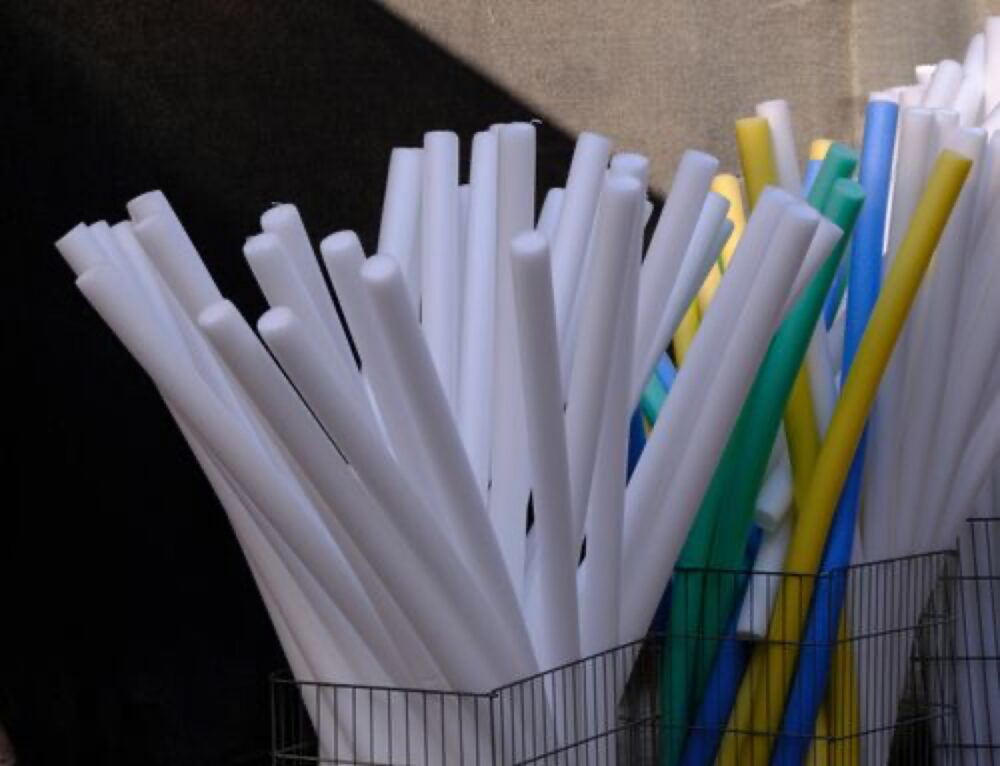
If you’re a US buyer ordering a few hundred mixed-color noodles, domestic wholesalers or foam sites are often simpler. If you’re an ecommerce seller or factory buyer planning thousands of units or custom sizes, then DHgate, Alibaba, or Made-in-China start to make sense. The right route depends on three things: how many units you need, how specific your foam spec is, and how much time you’re willing to spend managing suppliers.
How Pool Noodles and Foam Tubes Are Typically Sourced in Bulk
Most pool noodles and foam tubes are made in high-volume foam plants that extrude polyethylene or similar foam into long rods, then cut and bundle them. Production hubs include both US-based foam companies and Chinese manufacturers; China has a large base of small and medium factories that supply export-oriented platforms.
DHgate’s own editorial blog describes DHgate as a B2B wholesale platform that connects global buyers with small and medium Chinese manufacturers offering a wide scope of products. That matches what you see in search results: pool noodles listed as water sports accessories, exercise aids, and craft foam across multiple sellers.
Shipping matters more than it looks. Noodles are extremely light but take a lot of space. That pushes you toward:
- Domestic sources for small or rush orders (you avoid international freight on a bulky product).
- Container or pallet-size imports when you’re buying enough volume that per-unit savings outweigh freight and handling.
You don’t need precise freight math to make the first cut. If your order fits in a few cartons and you care more about quick delivery than max margin, domestic usually wins. If you’re talking pallet loads for a whole season and can plan months ahead, China-based sourcing becomes viable.
Matching Supplier Type to Your Order Size and Customization Needs
Think in concrete scenarios rather than abstract pros and cons.
Scenario 1: 50-300 generic noodles for a local operation You want basic hollow noodles, standard length, assorted colors for a camp or gym.
- Best fit: domestic wholesalers, big-box retailers’ business programs, or foam-focused sites. Forums like Chief Delphi’s discussion often mention sites like FoamNoodles.com for solid-core and specialty sizes.
- Why: no import paperwork, predictable specs, and you’re not large enough to justify Asia-sourcing workload.
Scenario 2: 300-1,000 noodles, slightly specific specs You want a certain diameter or firmness for swim training or padding, but not a fully custom mold.
- Domestic foam specialists: Better for unusual diameters that are still in their catalog. Price per unit will be higher but lead times are short.
- China-based marketplaces (DHgate, Alibaba): Useful for finding pre-existing SKUs that match your spec more closely, especially for sport training sticks or thicker tubes.
- Buyer workload: You’ll need to compare listings, ask sellers for exact diameter/length data, and likely order samples before committing.
Scenario 3: 2,000+ units or branded/custom tubes You want a custom color mix, logo-print packaging, or specific inner-hole sizes for industrial padding.
- Alibaba / Made-in-China / direct factory: Often better for deep customization and high MOQs. Many factories expect you to negotiate specs, tooling, and packaging.
- DHgate: Better aligned with small and medium buyers who still want near-wholesale prices and smaller batches of existing SKUs. Its blog calls out relatively low minimum order quantities and tiered pricing, but you still need to ask each seller specifically about MOQs and customization.
For China-based routes, plan on:
- Communicating clearly in simple spec language (e.g., “length 59 inches, diameter 2.5 inches, solid core”).
- Confirming material type and density in writing.
- Budgeting weeks for negotiation and sample shipment before the bulk order.
If supplier management is not something you want to take on, keep your early orders domestic and only shift to China when your volume and margins justify the extra work.
DHgate Pool Noodle Listing Snapshot (2026-09-28)
To show what small and medium buyers can actually find, here’s a snapshot of several DHgate listings checked on 2026-09-28. Prices are per listing’s price range at that date and can change.
| DHgate product (example only) | Category | Price range (USD) | Typical use framing in title |
|---|---|---|---|
| Pool Noodles Foam Floating Swimming Noodle | Pool & Accessories | 10.31-10.82 | Water sports accessory, exercise aid, craft/play |
| Swimming Pool Noodle Training Floating Sticks 59in | Air hockey (site category) | 139.47-146.08 | 59″ swimming training sticks for adults/kids |
| Swimming Floating Foam Sticks Pool Noodle Water Float Aid | Air hockey (site category) | 73.36-76.98 | Foam sticks for children/adult surfing, swim accessories |
| Swimming Pool Foam Noodle Float Aid Ring Buoyancy Stick 260622 | Inflatable Floats & Tubes | 27.03-54.51 | Foam noodle float aid, ring buoyancy stick |
| 2025 New Multicolor Swimming Pool Foam Noodle Float Aid | Pool & Accessories | 16.26-17.47 | Multicolor foam noodles for beginner swim training |
A few practical takeaways from these examples:
- Titles emphasize usage (training aid, float, craft projects) more than technical specs, so you must request exact dimensions and material details from the seller.
- Category labeling can be slightly off (e.g., listed under “Air hockey”), so rely on photos and specs rather than category alone.
- Price ranges differ significantly by bundle size, foam thickness, and design (simple noodles vs connectors or ring-style aids). You’ll need to compare per-unit cost once you know the pack quantity.
If you’re considering DHgate, internal DHgateWiki guides on how to find wholesale suppliers on DHgate, search for DHgate suppliers, and choose a DHgate wholesale supplier can help you structure that evaluation work.
Channel Comparison: DHgate and Other Routes for Pool Noodle Wholesale
Here’s how the main sourcing channels stack up for pool noodles and foam tubes, focusing on order size fit, customization, and buyer workload.
| Channel | MOQ & batch flexibility (editorial view) | Customization potential | Buyer workload level | Where it tends to fit best |
|---|---|---|---|---|
| Domestic wholesalers/retail B2B | Good for small to medium batches; often sell cases but not container loads. | Limited to catalog colors/sizes; branding mostly via packaging you add yourself. | Low–medium: simple orders, familiar returns, fast communication. | Camps, gyms, small resellers needing standard noodles quickly. |
| Specialized foam sites (e.g., FoamNoodles-style vendors referenced in Chief Delphi) | Moderate MOQs; more willing to discuss non-standard diameters/core types. | Strong for diameters, core type (solid vs hollow), sometimes custom lengths. | Medium: you’ll discuss specs, but they’re used to foam projects. | Robotics teams, DIY padding, niche uses needing specific tubing. |
| Cross-border multi-seller | Blog portrays relatively low MOQs and tiered pricing; some sellers allow small test orders. | Mostly existing SKUs; minor customization like color mix or packaging may be negotiable seller-by-seller. | Medium–high: you must vet each seller, clarify specs, and manage international shipping details. | Small/medium businesses importing pre-made noodles or training sticks with better margins than domestic retail. |
| Alibaba | Many suppliers expect higher MOQs, especially for custom foam products. | Very strong; factories promote custom specs, tooling, and OEM/ODM work. | High: more negotiation, factory verification, and logistics planning. | Container-level orders, branded or fully custom foam tubes for retail brands. |
| Made-in-China / direct factories | Often oriented to bulk buyers; MOQs can be high but negotiable. | Strong for industrial or heavily customized foam components. | High: direct sourcing, potential site visits or third-party inspections. | Large industrial buyers, big-box private label programs, long-term contracts. |
If you’re a small ecommerce seller testing pool noodles as a seasonal SKU, a realistic path could be:
- Start with domestic or specialized foam sites for your first small batches.
- Move to DHgate or similar marketplaces once sales validate the product and you want better margins on existing SKUs.
- Graduate to Alibaba or direct factories only if you need full customization and are ready to handle bigger MOQs and logistics.
If none of these routes matches your appetite for supplier management, staying with domestic wholesalers—even at a higher per-unit price—may simply be the right call.