
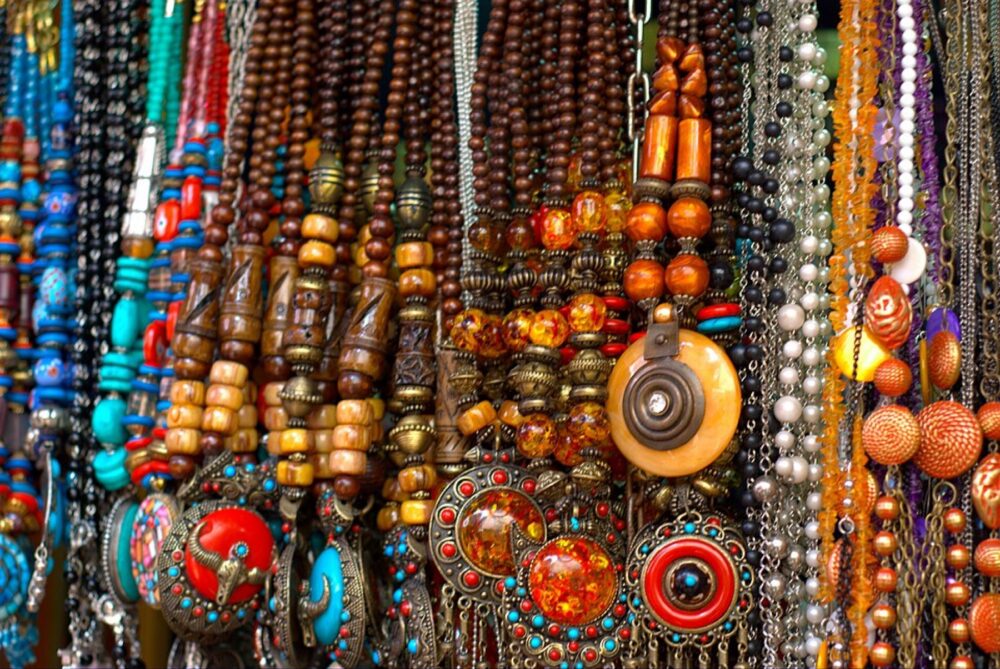
Indian jewellery wholesale online is built on a mix of India‑based supplier sites, global B2B marketplaces, and retail platforms where you actually sell your pieces. As a Canadian seller, you’ll probably source from one platform type and sell on another. If you care most about margins and having specific designs, you lean toward India‑centric wholesaler sites; if you prioritize simplicity and smaller test orders, you start with global marketplaces and retail platforms like Etsy or Shopify.
This guide focuses on how those platform models work and which combinations make sense for a Canada‑based jewellery business targeting international or diaspora buyers.
How Indian Jewellery Wholesale Works Online
“Indian jewellery wholesale” usually means bulk supply of:
- bridal sets (necklace, earrings, maang tikka, bangles);
- ethnic bangles and kadas;
- head chains and forehead jewellery;
- anklets and other imitation / fashion pieces.
Online, that wholesale market is split between:
- India‑centric wholesalers with their own sites (e.g., fashion and imitation jewellery suppliers in Jaipur or Mumbai);
- global B2B marketplaces that host many sellers from different countries;
- social/DM‑driven wholesalers advertising mainly on Instagram and WhatsApp.
An example of an India‑centric site is Eindiawholesale, described in one review as an Indian online wholesale store focused on fashion and imitation jewellery, with categories from handcrafted earrings to floral necklaces. That same review notes international buyers must meet a minimum order value around US$100 to purchase, which illustrates a key point for Canadian buyers: these sites are built first for Indian retailers, and cross‑border orders often require a relatively chunky first buy.
From Canada, you’ll usually:
- Source finished jewellery (or components) via a wholesale or marketplace platform.
- Import it, paying freight and applicable duties/taxes.
- Resell on retail platforms or your own store in smaller quantities.
The platform choices at each step determine your unit cost, cash risk, and how much control you have over product and brand.
Types of Platforms Used for Indian Jewellery Wholesale
You’ll touch at least one platform to source and one to sell. Here’s how the main categories work.
1. India‑based wholesale supplier sites
These are standalone sites run by Indian manufacturers or aggregators. They typically:
- focus on imitation/fashion jewellery (kundan sets, CZ bridal, Rajasthani styles);
- list bulk‑friendly SKUs with colour/size variations;
- require minimum order quantities or minimum order values, especially for overseas buyers (Eindiawholesale’s ~US$100 threshold is one example; you must confirm current terms on each site);
- accept common international payment methods and ship via courier.
Workflow for a Canadian buyer:
- Register an account, sometimes as a business.
- Build a cart that hits MOQ/MOV thresholds.
- Arrange payment and international shipping.
- Clear customs in Canada and then store or prep the inventory for resale.
This route suits you if you want depth in specific Indian styles and are ready to treat the first order as real inventory, not a small test.
2. Global B2B marketplaces
Platforms like Alibaba or other international marketplaces host numerous suppliers (from India and elsewhere) selling Indian‑style jewellery. You’ll see:
- per‑piece prices with batch or pack sizes for bangles and sets;
- messaging tools to negotiate MOQs, custom colours, or private labels;
- mixed origins (India, China, Middle East), so “Indian style” doesn’t always mean manufactured in India.
You use these marketplaces mainly for sourcing; they’re not usually where you build a consumer brand. The upside is broader choice and more flexible MOQs than some India‑only sites. The downside is more supplier vetting work.
3. Retail marketplaces (Etsy, Amazon, eBay)
These are where you sell, not source. For Indian jewellery, they’re popular because:
- they already have diaspora and wedding shoppers searching for terms like “kundan bridal set” or “Bollywood bangles”;
- you can list small quantities and test price points quickly;
- you don’t have to build a full tech stack on day one.
DHgate’s own editorial content on jewellery selling calls out Etsy, Amazon and eBay as common sales platforms, and contrasts them with building your own store via Shopify or WooCommerce. That’s the pattern most small Indian jewellery brands follow: source wholesale, then retail the pieces on marketplaces first.
4. Your own ecommerce site (Shopify, WooCommerce, etc.)
Many guides recommend pairing marketplace sales with an owned store once you have traction. Using platforms like Shopify or WooCommerce, you:
- list your catalogue with good imagery and SEO for terms like “Indian bridal jewellery Canada”;
- process orders and payments directly;
- keep customer data and margins that marketplaces might otherwise erode.
DHgate editorial on cross‑border ecommerce also suggests setting up an online store as the place orders are processed, with platforms such as Shopify, WooCommerce or Magento. For Canadian Indian jewellery sellers, this usually becomes phase two: you add a store once you have proof of demand from marketplaces or social channels.
Comparing Channels and Choosing the Right Route from Canada
Different platform routes trade off MOQ, control, and convenience. This table sums up typical behaviour for a Canada‑based buyer.
| Platform type | Typical MOQ / spend | Product depth in Indian styles | Buyer control & branding | Best fit scenario from Canada |
|---|---|---|---|---|
| India‑based wholesale sites | Often a minimum order value (example: Eindiawholesale’s ~US$100 for international buyers, but always check current terms) | High on imitation/bridal sets and regional designs | Medium – you buy fixed designs, may negotiate custom runs | You already know specific styles that sell and can commit to inventory for a season |
| Global B2B marketplaces | Negotiated per supplier, often lower starting packs | Medium to high; mix of Indian‑made and Indian‑style | Medium – easier to test multiple suppliers, some private label | You’re still validating products and need flexible quantities |
| Retail marketplaces (Etsy, Amazon, eBay) | No wholesale MOQ; you buy elsewhere, then list single units or small batches | Depends on what you source; discovery is excellent for niche ethnic styles | Low to medium – platform rules shape customer experience | You want fast access to diaspora buyers without building a full website yet |
| Own store (Shopify, WooCommerce) | No platform‑imposed MOQ; your sourcing dictates volume | Whatever you decide to carry | High – full control over branding, pricing, and customer journey | You’re building a long‑term brand and can invest in traffic and retention |
Where a marketplace like DHgate might fit
DHgate itself is a global marketplace that currently lists various Indian‑style jewellery items in small wholesale‑friendly batches. As of 2026-09-21, sample listings include:
- Luxury Indian 24k Gold Color Jewelry Sets for Women Bridal Long Flower Necklace and Earrings (Other Jewelry Sets; price range about US$13.49-14.13).
- Indian Bangles For Women 24k Gold Color Jewelry Dubai African Jewelries Bracelets (Other Bracelets; roughly US$11.37-20.40 depending on options).
- Indian Gold Plated Jewelry Set For Women Dubai African Bead Necklace Earrings (Other Jewelry Sets; around US$11.81-13.36).
- Indian anklet jewelry Tassel Foot Leg Bracelet (Anklets; about US$25.46-26.67).
Prices and availability change, and none of these listings are vetted endorsements. They simply show that global marketplaces can supply Indian‑style bangles, bridal sets, and anklets in pack sizes suited to small Canadian sellers.
If you consider DHgate or similar marketplaces for sourcing, treat each listing like a separate supplier:
- inspect product photos closely (for plating quality, stone setting, clasp design);
- compare pack sizes and price ranges to your expected resale price in Canada;
- message sellers about consistent reordering and any packaging or branding needs.
For a deeper look at how DHgate as a marketplace works, you can read What DHgate is and how the marketplace works, and broader platform context in Compare online marketplaces and shopping platforms or Compare DHgate with AliExpress, Alibaba and Temu.
Scenario‑based routes for Canadian jewellery sellers
How you combine these platforms depends on your starting point.
Scenario 1: Testing ethnic jewellery with minimal capital You might:
- source small batches of Indian‑style pieces via a global marketplace or a low‑MOQ supplier;
- list on Etsy and Instagram targeting Canadian and US diaspora;
- only move to India‑based wholesalers once you see clear winners.
This keeps cash risk down while you learn which designs and price points resonate.
Scenario 2: Serving wedding planners and boutiques If you already have offline demand, you might:
- buy in bulk from an India‑centric wholesaler site that matches your regional style focus (e.g., South Indian temple jewellery or North Indian kundan sets);
- import enough stock to support bridal packages and coordinated sets;
- sell via a combination of your own Shopify site and curated Etsy listings.
Here, higher MOQs make sense because each bridal booking moves multiple pieces.
Scenario 3: Building a long‑term brand around Indian jewellery For a brand play, expect a staged approach:
- Start on Etsy/Amazon to validate demand and messaging.
- Parallel‑test 2-3 suppliers through marketplaces to refine quality and margins.
- Once you have a stable product line, lock in one or two primary India‑based wholesale partners, then scale via your own site, email and social.
Whichever route you choose, align your platform mix with your cash tolerance, product specialization, and how quickly you need feedback. In many cases, a Canadian Indian jewellery business will touch all four platform types over its first two years, but not all at once.