
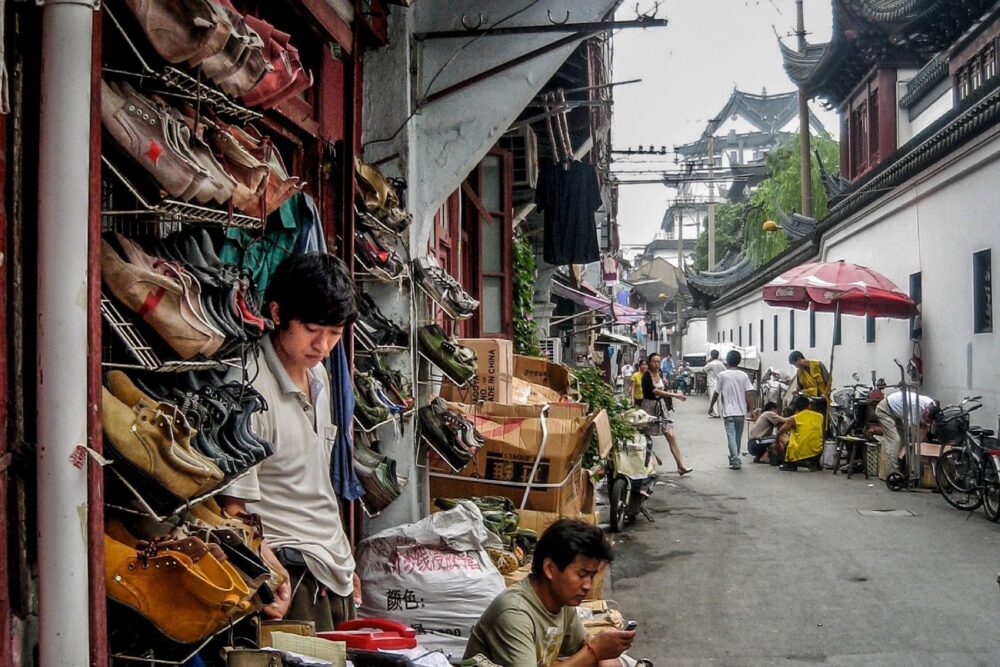
Chinese shoe brands and factories are neither automatically “fake” nor automatically “bargain gold.” The same country that produces shoes for giants like Nike and Adidas also has small workshops turning out no-name sneakers and some sellers pushing outright counterfeits. Your outcome depends far more on which tier of Chinese supplier you deal with, how you verify them, and how you structure payments and documentation than on the “Made in China” label itself.
For US buyers and small ecommerce businesses, Chinese footwear can be a smart way to access trendy designs and competitive pricing—but only if you treat it as a serious sourcing decision, not a casual impulse buy. This guide breaks down how the Chinese shoe ecosystem actually works, what can realistically go wrong, and the concrete safeguards you can put in place before sending money overseas.
Why buyers are nervous about Chinese shoe brands and factories
People usually ask “Are Chinese shoes legit?” because they’ve seen both extremes:
- Industry commentary notes that major global brands rely on Chinese factories for high-quality, performance footwear, provided those factories are tightly managed and inspected.
- Consumer complaint threads describe cases where shoes arrived looking nothing like the photos, sizing was wildly off, labels mimicked famous brands, or returns were practically impossible.
Those two realities coexist. Here are the specific risks worth worrying about:
1. Counterfeits and IP problems
Some operations copy well-known logos and model names. If you’re buying “Nike-style” or “Yeezy-style” shoes at suspiciously low prices, you may be dealing with trademark infringement. For a personal buyer that’s annoying and unethical; for a small US brand reselling those shoes, it can become a real legal liability.
2. Uneven quality within the same source country
A Chinese OEM making for a top-tier brand will have formal quality systems, lab testing, and regular audits. A small workshop exporting fashion sneakers for the first time may not. Online discussions about Chinese running shoes, for example, show a wide spread: some buyers praise cushioning and durability, while others complain about poor materials or midsole collapse after light use. That variance is the point—“Chinese shoes” aren’t one thing.
3. Sizing and fit surprises
Grading systems, lasts, and size conversion to US/EU can differ by factory. For private-label buyers, misaligned size runs can ruin a launch even if materials are good. For personal buyers, you may get shoes that fit half a size off what you expected.
4. Limited returns and weak recourse
Many cross-border sellers make returns expensive (you pay international shipping back) or difficult (slow responses, unclear addresses). Some complaint groups describe Chinese-origin shoes sold through US-looking sites with local addresses that turned out to be drop-shipping fronts; refunds were hard to obtain, even when products were misrepresented.
None of this means Chinese footwear is inherently untrustworthy. China is also described in editorial overviews as a major footwear production center and home to performance-focused domestic brands like Li‑Ning, Anta, Peak, and 361 Degrees. The reality is: you need to decide which band of that ecosystem you’re comfortable working with and then verify that you’re actually in that band.
How Chinese shoe manufacturing actually works
To understand what you can trust, it helps to know who actually makes shoes in China and how they’re organized.
1. Global OEM / ODM giants
Industry guides highlight large groups such as Huajian, Belle, Stella, Aokang, and others as key partners for mid‑to‑high‑end global brands. These firms typically:
- Provide full “sketch to shelf” services (engineering, pattern-making, tooling, sample rooms).
- Run multiple plants in hubs like Guangdong, Fujian, and Wenzhou.
- Work under strict compliance regimes demanded by international clients.
For a small foreign brand, these giants may be overkill or out of reach. Minimums, development expectations, and the need for a track record can be high. But they demonstrate that China has deeply professionalized footwear manufacturing at the top tier.
2. Domestic sports and lifestyle brands
China also has homegrown brands—Li‑Ning, Anta, Peak, 361 Degrees—described in editorial sources as prominent players combining performance tech with distinctive styling. They often run or contract with factories that use modern equipment and materials, even if their focus is the domestic market.
If you’re a consumer, buying these brands through official channels can be a way to access Chinese-designed performance shoes without fishing in the murky “no-name” pool. If you’re a reseller, you generally cannot legally private-label or rebrand these shoes, but you may be able to partner via formal distribution if you qualify.
3. Regional clusters and mid-size factories
Beyond the headline names, there are clusters like:
- Jinjiang (Fujian): often associated with sports shoes and sneakers.
- Wenzhou (Zhejiang): long history with leather footwear and dress shoes.
- Chengdu (Sichuan): known for women’s fashion shoes, including heels and boots.
Editorial lists point to high-end factories like Mescot, LANCI, and HYD Shoes that serve more fashion or premium niches. These factories may be open to smaller MOQs than the mega-groups, especially if you’re building a long-term brand.
For small US ecommerce brands, this mid-tier is often the sweet spot: export experience, but not so big that you’re ignored.
4. Private-label ODM and small workshops
Finally, you have thousands of smaller factories and trading companies that:
- Offer ready-made designs you can brand (ODM/private label).
- Specialize in specific constructions (e.g., vulcanized skate shoes, canvas “Old Beijing” cloth shoes, low-cost runners).
- Promote themselves on factory directories, B2B platforms, or even Instagram.
These are the suppliers you’ll most often encounter if you’re sourcing 200-500 pairs under your own label. Some are solid; others improvise with cheaper materials or inconsistent QC. That’s why your verification process matters.
OEM, ODM, and brand-owned factories—quick callout
- OEM (Original Equipment Manufacturer): Builds to another brand’s design and spec. You won’t control the design; you’re basically outsourcing production.
- ODM (Original Design Manufacturer): Provides pre-developed designs that you can customize and brand. Very common in Chinese footwear for small labels.
- Brand-owned factories: Plants owned by a brand like Anta or Li‑Ning, mainly serving house brands but sometimes open to limited collaborations.
Knowing which model you’re dealing with tells you who really owns the design and process—and how much leverage you have to demand changes.
Universal safeguards when buying or sourcing Chinese-made shoes
The checks below apply whether you’re buying ten pairs for a boutique or 500 pairs under your own brand name. They’re drawn from sourcing guides and industry lists that emphasize history, export track record, and references as key signals.
Company and factory credibility
- Verify legal identity. Ask for the company’s Chinese name and business registration details. Cross-check them on a major directory like Made-in-China’s shoe manufacturer section, which typically hosts company profiles and product categories. Directory presence is not proof of trustworthiness, but it’s a starting point.
- Look for operating history. Roundups of shoe manufacturers often highlight factories with long histories and consistent production. If a supplier claims decades of experience but can’t show older photos, certifications, or long-standing clients, treat that as a gap, not proof.
- Ask for export references. Sourcing resources advise asking for contacts at current or recent international clients; legitimate export-focused factories are often willing to provide them. If the supplier refuses any kind of reference, that’s a warning sign.
Product-level verification specific to shoes
Generic “check quality” advice doesn’t help much. For footwear, you want to pin down a few technical details before bulk orders:
- Last shape and size grading: Request the size chart mapped to US/EU sizes and clarify whether it’s unisex, men’s, or women’s sizing.
- Upper materials: Are they genuine leather, engineered mesh, PU, canvas? Ask for photos and material descriptions in writing.
- Outsole material and construction: Clarify whether outsoles are rubber, EVA, or TPU and whether the shoe is cemented, vulcanized, or stitched. This affects flexibility and durability.
- Insole and midsole: Ask whether there’s removable insoles, what kind of foam is used, and whether any cushioning tech is structural or just a design element.
- Glue vs. stitch: For dress shoes or heavy-duty boots, confirm whether uppers are stitched to the sole or only glued.
Always order physical samples before committing to bulk, then inspect them for glue marks, uneven stitching, midsole creasing, and any chemical odor.
Written specifications and photos
- Create a spec sheet for each model: materials, weight range, acceptable color variance, logo placement, packaging details, and key measurements.
- Include photos or line drawings of how logos and labels should appear. This reduces the risk of the factory “filling in the blanks” with designs that look too close to a major brand—something that could get you into trouble.
Payment and documentation practices
Without promising any platform’s specific protections, you can still set up safer structures:
- Avoid paying 100% upfront to unknown suppliers. A common pattern is a down payment with the balance after production inspection.
- Use payment methods that leave a paper trail (formal invoices, wire transfers with clear references). Avoid personal remittances for business orders.
- Keep purchase orders and email agreements that spell out delivery dates, quantities, and standards. If a dispute arises, this documentation becomes your leverage with any third party you involve.
Shipping, labeling, and returns realism
- Clarify who handles freight and customs, especially for bulk shipments. If you’re unfamiliar with import rules, consider a freight forwarder or customs broker.
- Get the supplier to state in writing what happens if goods arrive damaged or materially different from the approved sample.
- Assume returns on heavy footwear are expensive cross-border. Build in enough margin that a small defect rate doesn’t wipe you out.
How platforms and channels shape your protection
You can find Chinese shoe suppliers through multiple channel types: factory directories, B2B platforms, consumer marketplaces, social media, or direct relationships. Each gives you different visibility and leverage.
Here’s a channel-level comparison based on typical industry practice and the evidence we have about how these channels present suppliers:
| Channel type | What you usually see | Typical strengths | Typical weaknesses |
|---|---|---|---|
| Factory directories (e.g., Made-in-China) | Company profiles, product categories, sometimes badges | Good for mapping the landscape and identifying established manufacturers by region and product type | Listings can be broad and not heavily vetted; you still need independent verification |
| B2B sourcing platforms | Bulk-focused listings, MOQs, sometimes trade assurance-style features | Designed for wholesale; easier to compare factories, request quotes, and negotiate specs | May attract trading companies posing as factories; quality and follow-through vary widely |
| Consumer marketplaces (cross-border) | Retail-style listings with prices, photos, and user reviews | Low minimums; useful for small test buys and for gauging end-customer reactions | Reviews can be sparse or inconsistent; lots of no-name brands; returns may be costly |
| Social platforms (e.g., Instagram) | Photo-heavy promotion; factories and wholesalers tout “full range” and “bulk supply” | Direct contact with supplier reps; visual portfolio of past work | No built-in buyer protection; high risk if you pay off-platform without safeguards |
| Direct factory deals via email/phone | Customized communication, factory documents, private quotes | Maximum control over specs, branding, and long-term terms | Requires the most due diligence; little external signal if the factory overpromises |
DHgate is one example of a cross-border consumer marketplace where you can find Chinese shoe listings aimed at international buyers. The following snapshot is not an endorsement; it’s a practical example of what real Chinese shoe listings looked like on a consumer marketplace on 2026-09-14, and how little data you sometimes have to work with.
DHgate listing snapshot (2026-09-14)
- Traditional cloth and Hanfu-style shoes
A listing titled “2026 Chinese Style Shoes Spring And Autumn Embroidered Shoes Ethnic Style Short Cloth Boots For Women Linen Hanfu Shoes Thai Square Cotton-linen Shoes” was in the Sandals category with a price range of about $32.57–$39.14 and a single review (rating 5.0) from seller yuejia008.
- Old Beijing cloth shoes and slip-ons
Another item, “2026 Chinese Style Shoes Summer New Collection Traditional Chinese Style Women’s Shoes, Hanfu Shoes, Ethnic Style Mid-heel Embroidered Women’s Cloth Shoes,” also in Sandals, showed a price range around $26.24–$31.53 with no reviews, from the same seller.
- Casual fashion sneakers
“Chinese Bread Sports Women’s Shoes Personalized Design Letter Student Women’s Board Shoes Outdoor Fashion Leisure Sports Shoes Breathable White Shoes” appeared in Casual Shoes with a price range of roughly $22.08–$25.14 and zero reviews under seller panxianshengw.
- China-chic men’s sneakers
“New Mens Shoes China-Chic Small Mens Board Shoes Low top Sports Casual Shoes Versatile Fashion Color blocking Flat Running Shoes M241129” was in Casual Shoes with a wider price band of about $37.72–$79.00 and no public ratings, from seller jiahui_store.
These examples show what you’re up against: varied price ranges, often minimal reviews, and limited information about the factories behind the listings. Marketplace branding doesn’t replace your own checks—treat each listing as its own micro-supplier and apply the same safeguards you would in any direct deal.
Making a safer first move: from test order to ongoing supplier relationship
Whether you’re buying for yourself or launching a small brand, the safest way to work with Chinese shoe manufacturers is to treat the first order as a structured test, not a fully committed partnership.
Step 1: Define your risk tolerance and budget
- Personal buyer: Decide how much loss you can accept if the shoes are disappointing—maybe the cost of one pair. Stick to that until you’ve confirmed at least one trustworthy channel or brand.
- Small ecommerce brand: Treat the first production run as an experiment. Plan for possible write-offs in your budget, and avoid betting your entire launch on a single, unproven supplier.
Step 2: Shortlist suppliers using ecosystem clues
- Use directories like Made-in-China’s shoe listings to understand which companies specialize in your category (e.g., running shoes vs. leather boots).
- Compare which factories appear in industry “trusted manufacturers” lists, not to crown them as best, but to see what kinds of documentation and capabilities reputable players highlight (testing labs, compliance, design teams). Use that as a baseline when you talk to less-known suppliers.
Step 3: Sample smart, not blind
- Order multiple samples from 2-3 suppliers if possible, especially for high-risk categories like performance runners or heavy work boots.
- For each sample, inspect:
- Upper and outsole bond strength (flex the shoe, look for separation).
- Stitch regularity and alignment.
- Insole comfort and arch support.
- Weight and balance between left and right shoes.
- Have at least one other person try them on and comment on sizing and comfort; this gives you a sense of variance.
Step 4: Lock in written standards before bulk
Once you’ve chosen a front-runner:
- Convert your sample observations into a written spec they must match for bulk production. Include tolerance ranges where realistic (e.g., acceptable weight variation, color shade differences).
- Require pre-production samples or photos from the line if they’re changing anything substantial (materials, tooling, or factory site).
Step 5: Structure the first bulk order as a test
For a small US brand ordering 300-500 pairs, a simple staged structure could look like this (without hard numbers that may not fit your situation):
- Pay a partial deposit once specs and purchase orders are signed.
- Ask for mid-production photos or videos, focusing on key stress points like heel counters and eyelets.
- Arrange an inspection—either remote (detailed photos) or via a third-party QC service—before final payment.
- Ship in lots that you can reasonably handle if there’s a problem, rather than a single huge container.
If the factory pushes for full payment upfront with no documentation or refuses any photo evidence, step back. It may indicate they’re not used to serious export clients—or worse, they’re not planning to deliver as promised.
Step 6: Watch for early red flags and be ready to walk
Red flags worth reacting to quickly:
- Details in your written spec being ignored or “forgotten.”
- Frequent last-minute price changes with vague explanations.
- Inconsistent contact information, or being asked to pay a different entity than the one on your contract.
- Social media or forum reports pointing to chronic issues with the same company name or brand.
It can feel awkward to walk away after investing time and sample money, but that’s far cheaper than discovering systematic quality problems after you’ve committed to a full run.
Step 7: Build, don’t rush, long-term relationships
Once a supplier has delivered one or two runs that match your expectations, gradual trust-building makes sense:
- Share real sales feedback and returns data so they can adjust patterns or materials.
- Visit the factory if your scale justifies it, or at least hold regular video calls with walkthroughs of their production area.
- Consider joint planning for seasonal collections instead of one-off orders, which gives both sides more predictability.
Chinese shoe manufacturing can absolutely support high-quality, long-lasting partnerships. But the system is geared toward those who bring clear specs, documented expectations, and disciplined purchasing behavior. If you treat “Chinese shoe brands and manufacturing” as a black box, you hand over control. If you treat it as a structured sourcing project, you shift the odds in your favor.