

For US shoe buyers—whether you’re stocking a citywide chain or testing styles for a TikTok shop—no single sourcing channel wins across the board. DHgate tends to be strongest for small, variety-heavy cross-border orders: you can often buy low quantities from many Chinese suppliers and experiment with different sneaker, casual, and sport shoe designs. If you’re chasing volume contracts, stable repeat production, or tight compliance around safety and labeling, larger B2B platforms, domestic wholesalers, or direct factory deals usually fit better. The trick is matching your actual order pattern to the right mix of channels.
This comparison walks through the shoe-specific factors that matter, then shows where DHgate is helpful and where other options make more sense.
What US shoe buyers should compare across sourcing channels
For shoes, the usual sourcing advice (“compare prices,” “check reviews”) is too vague. You’re dealing with size curves, style cycles, and bulk freight. Use these shoe-specific dimensions to compare DHgate against other channels:
1. MOQ, size curves and variety
Shoes aren’t T-shirts; you need a size curve. Some channels push high minimum order quantities (MOQs) per SKU and size, which works for high-volume chains but is painful if you’re testing styles. DHgate’s marketplace structure means many sellers allow low or even single-unit orders, which can make it easier to sample multiple styles or buy small size runs without committing to pallets.
2. Lead times and re-order predictability
Citywide shoe suppliers need steady replenishment. Cross-border marketplaces often involve longer and more variable lead times than domestic wholesalers, but they can be agile for trend-driven drops if you accept that variability. Direct factory relationships usually aim for stable production slots once you’re big enough.
3. Quality and consistency across styles
Shoes fail in specific ways: outsole separation, poor cushioning, weak stitching. On fragmented marketplaces, quality can vary sharply between suppliers and even between models from the same supplier. Domestic wholesalers and established factories often curate or standardize lines, which can reduce variability but also limit your style range.
4. Compliance and authenticity risk landscape
US buyers need to care about labeling, materials (e.g., for kids’ shoes), and intellectual property. Any cross-border sourcing—whether via DHgate or another platform—raises your exposure if you’re not careful about what you’re buying. Channels built around brand programs or factory-direct contracts tend to be better aligned with formal compliance, while open marketplaces require more diligence on your side.
5. After-sale handling: returns, defects, and size misfits
Shoes generate returns: wrong size, fit issues, or quality complaints. Domestic wholesalers often plug into existing retail return flows. Cross-border suppliers usually require you to absorb more complexity around defects and misfits, so you need to plan margin and local resell or liquidation routes.
6. Total landed cost for bulky, heavy products
Shoes are relatively light but bulky. Boxes, fillers, and multi-pair shipments drive freight cost and storage. Comparing channels means looking beyond per-pair price to how case-pack quantity, packaging, and distance affect your landed cost.
Keep these six lenses in mind as we look at the main shoe sourcing channels.
How the main shoe sourcing channels stack up
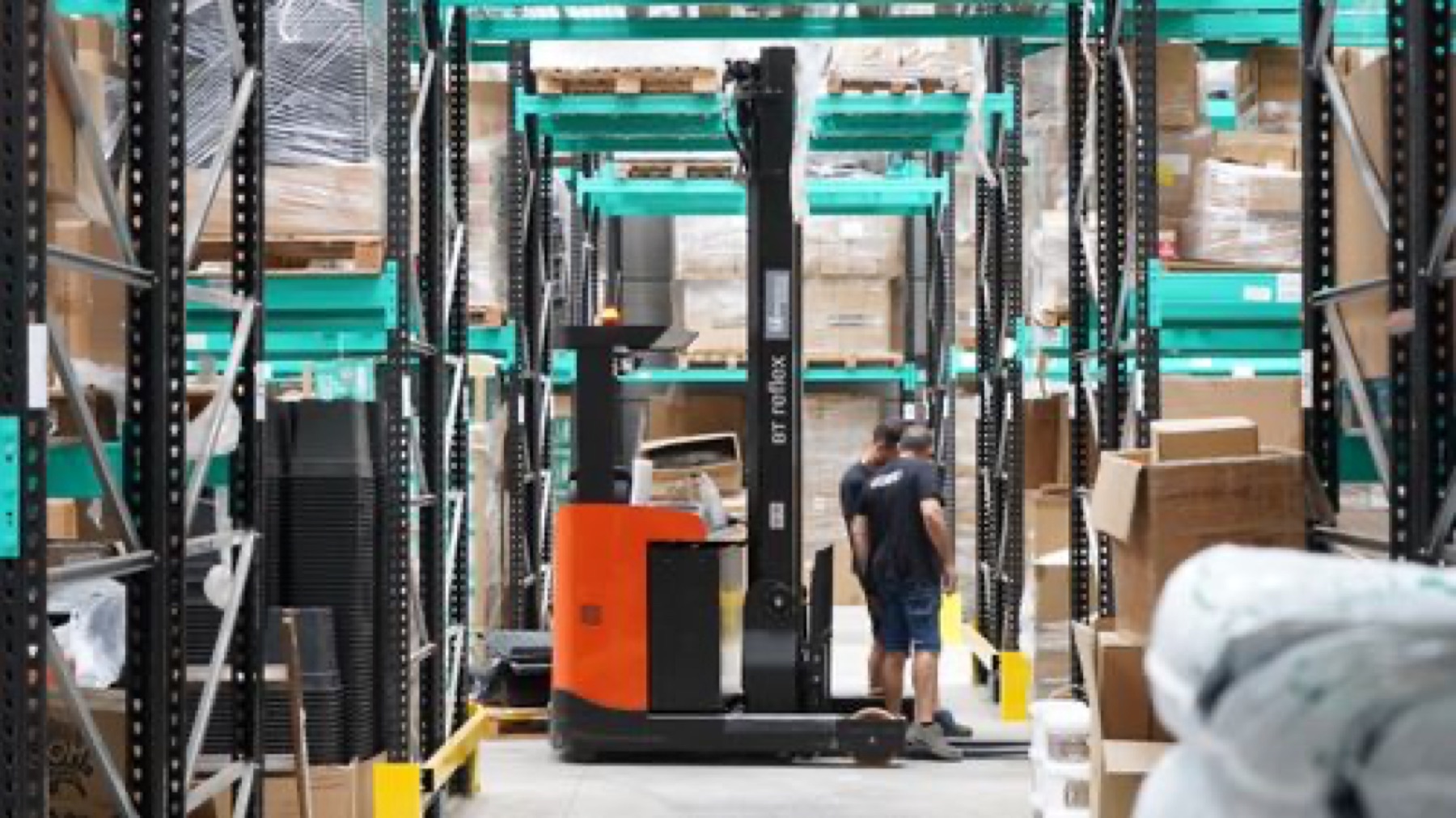
Below is a compact comparison of four common ways US buyers source wholesale shoes: cross-border marketplaces like DHgate, other global B2B marketplaces, domestic wholesalers, and direct factory relationships. Each cell is editorial judgment informed by how these channel types usually operate for footwear.
| Channel type | MOQ, size curves & variety | Lead times & reorder | Quality consistency & curation | Compliance & authenticity exposure* |
|---|---|---|---|---|
| Cross-border marketplace (DHgate & similar) | Often low MOQs, wide variety; fragmented size runs | Variable, can be longer; good for tests, less for strict cycles | Highly variable by supplier; you curate yourself | Higher if you chase trends/brands; you must vet listings |
| Other large B2B platforms | Usually higher MOQs, more structured programs | More predictable once contracted | More standardized; focus on factories and programs | Often better-aligned for formal programs; still needs checks |
| US domestic wholesalers | Moderate MOQs; assortment curated for US retail | Shorter, more stable; easier replenishment | Curation for local market; quality more consistent | Lower exposure for mainstream lines; still buyer’s responsibility |
| Direct factory relationships | High MOQs; narrow, customized lines | Scheduled and stable once set up | Consistency improves over time; you manage specs | Depends on your specifications and contracts |
\*This column describes your risk landscape, not platform guarantees.
Cross-border marketplaces (including DHgate)
DHgate is a China-based B2B marketplace connecting mainly Chinese suppliers with global buyers across many categories, including shoes. Its shoe category hosts a wide range of products—sneakers, casual shoes, sport shoes, and shoe accessories—used by buyers seeking variety and competitive prices.
Observed on 2026-09-14, DHgate’s own listings show this diversity:
- A “Mens and Womens Sneakers Walking Casual Shoes Fashion Running Sport Sneakers Shoes for Men and Women Shoes 260608” listing in the Running Shoes category with a price range around USD 17.59-18.43 from supplier `longda004`.
- A “Shoes Men Sneakers female casual Men’s Shoes tenis Luxury shoes Trainer Race Breathable Shoes fashion running Shoes for women” listing in Casual Shoes with a price range around USD 128.65-134.75 and a 5.0 rating from `dh404009`.
- A “Barefoot Trail Shoes … Aquatic Sneaker Shoe Man tenis masculino 250208” listing in Water Shoes at roughly USD 60.31-63.16.
- A shoe-care listing, “Cross-border foreign trade wholesale of sneakers, white casual shoes, and foam cleaner” in the Shoe cleaner/cream category at about USD 4.47-6.04 from `fsgeaoxcl`.
Prices, categories and availability can change at any time, but this snapshot illustrates how DHgate mixes footwear and accessories across performance and casual segments.
Many sellers on DHgate accept small or single-unit orders, which is structurally different from platforms optimized for container-load procurement. This makes DHgate attractive for US buyers who want to run small tests across multiple styles and categories before standardizing.
Large global B2B platforms
Other global B2B platforms, often centered on factory procurement, tend to emphasize higher-volume orders and larger MOQs. Editorial comparisons, such as the Best Alternatives To DHgate for B2B Manufacturers overview on gtsetu, describe these platforms as more tuned to big, contract-based purchasing than to the kind of fragmented, low-commitment orders many citywide shoe resellers start with.
This makes them a natural step once you’ve proven a few winning models and want to lock in production, but less friendly for the first phase where you’re trying to figure out which outsole pattern your local customers actually buy.
Domestic US wholesalers
Domestic wholesalers sit closer to your end customer geography. They typically:
- Offer curated assortments built for US tastes and sizes.
- Have more predictable lead times and replenishment cycles, which matters for chains and citywide operations.
- Simplify returns and defect handling because everything happens within US logistics and legal frameworks.
The trade-off is narrower variety and, often, higher per-pair prices than cross-border options. For many citywide shoe suppliers, domestic wholesalers handle “core” styles—white sneakers, work boots, school shoes—while experiments and niche trends are sourced elsewhere.
Direct factory relationships
Going straight to a factory, whether in China, Vietnam, or elsewhere, is about scale and control. Once you can commit to high MOQs and steady schedules, factories can help you:
- Customize designs and materials for your brand or citywide chain.
- Improve consistency over time as you refine specs and quality checks.
- Potentially optimize per-pair cost for large runs.
The downside: factories rarely entertain the kind of tiny, multi-style orders that DHgate suppliers often accept. Getting to this channel usually means you’ve already proven demand using more flexible marketplaces or wholesalers.
DHgate vs other B2B platforms for shoe sourcing
If you’ve already decided on cross-border online sourcing, the comparison narrows to DHgate versus other B2B marketplaces.
DHgate’s typical positioning for shoes:
- Low or single-piece orders: Many suppliers on DHgate allow buyers to purchase one or a few pairs. That structure supports testing multiple sneaker or casual shoe designs without committing to pallets.
- Wide assortment across shoe niches: As the listing snapshot shows, you can find casual fashion sneakers, running shoes, barefoot trail shoes, water shoes, and even shoe cleaners in one place.
- Accessible onboarding: You can generally start sourcing without the formal contract process that higher-volume platforms often require.
Higher-volume B2B platforms’ typical positioning:
- Larger MOQs: Editorial sources describe these platforms as geared toward larger orders and more standardized procurement. Smaller citywide operations may find entry thresholds higher.
- Stronger fit for factory-level relationships: Once your shoe program is mature, these platforms often become the gateway to long-term factory partners and more controlled production.
So for shoes, DHgate acts like a “laboratory” where you can cheaply audition styles and size curves, while higher-MOQ platforms are more like the “plant” where you scale proven models.
Match your shoe business model to the right sourcing mix
The following scenarios are illustrative, not guarantees of pricing or outcomes, but they show how channel choices shift with different shoe businesses.
Scenario 1: Social-commerce seller testing hype sneakers
You run a small TikTok Shop selling fashion-forward sneakers and casual shoes. You don’t yet know which silhouettes and colorways will stick.
- Primary channel: DHgate or similar cross-border marketplace. Use low-MOQ orders to test multiple styles, see which ones actually sell, and learn your audience’s preferred size distribution.
- Backup channel: Once you see repeat winners, explore higher-volume B2B platforms or factory relationships for that handful of styles.
Scenario 2: Citywide boutique chain with steady core demand
You operate a 3-5 store chain in one metro area, focusing on casual fashion and everyday sneakers.
- Primary channel: Domestic wholesalers for core, always-in-stock items where predictability and returns matter.
- Secondary channel: DHgate for trend-driven capsules (seasonal colors, special materials) where you’re willing to take more sourcing risk in exchange for variety and lower MOQs.
- Long-term: If one capsule becomes a permanent line, consider moving that SKU to a factory or higher-volume platform.
Scenario 3: Institutional buyer (schools, leagues, work programs)
You supply shoes for school sports, workplace safety programs, or local leagues.
- Primary channel: Domestic wholesalers or structured B2B platforms that can support consistent, compliant models and predictable contracts.
- Secondary channel: Limited DHgate use for accessories (like shoe cleaners) or non-critical items where assortment variety matters more than standardization.
Scenario 4: Local reseller building a brand around unique styles
You’re a small brand or reseller aiming for distinctive shoes that local customers can’t easily find at big-box stores.
- Primary channel: DHgate and other marketplaces in the exploration phase to discover unique styles and suppliers. Order small quantities across multiple models.
- Secondary channel: As you lock in a signature style, transition that model to a factory relationship to increase control over quality and materials.
Query-time DHgate listing example
Observed on 2026-09-14, Multi-functional Shoe Cleaner S260202 appeared in Other Home & Garden. This is a time-bound, illustrative listing example; availability and listing details may change. Compare the stated specifications and order a sample before considering a larger purchase.
Where DHgate realistically fits in a shoe sourcing strategy
DHgate is a global B2B marketplace based in China that connects small and medium suppliers with buyers worldwide through a multilingual interface. For shoes, its structure is especially useful in a few specific situations:
- Low-commitment style testing: Because many sellers accept small or single-unit orders, DHgate can play a key role early on—helping small ecommerce businesses and citywide resellers test different shoe designs before committing to larger runs elsewhere.
- Variety and mixed orders: The platform’s diverse shoe catalog and accessories such as cleaners let you build mixed assortments and upsell bundles without signing multiple formal contracts.
- Supporting emerging shoe businesses: Editorial materials from DHgate highlight that the marketplace is positioned as a way for small traders, including shoe sellers, to access global markets more easily.
There are also clear limits:
- Not ideal as your sole channel once you scale: High-volume buyers who need standardized, repeated production for citywide chains or institutional contracts often find that channels optimized for larger, contract-based orders are a better primary fit. DHgate can remain a side channel for trend tests and accessories.
For most US citywide and B2B shoe buyers, DHgate is best treated as one tool in a multi-channel kit:
- Use it early on to discover and trial styles at low commitment levels.
- Keep relying on domestic wholesalers or structured B2B platforms for your core, high-stability lines.
- Move proven winners into factory or higher-volume arrangements once your demand justifies the step.
If you’re clear about your size, risk tolerance, and whether you’re in “test” or “scale” mode, choosing between DHgate and other channels for shoes becomes far less confusing—and far more strategic.