

eBay reselling is a simple idea—buy low, sell higher—but the people who turn it into a lifestyle business treat it as a supply-chain job, not just listing a few things from the closet. Your day revolves around finding inventory, making sure there’s enough margin after fees and shipping, and keeping cash flowing while sales come in unevenly. That means your sourcing channels, suppliers, and order habits will decide whether this feels like a flexible side hustle or like a stressful, low-paid job.
This guide looks at eBay reselling as both a lifestyle and a sourcing problem: what daily work actually looks like, how inventory supply chains evolve as you grow, how to choose and manage suppliers, how to think about bulk buying and cross-border lead times, and where different sourcing channels—including one online wholesale marketplace—can fit.
What eBay reselling and the “reseller lifestyle” actually mean
At its core, an eBay reseller buys items—often used or overstock—and sells them for a profit on eBay. One practical description from Mama With a Calling’s reseller lifestyle guide is that this can range from yard-sale flips to more structured operations with steady sourcing routes.
eBay’s official selling help page notes that you can sell casually or as a business: you list items, handle payment through the platform, and ship orders to buyers. That structure sounds straightforward, but the “reseller lifestyle” is shaped by a few realities:
- Your schedule is built around sourcing and shipping. Guides such as ZenBusiness’s eBay reselling overview describe resellers spending regular time scouring thrift stores, auctions, and online marketplaces for inventory. In practice, you’re fitting in sourcing trips, photographing, listing, and daily shipping cutoffs.
- Income is lumpy, not a salary. An eBay community discussion on going full-time shows long‑time sellers cautioning that sales can swing month to month, so they advise strong planning before quitting a day job.
- Most people start part-time. Many US resellers begin by selling unneeded items, then move into sourcing specifically to resell once they see consistent results.
- Diversification matters. A post in a Facebook reseller group argues that “if you really want to win at reselling, eBay can’t be your only play,” reflecting a common community view that relying on one platform is risky if policies, traffic, or fees change.
Who this lifestyle tends to suit:
- You enjoy hunting for deals and don’t mind repetitive tasks like listing and packing.
- You can handle variable income and keep a separate cash cushion for slow months.
- You’re willing to treat sourcing like a supply-chain job: tracking what’s selling, what’s in the pipeline, and how much capital is tied up in stock.
If you want predictable hours, hate shopping or logistics, or need guaranteed income quickly, this lifestyle will likely feel stressful unless you treat it as a small, controlled side hustle.
Inventory supply chains for eBay resellers: from one-offs to wholesale
Most resellers don’t jump straight to pallets and international suppliers. They climb a sourcing ladder as their niche, capital, and risk tolerance evolve. Flowlister’s eBay sourcing guide highlights a mix of thrift stores, estate sales, arbitrage, wholesale, and liquidation as common strategies. Here’s how those typically map to stages.
Stage 1: Casual and “closet” inventory
- Sources: Your own items, friends’ and family’s castoffs.
- Categories: Clothing, household goods, electronics, books—whatever you have.
- Pros: No upfront cost; good for learning listing and shipping.
- Cons: Not repeatable. Once it’s gone, it’s gone.
This stage is about skill-building, not building a real supply chain.
Stage 2: Thrift, yard sales, and estate sales
- Sources: Thrift stores, garage sales, estate sales, flea markets.
- Best for: Vintage clothing, collectibles, books/media, hard-to-find items.
- Pros: Low buy-in per item; potential for high margins; great for learning what sells.
- Cons: Highly inconsistent. Community discussions about “consistent sourcing” point out that even popular “bins” outlets can be hit-or-miss from week to week.
If your niche is truly one-of-a-kind items—antiques, art, rare collectibles—this may remain your main supply chain indefinitely. You’ll scale by adding more routes (more towns, more sales) rather than by going “wholesale.”
Stage 3: Retail arbitrage and online arbitrage
- Sources: Discount chains, big-box clearance, outlet stores, online sales.
- Best for: New-in-box items, toys, seasonal products, small electronics.
- Pros: Products are new and often replenishable for a time; easier to list as multiples.
- Cons: Competitive; prices can change quickly; you’re competing with other arbitrage sellers.
Retail arbitrage sits between one-off thrifting and wholesale. You get some repeatability, but your “supplier” is still retail, not a dedicated wholesale relationship.
Stage 4: Liquidation and surplus
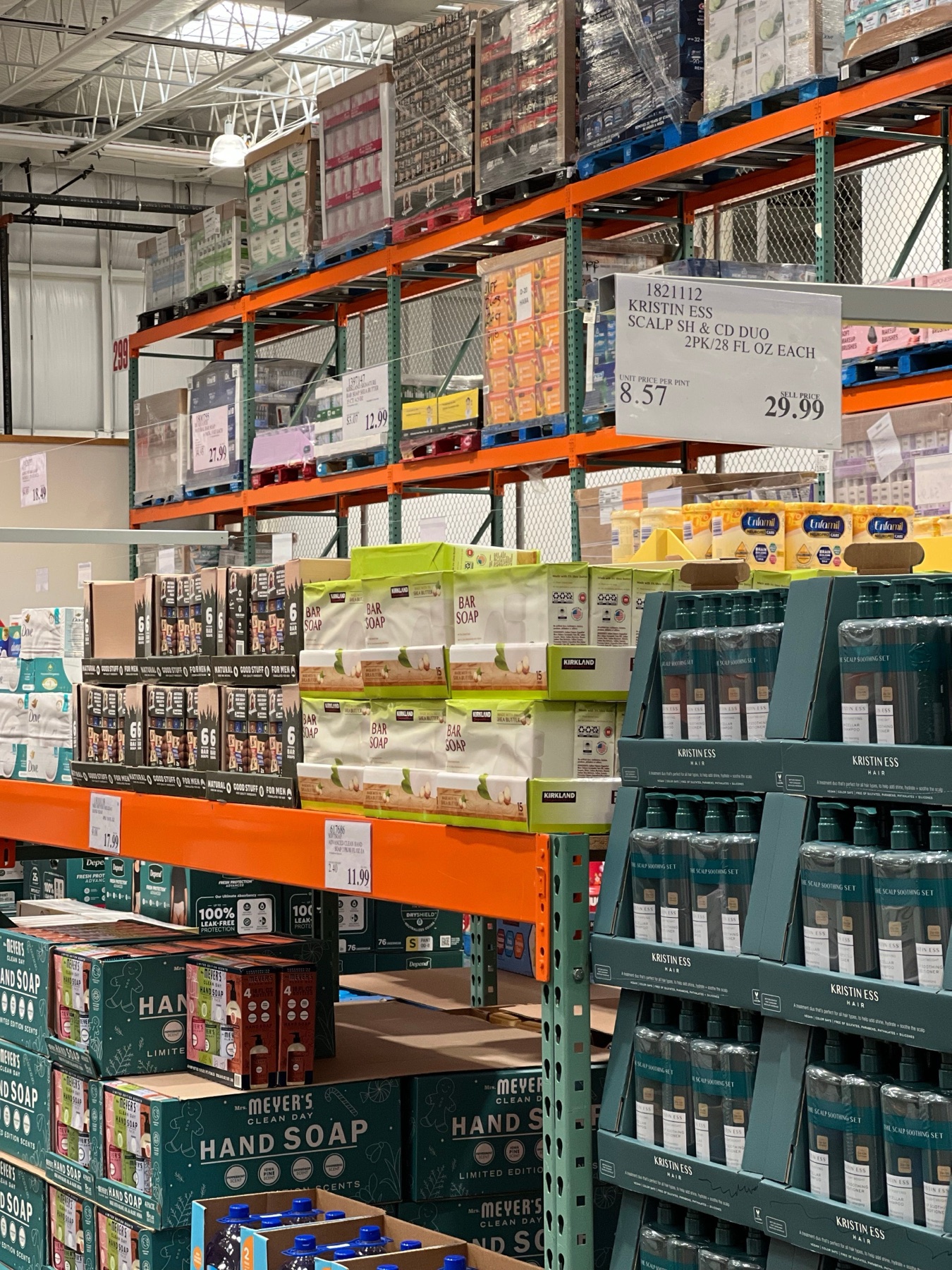
- Sources: Amazon or big-box store returns and liquidation pallets, shelf pulls, customer returns.
- Best for: General merchandise, electronics, home goods, clothing, where you can list as “open box,” “used,” or “for parts.”
- Pros: Large volume at relatively low per-unit cost; good for sellers who enjoy sorting and testing.
- Cons: Mixed quality; requires space, capital, and time to process. Editorial tips from DHgate’s article on Amazon liquidation pallets emphasize reputation-building, bundling low-value items, marketing on social media, and keeping close track of inventory—good general rules for any liquidation-based operation.
Stage 5: Wholesale and direct-from-supplier
- Sources: Domestic distributors, manufacturer reps, cross-border wholesale marketplaces.
- Best for: New products in consistent demand: generic accessories, home goods, fashion basics, and certain electronics accessories.
- Pros: Repeatable SKUs, predictable reordering, and potential scale once you find winners.
- Cons: Higher minimum order quantities (MOQs), longer lead times (especially cross-border), and more capital tied up in one bet.
Editorial coverage of the resale and secondhand boom on DHgate’s blog notes that resale markets are growing partly because buyers are cost-conscious and want unique or value-driven products. That’s the environment where steady wholesale sourcing of in-demand items becomes appealing—but only once you’ve proven a niche and built enough capital.
Choosing and managing suppliers as a small eBay reseller
Once you move beyond one-off finds, your main job becomes managing a small supply chain. You might not think of it that way at first, but you’re doing the same work: selecting suppliers, gauging risk, and negotiating terms.
What to look for in repeat suppliers
Instead of a generic “check reviews” checklist, you need a short set of concrete tests that match an eBay-scale operation:
1. Consistency of supply
- Can the supplier restock the same item, or at least the same spec, for months at a time?
- Ask: “How long have you carried this product?” and “Do you expect to stock it for the next 6-12 months?”
2. Enough room for real margin
DHgate’s wholesale-resale editorial guidance frames flipping simply: you profit by buying below ordinary retail from a distributor or supplier and reselling higher.
For eBay, that means your supplier price must leave room for:
- eBay fees (check current structures in eBay’s selling help)
- Payment processing fees
- Shipping/packaging
- Returns/refunds
- Your time
As an illustrative rule of thumb, if your expected selling price is not at least about 2-3× your all-in cost for small, low-ticket items, the margin may vanish once fees and returns hit. This is a hypothetical illustration, not a guarantee.
3. Quality and defect rates
- For liquidation or returns, ask what share is typically salvageable.
- For new wholesale goods, buy a tiny test run (or a sample, if offered) and actually use or inspect items before committing to a larger order.
4. Communication and responsiveness
You’ll eventually deal with delays, mis-picks, or defects. A supplier who answers questions clearly and in a predictable timeframe becomes part of your risk management.
5. Reputation signals specific to their channel
- Domestic wholesalers: Years in business, trade references, or industry association membership.
- Liquidation sellers: Repeat buyers in forums or reviews who describe realistic manifests, not “get rich” language.
- Online marketplaces: Aggregate ratings, how long the seller has been active, and the volume of reviews—plus what those reviews actually say.
Editorial tips from DHgate’s high-demand products article stress building strong supplier relationships and leveraging reviews—ideas that apply across channels. Treat suppliers with recurring orders as partners and they’re likelier to give you early warning on changes or help you solve issues.
Basic negotiation that fits an eBay-scale business
You don’t need corporate-level leverage to negotiate. You just need to:
- Tie your requests to volume and predictability. For example: “If I reorder 200 units every month, can we discuss a slightly better price or combined shipping?”
- Ask for clarity, not miracles. Clarity on lead times, packaging, and replacement policies often matters more than shaving a few cents per unit.
- Be realistic about your own size. A small reseller asking a factory to break their normal MOQ in half may succeed only if they position it as a test order leading to real volume.
Buying inventory intentionally: MOQ, margin math, lead times, and cash flow
Once you step beyond thrift and one-off arbitrage, your main risk isn’t “will I find anything this week?” but “will I tie up too much cash in the wrong inventory?” Bulk buying, especially cross-border, magnifies both your upside and your downside.
Start with landed cost, not supplier price
Landed cost per unit is the only number that matters for your eBay math. It includes:
- Unit price from supplier
- Shipping and handling
- Customs/duties or brokerage fees (if cross-border)
- Packaging you add (boxes, poly mailers, padding)
Then you layer on platform and payment fees and an allowance for returns.
A simplified hypothetical thought process:
- Landed cost per unit: $4.00 (editorial example)
- Expected average sale price on eBay: $11.99
- Estimated platform + payment fees: perhaps in the $1.50–$2.00 range (check current official eBay help for actual fee structures)
- Shipping (if you’re offering “free” shipping): maybe $4.00–$5.00, depending on weight and service
That might leave only a few dollars per item for your time and profit. If those units take months to sell, your real return on capital shrinks.
Match MOQs to your proven sales pace
Many wholesalers and cross-border suppliers set a minimum order quantity. Even if they don’t, there’s a practical MOQ for you: the smallest order that still makes sense after shipping.
To decide if an MOQ is safe for your scale:
- Look at your actual sold data in eBay for that category and price band.
- Estimate how many units per month you can realistically sell.
- Only commit to an MOQ that you can sell through in a timeframe you’re comfortable with—say, a few months—based on current demand, not wishful thinking.
DHgate’s editorial on wholesale resale notes that any bulk purchase means taking a level of risk by tying money up in inventory. That’s manageable if you treat every bulk order as a deliberate bet backed by your sales history.
Lead times, seasonality, and cash flow
Lead times (from placing an order to having stock on your shelf) matter more than most new resellers realize:
- Domestic wholesalers: Often shorter and more predictable, but still variable.
- Cross-border suppliers: Longer, and more exposed to shipping and customs delays.
This affects you in three ways:
- Seasonal products. If it takes six weeks to get a shipment of holiday-themed inventory, ordering too late can leave you discounting or holding stock for a year.
- Cash locked in transit. Money spent on goods in a container, plane, or truck can’t be used for new opportunities.
- Reorder timing. Once you see a product selling reliably, you need to reorder before you’re at zero—counting backward from the lead time.
Operational tips in DHgate’s Amazon pallets article—like tracking inventory closely and diversifying product lines—apply here. Whatever tool you use, keep a simple but accurate view of:
- Units on hand
- Average weekly sales
- Lead time to restock
Your goal is to avoid both stockouts (lost sales) and overstock (cash frozen in slow movers).
Matching sourcing channels to your eBay strategy
No single sourcing channel is “right” for every eBay reseller. Different channels shine in different niches and at different business sizes. The table below summarizes how typical channels map to common eBay strategies.
| Sourcing channel | Best for eBay niches | Typical scale/stage | Key risks for resellers |
|---|---|---|---|
| Thrift/estate/flea | Vintage, collectibles, unique décor | Early & specialty sellers | Inconsistent supply; time-heavy sourcing |
| Retail/online arbitrage | New toys, household goods, small electronics | Early–mid, test batches | Price wars; sudden markdowns end opportunities |
| Liquidation pallets | Mixed general merchandise, returns | Mid-scale with storage | Unknown condition; capital & space intensive |
| Domestic wholesalers | Branded or generic repeat goods | Mid-scale to growing | MOQs; need to prove demand before big buys |
| Cross-border wholesale | Generic accessories, fashion basics, décor | Mid-scale with tested SKUs | Longer lead times; product and supplier variance |
Where an online marketplace like DHgate can fit
Online wholesale marketplaces that aggregate cross-border suppliers—including DHgate—can be useful once you’re ready to test new, generic products where branding is less critical and you’ve already validated demand on a small scale.
A realistic use case:
- You’re in the US, selling unbranded fashion accessories or home goods on eBay.
- You’ve proven that certain styles or features sell through consistently via domestic small-batch sources.
- You now want to improve margin by buying similar, generic items from a cross-border supplier in larger lots.
In that scenario, a marketplace like DHgate might be one of several options you evaluate. To keep risk in check:
- Narrow your search to one specific product type you already sell.
- Compare multiple suppliers’ price ranges, minimums, and review patterns.
- Start with the smallest practical order to test real-world quality and buyer response.
Because DHgate is a marketplace, not a single seller, you still need to vet each individual supplier and listing. Prices, availability, and seller performance can change, so treat any cross-border channel as one piece of a diversified sourcing mix, not your only pipeline.