

Choose a women’s purse on DHgate by matching the construction to what you carry, then verify the exact listing rather than trusting its style name. Measure your largest item, compare the bag’s width, height and depth, and check strap drop, closure, compartments, material wording, stitching and hardware photos. Tote, shoulder, crossbody, clutch, satchel and backpack purses solve different carrying tasks.
Reviewed September 14, 2026. This guide does not claim current inventory, test a product or guarantee a seller’s description.
Compare six purse types by the job they do
Purse names overlap. A listing may call a short-handled bag a tote, shoulder bag or satchel, so use the photos and measurements to identify its construction.
| Type | Typical construction | Useful when | Check before ordering |
|---|---|---|---|
| Tote | Two top handles; open or zip top; broad main compartment | You carry documents, a tablet or several daily items | Opening width, base depth and whether the top closes |
| Shoulder bag | One or two straps intended for one shoulder | You want quick access without holding the bag | Strap drop with your usual jacket and whether it slips |
| Crossbody | Long strap worn across the torso | You want hands-free carry for errands or travel | Adjustable range, strap anchors and bag position on your body |
| Clutch | Small handheld body, sometimes with a removable strap | You carry a phone, cards and keys for an event | Internal dimensions, closure and whether your phone fits |
| Satchel | Structured body, top handle and often a long strap | You want shape, separated storage and two carry options | Empty weight, handle clearance and strap attachment points |
| Backpack purse | Two back straps on a purse-sized body | You prefer weight carried on both shoulders | Opening access, strap adjustment and back-panel structure |
These are tendencies rather than standards. Judge the selected model’s actual layout.
Start with a packing list
List the items the purse must hold. For work, that might include a tablet, notebook, charger, wallet, keys and glasses. For errands, it may be only a phone, cardholder and sunglasses. An evening purse may need space for a phone, cards, keys and one cosmetic.
Measure the largest rigid item first. If a tablet is 10 inches wide, a stated 10-inch exterior width does not prove it will fit: seams, padding, a narrow zipper and tapered sides reduce usable space. Ask for the interior opening measurement when the listing is unclear.
Read dimensions in inches and centimeters
Record width, height and depth in the same unit. To convert centimeters to inches, divide by 2.54; to convert inches to centimeters, multiply by 2.54. Keep the seller’s original measurements in your notes so rounding does not hide a tight fit.
Check five measurements:
- Width: confirm whether the number describes the widest point, base or opening.
- Height: exclude handles unless the diagram explicitly includes them.
- Depth: check the base and side gusset, which often determine practical capacity.
- Strap drop: measure vertically from the top of the bag to the inside top of the strap.
- Strap range: compare the minimum and maximum length with where you want a crossbody or backpack purse to sit.
Make a quick cardboard outline or use painter’s tape to visualize the dimensions. Compare strap drop with a bag you already own while wearing the coat or clothing you normally use. Do not assume an adjustable strap will cover every body or carry position.
Check closure, access and compartments
An open tote gives fast access but exposes the main compartment. A full zipper, flap, drawstring, magnetic snap or turn lock changes how you reach the contents. Look for photos showing the closure both open and closed.
Count only compartments visible in photos or described with dimensions. A phrase such as “multiple pockets” does not tell you whether a phone, passport or bottle fits. Check whether an interior zipper divides the main space, whether the lining hides the pocket depth, and whether the opening is narrower than the body.
For travel, consider where valuables sit and whether you can reach the main opening while wearing the bag. These checks describe access; they do not make any purse theft-proof.
Evaluate material and construction claims
Material labels need precision. “Leather,” “PU leather,” “genuine leather,” “canvas” and “nylon” are different claims, but a title alone does not verify composition. Read the specification field and description, then compare them for contradictions. Ask the seller what part of the bag the material statement covers when the body, trim and lining may differ.
Use close-up photos to inspect:
- stitching at handles, strap anchors and zipper ends;
- edge paint or folded seams around handles and openings;
- zipper alignment, pullers, clasps and protective feet;
- lining attachment and unfinished threads;
- symmetry where panels or patterns meet.
Photos can reveal construction details but cannot prove durability, waterproofing or fiber composition. Avoid treating words such as “luxury,” “premium” or “designer” as evidence. The DHgate accessory listing checklist provides a broader way to separate listing evidence from marketing language.
Ask focused questions before paying
If the listing leaves a decision-critical detail unresolved, send a short question that can be answered precisely:
- What are the inside opening width and usable depth?
- What are the minimum and maximum strap lengths?
- Is the pictured long strap included with the selected option?
- Does the selected color have a zipper, snap or open top?
- Can you provide a current photo of the interior and strap anchors?
Save the reply with the selected color and size. The guide to contacting a DHgate seller explains how to keep questions tied to the exact variant.
Make the final DHgate listing decision
Compare two or three listings using the same packing list and measurement sheet. Eliminate any option that omits a required dimension, shows inconsistent material wording or fails to show a critical closure or strap attachment. Then compare the remaining listings by usable fit, construction evidence and how well the carry method matches your routine.
Use the DHgate listing and seller risk checklist for seller-level evidence. A strong purse shortlist should answer four questions before checkout: Will the required items pass through the opening? Will the strap place the bag where you want it? Does the closure fit the setting? Do the photos support the stated construction? If any answer is still unclear, ask the seller or choose a better-documented listing.
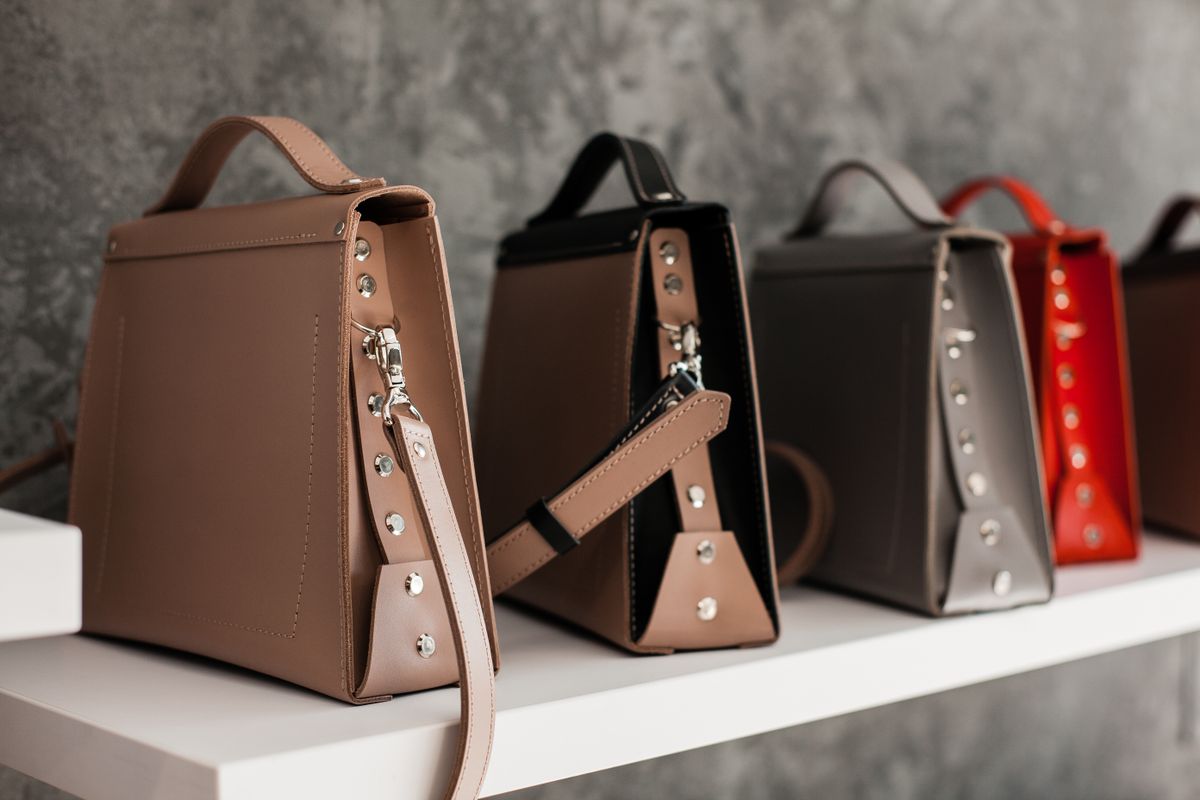
Featured photo by Dhanjit Sharma via Pexels, under the Pexels License. It shows handbags in a studio setting and is not a marketplace listing or endorsement.