
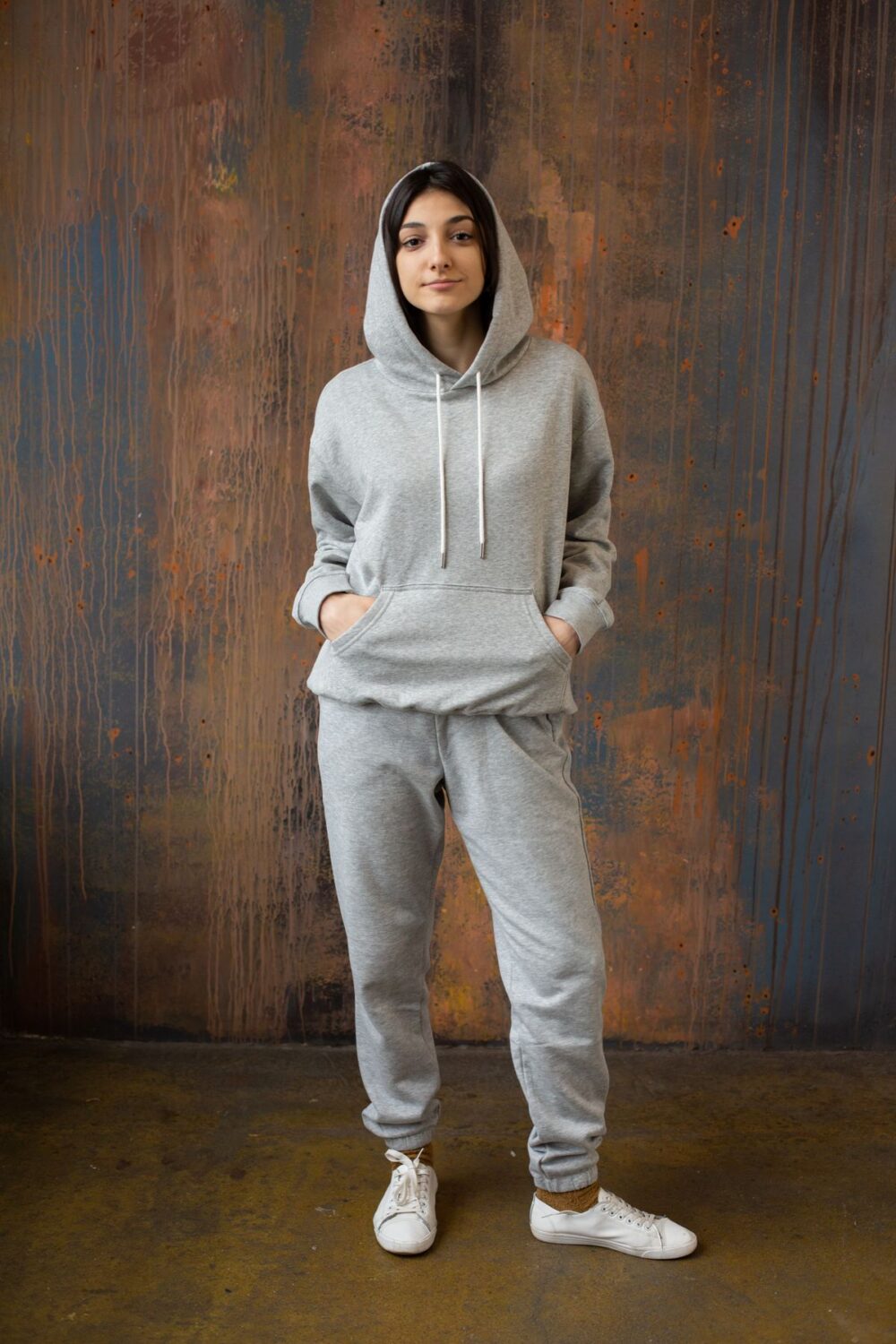
When choosing baggy sweatpants for women on DHgate, start with the cut, not an automatic size increase. Compare the waist, hips, thigh room, rise and inseam for the exact option, then decide between an open leg and a cuffed ankle. Choose a fabric and color that work with your wardrobe, and plan the outfit around the shoes and top you actually want to wear.
Reviewed September 14, 2026. This is a fit and styling guide, not a verified list of current DHgate products. Photos are styling references and do not show DHgate purchases or imply endorsement.
Choose where you want the volume
“Baggy” describes a look, but it does not tell you how a particular pair is cut. You may want room through the hips and thighs with a gathered ankle, or a loose line that continues to an open hem. Those choices can look different even when two listings use the same size label.
| Cut | Shape to look for | Styling starting point | Fit detail to confirm |
|---|---|---|---|
| Relaxed cuffed jogger | Room above an ankle cuff | Sneakers and a hoodie, fitted tee or shorter jacket | Thigh room, inseam and how closely the cuff sits around the ankle |
| Loose straight leg | Similar width through much of the leg, with an open hem | A tucked tee and an overshirt | Leg opening and where the hem falls over your shoes |
| Wide open leg | More volume continuing to the hem | A shorter or fitted top if you want contrast | Hip fit, inseam and enough clearance to keep the hem off the ground |
A higher rise places the waistband higher on the torso; a lower rise changes where the pants sit and how the top meets them. Choose the position you find comfortable. A drawstring can adjust the waist within its intended range, but it cannot change the rise or remove excess length.
Featured styling photo: Monstera Production via Pexels. The grey matching outfit illustrates a relaxed cuffed shape, rather than a wide open leg.
Read the size chart before sizing up
First establish what the numbers measure. A body chart describes the person the size is intended to fit; a garment chart describes the clothing itself. For example, Nike’s women’s bottoms guide explicitly identifies its chart as body measurements. That is a useful distinction to look for, not a chart to apply to unrelated DHgate sellers.
Ask the seller which kind of chart belongs to the selected sweatpants. If it gives garment measurements, clarify whether waist and hip figures are full circumferences or widths measured with the pants laid flat. Do not compare a flat width directly with a body circumference. If the listing and your tape use different units, convert them before comparing.
A pair you already own can provide a useful reference when you use the same measuring method as the seller. Record the waist, hip and thigh widths, rise, inseam and leg opening. Note what you would change: more room at the thigh, a higher waist, less fabric over the shoe, or a wider hem. That turns “I want them baggier” into specific questions.
For an elastic waist, ask what the stated measurement represents and whether an intended fit range is supplied. Do not treat a maximum stretched measurement as a promise of comfort. Increasing the size may also change the waist, rise and length; a deliberately loose cut in the right size may better match your aim. If the chart is unclear, use the guide to contacting a DHgate seller to organize the missing measurements before ordering.
Check the fabric beyond “soft” or “cotton”
Fiber content and fabric construction answer different questions. Cotton or a cotton blend describes the fibers; a fleece or looped interior describes a surface or construction. A photograph cannot establish the exact blend, weight or how the garment will feel against your skin.
For a warmer lounging pair, ask whether the inside is brushed and request a close-up. For a less bulky outfit, compare the fabric thickness and hanging shape rather than assuming every cotton blend will drape the same way. If weight is supplied, check the unit and the model it refers to; do not infer warmth or quality from that number alone.
Check the details that matter in use: pocket placement, whether pockets have closures, how the waistband is constructed and the stated care instructions. If shrinkage, color transfer or the softness of the interior is decisive, seek product-specific information. “Premium” and “cozy” in a title are not substitutes for it. Follow the garment’s own washing and drying directions rather than assuming all sweatpants tolerate the same treatment.
Build three outfits from the same fit decisions
These are options for experimenting with proportion, not rules about body shape.
1. A simple everyday outfit. Pair grey or black relaxed cuffed sweatpants with a fitted tee and sneakers. Add a short jacket if you want a visible contrast between the roomy leg and the upper half. Choose the inseam so the cuff sits where you want it; extra bunching is a choice to assess, not proof that the size is correct.
2. An open-leg outfit with more structure. Try loose straight-leg sweatpants with a tucked shirt and an open overshirt or cardigan. Check that tucking does not make the waistband uncomfortable. Wear the intended footwear when judging the length: an open hem should not drag beneath the heel. If it does, seek a suitable inseam or ask about appropriate alterations instead of relying on a knot in the hem.
3. A matching-color outfit. Wear cuffed sweatpants and a hoodie in a similar shade with simple sneakers. If you prefer less volume on top, swap the hoodie for a closer-fitting top in the same palette. When buying pieces separately, similar color names do not establish an exact match; compare the selected options and ask whether they are intended as a set.
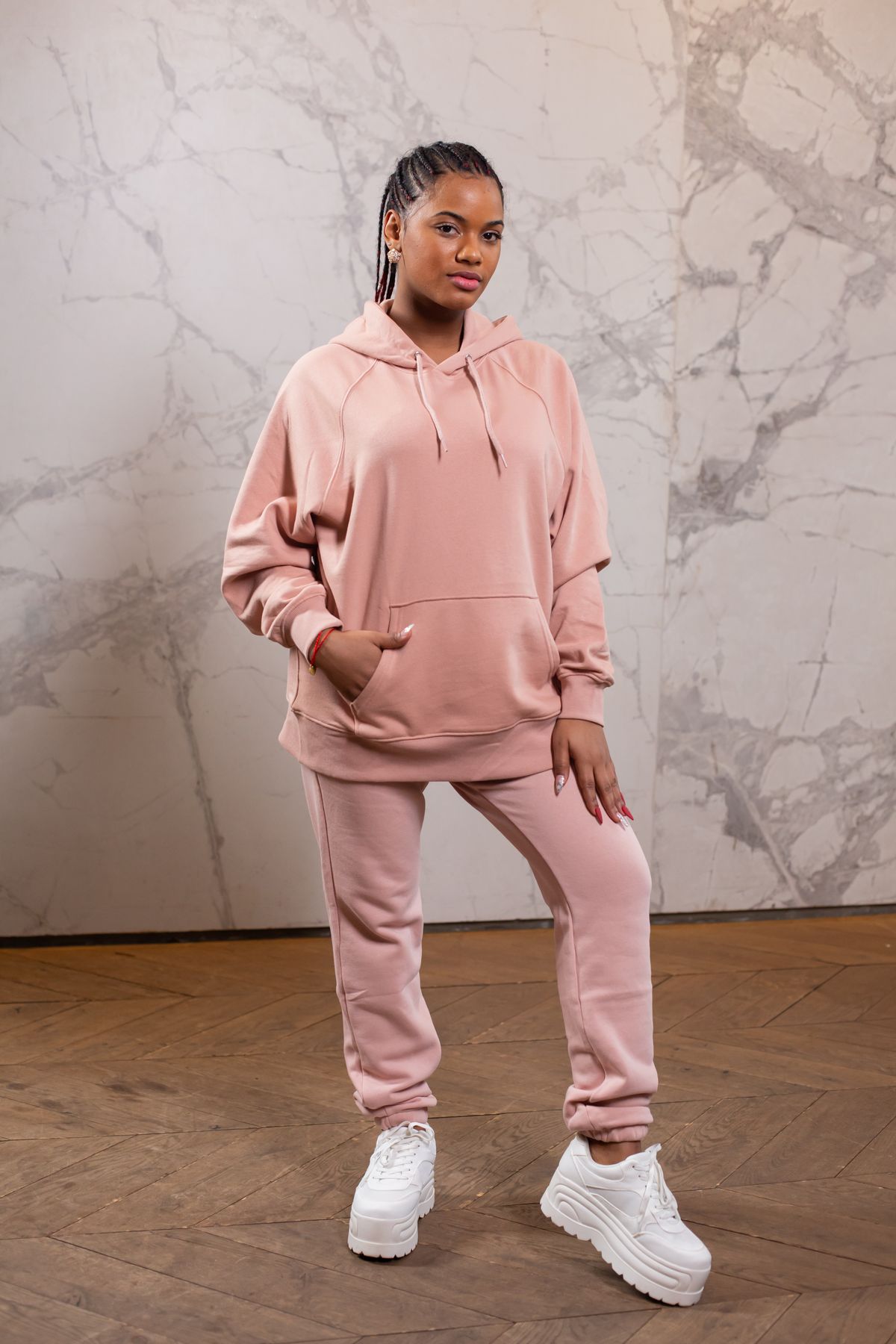
Matching-color reference: Monstera Production via Pexels. This photograph illustrates outfit coordination, not the fit or availability of a DHgate listing.
A cropped top is another way to leave the waistband visible, while a longer cardigan creates a different layered line. Neither is necessary for a “correct” silhouette. For accessories, start with what you carry and wear comfortably. Check belt loops before planning a belt, and use the accessory listing checklist if you are buying coordinating items separately.
Narrow the DHgate shortlist by color and exact variant
Choose a base color you can pair with several tops you own. If you want stripes, a print, embroidery or another detail, ask for a close-up and a full-length view. A small thumbnail may hide the scale of a print or the placement of a patch. Screen and lighting differences mean photos cannot guarantee an exact shade.
Search with the leg shape and desired color as well as “women’s sweatpants.” Open the exact size and color option before recording its measurements and included items. If a photo shows a complete outfit, confirm whether the price is for pants alone or a set. Model height and worn size can help interpret a photo when supplied, but they do not replace your own fit comparison.
For checks beyond the garment itself, consult the DHgate listing and seller risk guide. Choose the option whose cut, measurements, fabric description and care requirements all match your intended use. If those details remain unclear, a pair you can try on locally may be a more dependable way to settle the fit question.