
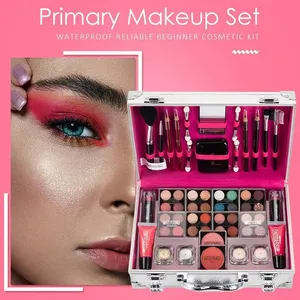
Before ordering makeup from a marketplace listing, check whether the page gives you enough information to identify the exact product and decide whether it is suitable to put on your skin, lips, or eyes. A product photo, a low price, or a brand-like name does not confirm the ingredient list, the manufacturer, the condition of the item, or whether the version in your cart matches the image.
Use this rule: If you cannot identify the exact variation, find an ingredient list or packaging information, and get a clear answer to your most important question, do not treat the listing as verified. Choose another source or pause before ordering.
Start With the Exact Cosmetic Product, Not the Main Photo
One makeup listing can contain several shades, sizes, bundles, or related items. Confirm the option you are actually selecting before you assess the product.
- Read the selected shade, quantity, kit contents, and size or net weight.
- Check whether the main image shows a full set while the selected option is a single item, sample, refill, or accessory.
- Compare the variation label with the cart before paying.
- Do not assume that a familiar product name or packaging image identifies the exact item in the selected variant.
Check Whether the Listing Provides Usable Cosmetic Information
For a cosmetic you may apply to your face, lips, or eyes, a useful listing should make it possible to identify what the product is and what claim is being made. Look for the product name, the intended use, quantity, visible packaging details, and ingredient information where available.
Pause when the page has only polished images and marketing language but does not clarify the product’s contents, variation, or packaging. That gap is more important for products used close to the eyes or on sensitive skin.
| Check | What to look for | What to do if it is missing |
|---|---|---|
| Exact variation | Shade, type, quantity, size, and kit contents | Ask which option matches the image, or compare another listing. |
| Packaging details | Clear photographs of the item and label, not only promotional artwork | Ask for a current photo of the exact product or choose another source. |
| Ingredient information | An ingredient list or a clear route to it for the selected item | Do not guess from a similar product or from a generic brand page. |
| Product claim | Whether a claim is cosmetic marketing or a health/drug claim | Be especially cautious with claims to treat, cure, or prevent a condition. |
Be Careful With “Safe,” “Hypoallergenic,” and Treatment Claims
Terms such as “safe,” “natural,” “hypoallergenic,” or “dermatologist tested” do not tell you by themselves whether a particular product is right for you. Read the information supplied for the exact product and avoid treating marketplace wording as medical advice.
A claim that a cosmetic treats acne, eczema, an infection, a medical condition, or another health problem deserves extra caution. If you need a product for a medical purpose, get advice from an appropriately qualified clinician or choose a channel that provides the product information you need.
Ask One Specific Question Before You Order
When an important detail is absent, send one short question tied to the exact variation. A useful question is easy to answer and creates a clear record of what you asked.
- “Can you send a clear photo of the ingredient label for the shade currently selected?”
- “Does the selected kit include every item shown in the first image?”
- “What is the net weight of the selected lip product?”
- “Is this product intended for use near the eyes?”
If the reply does not answer the question, do not fill the gap with an assumption. A vague answer is a reason to compare another listing.
How to Use Photos and Reviews Carefully
Buyer photos can show colour, packaging, item size, and the condition in which an item arrived. They cannot confirm the product’s complete ingredient list, safety for every user, or authenticity. Treat photos as one observation alongside the written product details and any seller response.
Look for recent feedback that refers to the same shade, bundle, or variation. Be cautious when reviews appear to describe different products from the one in your cart.
When to Choose Another Buying Route
Choose a retailer, brand, or seller that provides clearer product and label information when you need confidence about ingredients, a particular formulation, a health-related use, or brand authorization. This is especially sensible if you have a known sensitivity or need a product for use around the eyes.
Before You Pay: A Short Record Checklist
- Save the listing title, selected variation, product photos, and displayed price.
- Save the product information that matters to you, such as ingredients, net weight, or kit contents.
- Keep any seller answer connected to the listing or order.
- After delivery, inspect the packaging before use and compare it with what was shown.
- If you need help with an order issue, use the options shown for that order and keep your evidence focused on the transaction.
FAQ
Can a marketplace product photo prove that makeup is safe or authentic?
No. A photo can show how a product or package looks, but it does not independently verify ingredients, condition, authenticity, or suitability for your skin.
What is the most important thing to check on a DHgate makeup listing?
Confirm the exact variation and look for enough product and packaging information to identify what you are considering. If a key detail is missing, ask directly or do not order.
Should I buy makeup with a health-treatment claim?
Be cautious. Cosmetic marketing is not a substitute for medical advice. If you need treatment for a skin or eye condition, consult an appropriate clinician or use a source that provides suitable product information.