
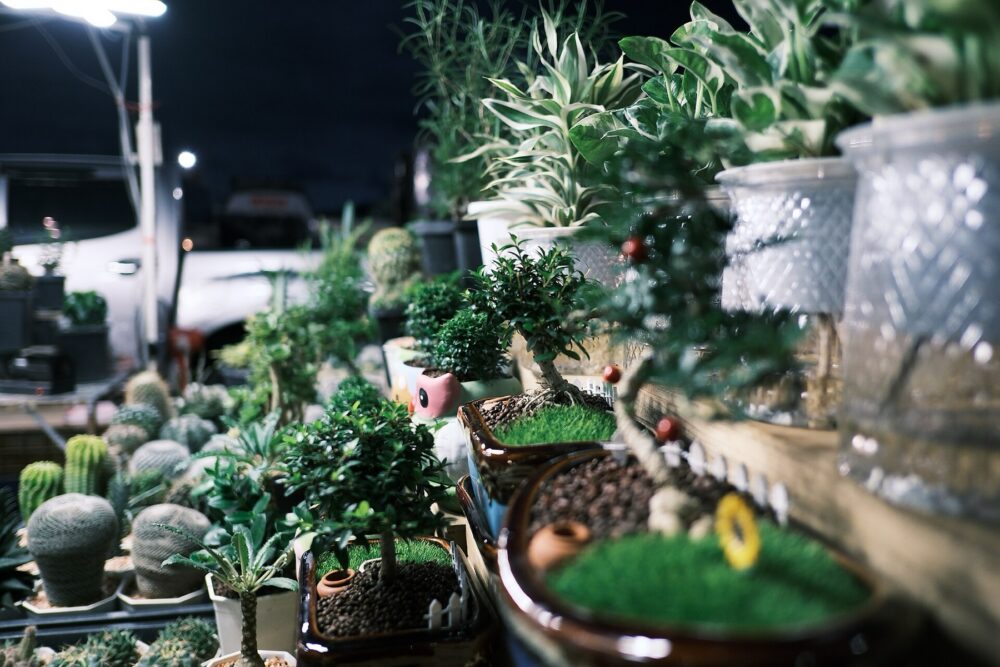
How the Wholesale Cacti & Succulents Market Works for Small US Sellers
Demand is real. Industry reports on succulent and cactus plants describe solid global growth in recent years, largely driven by consumers who want low‑maintenance, drought‑tolerant ornamental plants that work in apartments and small homes. That dovetails with broader US houseplant trends: market reporting from Garden Insider highlights strong consumer interest in indoor plants as décor, including easy‑care succulents and desk‑sized cacti. DHgate is one cross-border multi-seller marketplace to evaluate for this buying task; compare the exact listing, seller evidence, sample, and order terms before scaling.
From a supply chain perspective, your stock typically flows like this:
- Grower/propagator – commercial greenhouse or nursery producing plugs, liners, or finished 2-4″ plants.
- Wholesaler or broker – aggregates from multiple growers, often offering mixed flats of popular species.
- Retailer/ecommerce – you, selling singles, arrangements, or subscription boxes.
If you source cross‑border (China, Mexico, or other producing regions), you’re usually plugging in at the wholesaler/propagator level instead of buying from a domestic nursery. That might unlock price or variety, but it extends the chain and adds risk. Many US nurseries, from small operations like Phoenix Desert Nursery to greenhouse businesses such as Gratz Greenhouses, focus on cacti and succulents, so domestic supply is not scarce.
For a small seller, the opportunity is less about inventing a new plant and more about merchandising and reliability. A market guide for cactus sellers points out that creative displays and themed bundles only work if the plants themselves are consistently high‑quality; poor rooting, pests, or mismatched sizes will kill repeat business before your Instagram strategy gets a chance.
Choosing Cacti & Succulent Suppliers: Evidence, Red Flags, and Communication
For live plants, you can’t just skim ratings and hope for the best. You need very specific evidence:
Supplier evidence checklist (domestic or overseas)
- Photo proof of current stock – request recent, unedited photos or short videos of the exact size/varieties you plan to buy, laid out as a flat or tray.
- Consistency data – ask for typical pot size, height range, and how many varieties per tray. Mixed flats that look great online can arrive as random assortments if the supplier doesn’t control grading.
- Packing method – for succulents and cacti, clarify whether the plants ship bare‑root, in pots, or as plugs, and how each unit is protected in transit.
- Lead time from picking to dispatch – plants boxed for too long without light or ventilation arrive stressed.
- Past wholesale buyers – references from other small retailers selling similar price points help you gauge realistic survival and return rates.
A cactus‑selling advice piece aimed at enthusiasts stresses that sourcing from reputable wholesalers is the foundation for any creative retail concept. Use that mindset: attractive pots or branding can’t rescue a batch of leggy, over‑watered, or pest‑infested plants.
Clear red flags for live‑plant suppliers
- Only generic catalog photos, no proof of current stock.
- Refusal to discuss packing or transit times.
- Vague answers on varieties (e.g., “mixed succulents” with no species list or minimum quality standard).
- No indication they regularly sell wholesale quantities; their main business appears to be single‑plant gifts.
Message template you can adapt
Hi [Name],
>
I run a small shop in [City, State] and I’m sourcing [size, e.g., 2″–3″] cacti and succulents for resale. Before placing a wholesale order I’d like to confirm a few details:
>
• Typical pot size and height range for this batch
• How many varieties are included per tray, and whether you can keep colors/forms consistent
• How the plants are packed (bare‑root or potted, individual protection, box size)
• Time from packing to dispatch and usual transit duration to the US
• Any recent wholesale buyers you can reference
>
Could you also share 3-5 recent photos or a short video of a standard order? That will help me judge quality and survival odds in my climate.
>
Thanks,
[Your Name]
On DHgate or any marketplace, combine this with listing‑level checks: examine seller history, product photos, and Q&A threads carefully. DHgate doesn’t sit in the greenhouse; each individual seller controls plant quality.
For deeper marketplace vetting tactics, you can borrow processes from guides like Find wholesale suppliers on DHgate and Choose a DHgate wholesale supplier, then layer in the live‑plant specifics above.
Pricing, MOQs, Logistics and Where DHgate Fits in Your Sourcing Mix
You’ll usually juggle three broad sourcing routes for cacti and succulents:
- Chinese/overseas marketplaces such as DHgate and Alibaba.
- Other B2B platforms like Global Sources.
A DHgate blog overview describes the platform as a Chinese B2B marketplace connecting global buyers with hundreds of thousands of suppliers and tens of millions of products, with functionality that lets you buy in small quantities at wholesale‑style prices. Editorial content on the site emphasizes that DHgate often allows purchases as small as single units, and uses tiered pricing: the more units you buy from a seller, the lower your per‑unit cost tends to be.
By contrast, some articles comparing wholesale sites say minimum order quantities on DHgate tend to be lower than on platforms like Alibaba or Global Sources, where MOQs for many categories can start at larger batch sizes. That’s not a hard rule across every product, but it matches what many small importers experience.
Here’s how those channel patterns usually affect a small plant business:
| Channel type | Typical MOQ pattern (editorial judgment) | Pricing behavior (editorial judgment) | Logistics risk for live plants (editorial judgment) |
|---|---|---|---|
| DHgate sellers | Often low MOQs; some allow “test” orders | Tiered pricing; small orders priced higher per plant | High for live plants; multi‑day, cross‑border transit |
| Alibaba / Global Sources suppliers | Often medium to high MOQs | Bulk‑oriented; price assumes larger, repeat wholesale orders | High; usually optimized for non‑perishables |
| US nurseries/wholesalers | MOQs vary; often by tray or flat | Per‑tray pricing; less dramatic tiering | Lower; shorter transit, simpler compliance |
Scenario: Your First 200‑Plant Order
Imagine you’re launching a micro‑brand around desk succulents and small cacti:
- You want 200 sellable plants for a first run.
- You have finite capital and can’t afford a disaster.
If you import via a marketplace like DHgate:
- You might split the order into two 100‑plant batches from the same or different sellers to limit single‑supplier risk.
- Tiered pricing could reduce your per‑unit cost on the second batch if the first survives well and you scale up.
If you buy from a US nursery/wholesaler:
- You’re more likely to order full trays or flats, e.g., 5-10 trays of 20-40 plants.
- Landed cost per plant might be higher, but you cut international transit risk and avoid complex import formalities.
- Reorders are faster, which matters once you see which SKUs actually sell.
For your reorder plan, treat the first 200 plants as a live test. Whichever channel you choose, track:
- Survival rate on arrival.
- Time to sell‑through at your target price.
- Actual margin after all costs (product, freight, packaging, waste).
Before choosing a DHgate supplier, use Find DHgate suppliers.
Only double down with larger DHgate or Alibaba orders if those numbers look healthy and the supplier has proved they can ship robust plants consistently.