
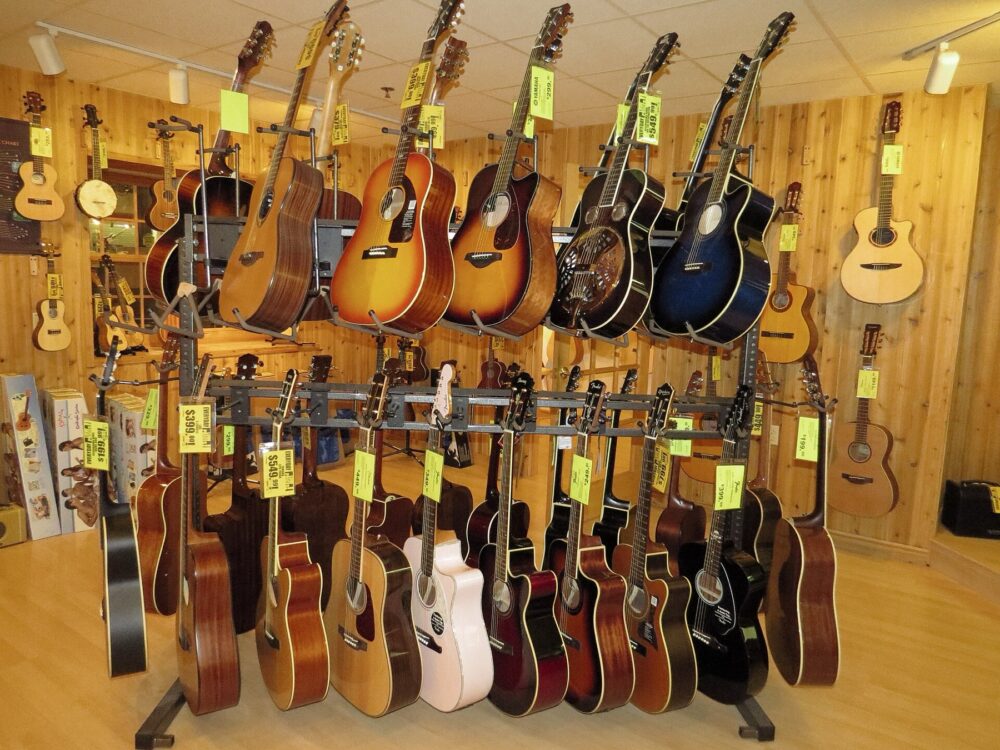
Wholesale guitar and music equipment means buying instruments and related gear in bulk—acoustic and electric guitars, strings, straps, cases, amps, cables—for resale at a discount. As a US shop, your real choice is between domestic distributors that focus on branded gear and cross-border marketplaces like DHgate or Alibaba-style platforms that connect you directly with manufacturers and trading companies. DHgate’s own editorial highlights a wide range of guitars and accessories plus detailed product descriptions, seller ratings, and customer reviews, but you still need to vet each seller, compare landed cost, and decide whether its mix of budget/private-label gear fits your business.
How Wholesale Guitar and Music Equipment Supply Chains Work for US Sellers
Wholesale in this category covers three main product buckets:
- Core instruments: acoustic, electric, classical, kids’ and student guitars.
- Accessories and maintenance: strings, picks, straps, gig bags and cases, stands, capos, tuners.
- Audio gear: practice amps, small PA gear, cables, DI boxes.
On the US side, distributors such as LPD Music International, Salem Music, Wholesale Guitar Club, and Wholesale Music Warehouse sell this kind of gear to retailers with a tax ID. They tend to focus on recognizable brands, offer more predictable domestic shipping, and often pair wholesale with dropship programs or brick-and-mortar-friendly terms.
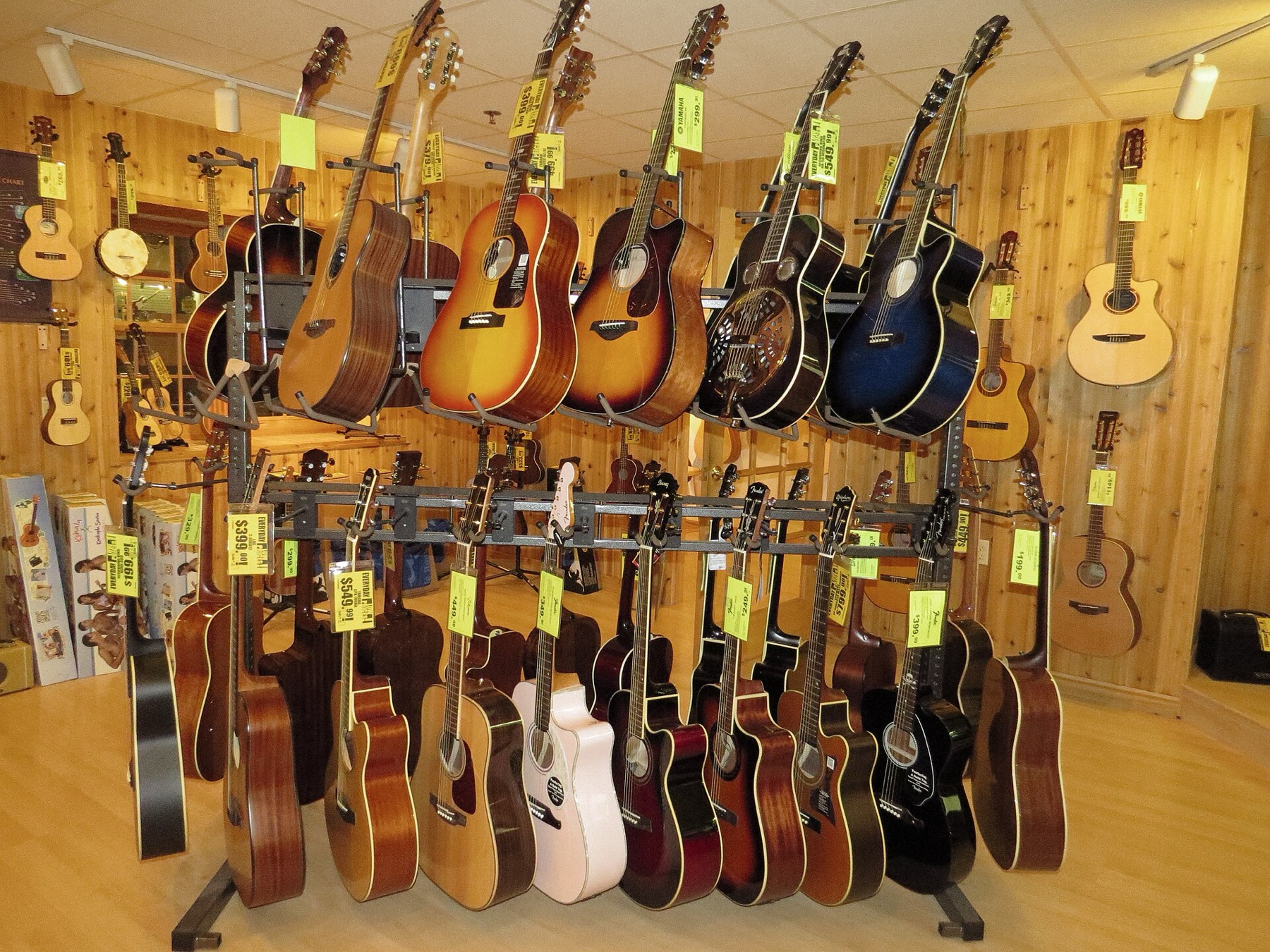
Cross-border marketplaces sit in a different place in the supply chain. DHgate is a marketplace, not a manufacturer; individual sellers list guitars, strings, straps, cases, amplifiers and more. Its blog promotes “extensive selection” and “competitive prices” on guitar categories, and points out that ratings and reviews can help buyers judge sellers. That positioning is usually better suited to budget instruments, off-brand amps, and private-label accessories than to major-label guitars that need US warranty support.
Choosing and Vetting Guitar and Music Equipment Suppliers
With instruments, poor sourcing shows up fast: warped necks, bad fretwork, noisy electronics, inconsistent finishes. So you need deeper checks than you might for generic accessories.
What to look for on DHgate and other marketplaces
Because DHgate is only the venue, you’re really evaluating individual sellers:
- Ratings and feedback volume: DHgate’s editorial encourages using seller scores and buyer reviews as signals. Favor sellers with a long history and plenty of guitar-specific reviews, not just general merch.
- Category focus: A seller who mainly lists guitars, strings, straps, and small audio gear is more likely to understand the category than a general gadget shop.
- Product detail level: DHgate highlights detailed descriptions as a selling point. For guitars and amps, look for specs on tonewoods, hardware, electronics, scale length, and finish—not just “high-quality electric guitar.”
- Direct communication: The DHgate blog suggests messaging sellers before purchase. Use that to ask for neck relief tolerance, fretboard material, QC process, and packaging (double-boxing, foam supports, desiccant packs).
For domestic distributors, vetting leans more on:
- Brand lists and dealer programs on their websites.
- References from other stores in your region.
- Sample orders of a few SKUs to check consistency.
A quick guitar-specific vetting checklist:
- Order at least one sample per model you plan to stock.
- Inspect neck straightness, fret ends, bridge placement, tuning stability, and noise in electronics.
- Check packaging simulates a cross-country trip—does the guitar arrive playable or need major work?
- Ask how the supplier handles repeat orders: do specs drift between batches?
If you need more depth on marketplace vetting tactics, DHgateWiki’s own guides—like finding wholesale suppliers on DHgate, finding DHgate suppliers, and choosing a DHgate wholesale supplier—walk through rating patterns, communication scripts, and sample strategies in detail.
Pricing, MOQs, Logistics, and When DHgate Makes Sense
You won’t get reliable price sheets or MOQ numbers without talking to suppliers directly, but you can map typical patterns and where each channel fits your business.
Here’s a qualitative comparison for small US sellers:
| Channel type | Best suited for | Typical MOQs (editorial judgment) | Shipping/lead time feel (no guarantees) | Cross-border multi-seller-specific notes |
|---|---|---|---|---|
| US distributors (LPD, Salem, etc.) | Branded guitars, school band programs, midrange gear | Case quantities or small multi-guitar orders | Domestic ground; usually more predictable for US shops | Often require tax ID and dealer setup, but simpler logistics. |
| DHgate marketplace | Budget guitars, private-label accessories, experimenting with new SKUs | Flexible; many marketplace sellers will discuss low trial quantities | Cross-border; transit and customs can extend timelines | DHgate’s blog stresses competitive pricing and detailed listings; each seller sets their own MOQs and terms. |
| Alibaba-type B2B platforms | Factory-direct orders, custom designs, long runs | Higher; often carton or pallet-level | Cross-border with negotiated logistics | Better for mature volume programs than first experiments. |
From a cost and risk standpoint, think in scenarios, not in abstract pros/cons.
Scenario 1: Brick-and-mortar music store
If you run a local shop serving students and gigging players, you probably need recognizable brands, consistent specs, and reliable warranty channels. Domestic distributors like LPD Music or Music & Arts’ MI Wholesale are built around that: branded instruments, accessory assortments, and shipping that’s aligned with US retail rhythms.
DHgate can still play a role here—but at the edges. It’s useful for low-risk items like generic straps, picks, inexpensive gig bags, and maybe novelty guitars, where customers expect budget pricing and you can treat each batch as a test. For core wall inventory, most US shops will lean on distributors instead.
Scenario 2: Online-only budget guitar/gear reseller
If your model is value-focused and online-only, you’re more flexible. DHgate’s editorial talks up “extensive selection” of acoustic/electric models and a wide range of accessories such as strings, picks, straps, cases, and amplifiers. That kind of assortment is attractive if you:
- Don’t need big brand names on the headstock.
- Can invest in careful sampling and QC before listing.
- Are comfortable explaining in your product pages that instruments are house-brand or imported.
Here, DHgate can make sense as a primary source for private-label instruments and accessories, while domestic distributors fill gaps for items that must be branded or carry US support.
Working through MOQs, sampling, and landed cost
Regardless of channel, run the same basic playbook:
- Ask explicitly about MOQs and trial runs. Many marketplace sellers are willing to start with smaller test orders even if their standard MOQ is higher.
- Cost out samples as an investment. Treat the first 1-3 units as QC spend, not profit generators.
- Calculate landed cost per unit. Include unit price, estimated shipping, customs/duties, and any bank or platform fees. Cross-border orders may look cheaper on unit price but catch up once freight and tariffs are added.
- Plan for reorders. Ask suppliers how often specs change, whether woods or hardware may be substituted, and how far in advance you need to place repeat orders to stay in stock.
If a DHgate guitar or amp listing looks attractive but the seller can’t give clear answers on QC, specs stability, and packaging, treat that as a red flag. For low-risk accessories you might still test it; for instruments that can ruin your store’s reputation, move on.
The practical approach is to use domestic distributors for your reliability-critical SKUs and layer in DHgate as a flexible, experiment-friendly source for budget and private-label guitar and music equipment—always grounded in real samples and careful supplier vetting rather than platform promises.