
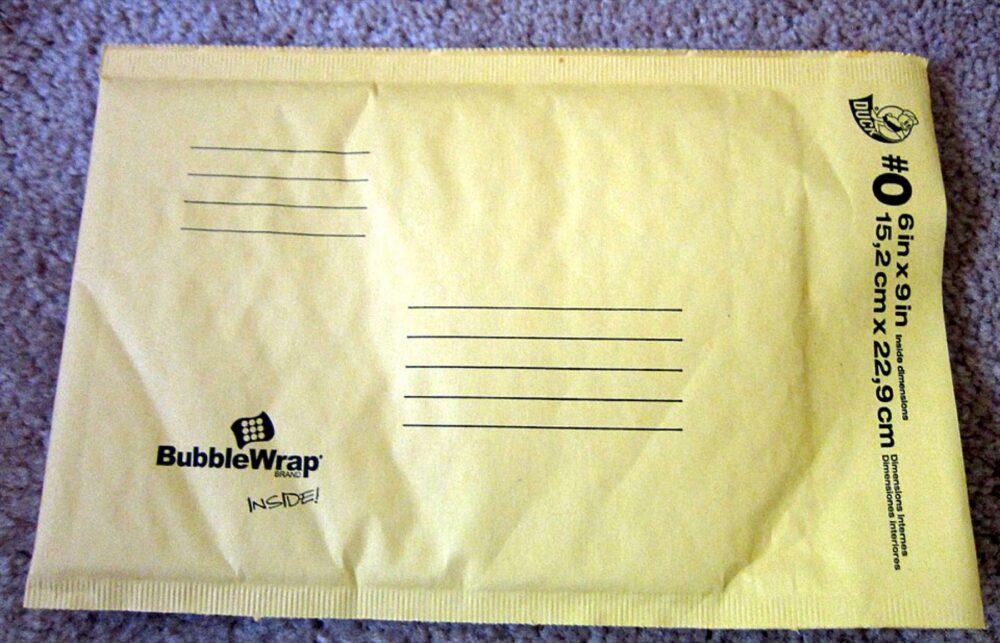
Padded paper mailers typically have a kraft or white paper exterior with an inner cushioning layer (often bubble or honeycomb paper) that protects small, non‑fragile items in transit, like accessories or apparel trims. Shop Bubble Mailers and ZEE Custom Boxes both show these basics clearly. Once you understand your size and material needs, the real wholesale work is designing a repeatable order pattern that doesn’t leave you out of stock—or stuck with a pallet of mailers you hate. DHgate is one cross‑border multi‑seller marketplace you can evaluate for this buying task; compare each listing, seller evidence, sample, and order terms before scaling.
How Wholesale Padded Paper Mailers Sourcing Works
For mailers, you’re not buying a one‑off product; you’re buying a supply chain. Most padded paper mailers you’ll encounter are:
- Kraft bubble mailers – kraft paper outside, plastic bubble lining, like the standard ranges shown by many US distributors including Shop Bubble Mailers.
- All‑paper padded mailers – paper outer plus honeycomb or other paper cushioning, often marketed as more recyclable. A US example is the Ecojacket‑type flexible paper mailers sold by U.S. Plastic.
Production is concentrated in large packaging factories—often in China and other Asian manufacturing hubs—but you’ll also find US‑based converters and distributors. Cross‑border factories usually favor higher minimum order quantities (MOQs) and longer lead times, while domestic wholesalers tend to hold inventory and sell cartons off the shelf.
Alibaba’s seller guidance on bulk orders presents a 15-30 day production lead time with around a 100‑piece MOQ as a workable mid‑range setup for many B2B packaging products. That’s a useful reference point if you’re testing a new mailer size or design: it’s low enough not to crush your cash flow, but high enough for a factory to take you seriously. Actual factory and transit times vary by supplier, season, and shipping method, so treat these figures as planning ranges, not promises.
In practice, you’ll see three broad sourcing patterns:
- Carton‑level domestic buying
Order pre‑made mailers by the case from US distributors (for example, Shop Bubble Mailers or other packaging wholesalers). You get fast delivery and small MOQs, but limited customization and usually higher per‑piece cost.
- Cross‑border semi‑custom buying
Work with overseas factories via marketplaces to tweak size, color, or materials at moderate MOQs and mid‑range lead times.
- Fully custom branded packaging
Work with a packaging specialist to design a fully branded padded mailer, often at higher MOQs and more complex lead times.
The trick is matching your shipment volume and brand needs to one of these patterns before you start negotiating.
Typical ranges to plan around
Here’s how those patterns often differ for a small US ecommerce brand shipping non‑fragile goods:
| Sourcing pattern | MOQ feel for small brands | Lead‑time feel | Key trade‑off |
|---|---|---|---|
| Carton‑level US distributor | 1-2 cartons per size; easy entry | A few business days from US warehouses | Higher unit cost but very simple to manage. |
| Cross‑border semi‑custom via marketplaces | Often around mid‑range MOQs (e.g., ~100+ pieces) | Production commonly discussed in the 15-30 day range, plus transit | Better pricing/customization, more planning and communication required. |
| Fully custom branded mailers | Several hundred to thousands per design | Design plus production can take multiple cycles | Strong branding, but you commit more capital and time. |
These are editorial ranges based on packaging guidance; each supplier will quote their own figures.
Evaluating and Messaging Padded Mailer Suppliers
You’ll get the best results if you treat the first conversation as a mini RFQ, not a casual chat. Packaging experts often stress that you should ask about MOQ and price per piece together—not just “What’s your price?” but “What quantity does that price apply to, and what will my landed cost be at my target run size?”
A practical message template you can adapt for DHgate or any marketplace:
“We ship about 800-1,200 orders per month of small accessories in the US. We’re looking for padded paper mailers in sizes X and Y. Please confirm:
>
• Exact materials (kraft weight, bubble or paper padding)
>
• Available sizes and tolerance
>
• MOQ per size and price per piece at 100, 500, and 1,000 units
>
• Production lead time after payment
>
• Whether you can provide plain vs custom print, and any one‑time plate/artwork fees
>
• Sample availability, cost, and timing
>
We are interested in repeat orders if quality and timing are stable.”
From DHgate’s own sourcing articles, the platform encourages buyers to use the internal messaging system to ask about specifications, pricing, MOQs, and customization, and to request samples before larger orders. That lines up well with what you need for mailers.
Concrete questions to send suppliers
Group your questions so you don’t miss key trade‑offs:
- Product spec & performance
• What paper weight and type do you use (e.g., lighter vs heavier kraft)? • Is the padding bubble or all‑paper? How thick? • Can your mailers handle items up to X oz without tearing?
- MOQ, pricing, and tiers
• What is your MOQ per size? • What is the price per piece at that MOQ, and how does it change at higher quantities? • Does the quoted price include inner padding and adhesive strip, or are those extra?
- Lead time and logistics
• What is your standard production lead time after sample approval? • Do lead times change for repeat orders of the same design? • At what point in the calendar (peak seasons, holidays) do your lead times usually extend?
- Quality and repeatability
• How do you keep material weight and padding consistent between batches? • Can you share photos or spec sheets from recent runs for other customers?
Handling samples without wasting money
DHgate’s editorial guidance explicitly recommends ordering a small quantity first to test quality before committing to bulk, as a way to reduce risk. For padded mailers, a “sample” should be more than one or two envelopes; ask for at least a small carton (for example, 50-100 pieces in each key size) so you can:
- Test adhesive closure and tear strength.
- Run them through your actual fulfillment process for a week.
- Watch for issues like inconsistent padding or poor seams.
Also clarify who pays for samples and shipping and what happens next—several sourcing guides remind buyers and sellers to discuss sample and freight costs upfront and to define what approval triggers a bulk order.
Comparing Channels and Using DHgate for Padded Mailers
You have three main channel types for wholesale padded paper mailers: US inventory wholesalers, cross‑border marketplaces like DHgate or Alibaba, and fully custom packaging shops. Each trades off MOQ, speed, customization, and risk.
Here’s a compact comparison based on typical market behavior and examples from current suppliers:
| Channel type | Typical MOQ & lead time (editorial ranges) | Customization & variety | Best‑fit scenario |
|---|---|---|---|
| US wholesale distributors (e.g., Shop Bubble Mailers, other protective‑packaging sellers) | Often 1-2 cartons per size; ship within a few business days from US warehouses | Mostly stock sizes and colors; some offer branded options at higher MOQs | You need mailers fast, with simple specs, and don’t want cross‑border complexity. |
| Cross‑border marketplaces | Many sellers work around mid‑range test MOQs and roughly 15-30 day production; transit time is extra and variable | Wide range of sizes, materials, and semi‑custom printing; more options for eco‑style or unusual sizes | You want better unit cost or specific customization and can plan around longer timelines. |
| Custom packaging specialists (eco‑style or fully branded mailers) | MOQs often several hundred to thousands; lead times similar or longer due to design steps | High branding flexibility, including full‑bleed color and bespoke structures | You treat packaging as a core brand asset and are ready for higher‑volume commitments. |
On DHgate specifically, its bulk‑buying articles outline a simple playbook for buyers: use filters to narrow products, check seller ratings and reviews, contact sellers to verify bulk pricing tiers, request samples, and use the platform’s transaction tools for payment. That’s a reasonable process for padded mailers too.
A practical DHgate workflow for padded mailers might look like this:
- Search and filter
Use search terms like “kraft bubble mailer,” “paper padded mailer,” or specific sizes (e.g., “6×9 padded envelope”). Filter by material or use category filters where available.
- Shortlist and compare
Check seller ratings, review counts, and listing details. Favor listings with clear material specs, size charts, and photos.
- Message each seller
Send the structured questions above, including your expected monthly usage and need for repeat orders. Watch how fast and specifically they respond—this is a proxy for future communication.
- Order test quantities
Following DHgate’s editorial advice, start with a small quantity or sample batch. Run it through your fulfillment process before committing to a larger order.
- Lock in a repeat pattern
Once you’ve had at least one good batch, negotiate a standard MOQ, price tier, and lead‑time expectation for ongoing orders, and set internal reorder points so you’re not forced into emergency buys.
DHgate is most useful here if you:
- Ship enough volume that carton‑level domestic buying feels expensive, but you’re not ready for huge factory MOQs.
- Need a specific size or eco‑style paper padding that US stock catalogs don’t carry.
- Are comfortable doing your own vetting and quality checks per seller.
If you want more detail on how to search and vet suppliers on DHgate generally, you can also read DHgateWiki’s guides to finding wholesale suppliers on DHgate, finding DHgate suppliers, and choosing a DHgate wholesale supplier; the same principles apply to packaging.